-
By Brad Durham
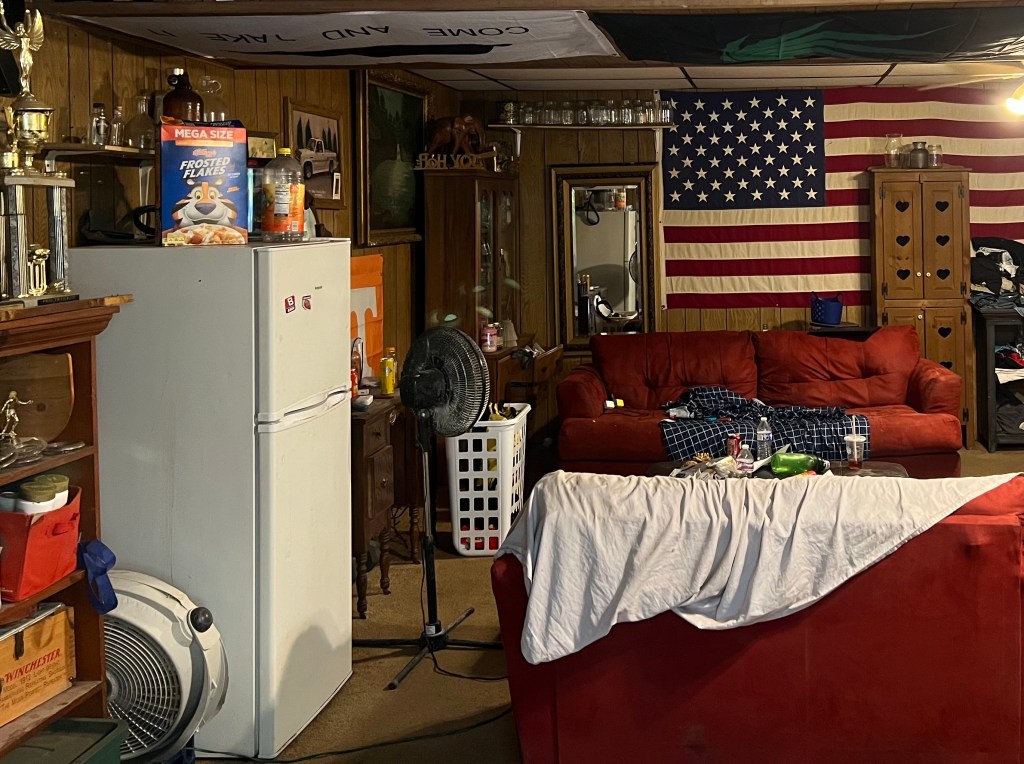
John’s (not his real name) basement apartment for $500 a month.
When I first met John (not his real name) on April 17 of this year, it was at a McDonald’s. The free Wi-Fi and a place to sit for a while provided a port in the storm of his homelessness. John told me he was exhausted from walking day and night, with nowhere to stay and desperately searching for work. Even when someone offered him a tent, he didn’t have a place to safely pitch it. Yesterday, McMinnville Action To Create Housing (MATCH), a nonprofit committed to helping our unhoused neighbors secure permanent supportive housing, assisted John in paying a month’s rent for his new apartment.
ENDED HIS OWN HOMELESSNESS
John is 32 years old. Due to unfortunate circumstances—some of which he acknowledges were of his own making—he bounced in and out of homelessness for the past 11 years. His determination to find work and address back child support payments ultimately motivated him to find both a job and an apartment. All John needed going into September was $500 to cover his first month of rent in a basement apartment.
A few weeks ago, he started working at an industry in McMinnville. Without a place to stay, he slept right outside on the property. Fortunately, he knew someone nearby, within walking distance of his job, who agreed to rent him a basement apartment after he spent two weeks sleeping outside the building.
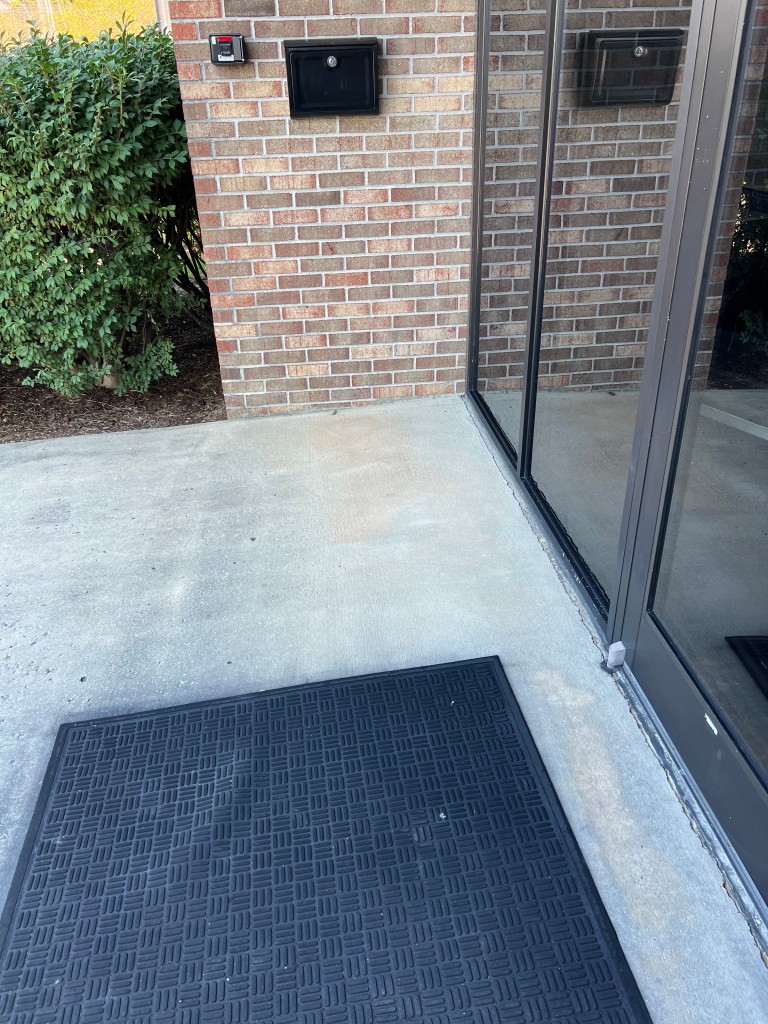
Where John slept overnight before working a full shift — without a sleeping bag or cushion,
HOW MATCH HELPED
MATCH is covering his first month’s rent OF $500, which will enable John to address the child support payments he struggled to make while homeless and looking for work. Moving forward, John will be able to pay his full rent and child support. In September, he has a court date concerning the child support payments, which he has significantly reduced since starting work a few weeks ago. He hopes to catch up on these payments, allowing him to continue working and paying his rent.
UCHRA PROVIDES SUPPORT
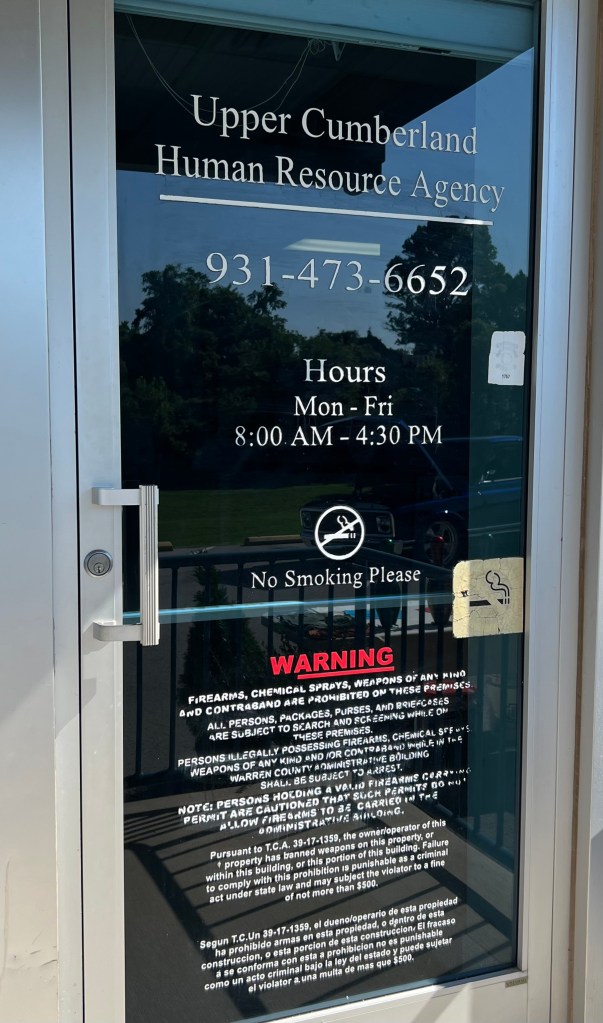
John credits UCHRA with providing support.
John credits a member of the UCHRA staff for providing essential supportive services. He said, “I meet with a lady every Tuesday about child support. She works with UT and UCHRA. When I was homeless and searching for a job, she communicated with the court about my efforts. She is my advocate, a professional who documented my job-search progress. She provided me with gift cards each week for food and gas. She even helped me purchase a new bike for $286! When I had nothing, she helped me get through the week.”
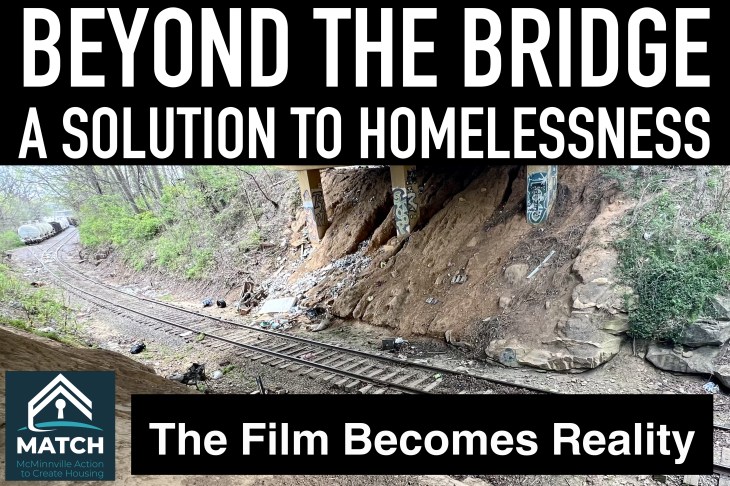
John is the second unhoused neighbor in McMinnville that MATCH has assisted in moving into housing in the past week. This initiative is part of an evidence-based solution to homelessness presented by MATCH in the film BEYOND THE BRIDGE, earlier this year at the Park Theater.
HOMELESS SUMMIT IN OCTOBER
MATCH plans to host a Homeless Summit in October to jumpstart collaboration and fundraising aimed at developing both supportive services and a housing search team, along with private rental subsidies. Everyone in McMinnville will be invited to the Homeless Summit, with the date and location to be announced soon.
-
Who Was Homelessness in McMinnville
By Brad Durham
I would like to express my heartfelt gratitude to McMinnville Action To Create Housing (MATCH), H.O.M.E., and the 30 generous supporters who contributed to help an unhoused mother and her 10-year-old son secure an apartment. A private rental subsidy was established to facilitate their transition into permanent supportive housing.
How It Works – Collaboration
This initiative represents a collaborative effort to provide supportive services and rental assistance. The total yearly rent amounts to $10,800, which breaks down to $900 per month.
Brad Durham and supporters contributed $3,000 to help subsidize the family’s rent, while MATCH has provided $7,800 upfront. The tenant will repay $4,200 to MATCH at a rate of $350 per month, in addition to covering utilities.
The tenant’s share of the rent is set at 30% of her income, which equates to $500. H.O.M.E. has also played a vital role by assisting with part of the security and utility deposits, helping secure furniture, and providing ongoing supportive services.
SIMILAR TO MASTER LEASING
The rental subsidy functions similarly to a master lease program; however, in this case, no one is master-leasing the apartment from a private landlord. The tenant has signed the lease herself, and the rental subsidy facilitates her move from a shelter to permanent supportive housing.
The mother currently works part-time while pursuing full-time employment, and her son is in the fifth grade. They still require some furnishings for their new apartment.
ITEMS NEEDED
Washer and dryer, vacuum cleaner, dresser, microwave, TV, towels, and other essentials. If anyone would like to assist in providing items for the family’s apartment, please contact Crystal Rippy at (931) 309-9775.

Crystal Rippy in her apartment.
-
By Brad Durham
Forty years ago, I volunteered and worked directly with the homeless in Boston and Cambridge, Massachusetts. My role involved placing homeless families into permanent housing using HUD rental subsidies. This experience, combined with research from Harvard and MIT on poverty and homelessness, was invaluable. I successfully blended my passion for music with advocacy by developing benefit concerts and a nonprofit organization that supported homeless children living with their families.
For the past 40 years, I did nothing to help the homeless. Everything I am about to share is directed primarily at myself. The catalyst for my transformation from inaction to action was volunteering at the First Methodist Outreach building to serve the homeless. What I witnessed there was strikingly different from the attempts I had participated in while in Massachusetts to house the unhoused. This experience motivated me to advocate for a shift in public and political will regarding chronic homelessness. In my hometown, many people who are homeless walk around all day, and some are literally sleeping on the sidewalks.
Warren County: Income Statistics & Projected Funding
Warren County has a total income of $2.1 billion. One percent of that income is $21 million, and 1% of that $21 million is $210,000. If 8,400 households contribute $25 each this year, we can raise the $210,000 needed, representing approximately 52% of the 16,203 households in Warren County. I believe this goal is achievable, allowing us to fund 10 rental subsidies and, in addition, develop separate supportive services and housing search teams. In essence, $210,000 could help end homelessness for 10 individuals or families and transform their lives.
Two Talks Featured Below
Two talks have significantly changed my perspective on addressing homelessness and improving the lives of the unhoused in McMinnville. My goal is simple: to collaborate with as many people as possible to place 10 unhoused families and/or individuals into permanent supportive housing within one year.
Inspiration #1 is a 90-second lecture by Nick Saban entitled, IMPORTANCE OF NOTHING.
Key highlights of Coach Saban’s talk include:
- You wake up in the morning, and you are entitled to nothing.
- Nobody owes you nothing.
- You can have talent, but if you don’t have discipline and you don’t execute and focus, what do you get? Nothing.
- If you are complacent and not paying attention to detail, what does that get you? Nothing.
- Nothing is acceptable but your best.
- Everything is determined by what you do and you trying to be your best so that you can build on positive performance. That’s the only thing – there should be nothing else.
- What we have to be focused on is what we need to do.
- Do not accept anything but our best.
Inspiration #2 is an 11-minute Ted Talk by Dr. Sam Tsemberis, who created Housing First in 1992, providing thousands of successful examples of permanent supportive housing.
Key highlights from Sam Tsemberis’ Ted Talk entitled ENDING HOMELESSNESS AND TRANSFORMING LIVES presented in 2012 include:
- We pay a price for ignoring homelessness, affecting not only those living on the streets but also ourselves.
- Ignoring the pain of homelessness requires us to shut down part of ourselves, leading to shared suffering that can be alleviated.
- Homeless individuals often face various clinical conditions, and failing to help them constructively leads us to label them as treatment-resistant.
- We tend to blame them for their suffering, forming implicit assumptions that they are not trying hard enough or have wasted their opportunities.
- The disconnect between individuals seeking housing and the systems requiring treatment or participation in programs has persisted for years.
- Our desperation to serve them has created transformative moments.
- Improving lives, both for the homeless and those providing service, requires a significant shift in approach.
- Our clinical expertise often misaligned with their needs; many prefer a stable home before treatment.
- The Housing First program, created in 1992, recognized their desire for simple dignity—a private space to live, cook, and sleep without being in crowded shelters.
- We had to set aside our preconceived notions about mental illness and acknowledge their reality.
- Accepting their perspectives allowed us to help them find housing of their choosing, and support teams helped them thrive beyond our expectations.
- With a home, they utilize their survival skills more effectively; studies show 85% success in housing and 20%-25% with treatment.
- Both Republicans and Democrats agree that providing housing is more cost-effective than leaving someone homeless.
- Housing First has proven effective by creating safe living environments and offering necessary services.
- Key lessons include respecting their wishes, valuing diverse perspectives, and recognizing that success relies on collaboration.
- Unlike diseases like cancer or Alzheimer’s, we have a clear solution for homelessness, though we lack the necessary political will. My advocacy aims to challenge this.
- Ending homelessness benefits those affected while healing society, fostering a more just and compassionate community.
MY CONCLUSION
As Sam Tsemberis mentioned in his TED talk, I often blame homeless individuals for their lack of housing and decision-making. I make judgments without knowing their real circumstances and history. The worst mistake I make is ignoring them. I mistakenly believe that simply showing up and discussing how to help the homeless means something. Watching someone leave a meal and walk into the night in search of a place to sleep is equivalent to doing nothing.
I have lacked the courage to turn my judgmental attitude and moral justifications into action to help provide permanent supportive housing. One fundamental lesson I have learned is that I cannot do it alone. It’s unrealistic to expect that I can simultaneously negotiate housing deals for the homeless, offer supportive services, and maintain my own full-time business.I have been doing a disservice to our homeless neighbors in McMinnville.
Action Step
Therefore, I am organizing a Homeless Summit and inviting every church, civic organization, elected official and private citizen to attend. The purpose of the Summit is to review the seeds that BEYOND THE BRIDGE planted in January and what has developed with those seeds. Dates for the Summit will be announced soon.
The Goal
My goal is to place 10 people and/or families who are homeless into permanent supportive housing within a year. With 8,400 households donating $25 each, we can raise the $210,000 needed to help end homelessness and transform lives. We can turn nothing into something. We can do our best to provide evidence-based solutions. Together we can heal homelessness and ourselves, transforming McMinnville into a more caring and just community for our neighbors who are homeless. 1% of 1% of the total income in our county can make it happen.
Footnotes: The source for the total county personal income is the Tennessee Department of Economic & Community Development: https://tnecd.com/county-profiles
The number of household metrics are from the American Community Survey (ACS) and the most recent US census reports using ChatGPT. www.censusreporter.org.
-
By Brad Durham
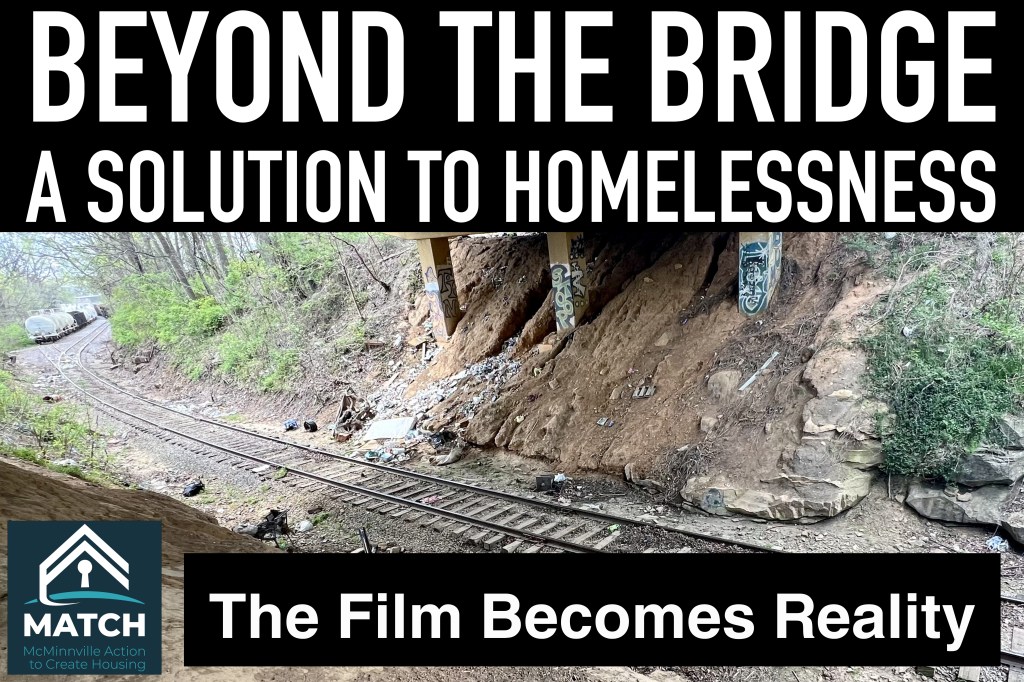
Under a bridge in McMinnville. Photos by Brad Durham.
McMinnville Action To Create Housing (MATCH) hosted the film Beyond The Bridge at the Park Theater earlier this January to raise awareness about the need for permanent supportive housing for our unhoused neighbors. Recently, board members of MATCH assisted two unhoused men in moving into permanent supportive housing.
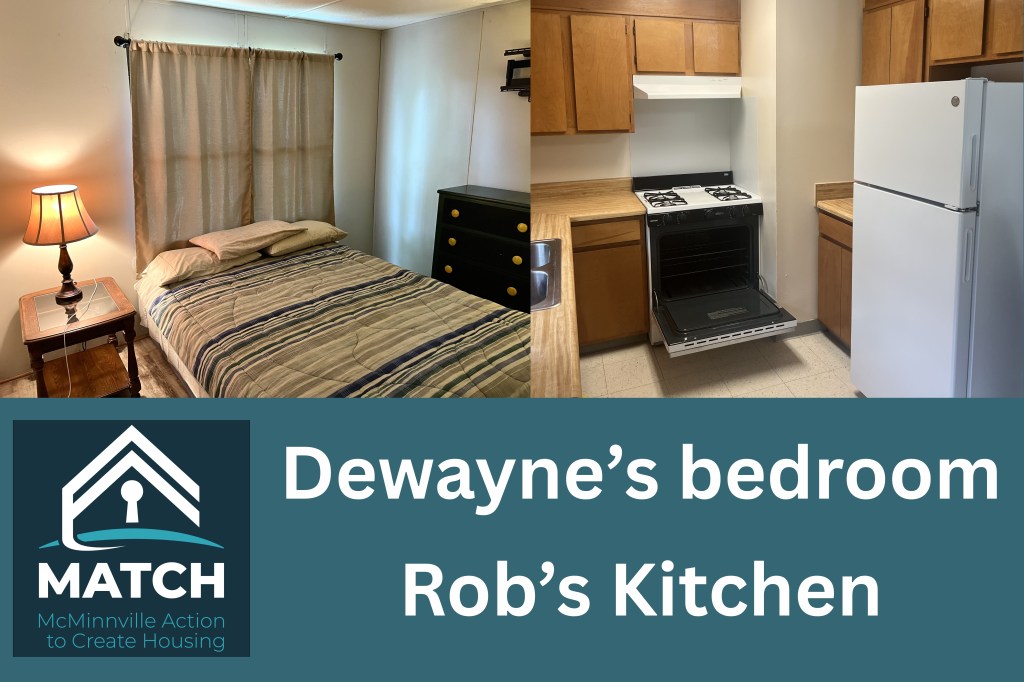
Both men agreed to be interviewed and shared their stories in the hope that other unhoused individuals will be inspired to pursue permanent supportive housing. Below are some photos of their previous unhoused environments alongside their new permanent homes.
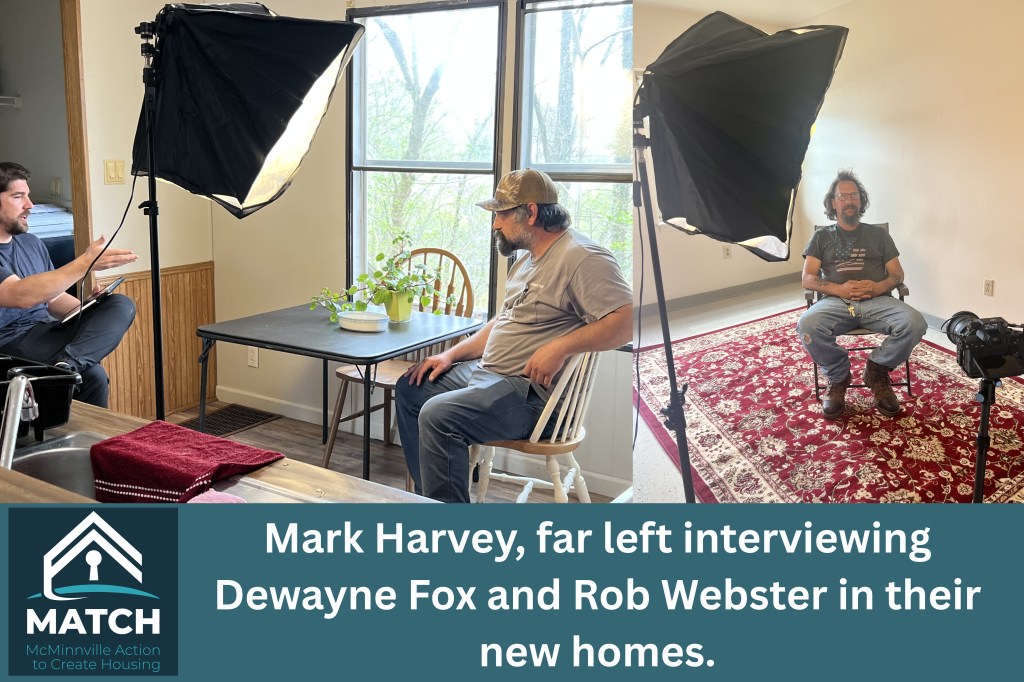
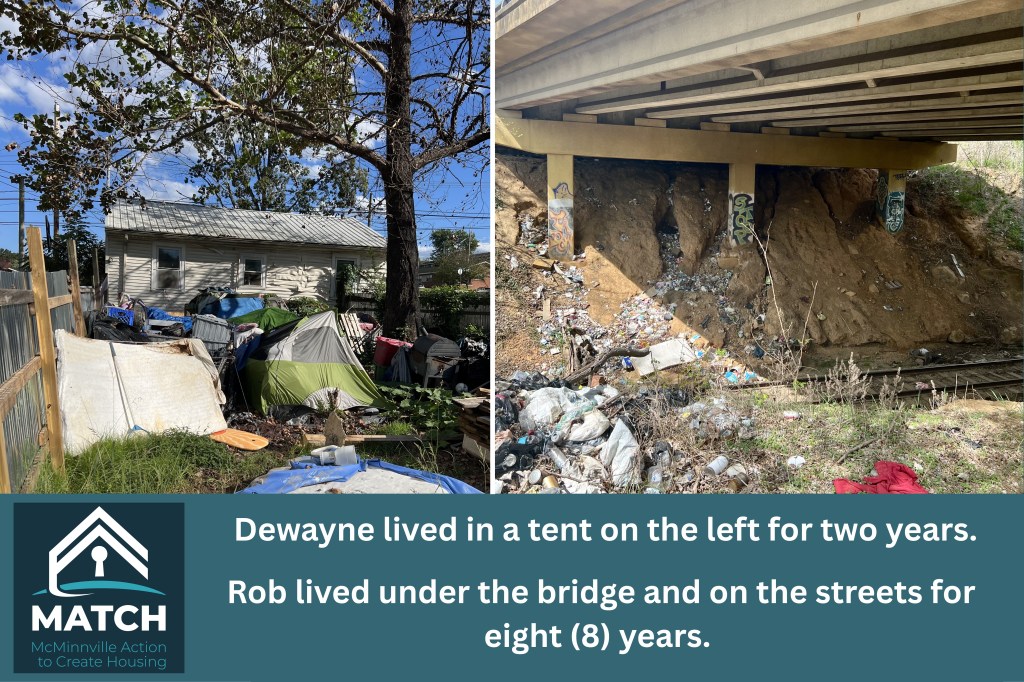
Dewayne has experienced health problems related to his heart and back. Members of the First United Methodist Church have assisted him with transportation to a heart doctor in Cookeville and have provided additional support for his healthcare. There is a good possibility that Dewayne will be driving a bus for UCHRA later this year, as truck driving was his former job.
Rob has worked odd jobs and is attending a job fair soon. Having an apartment with a bathroom and kitchen will help him stabilize and become more consistent in his job search. Rob went to rehab a year ago and returned to McMinnville 100 days sober. He had no place to live and returned to sleeping under the bridge. He was arrested for not reporting to probation during his rehab. After providing documentation, Rob was released from a brief stay in jail and returned to the streets.
Both Dewayne and Rob hope that their stories will encourage the public to support fundraising efforts by MATCH to develop permanent supportive housing for other unhoused individuals in McMinnville.
MATCH PLANS TO HELP 10 MORE INDIVIDUALS
MATCH plans to place 10 of our unhoused neighbors into permanent supportive housing within one year. These plans include fundraising to create 10 rental subsidies to help individuals like Dewayne and Rob afford a home. Another aspect of MATCH’s plans includes hiring two full-time staff members: one will be a supportive services coordinator (case manager), and the other will be a housing search specialist (housing navigator).
MATCH is committed to building a coordinated, data-driven system that addresses both housing instability and the underlying factors preventing individuals from achieving long-term stability. Please stay tuned for upcoming fundraising activities by MATCH to support these initiatives.
-
By Brad Durham
WHAT IS MATCH
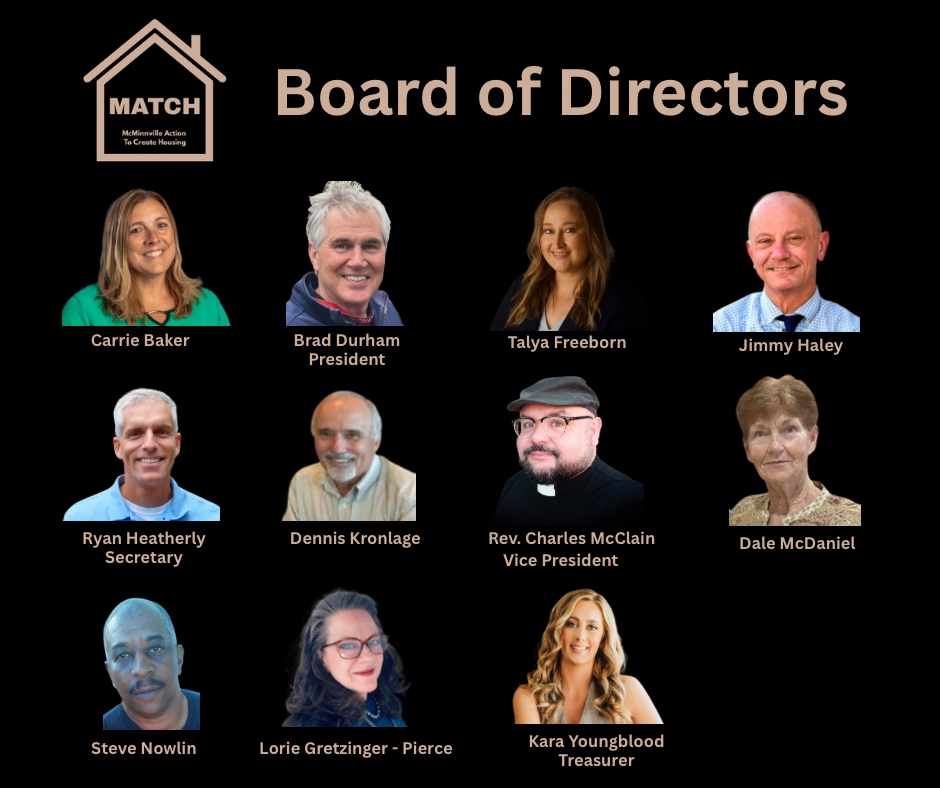
Recently, the McMinnville Action To Create Housing (MATCH) hosted the documentary film Beyond The Bridge at the Park Theater on January 22, 2026. I founded MATCH and invited people to join the Board to assist the poorest of the poor in McMinnville—our homeless neighbors. My vision for MATCH is to operate as a 100% volunteer effort focusing on three areas: advocacy, managing resources, and developing programs.
OUR FIRST ACTION
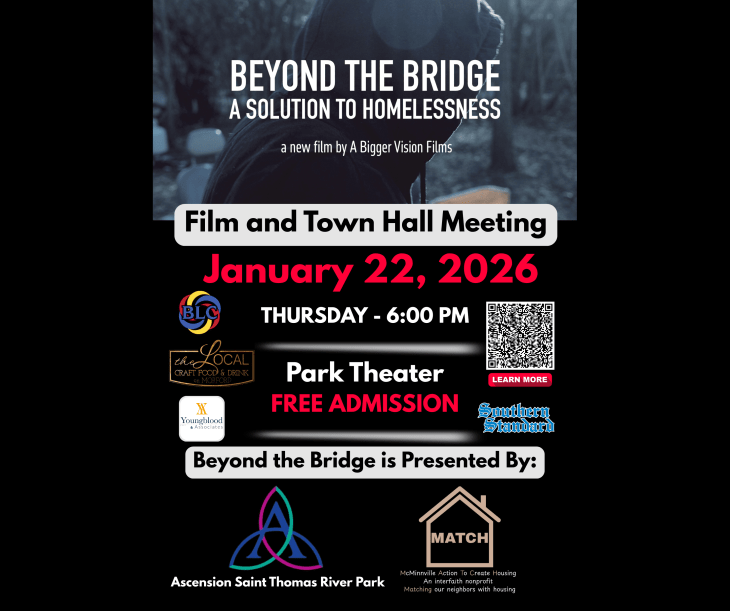
Our first action as a nonprofit was to advocate publicly for permanent supportive housing for the unhoused in our county by presenting the film Beyond The Bridge and hosting a Town Hall Meeting afterward. What is permanent supportive housing? It is an evidence-based solution to homelessness that quickly places a homeless person or family into an apartment, usually owned by a private landlord. Two key components are the supportive services that follow the individual into permanent housing and a rental subsidy that helps address the issue of housing affordability.
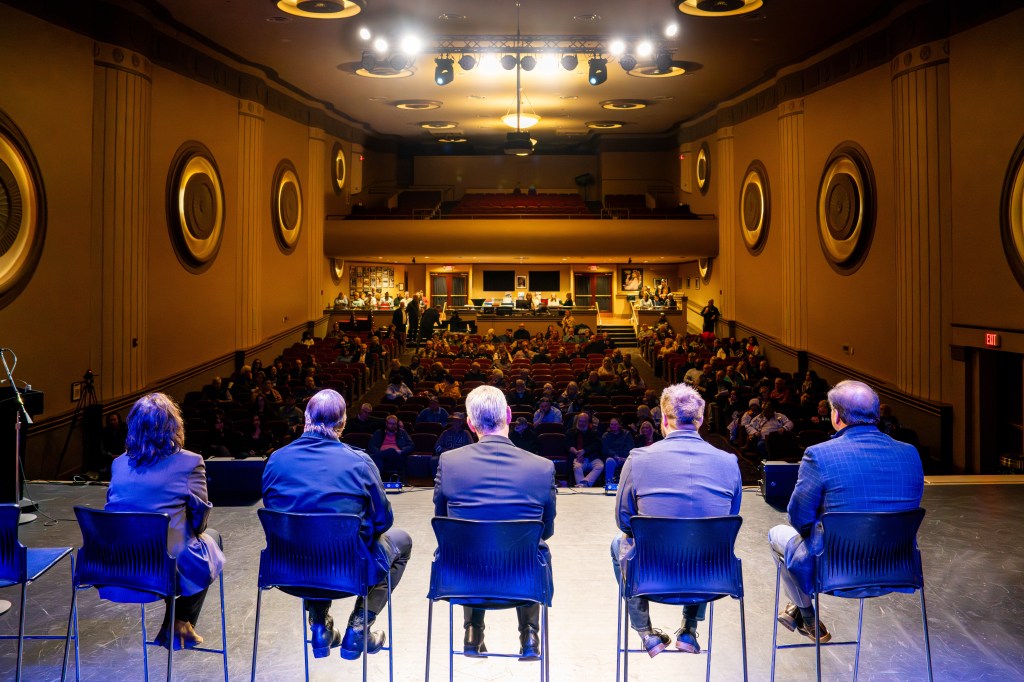
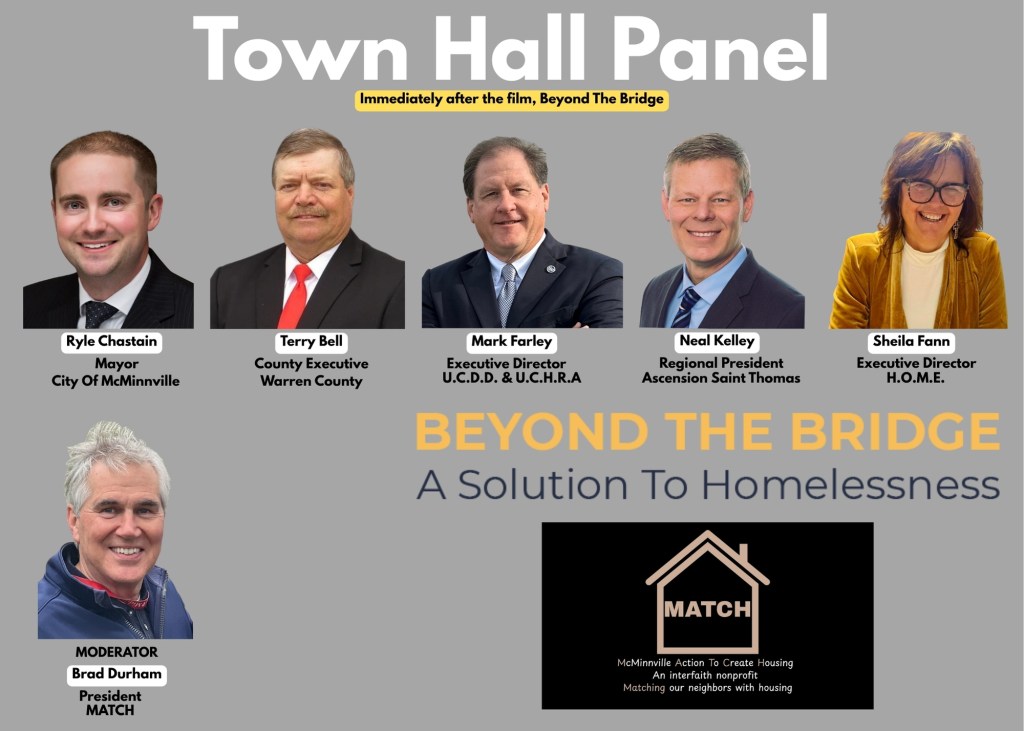
The Town Hall Meeting featured City Mayor Ryle Chastain, County Executive Terry Bell, UCDD/UCHRA Executive Director Mark Farley, Regional President of Ascension Saint Thomas Neal Kelley, and Sheila Fann, the Executive Director of HOME. I served as the moderator in my role as president of MATCH. Ninety percent of the questions came from the audience of 250 people.
ROUNDTABLE
The clear message from the Town Hall Meeting was that the mayor, county executive, executive director of UCDD/UCHRA, and the regional president of Ascension were all interested in sitting at a roundtable to develop and implement a public policy for creating permanent supportive housing. MATCH successfully advocated for permanent supportive housing in a forum that was free and open to everyone in McMinnville.
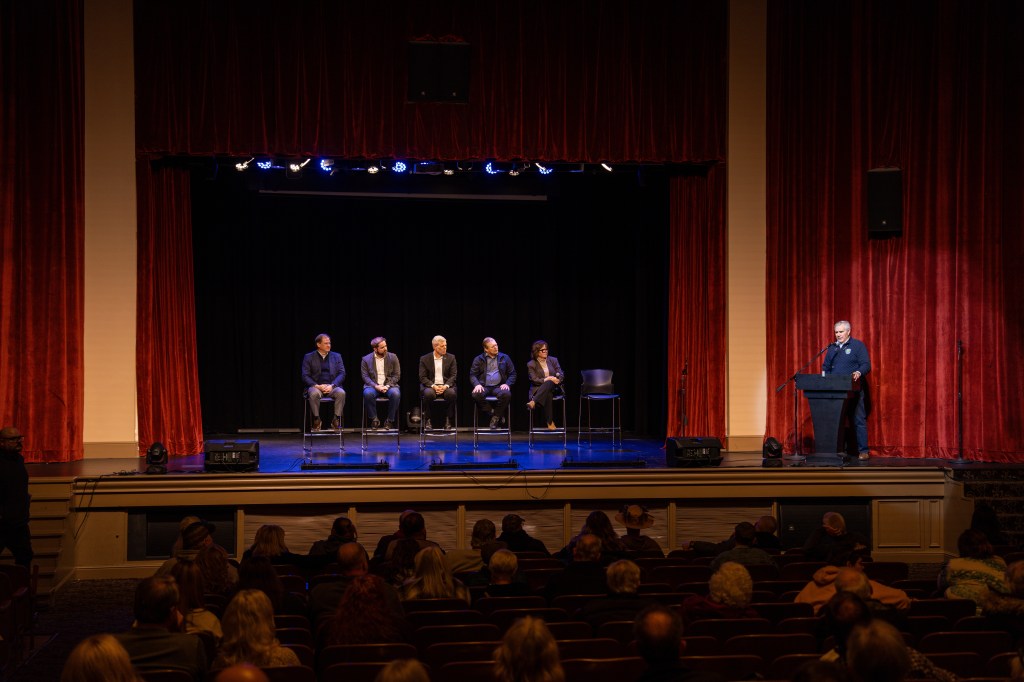
Town Hall Meeting after Beyond The Bridge. Panel and Moderator.
SPONSORS – SUPPORTERS
Our presenting sponsor, Ascension Saint Thomas River Park, donated $10,000 to help us create awareness and foster community involvement. Other sponsors included Ben Loman Connect, Security Federal Savings Bank, Youngblood and Associates, The Local, St. Matthews Episcopal Church, First United Methodist Church, the Southern Standard, and over 100 private citizens. Roland Advertising provided free billboard promotion for the event.
TWO OTHER POINTS OF FOCUS
MATCH has two other major focuses: resource management and program development. These are issues we wish to discuss at the roundtable with elected officials, regional and local service providers, business leaders, and private citizens. We have met individually and as a group with our police chief, the sheriff, the District Attorney, public defenders, and judges to discuss collaboration in addressing the disproportionate burden our unhoused neighbors create in these areas. There is a term often used to describe the pattern that the homeless follow—from hospitals to law enforcement, to courts, and then to jail—known as “frequent fliers” or “frequent users.”
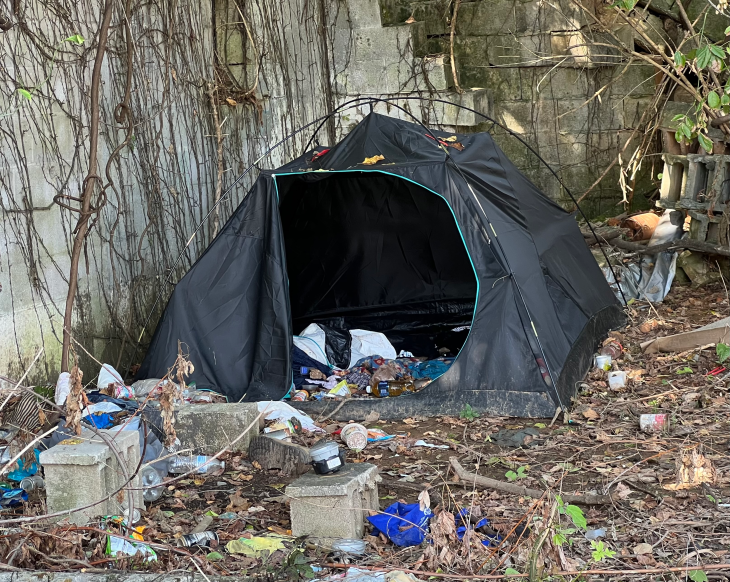
Tent in Downtown McMinnville during the past two years…
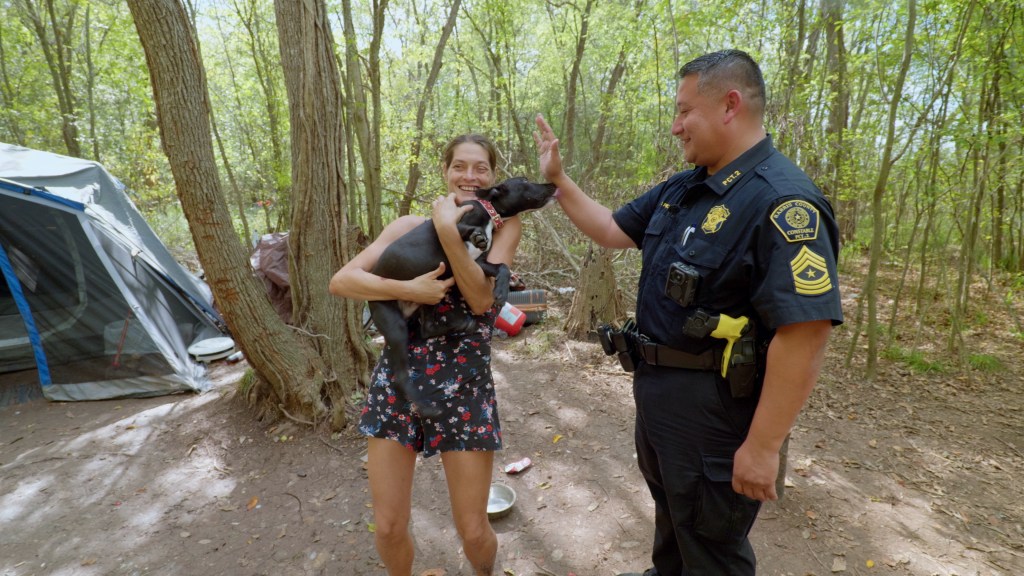
Scene from Beyond The Bridge – Houston police outreach worker to the homeless.
CONSERVE PUBLIC RESOURCES
MATCH aims to conserve limited public resources by leading our homeless frequent users from this cycle by helping them transform into permanent supportive housing. To achieve this, we need to manage funding resources at the local, regional, state, and federal levels to develop full-time staff who can assist the homeless in navigating their way to permanent supportive housing.
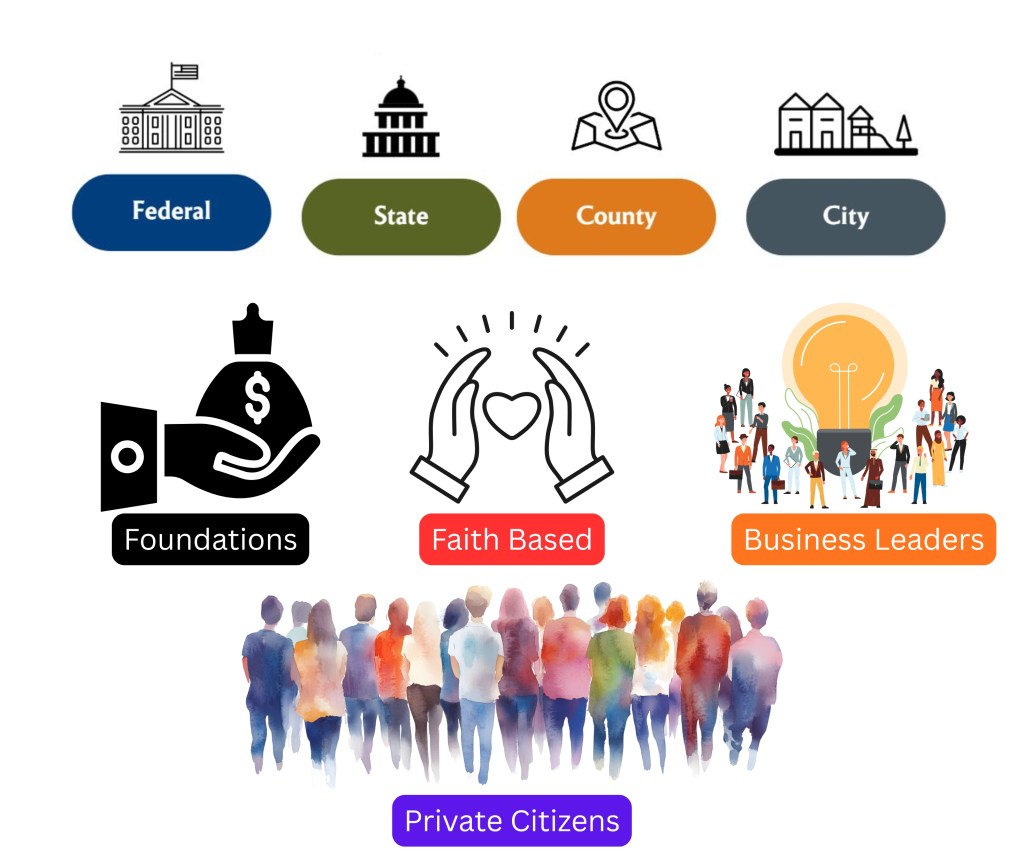
Various levels of funding to support permanent supportive housing.
REPLICATE THE DOCUMENTARY FILM
If we had presented a great science fiction film like Star Wars by George Lucas and said we wanted to replicate the Rebel Base and Storm Troopers in McMinnville, you would think we were crazy! Yet, we showed a documentary film presenting an evidence-based positive solution to homelessness at the Park Theater and expressed our desire to replicate it in McMinnville.
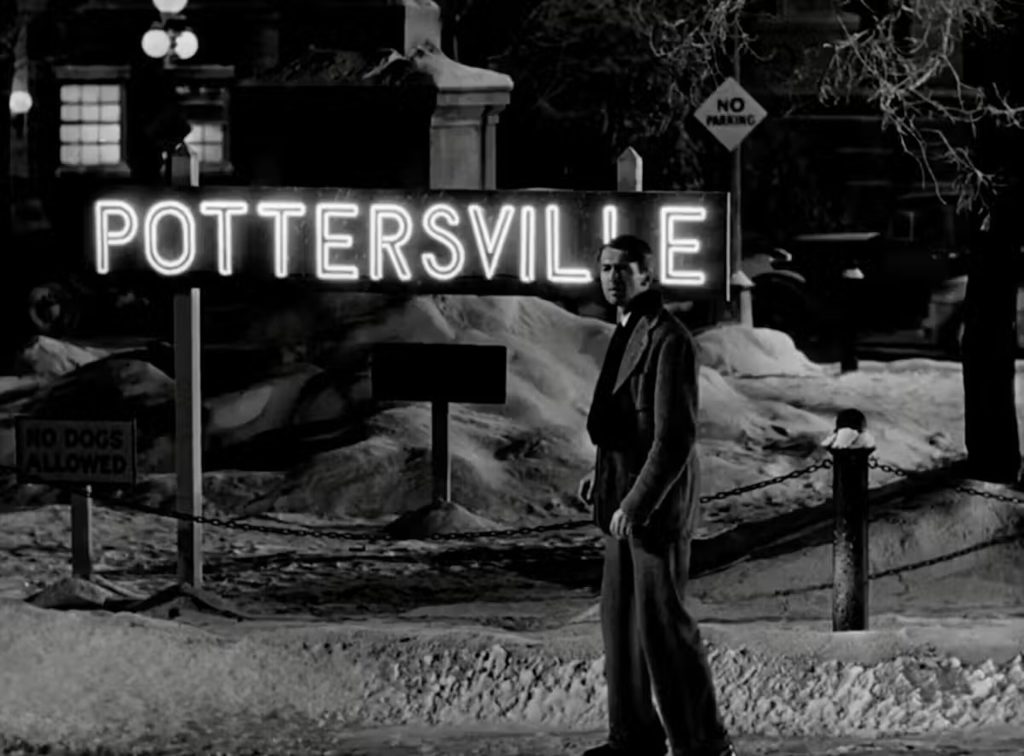
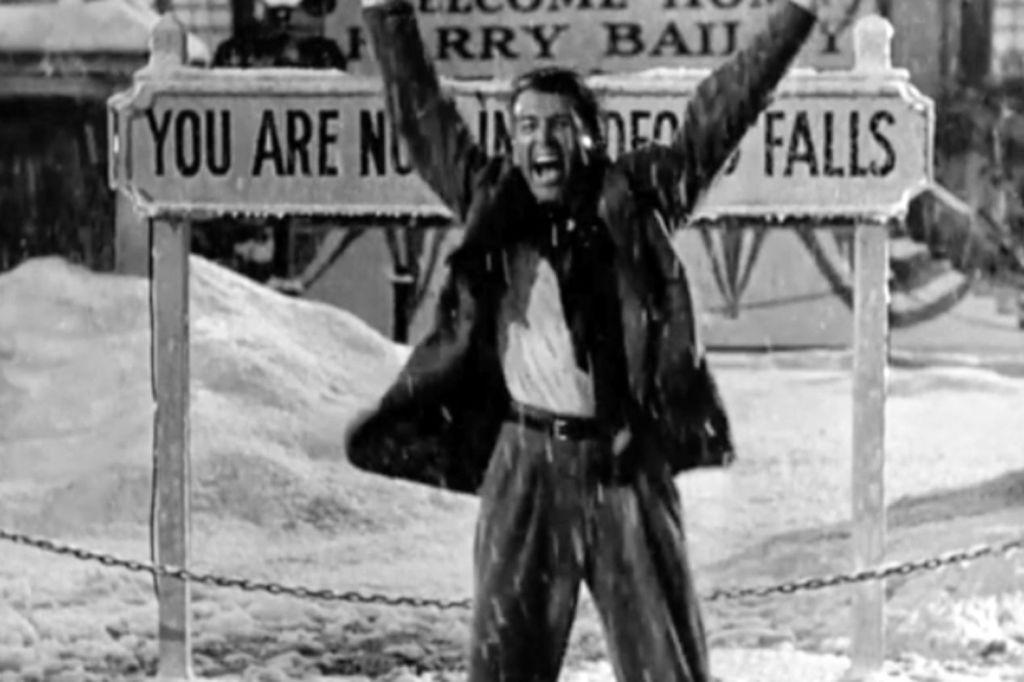
BEDFORD FALLS VS POTTERSVILLE
Let me use another film analogy: Frank Capra’s It’s A Wonderful Life, which many of us enjoy watching each Christmas. I am asking everyone throughout McMinnville and Warren County: Do you want McMinnville to be a Pottersville or a Bedford Falls?
CALL TO ACTION
There is something each of us can do to support the poorest of the poor in our community. You can become a positive advocate for permanent supportive housing, contribute your skills, resources, and compassion to help.
Watch this video and contact MATCH if you want to be part of the solution to homelessness in McMinnville by helping develop permanent supportive housing for our homeless neighbors.
-
BY BRAD DURHAM
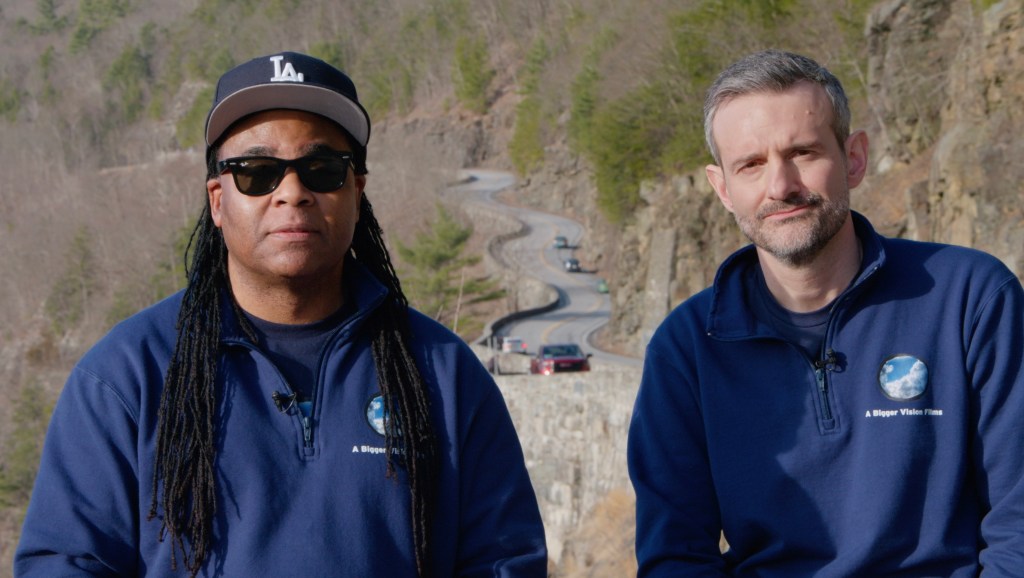
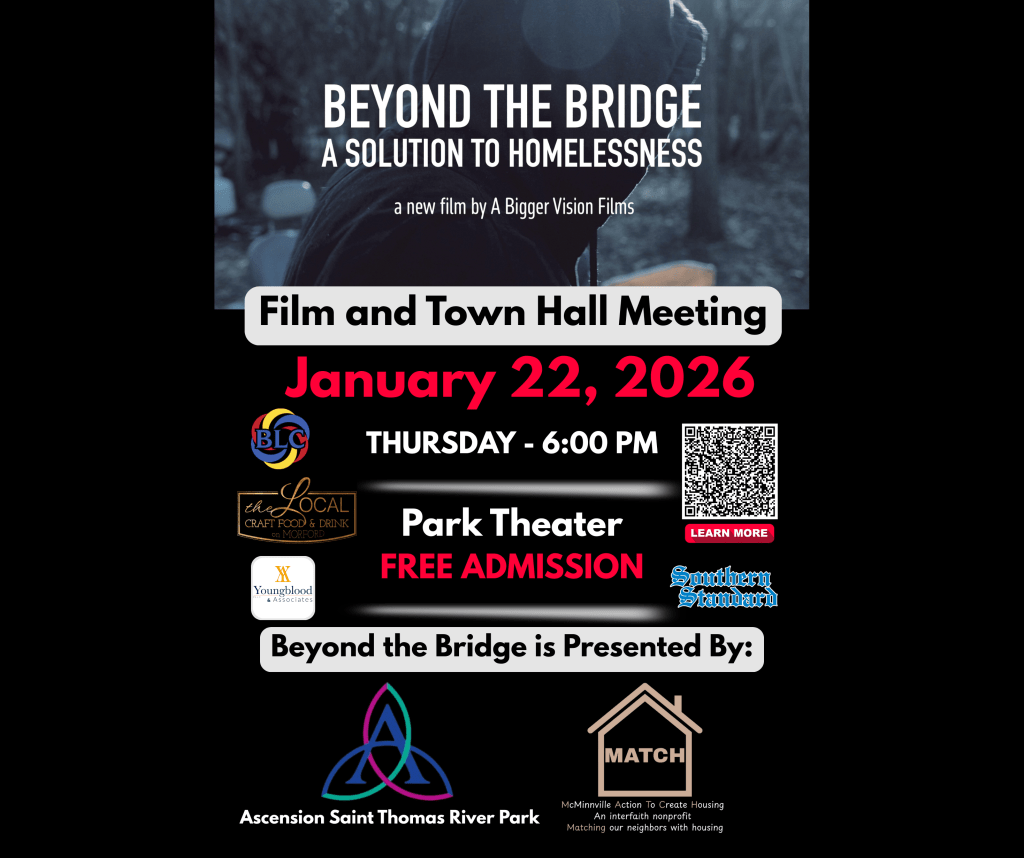
Left to right: Don Sawyer and Tim Hashko MATCH (McMinnville Action To Create Housing) is bringing the film, Beyond The Bridge to the Park Theater on January 22, 2026. A Town Hall Meeting will take place immediately after the film. The filmmakers, Tim Hashko and Don Sawyer will be in McMinnville the day of the film and at the screening for various meetings. This interview serves as an introduction to them and their experiences in making the film.
BD Newsletter: Why did you make the documentary film, Beyond The Bridge?
Tim Hashko and Don Sawyer: Most documentaries about homelessness focus on how sad, lonely, and what a pathetic state people experiencing homelessness are in. This is true. But what needs to happen to fix the situation? We thought that if America can successfully keep a space station orbiting the earth for many years now, America can also successfully solve homelessness. We just didn’t believe solving homelessness is beyond the capability of this country, so we set out on a journey to discover the solution for ourselves.

BD Newsletter: What is the most common reason towns have not developed a strategic plan to solve homelessness? What is the common denominator in these towns?
Tim Hashko and Don Sawyer: There are two very common reasons communities struggle when it comes to creating an effective strategic plan to address homelessness. First, in most communities, there is a deep, unspoken belief that homelessness is an intractable problem that can never be solved. If you don’t believe you can solve the problem, then you will never solve the problem – a fundamental principle when pursuing any goal. Second, most communities (sometimes inadvertently) set their homeless response systems up to serve their local government, service providers and the housed public. In other words, the welfare of these groups are prioritized over the welfare of the people experiencing homelessness. For many communities the priority of their homeless response system is to get the homeless population out of sight and out of mind instead of meeting them at their need and leading them out of homelessness – when this is the objective of a homeless response system, it will always end in failure.
Have you seen a difference in the approach and resources committed to solving homelessness in small and large cities? In other words, have you seen small towns practice the same plans large towns use?
Tim Hashko and Don Sawyer: The scale is different, but the fundamentals are the same. Large cities tend to have more resources and more complex systems, while small towns often assume those models do not apply to them. What we found is that the core strategies that work in big cities also work in small communities when they are adapted to local conditions. In fact, small towns often have an advantage because relationships are closer and change can happen faster.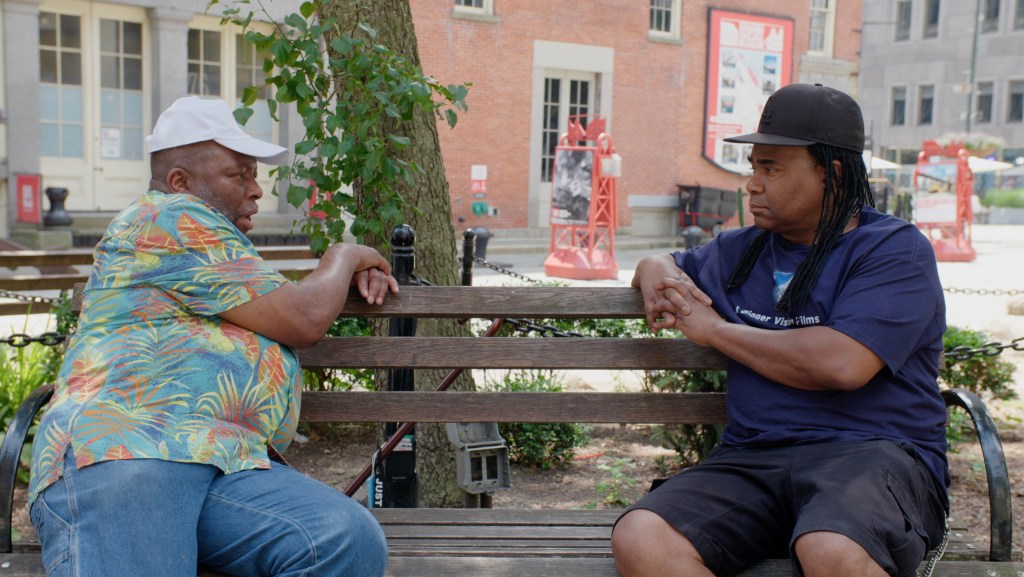
Don Sawyer interviewing Rob Robinson, a prominent
community organizer, activist and formerly homeless.BD Newsletter: What is the number one reason you want people to see your film?
Tim Hashko and Don Sawyer: To change perspectives on people experiencing homelessness, and to learn why homelessness exists in this country. Then, we want people to see that homelessness is solvable by deploying the blueprint we show in the film, which applies to every community no matter how big or small a community is. Ultimately, we’d like people to understand that if they want different results in their efforts to address homelessness, they will have to band together as a community to make it happen – everyone has a role.
BD Newsletter: Why should a private citizen, service provider, business person, and elected officials see this film? On the other hand, is there anyone in McMinnville who should not see Beyond The Bridge?
Tim Hashko and Don Sawyer: Homelessness affects the entire community, and solutions require participation from everyone. The film gives private citizens a clearer understanding of what actually works, service providers a framework for stronger collaboration with other organizations, business leaders insight into how they can help, and elected officials examples of effective leadership grounded in results rather than theory.There is no one who should not see this film. It is not political and it does not promote a single ideology. It presents evidence, lived experience, and real world solutions, and invites the whole community into a more productive conversation.
Please plan to attend this event—admission is free! By reserving a ticket, you’ll secure your spot and receive a convenient reminder, ensuring you don’t miss out on this exciting experience. Click on the link below to reserve your ticket today.
-
By Brad Durham
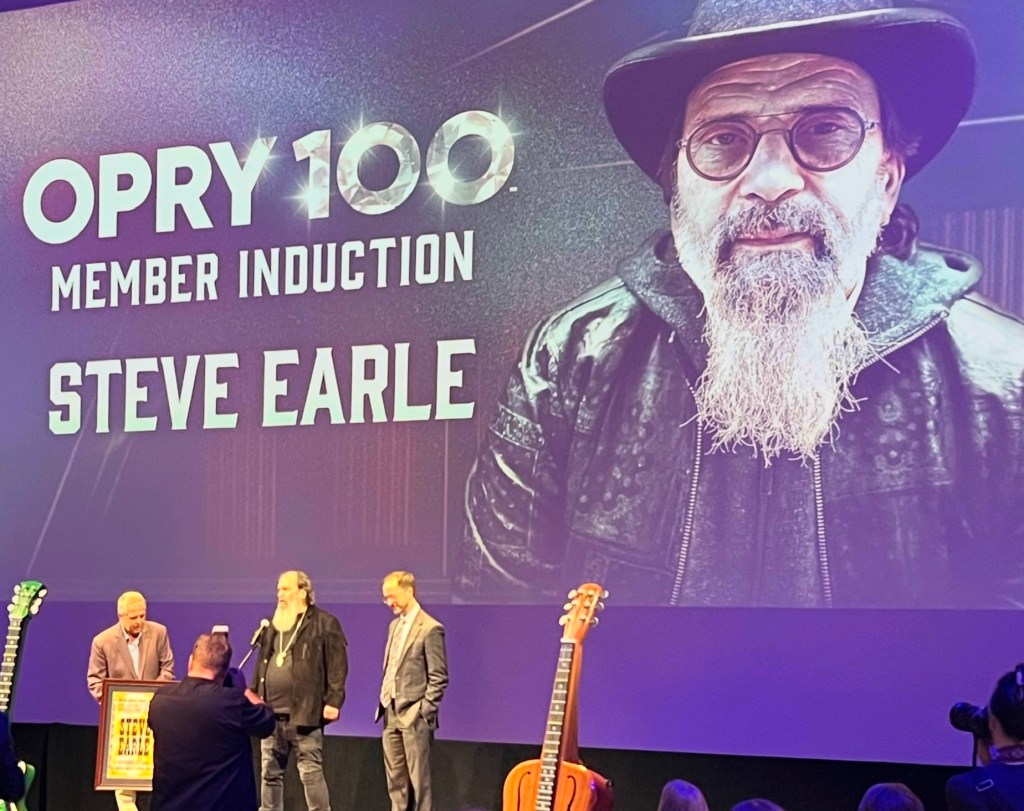
Left to right: State Representative Bo Mitchell, Steve Earle and Mayor Freddie O’Connell
A Personal Reflection
My connection to the Grand Ole Opry is a story woven with irony, chance, and profound influence.
The Grand Ole Opry was a place my uncle Hal Durham dedicated four decades of his life to — first as an Emcee at the historic Ryman Auditorium downtown, as Program Director at WSM Radio, and ultimately as General Manager when the new Opry House opened in 1974.
Through my uncle, I was inadvertently introduced to Steve Earle by T-Bone Burnett, an encounter that significantly altered the course of my life. That chance connection opened doors I never anticipated, reaffirming how moments of irony and chance can shape our futures in unexpected and meaningful ways.
The Beginning of a Quest
The idea to organize a benefit concert first took shape in 1986, during my time working at the Multi-Service Center for the Homeless with the Cambridge Department of Human Services. My role was to help place homeless families into permanent housing. At that time, Philip Mangano, the director of the center, had brokered a deal with Harvard University to host a benefit concert at Harvard Stadium.
Around the same period, T-Bone Burnett had just released a new country album, which gave me an idea. Eager to bring high-profile artists to the event, I mentioned this to my uncle, Hal Durham, encouraging him to invite Burnett to the Grand Ole Opry. My ultimate plan was to surprise Burnett at his appearance with a request for him to reach out to Pete Townshend of The Who and other renowned artists, to perform at the benefit concert and help make a difference.
The Irony Unfolds
On September 17, 2025, I was in the audience as Steve Earle was inducted into the Grand Ole Opry — a moment that felt almost surreal. It was on that very stage in 1986 that I first became aware of Steve Earle.
After weeks of persuading my uncle to book T-Bone Burnett, he unexpectedly called one day. He asked if I wanted T-Bone Burnett to appear at the Opry. He said, “If you want him to play, he will. If you don’t, he won’t.” I was stunned by such an offer and quickly said yes, hoping Burnett’s appearance might help us gain access to major acts.
Fast forward to Burnett’s performance at the Opry in 1986. My uncle introduced us backstage. I vividly remember: T-Bone Burnett had asked my uncle why he hadn’t asked Steve Earle to perform at the Opry. At that time, I had no idea who Earle was, but I made a mental note to check out Steve Earle’s music.
That’s Show Business
That night at the Opry, my uncle pointed to Dolly Parton’s sister and said, “See that woman over there? That’s Stella Parton. She’s been asking me to put her on the Opry for six weeks. She asked if Burnett was my nephew.” Clearly, T-Bone Burnett wasn’t as well-known in 1986 as he is today.
Afterward, T-Bone and I went out to eat, and he promised to speak with Pete Townshend and get back to me. Unfortunately, he never returned my calls. That’s show business — you win some, you lose some.
The Dream Became Reality
A few weeks later, I was back in Boston, and to my surprise, Steve Earle was performing at the Paradise Club. I attended his show and was blown away by his performance. He had just released Exit 0, the follow-up to Guitar Town. My curiosity about Steve Earle grew even more after witnessing his live set. I shared my plan to organize a benefit concert for the homeless with him. Without hesitation, he agreed to participate. That moment created a great positive visitation of energy in my life.
Steve Earle profoundly influenced my life. His generosity in performing benefit concerts inspired me to start Fearless Hearts for Homeless Children in Boston. His support turned my dream of using music to help the homeless into reality. Steve’s active participation helped me find my path as an advocate for the homeless.
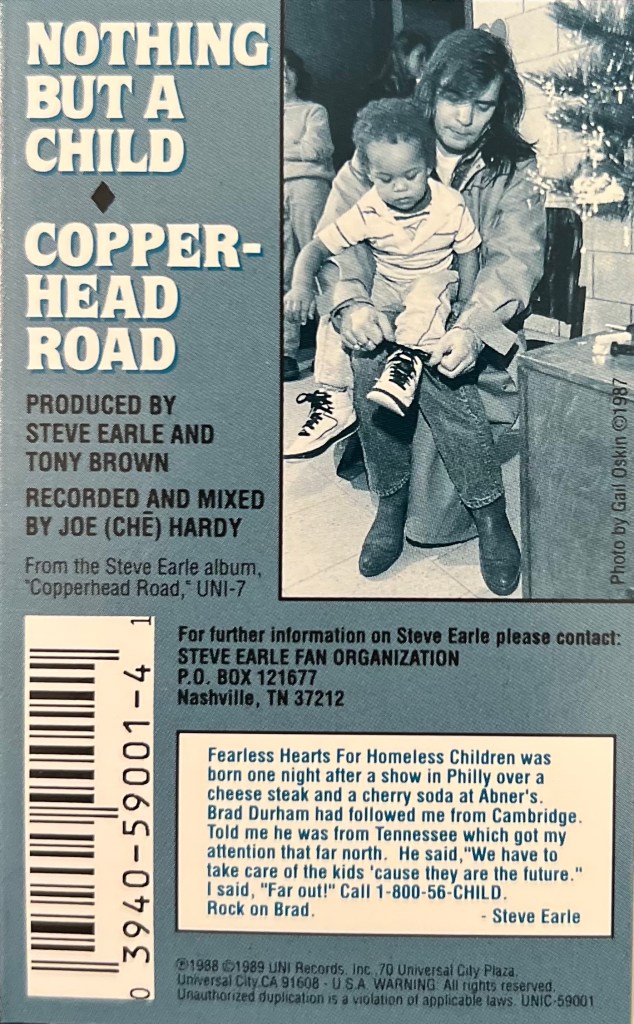
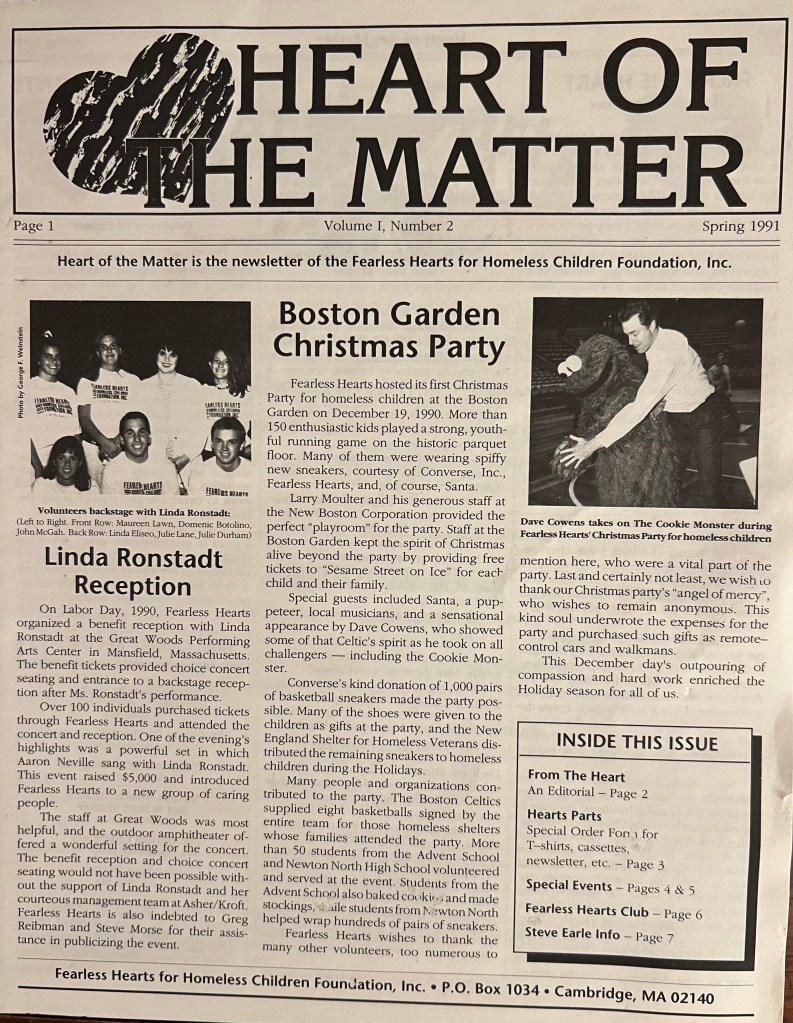
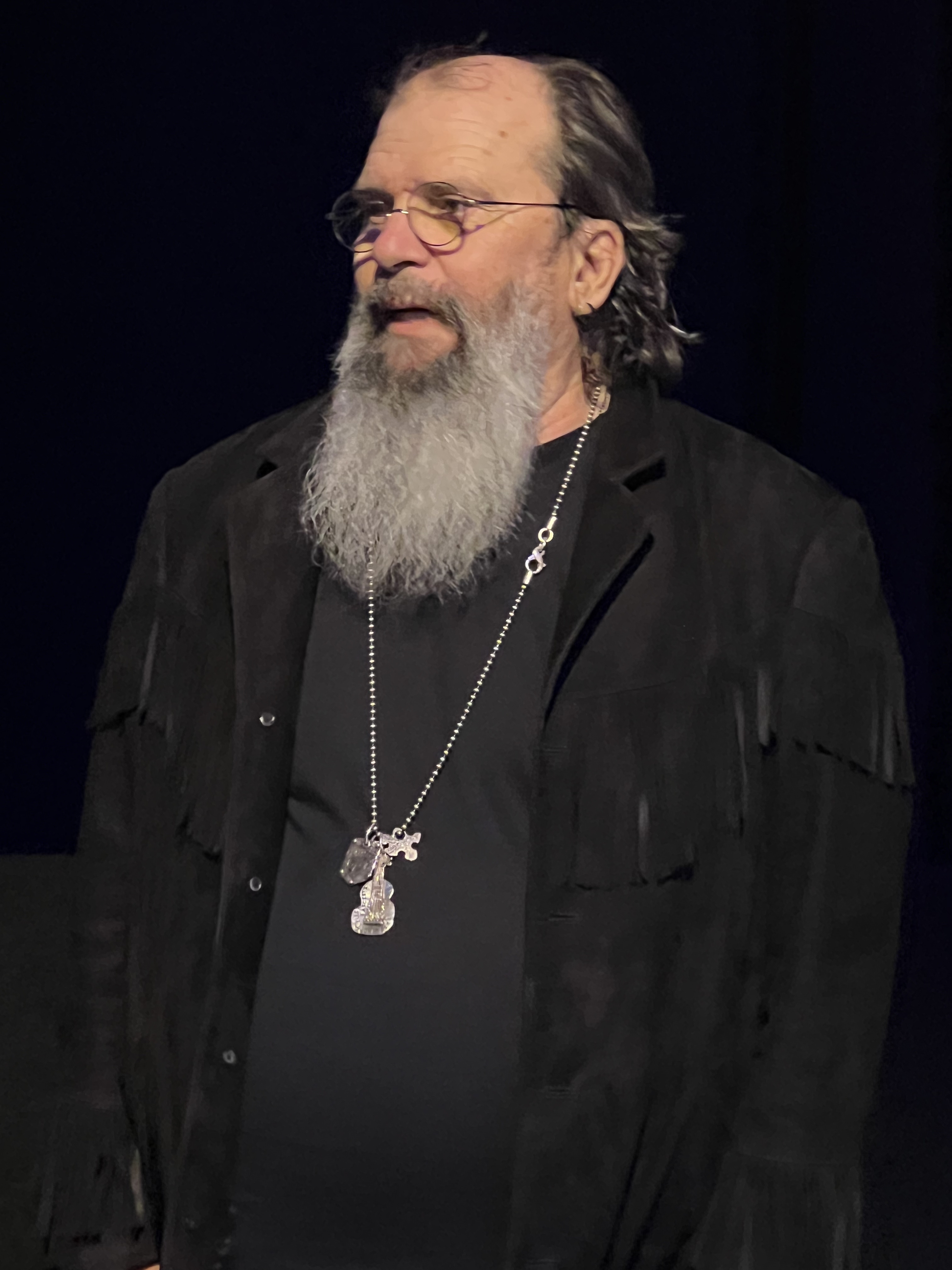
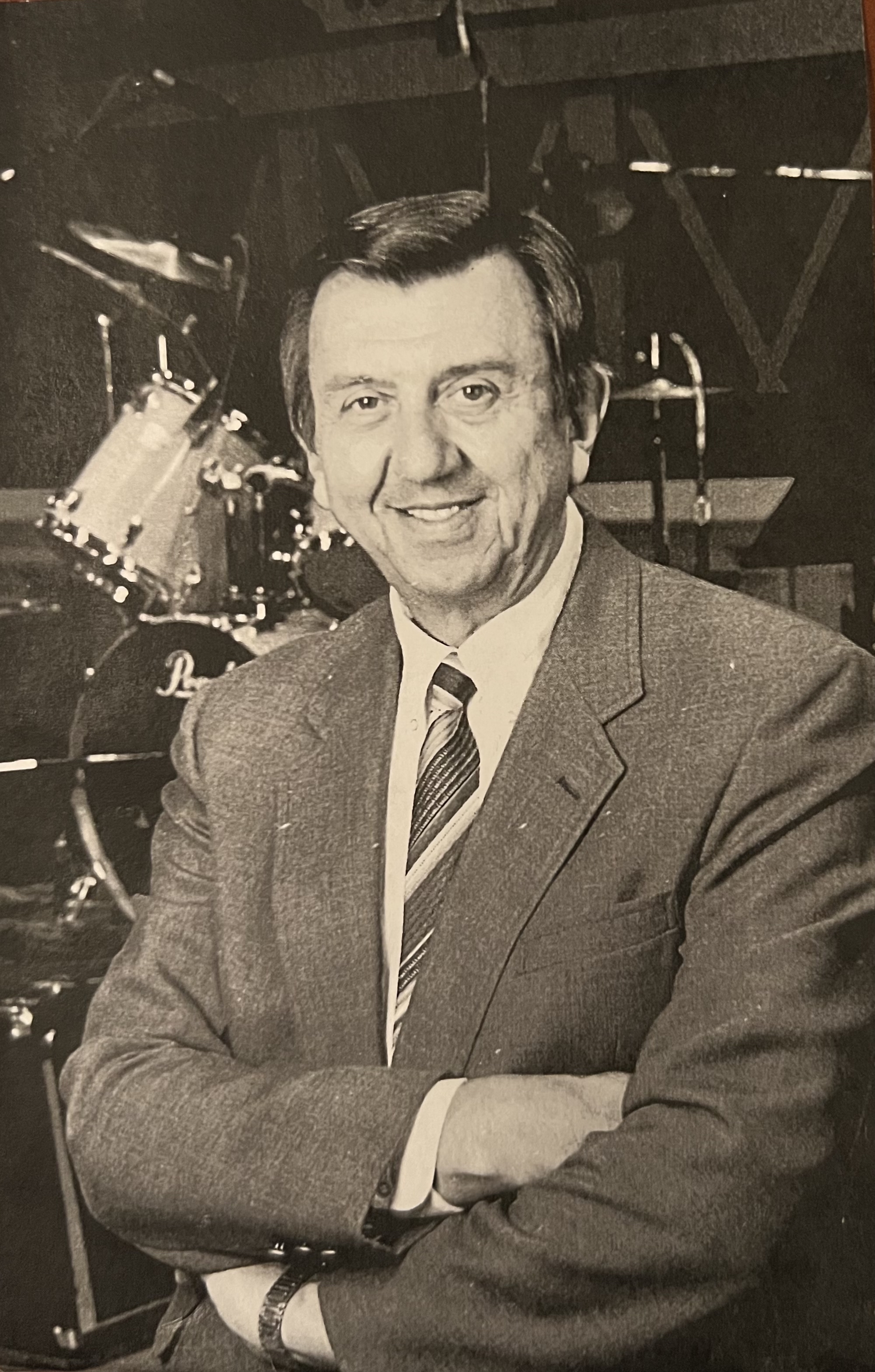
Left: Steve Earle; Right Hal Durham
Irony and Influence
My Uncle Hal had a major impact on my life. I had the honor of delivering his eulogy, during which I stated he was always the smartest person in the room—though he never needed to prove it. His intelligence shone through naturally, with grace and dignity. He was a steady, rational voice during some of my traumatic early years.
Steve Earle is a passionate and determined man. He has composed many outstanding songs, and on September 17, 2025, the Grand Ole Opry became even better by inducting him as a member.
Last night, two men—Hal Durham and Steve Earle—occupied my thoughts at the Grand Ole Opry. That, truly, is irony.
-
AUTHOR, STREET CHAPLAIN, ACTIVIST & NONPROFIT LEADER
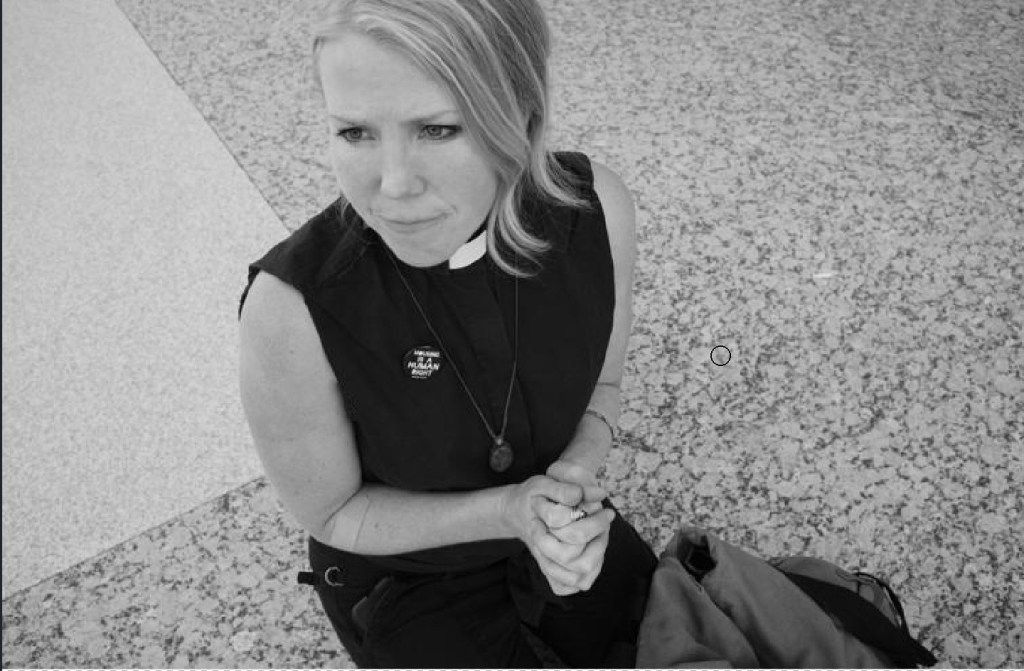
LINDSEY KRINKS BY BRAD DURHAM
Recently, Lindsey Krinks visited McMinnville and spoke to a group of people working with unhoused individuals in the community. Not only did Krinks travel 70 miles to reach McMinnville, but she has traveled a great distance in her lifetime—going from South Carolina to David Lipscomb University, then to Vanderbilt Divinity School. She has made her way from Tent City to Otter Creek to Legislative Plaza. Throughout her journey, she has undergone transformative experiences rooted in a spiritual quest.
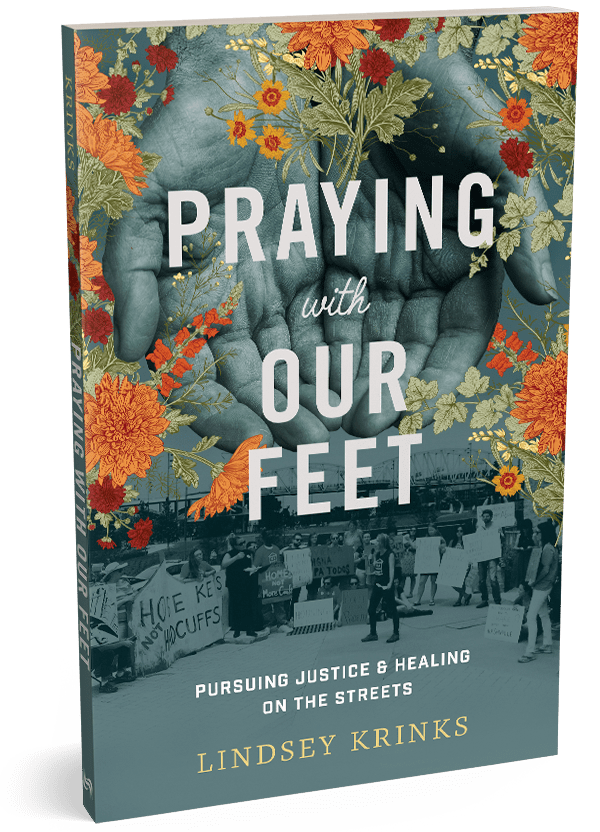
After inviting Lindsey Krinks to meet with us, I read her book, Praying with Our Feet. As I read her autobiography, I couldn’t help but think of Joseph Campbell’s Hero’s Journey. The hero embarks on an adventure beyond the ordinary and returns with a message. Lindsey’s story mirrors this: she has faced moments of almost breaking down physically, mentally, and spiritually—yet she persevered and was transformed. Her drive to serve the poorest of the poor—the homeless—has fueled her journey.
For me, reading Lindsey’s book felt like uncovering stories of saints such as Saint Francis of Assisi and Mother Teresa—people who led lives of profound transformation and became signposts along the journey of imitating Christ.
Lindsey Krinks is the real deal—she is a street chaplain, author, activist, and nonprofit leader. She is the co-founder of Open Table Nashville. I’m grateful she visited us to share her story and an excerpt from her book, Praying with Our Feet.
After the meeting, I asked Lindsey a few questions. The following is part of that interview during lunch at The Local in McMinnville.
BD NEWSLETTER: What motivated you to work with the homeless?
LINDSEY KRINKS: Growing up, members of my family—their experiences with homelessness—shaped my perspective. My cousin and uncle experienced homelessness, and I initially thought it was a personal decision on their part. But when I got to college in Nashville, I realized that poverty is much more widespread than individual choices. I started re-reading the Hebrew prophets and the Gospels, and a conviction grew in me: if we are truly followers of Christ, we must go where Jesus went. We are called to the margins—to love, to extend our hand, share food, and provide shelter. And if we take Matthew 25 seriously, we are also called to find Christ there.
Understanding how widespread and systemic the problem is—beyond personal failures—has deepened my call to be the hands and feet of Christ. Compassion at this larger level is justice. That’s a significant part of what pulled me into this work. But once I built relationships with people on the street, I was amazed by who they are and what they had survived. After forming those relationships, there was no way I could go back to anything else. It has been the most raw, real, and transformative experience I’ve ever been part of.
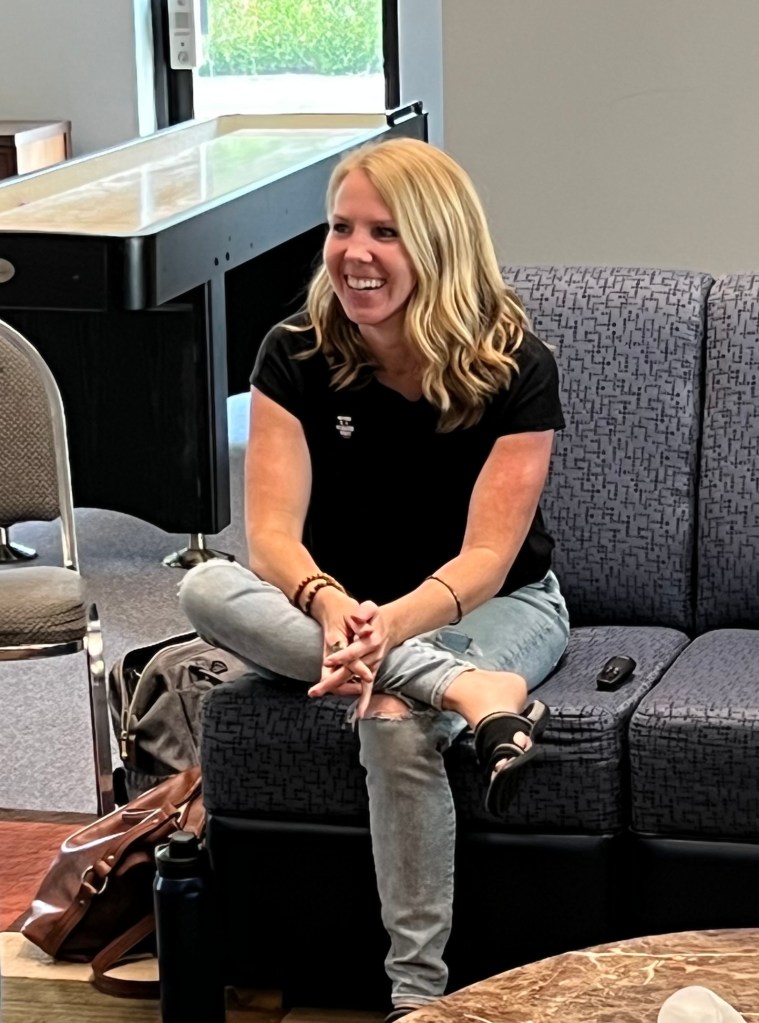
LINDSEY KRINKS SPEAKING IN MCMINNVILLE, JUNE 20, 2025 BD NEWSLETTER: What influenced you to attend Vanderbilt Divinity School after graduating from David Lipscomb University?
LINDSEY KRINKS: I started becoming involved with issues of homelessness and affordable housing during my time at Lipscomb. Influences included dedicated teachers, books I was reading, and a service club that truly changed me.
I was introduced to authors like Shane Claiborne (The Irresistible Revolution), Dorothy Day (The Long Loneliness), and saints such as St. Francis and Mother Teresa. Those are the things that started working on me as I graduated from Lipscomb as a young adult and thinking about what I wanted to do in the world.
I met Charlie Strobel, founder of the Room at the Inn and homeless services in Nashville—someone I considered a literal saint living among us.
I took a few years off after college to work on the streets. I spent two years with AmeriCorps in a homeless outreach program within a mental health agency. The questions of faith, suffering, and liberation kept haunting me. I wanted to explore these issues theologically, which led me to Vanderbilt Divinity School. I knew the school had the tools I needed, and I also had gained tools at Lipscomb. Vanderbilt welcomed me warmly. As a young Church of Christ member, I had a phenomenal experience—meeting others wrestling with Scripture, reflecting deeply, and sharpening my faith and commitments.
BD NEWSLETTER: In your book, you mention a Vanderbilt professor who asked what you were running from. Could you describe the context of that question and how you found the answer years later?
LINDSEY KRINKS: During my first or second year at Vanderbilt, I was part of a small group discussing pastoral care. I was exhausted, burning the candle at both ends—working at shelters, trying to help everyone around me. It’s common for “fixers” to go full throttle…but if done excessively, it’s unhealthy.
My professor noticed I was doing good work but not in a sustainable way. After I expressed my exhaustion, she asked, “What are you running from?” I was defensive and replied, “I am not running from anything.”
It took digging into therapy to realize and say, “Oh, I keep falling into this over-functioning fixer role because of the family system dynamic that was ingrained in me. I was also struggling with survivor’s guilt. I work on the margins and was seeing people on the streets dying from preventable causes. Globally, I was seeing poverty on an enormous scale. Looking at my own family system, I’ve lost cousins and uncles—one of my uncles died on the street and another uncle died after getting out of prison. I’ve watched family systems implode. I had been navigating survivor’s guilt. I believed that if I’ve survived these toxic systems, then I had to try to pull everyone out of these systems.
We see this with war veterans and people who survive childhood trauma. Once I got to the root of that and started to name it, I could begin to respond from a place of love rather than guilt. Love is a deeper well—one that says I am committed to working toward a world where everyone is whole and can thrive.
Yes, I was taken aback by that question from the professor. When someone sticks a finger in our wounds, removes the Band-Aid, and says, “It’s here”—ouch! I encourage all of us to do that kind of work.
BD NEWSLETTER: There’s a point in your life that you describe in your book when you decided to dedicate your life to working with the poor. Can you describe how that commitment manifested?
LINDSEY KRINKS: I’ve always been drawn to healing work. My dad was a pediatrician, and healing felt like a natural calling—it was ingrained in me. I initially wanted to pursue physical therapy in undergrad because the medical field made sense to me. I also wanted a comfortable life, and I saw how some family members worried about finances, so I wanted to avoid that stress.
It was through rereading the prophets and the gospels—holding up examples like Dorothy Day, St. Francis, Mother Teresa, Martin Luther King, and others—who leaned into discomfort to become personally transformed and participate in larger societal change through faith. Once I started working on the street, met Charlie Strobel, and connected with friends on the streets through the Nashville Homeless Power Project, everything fell into place.
There’s a quote I encountered in college that resonated deeply: You are not called to be comfortable; you are called to be faithful. That shook me up.
My faith drew me toward the margins. That is where I discovered that God didn’t need to be taken there – God was already present in the tents and alleys, the underpasses and camps. As Jesus says in Matthew 25, you will meet him on the margins: “When I was thirsty, you gave me water. When I was hungry, you gave me food. When I needed clothing, you clothed me…
There are these passages in scriptures. It was absolutely a calling.
You can order Lindsey Krinks’ book, PRAYING WITH OUR FEET here: https://bakerbookhouse.com/products/235899
You can learn more about Lindsey Krinks at her website: https://www.lindseykrinks.com

LINDSEY KRINKS -
By Brad Durham
Upcoming Events to Support Our McMinnville Community
The public is invited to attend and lend your support to two important upcoming events focused on assisting our homeless neighbors.
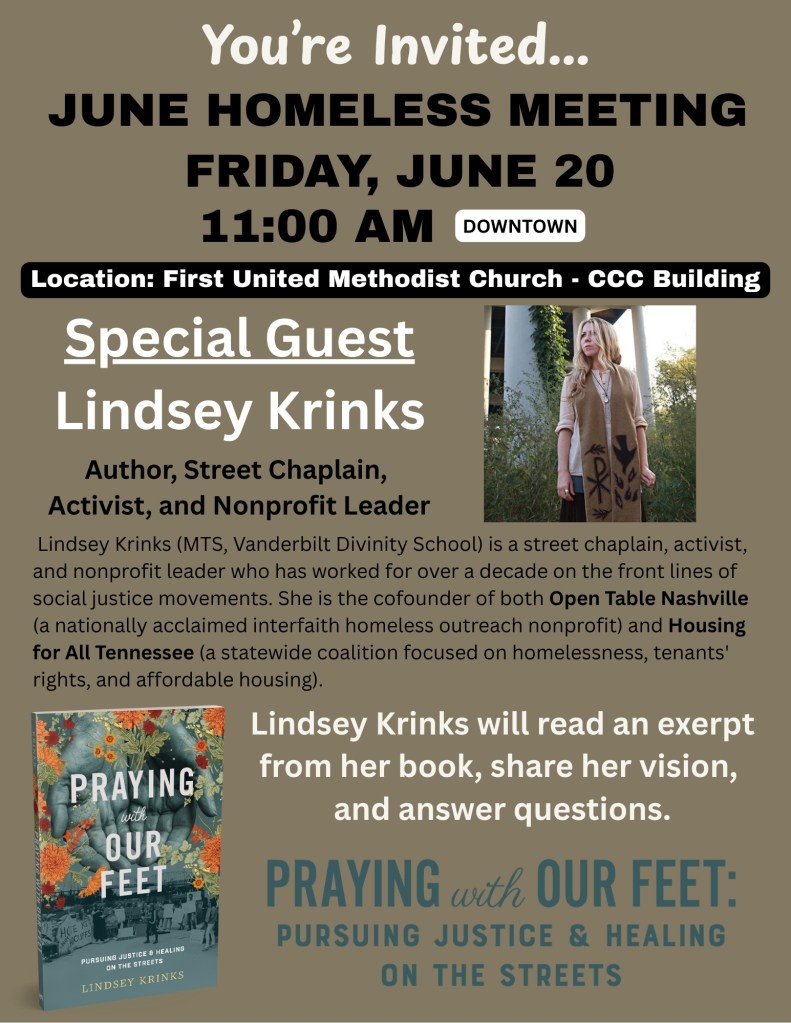
Special Guest Event with Lindsey Krinks
FREE ADMISSION
Date: Friday, June 20, at 11:00 AM
Location: Christian Community Center, First United Methodist Church DowntownLindsey Krinks is an author, street chaplain, activist, and nonprofit leader who works closely with the unhoused community in Nashville. She will be reading an excerpt from her book Praying with Our Feet, sharing her vision for activism, and answering questions. This event is part of a regular meeting of individuals working with our homeless neighbors in McMinnville.
Benefit Car Wash to Support Our Homeless Neighbors
Tickets: $10 in advance; $15 Day of Car Wash
Date: Saturday, June 21, from 8:00 AM to 5:00 PM
Location: First United Methodist Church Downtown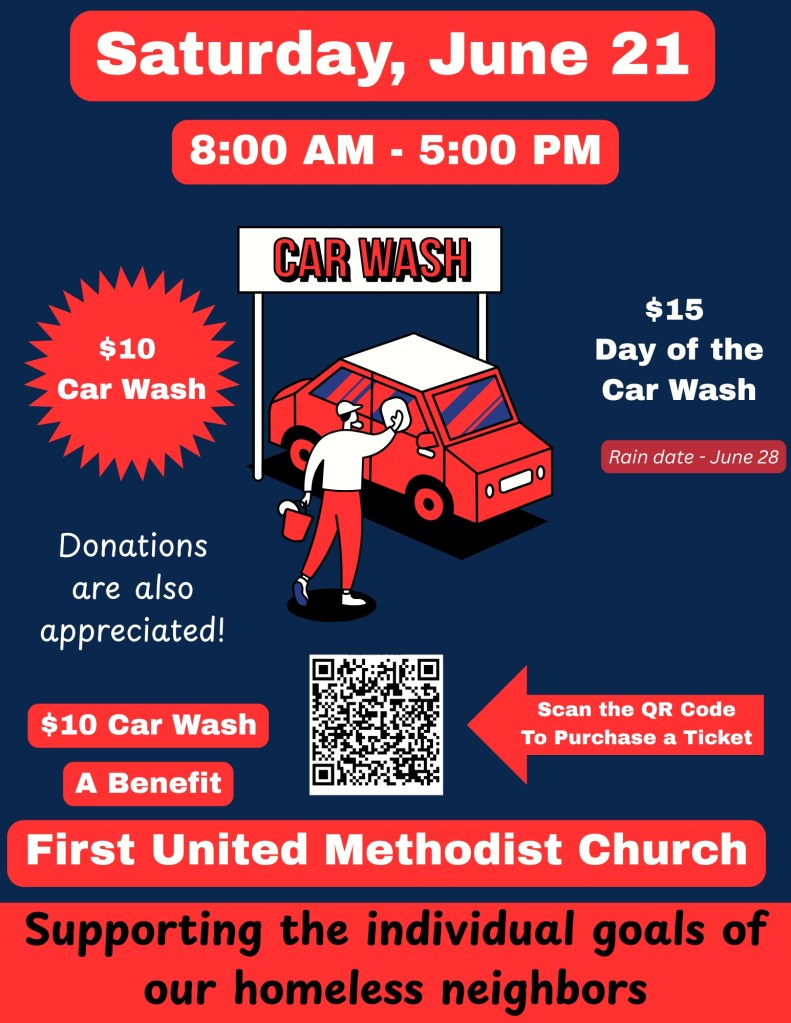
Join us for a car wash fundraiser to benefit our unhoused neighbors. Tickets and donations can be purchased in advance through the link below. All proceeds support the personal goals of those working on the car wash and aid our community.
LINK TO PURCHASE CAR WASH TICKETS AND/OR MAKE A DONATION:
Please share this newsletter with family and friends.
For questions, comments, or suggestions, please contact Brad Durham at (615) 838-4426 or via email at brad412@benlomand.net.
Thank you for your support!
-
By BRAD DURHAM
PROLOGUE
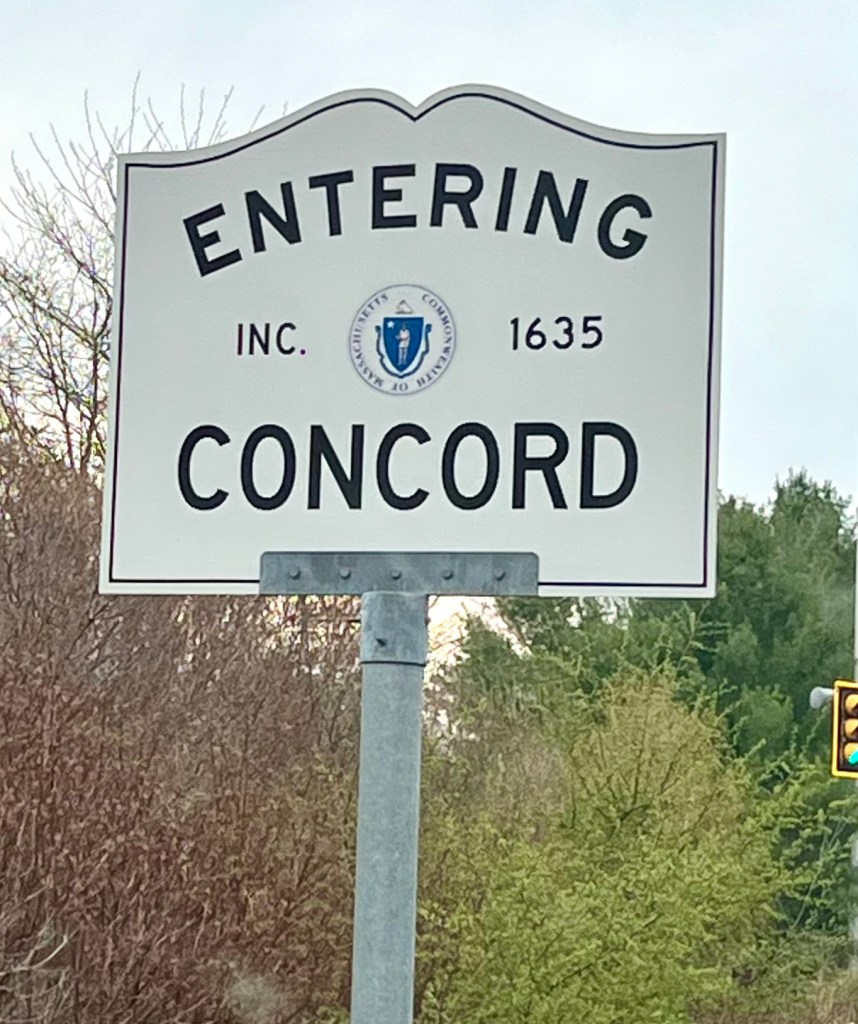
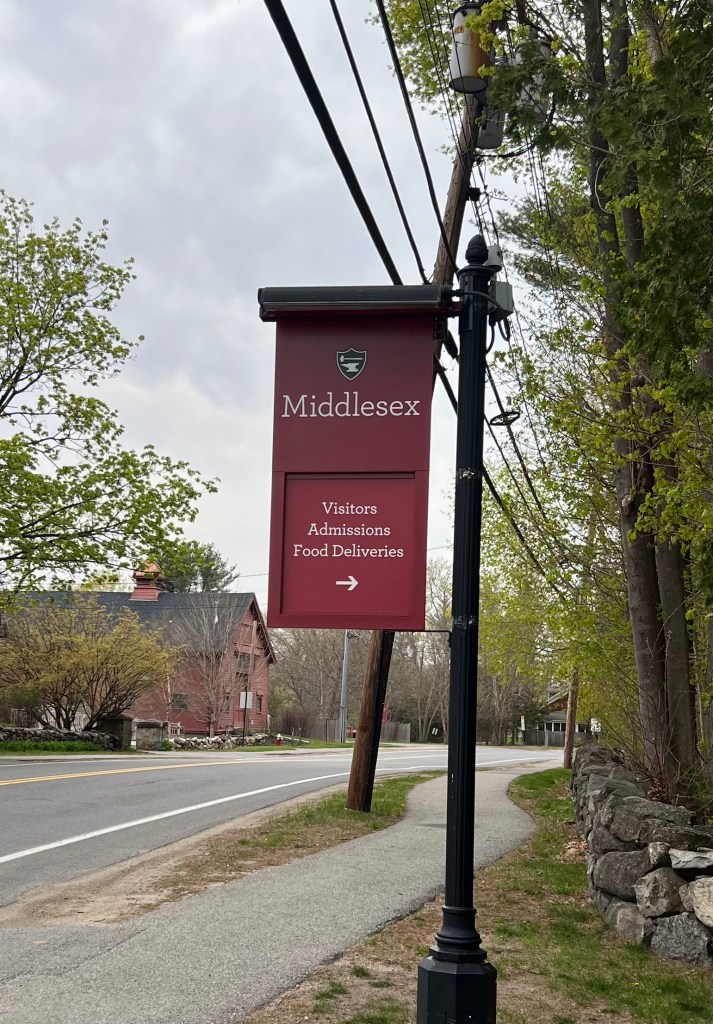
Over the last 26 years, I’ve had the privilege of collaborating with numerous coaches, assisting them in raising funds for their high school teams. At a coaching conference, I discovered a remarkable book titled COACHED FOR LIFE. This inspiring narrative recounts how two dedicated teachers guided and molded 37 young men during a championship season, leaving a lasting impact on their lives. While the fall of 1974 at Middlesex School didn’t boast a dream football team, we had a man who imparted lessons that extended far beyond the field—Brad Kingman’s legacy continues to resonate even after his passing.
A classmate, “I’ve not seen those guys in 50 years; why do I want to see them now!”
Everyone has his own reason to attend or ignore his 50th High School Reunion. My motivation was to see some friends I had not seen in many decades, and I had something pulling at me to be there. I was not sure what it was, but once I drove onto campus, it hit me…it was Brad Kingman. His spirit lives!
(Brad Kingman passed away on August 17, 2012: https://www.legacy.com/us/obituaries/wickedlocal-concordjournal/name/bradford-kingman-obituary?id=9486613)
u003cstrongu003eVideo of the circle in the middle of Middlesex’s campus.u003c/strongu003e Looking out over the Circle at the 50th Reunion, a basic question popped into my head, what is the purpose, the mission of Middlesex? I looked it up…
Middlesex School helps students find their promise through rigorous intellectual, physical, creative, and ethical education. We value integrity, kindness, inclusivity, excellence, and engagement in service of our community and the wider world.
MY PROMISE
The promise I made to myself about the 50th Reunion was to resolve my deep regret about breaking my word to Brad Kingman. The rigorous Middlesex education was clearly beneficial. The major ethical lesson that I should have learned at Middlesex eluded me for decades. I was out of alignment before I went to Middlesex, and as much as Brad Kingman and the school tried to guide me in the right direction, I resisted.
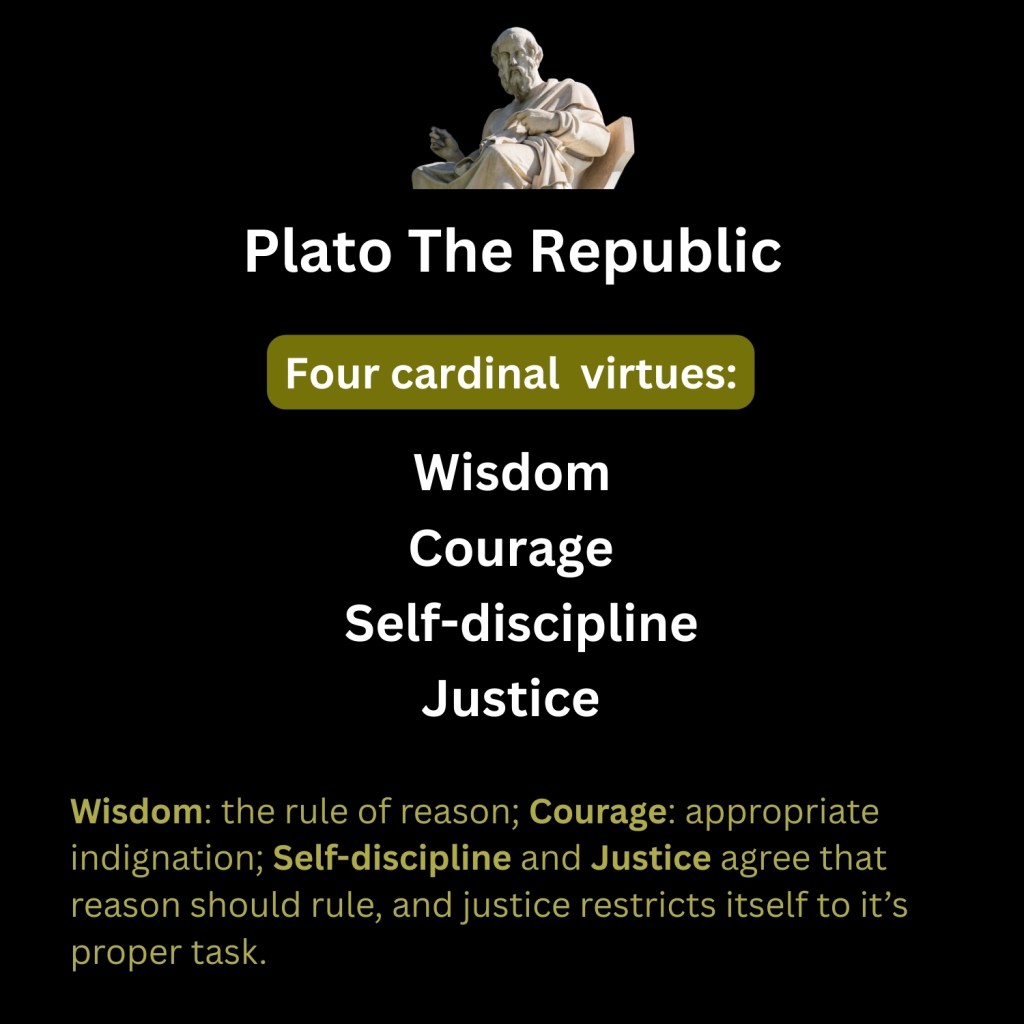
FOUR CARDINAL VIRTUES
Plato presents four cardinal virtues in The Republic. They are wisdom, courage, self-discipline and justice. When I entered Middlesex as a student, I was lacking in all four of these virtues. I was self-consumed, not making the best and brightest personal choices. Early childhood trauma had hijacked me.
SENIOR YEAR – MY TRANSGRESSION
When I came back to Middlesex early for football my senior year, I started off on the wrong foot. The year before, I had asked Brad Kingman, who was my advisor and Dean of Middlesex School, if I could drive my MG up from Tennessee after the break. Jamie Jones had asked me to visit him on the Cape after school ended, and I mentioned that I wanted to have my car. Mr. Kingman said, “Okay” — on one condition – that I not bring the MG back my senior year.

BD and Jamie Jones, April 26, 2025 I drove the MG back to Concord for my final year, and my second stop was Mr. Kingman’s house. Why? I was stupid and out of alignment. He told me that he wanted my plates and keys to the car. I refused. During the next few months, we had a few intense meetings inside and outside of his office.

MG MIDGET MODEL OWNED BY BRAD DURHAM THE CRASH
The night after the final football game, I crashed my MG down the street from Jamie Jones’ house on the Cape. Word traveled back to Middlesex. Crashing my car was an existential metaphor. I was crashing in every sense of the word.
Mr. Kingman probably discussed the issue of my MG with the Headmaster and staff during the Fall of 1974. One fall day, John DeQ. Briggs, Jr., the Assistant Headmaster, approached me in Alumni Hall. He said, “There was a time when I thought you represented Middlesex well. Now, I do not know what the hell to think!” And he walked away.
THE DEMAND TO LEAVE CAMPUS FOR A SEMESTER
A few days later in November, Brad Kingman called me into his office. He asked me what I was going to do next semester. I told him that I had fulfilled my credits, and I was going to do an independent study and play sports. He said that I wasn’t. I said that I was. Mr. Kingman then said, “I’ve been here a long time. You are not going to make it. You will get expelled and not get into the college you want to attend.”
I was shocked; the game was over. It was obvious that Mr. Kingman was tired of dealing with me, and I was close to being expelled. Maybe he was going to expel me but reconsidered. I don’t know…but I knew I had to change my plans
MANY YEARS LATER…THE BENEFITS OF THERAPY
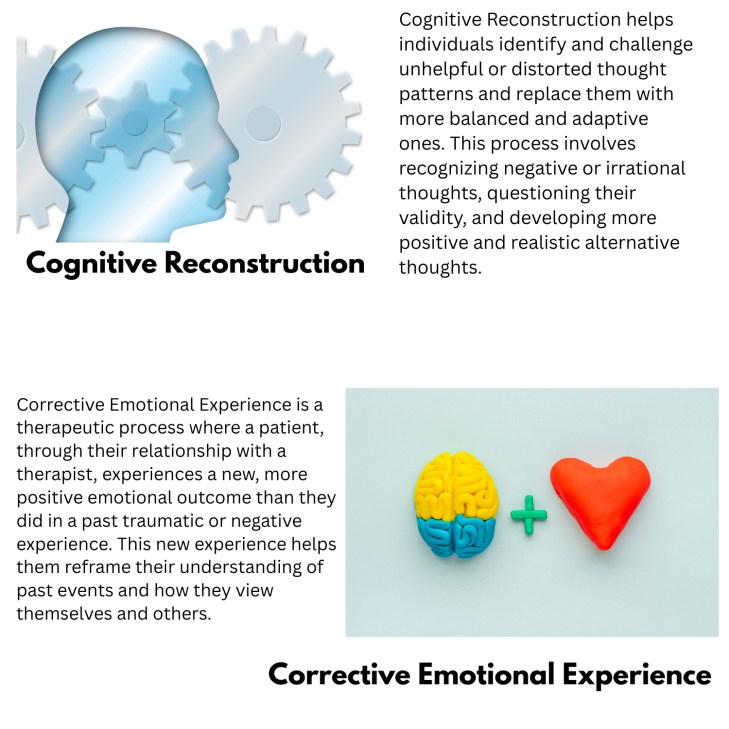
Doing cognitive reconstruction work in therapy created clarity and helped decrease some of my misplaced shame. For example, I developed a better understanding of how I was not responsible for my parent’s divorce and my mother’s death. No matter what I learned as I grew older, the mixed-up perspective of a child was tough to correct emotionally.
My parents divorced when I was in the seventh grade, and two years later, I found my mother dead in her bed. Many years later, I realized that I did not have the foundation as a kid to deal with the childhood trauma. I came to Middlesex ready to explode without proper guardrails. Those were guardrails that no longer existed for multiple reasons.
Intellectually, I could understand that I was not totally responsible for the breakup and tragedy in my family. But I blamed myself for causing problems. I was a rebel. I was angry. I defied authority constantly. I simply did not know why I thought and felt the way I did. Often, I questioned my own behavior.
UNDERSTANDING MY 18-YEAR-OLD BEHAVIOR
Therapy helped me better understand my history of self-destructive behavior. 50 years after being told that I had to leave campus for my last semester, I can better understand what transpired. I was spiraling out of control. Brad Kingman was trying to help me align with the proper virtues. I was resistant, defiant.
If I had simply given Brad Kingman the plates and keys to my car, and apologized for breaking my word, who knows what would have happened. Unfortunately, I did not have the wisdom and courage to do the right thing in 1974/1975. Mr. Kingman gave me many opportunities to correct my decision-making, and I refused. I was clueless.
I am extremely grateful that Brad Kingman stood his ground and did his job. He protected Middlesex, and he protected me from myself. I cannot explain my stupid behavior. Moreover, I am not making any excuses. Yet, I can understand why I was so out of alignment.
PEOPLE – RELATIONSHIPS MAKE THE DIFFERENCE
Seeing all my classmates was genuinely heartwarming and inspirational. Everybody added something to the experience of being at Middlesex. The Class of 1975 had some great characters, and every one of them made a contribution. Jamie Jones, Blair Villa and Spence Sloan together with George Noble did a great job of making everything happen for the 50th.
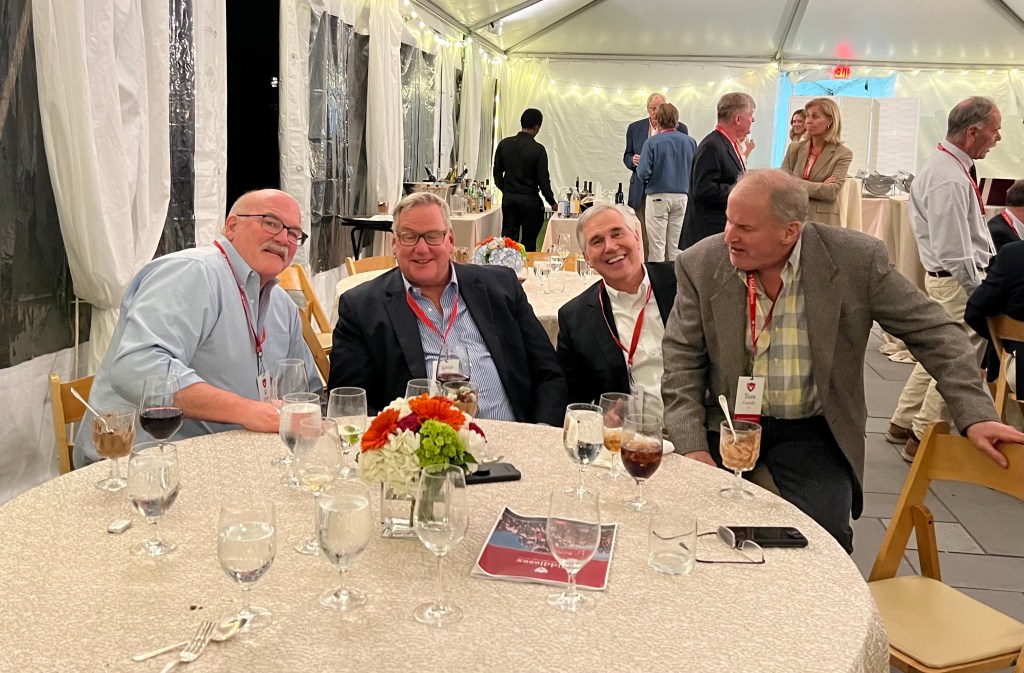
Ki Haden, Jamie Jones, BD, Tom Costello 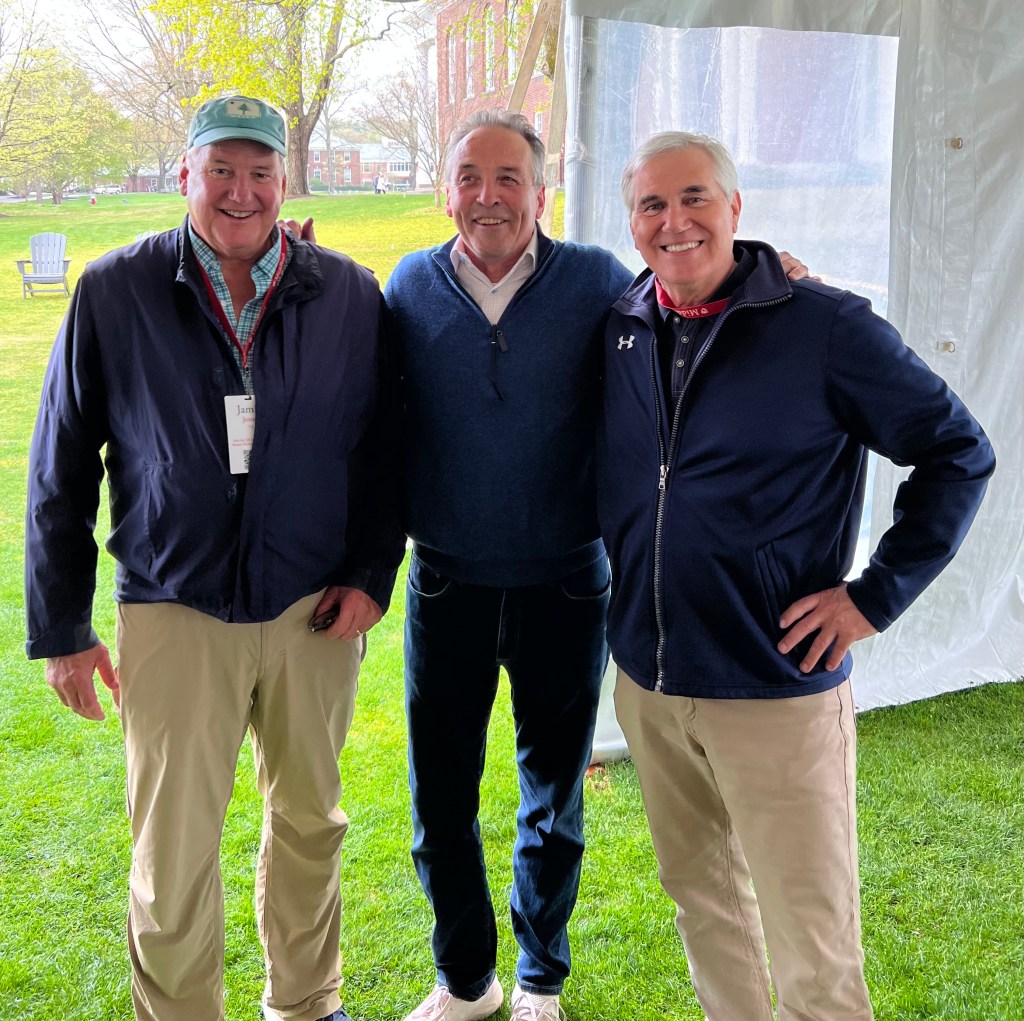
Jamie Jones, Jack Finigan, BD 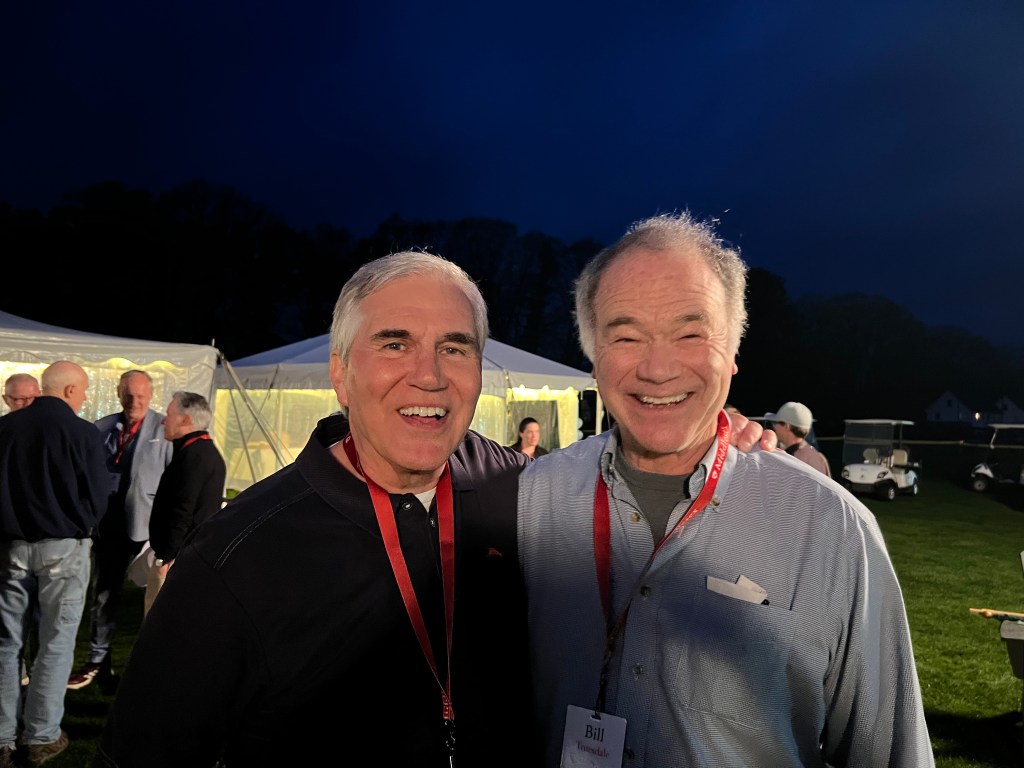
BD, Bill Trousdale 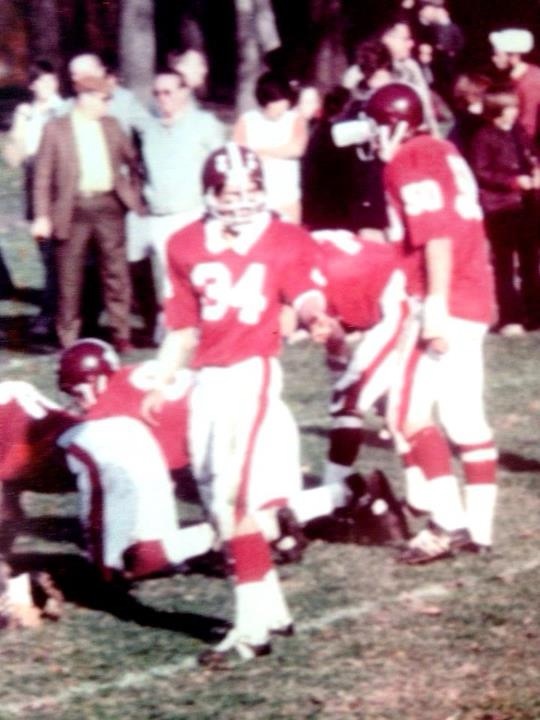
BD, #34 Fall of 1974 
BD pointing to his senior plaque of QUADROPHENIA 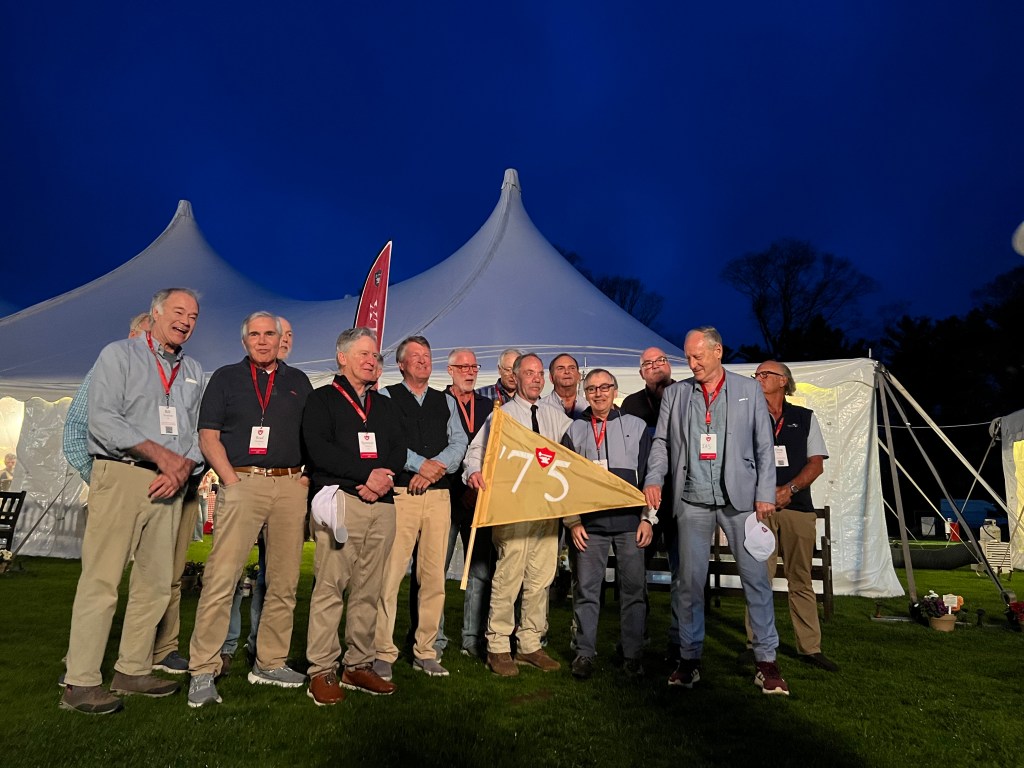
MIDDLESEX SCHOOL CLASS OF 1975 – 50TH REUNION BRAD KINGMAN, A LASTING INFLUENCE
Of course, I regret not being able to see Brad Kingman to apologize and thank him. In many respects, I was 50 years too late.
From my perspective, there were several moments when Mr. Kingman tried to persuade me to change my behavior. He used logic. He used intimidation. He ambushed me. In therapeutical terms, he tried to help me have “corrective emotional experiences.” He saw that I was making bad choices, and he genuinely tried to redirect me.
Brad Kingman was a good man. I hope he knew that I respected him for being firm and consistent. He made a major difference in my life. I choose to interpret his demand that I leave campus as an act of compassion — helping me avoid a tragedy. The rest is history!
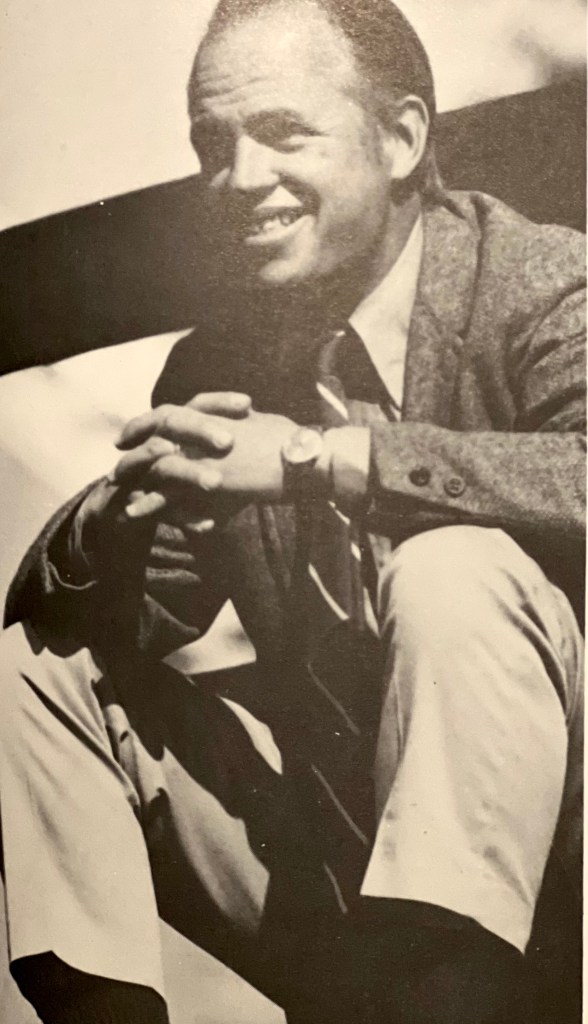
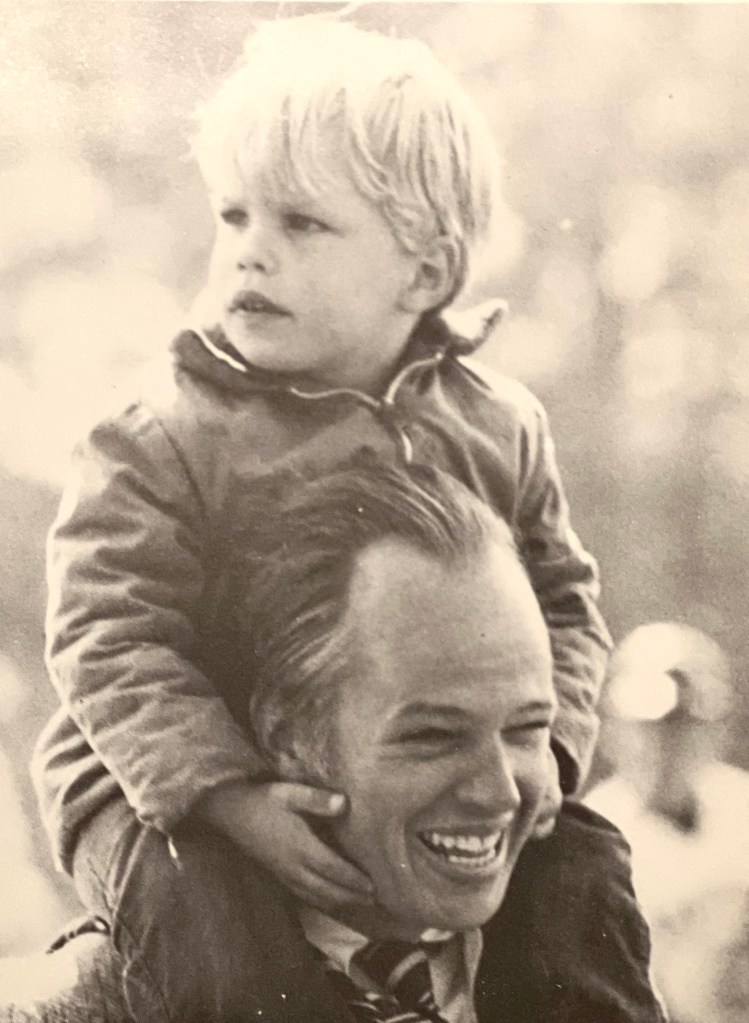
Brad Kingman, Dean of Faculty 1974 Middlesex School Yearbook Photos
EPILOGUE
The day I left to go to my 50th Reunion at Middlesex, I saw my therapist of the past 20 years for the last time in Nashville. She is retiring. She was an unconventional therapist who would often insist that I focus on two things during my early years of therapy: cognitive reconstruction and corrective emotional experience. She was the first person to convince me that I had experienced childhood trauma. I learned that untreated trauma can lead to being out of alignment with your values.
My therapist actually started as my daughter’s therapist, and as I was going through a divorce 15 years ago, she became my therapist. Previous to going into therapy with this woman, nothing I had tried was able to unlock the psychological issues. Making a Christian commitment my sophomore year in college probably helped prevent me from partying out of school…flunking out. Therapy, cognitive behavioral therapy to be specific, with a great therapist helped me to understand my most severe issues.
The two major concepts that helped me are amplified below. I was very fortunate to have people such as Brad Kingman and my therapist, Amy Powell in my life. They taught me lessons that are valuable for a lifetime.



You must be logged in to post a comment.