-
By Brad Durham
Forty years ago, I volunteered and worked directly with the homeless in Boston and Cambridge, Massachusetts. My role involved placing homeless families into permanent housing using HUD rental subsidies. This experience, combined with research from Harvard and MIT on poverty and homelessness, was invaluable. I successfully blended my passion for music with advocacy by developing benefit concerts and a nonprofit organization that supported homeless children living with their families.
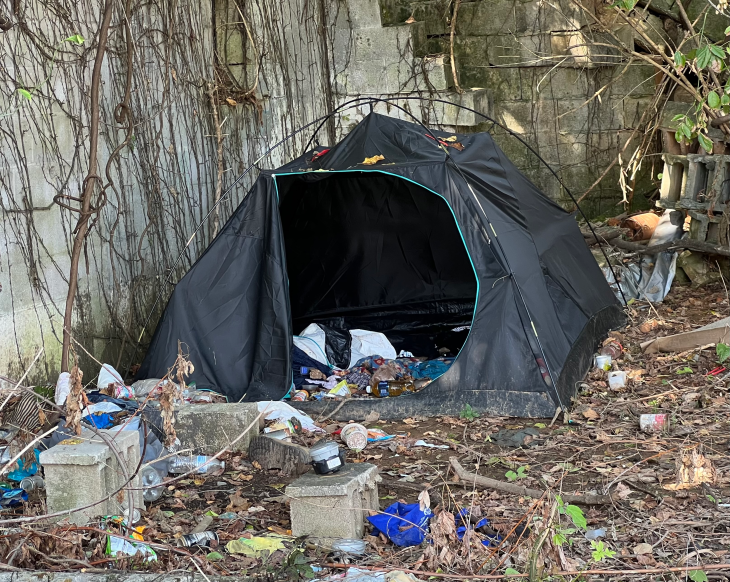
For the past 40 years, I did nothing to help the homeless. Everything I am about to share is directed primarily at myself. The catalyst for my transformation from inaction to action was volunteering at the First Methodist Outreach building to serve the homeless. What I witnessed there was strikingly different from the attempts I had participated in while in Massachusetts to house the unhoused. This experience motivated me to advocate for a shift in public and political will regarding chronic homelessness. In my hometown, many people who are homeless walk around all day, and some are literally sleeping on the sidewalks.
Warren County: Income Statistics & Projected Funding
Warren County has a total income of $2.1 billion. One percent of that income is $21 million, and 1% of that $21 million is $210,000. If 8,400 households contribute $25 each this year, we can raise the $210,000 needed, representing approximately 52% of the 16,203 households in Warren County. I believe this goal is achievable, allowing us to fund 10 rental subsidies and, in addition, develop separate supportive services and housing search teams. In essence, $210,000 could help end homelessness for 10 individuals or families and transform their lives.
Two Talks Featured Below
Two talks have significantly changed my perspective on addressing homelessness and improving the lives of the unhoused in McMinnville. My goal is simple: to collaborate with as many people as possible to place 10 unhoused families and/or individuals into permanent supportive housing within one year.
Inspiration #1 is a 90-second lecture by Nick Saban entitled, IMPORTANCE OF NOTHING.
Key highlights of Coach Saban’s talk include:
- You wake up in the morning, and you are entitled to nothing.
- Nobody owes you nothing.
- You can have talent, but if you don’t have discipline and you don’t execute and focus, what do you get? Nothing.
- If you are complacent and not paying attention to detail, what does that get you? Nothing.
- Nothing is acceptable but your best.
- Everything is determined by what you do and you trying to be your best so that you can build on positive performance. That’s the only thing – there should be nothing else.
- What we have to be focused on is what we need to do.
- Do not accept anything but our best.
Inspiration #2 is an 11-minute Ted Talk by Dr. Sam Tsemberis, who created Housing First in 1992, providing thousands of successful examples of permanent supportive housing.
Key highlights from Sam Tsemberis’ Ted Talk entitled ENDING HOMELESSNESS AND TRANSFORMING LIVES presented in 2012 include:
- We pay a price for ignoring homelessness, affecting not only those living on the streets but also ourselves.
- Ignoring the pain of homelessness requires us to shut down part of ourselves, leading to shared suffering that can be alleviated.
- Homeless individuals often face various clinical conditions, and failing to help them constructively leads us to label them as treatment-resistant.
- We tend to blame them for their suffering, forming implicit assumptions that they are not trying hard enough or have wasted their opportunities.
- The disconnect between individuals seeking housing and the systems requiring treatment or participation in programs has persisted for years.
- Our desperation to serve them has created transformative moments.
- Improving lives, both for the homeless and those providing service, requires a significant shift in approach.
- Our clinical expertise often misaligned with their needs; many prefer a stable home before treatment.
- The Housing First program, created in 1992, recognized their desire for simple dignity—a private space to live, cook, and sleep without being in crowded shelters.
- We had to set aside our preconceived notions about mental illness and acknowledge their reality.
- Accepting their perspectives allowed us to help them find housing of their choosing, and support teams helped them thrive beyond our expectations.
- With a home, they utilize their survival skills more effectively; studies show 85% success in housing and 20%-25% with treatment.
- Both Republicans and Democrats agree that providing housing is more cost-effective than leaving someone homeless.
- Housing First has proven effective by creating safe living environments and offering necessary services.
- Key lessons include respecting their wishes, valuing diverse perspectives, and recognizing that success relies on collaboration.
- Unlike diseases like cancer or Alzheimer’s, we have a clear solution for homelessness, though we lack the necessary political will. My advocacy aims to challenge this.
- Ending homelessness benefits those affected while healing society, fostering a more just and compassionate community.
MY CONCLUSION
As Sam Tsemberis mentioned in his TED talk, I often blame homeless individuals for their lack of housing and decision-making. I make judgments without knowing their real circumstances and history. The worst mistake I make is ignoring them. I mistakenly believe that simply showing up and discussing how to help the homeless means something. Watching someone leave a meal and walk into the night in search of a place to sleep is equivalent to doing nothing.
I have lacked the courage to turn my judgmental attitude and moral justifications into action to help provide permanent supportive housing. One fundamental lesson I have learned is that I cannot do it alone. It’s unrealistic to expect that I can simultaneously negotiate housing deals for the homeless, offer supportive services, and maintain my own full-time business.I have been doing a disservice to our homeless neighbors in McMinnville.
Action Step
Therefore, I am organizing a Homeless Summit and inviting every church, civic organization, elected official and private citizen to attend. The purpose of the Summit is to review the seeds that BEYOND THE BRIDGE planted in January and what has developed with those seeds. Dates for the Summit will be announced soon.
The Goal
My goal is to place 10 people and/or families who are homeless into permanent supportive housing within a year. With 8,400 households donating $25 each, we can raise the $210,000 needed to help end homelessness and transform lives. We can turn nothing into something. We can do our best to provide evidence-based solutions. Together we can heal homelessness and ourselves, transforming McMinnville into a more caring and just community for our neighbors who are homeless. 1% of 1% of the total income in our county can make it happen.
Footnotes: The source for the total county personal income is the Tennessee Department of Economic & Community Development: https://tnecd.com/county-profiles
The number of household metrics are from the American Community Survey (ACS) and the most recent US census reports using ChatGPT. www.censusreporter.org.
-
By Brad Durham
Three alarming facts about the high cost of homelessness have been discussed recently in a local McMinnville group of homeless service providers and volunteers. Number one: the homeless live about 30 years less than Americans who live in a home. Number two: It cost the taxpayers less to place a homeless person into permanent housing than to keep a person in the Warren County jail for a year. Number three: The homeless are a portion of the self-pay patients who are uninsured or underinsured, costing Ascension Saint Thomas River Park Hospital several million dollars a year in charitable health care.
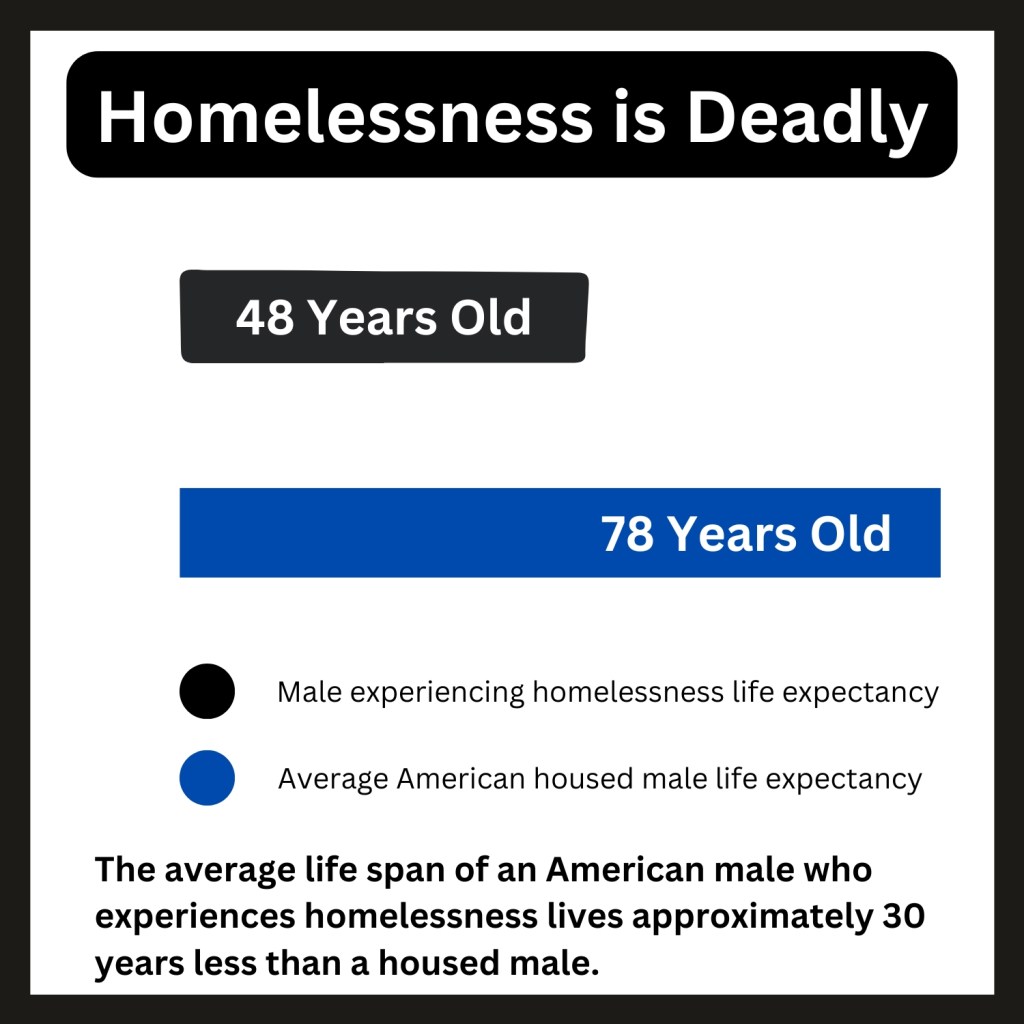
Dale Humphrey, President and CEO of Saint Thomas River Park Hospital, informed the group earlier this month that homeless men die about 30 years earlier than their peers who live in a home. Clearly, anyone who lives on the street, under a bridge or in a tent for an extended period of time pays the highest price of homelessness. Being homeless without proper housing is not healthy. While the homeless’ illnesses may not be much different than the non-homeless population, the homeless illnesses are usually much more severe and typically managed worse due to difficulty in cleanliness, nutrition, access to follow up care, and access to proper medication. Humphrey stated that stress is obviously a contributing factor.
Dale Humphrey also informed the group that the hospital has $7 million in charitable health care per month, and a significant portion of that charitable health care is contributed to the McMinnville homeless population.
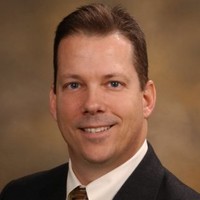

Left to right, President and CEO, Dale Humphrey and Sheriff Jackie Matheny, Jr.
During the February meeting, Sheriff Jackie Matheny, Jr. spoke to the group and stated that at least 12 of the 258 inmates in the Warren County Jail were homeless. Sheriff Matheny also confirmed that the minimal cost to the taxpayers to keep someone in the local jail is $41 dollars a day. Taxpayers pay more to keep someone in the Warren County jail than taxpayers pay to keep someone in subsidized, affordable housing. See the image below for a detailed illustration.
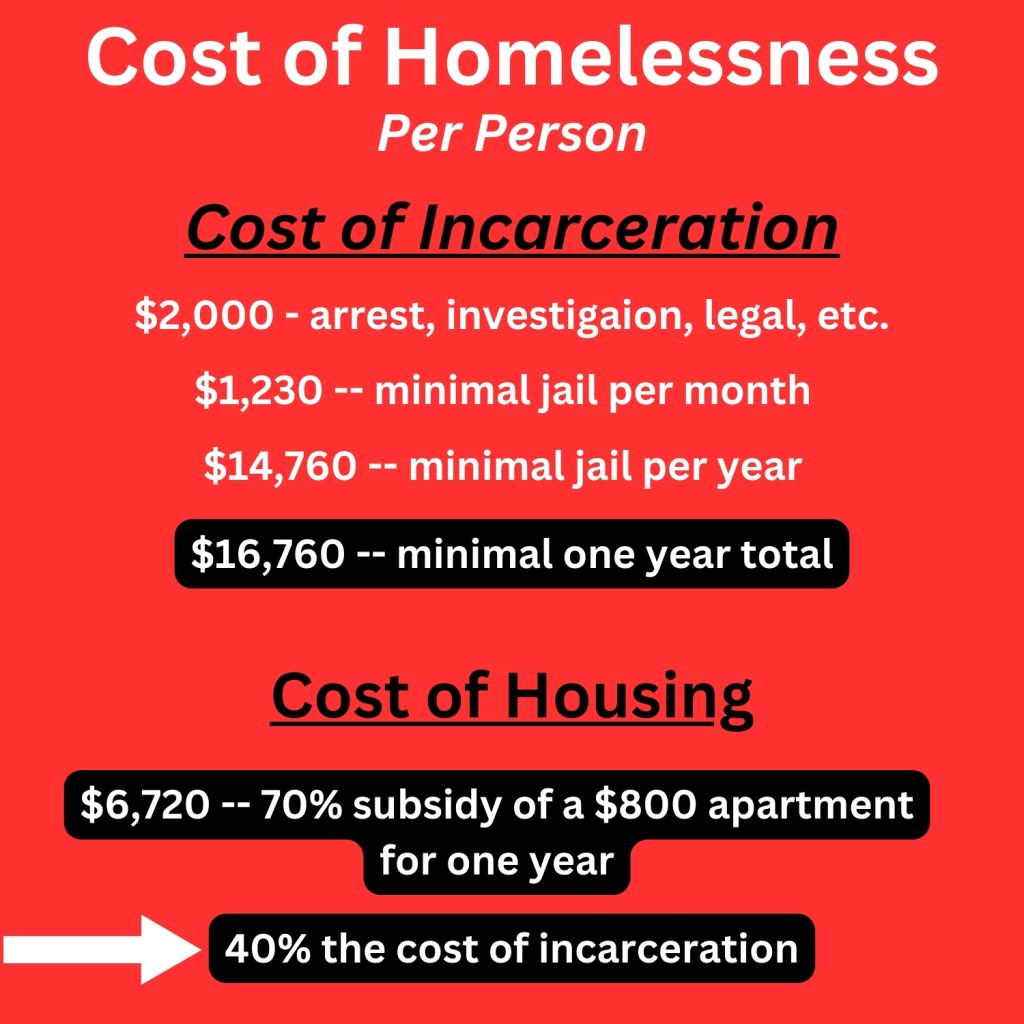
* The cost of arrest, investigation and legal fees are estimated.
SUBSIDIZED PERMANENT SUPPORTIVE HOUSING…A COST-EFFECTIVE SOLUTION
A local nonprofit or city/county government can apply for HUD funding to provide permanent supportive housing for the homeless. HUD offers rental assistance that pays 70% of the rent on privately-owned apartments. The subsidy for an $800 apartment would be $560 a month. That is $18.60 per day, which is 45% of the cost to keep someone in the Warren County jail.
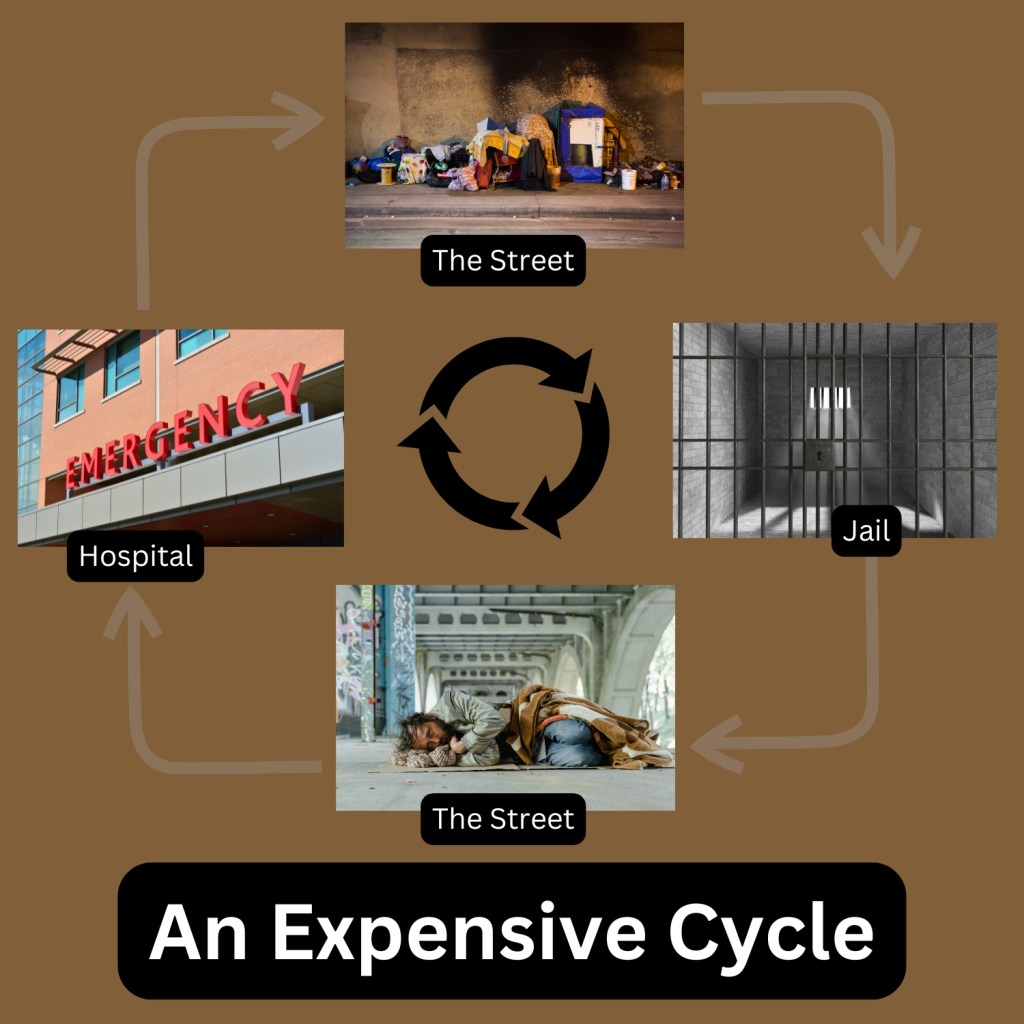
Common themes from both Sheriff Jackie Matheny. Jr. and Dale Humphrey were the high rates of recidivism and recycling of the same homeless population through the jail and hospital. Placing people who are experiencing homelessness into permanent supportive housing can extend lives — in addition to saving taxpayers and the local hospital a lot of money. All of this begs the question of how to develop a cost-effective solution to homelessness in McMinnville.
BEYOND THE BRIDGE: A POSITIVE SOLUTION TO HOMELESSNESS PROMO
Readers of this newsletter are encouraged to see the film, Beyond The Bridge. The film is a documentary about solutions to homelessness. The filmmakers traveled over 40,000 miles and studied positive solutions to homelessness. The film highlights solutions in two cities. Beyond The Bridge is showing at Otter Creek Church on West End in Nashville at 6:00 PM on Thursday, April 3. Tickets are free and must be reserved online. This is a link to information about the film and tickets:https://asolutiontohomelessness.com
Full disclosure, I have been promoting a plan to create affordable housing for 10 homeless people in McMinnville. I am personally looking forward to learning more about positive solutions to homelessness from Beyond the Bridge and the discussion after the film. Nashville Mayor Freddie O’Connell and the filmmakers will be at the event.
For more information, please attend the monthly homeless meetings in McMinnville. The next meeting will be Friday, April 25, at 11:00 AM, at St. Matthews Episcopal Church.
-

By Brad Durham
Recently, there was an article in The New York Times, “The Theory of Media That Explains 15 Years of Politics.” The article explains how the media has changed from a very small number of trusted sources to an abundance of questionable digital sources. Link: https://www.nytimes.com/2025/02/25/opinion/ezra-klein-podcast-martin-gurri.html?unlocked_article_code=1.2k4.ku6r.CXinZpISRmjN&smid=url-share
The New York Times article is full of insights about the disruptions to the media. It is worth reading, especially if you are interested in how national politics have been shaped by the different forms of media in recent elections.
Reading the article made me think about the traditional media sources in McMinnville. There were no digital platforms or internet when I grew up. Baby boomers such as myself experienced the media in our youth much differently than we do in 2025.
THAT WAS THEN…
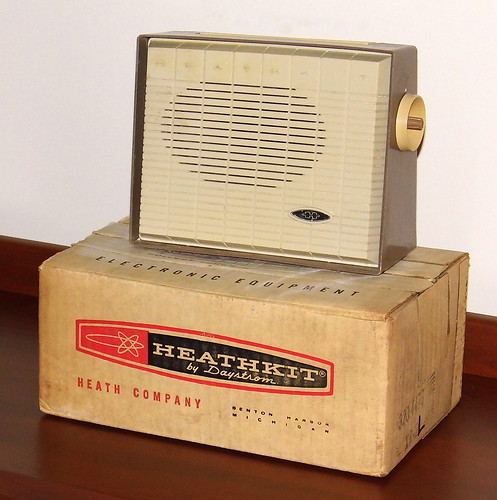
When I was in the eighth grade during 1970, I would often go to bed listening to WLS-AM out of Chicago playing the Top Forty Hits on the radio. My radio was a Heathkit that I had put together myself. I would go downtown and buy 45 vinyl records of the songs I really liked and wanted to listen to on my turntable/stereo. On Sunday mornings, I would read the newspaper to learn college football scores, stories and pictures from Saturday’s games. Radio and the newspaper were primary sources of music and information.
In November of 1963, when I was seven years-old, I vividly remember hearing my father call into my uncle Hal’s radio show in McMinnville on WBMC-AM from Dallas. My dad was reporting that President Kennedy had been shot. My dad’s call had beaten the newswire report to the station, and my uncle recorded the phone call. The radio station replayed the news report from my dad a few times that day – after verifying the story from national sources.
My father and uncle, Aaron and Hal Durham, worked at WMMT-AM in high school, and then worked their way through college working at radio stations in Knoxville. My father later purchased WAKI-AM (formerly WMMT) in the early 1970s. My uncle Hal became Program Director at WSM and later the General Manager of the Grand Ole Opry.
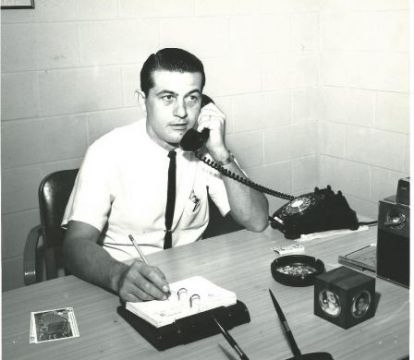
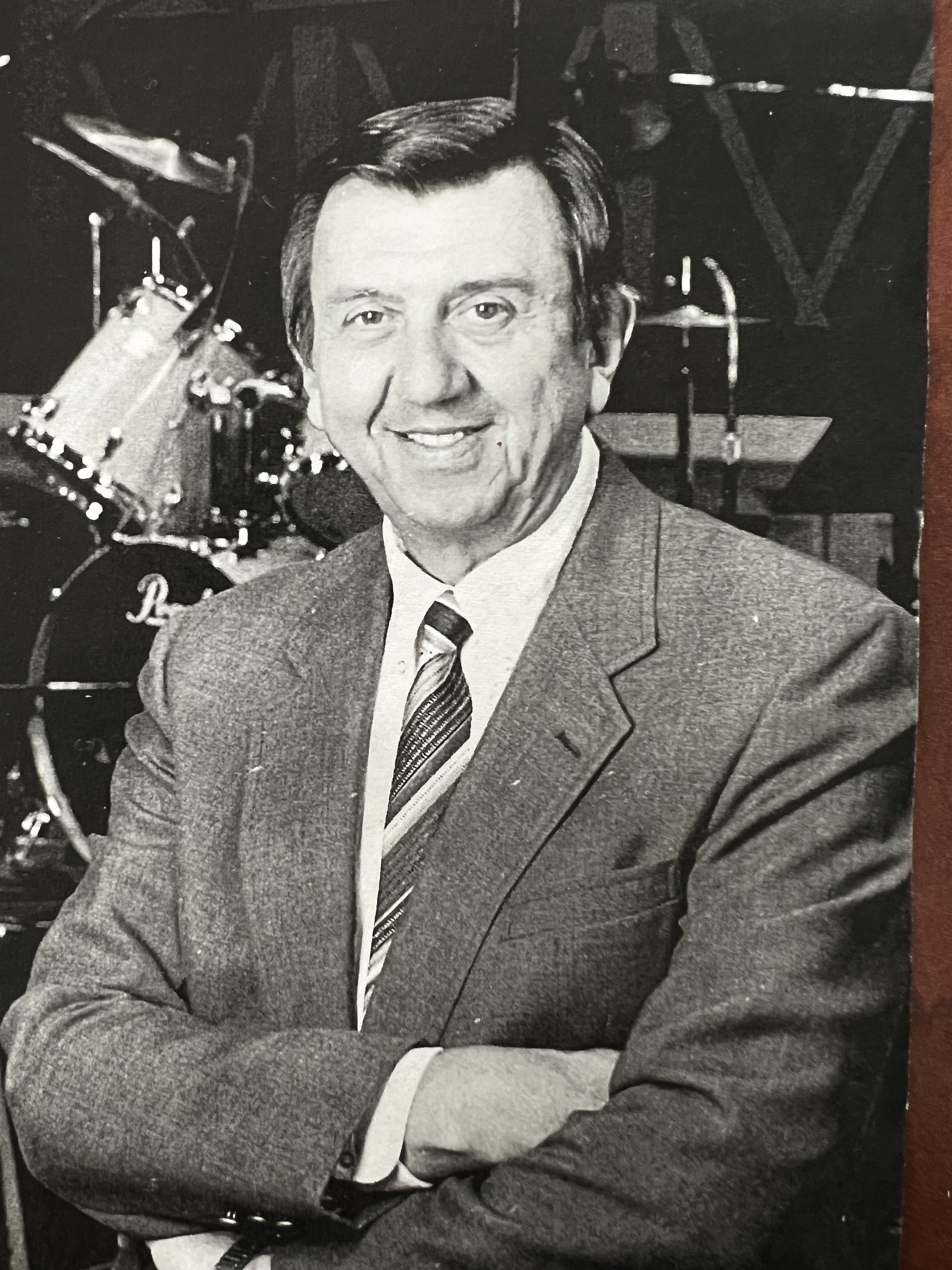
Left to right: Aaron Durham during his days as owner/manager of WJLE-AM; Hal Durham, General Manger at the Grand Ole Opry.
I would be interested in what my father and uncle would think about the future of the radio stations and newspaper in McMinnville. When they were broadcasters in college, radio was how people normally first learned about a news story. News headlines were at the top of the hour on radio stations. Today, it is extremely rare for radio to be someone’s first source of headline news. Nobody is waking up on Sunday morning to first learn about college football scores from the day before in a newspaper.
If someone is under 30, I might as well be talking about watching the first man to walk on the moon or riding in a horse and buggy. My early media encounters resemble nothing a 30-year-old has experienced. If someone is under 40, he has probably have never listened to a radio in their bedroom or had a newspaper delivered to his home.
LOCAL NEWSPAPER AND RADIO STATION OWNERS
The local newspaper is clearly undergoing changes as it announced its publisher is retiring. The Southern Standard is owned by a private company, Morris Multimedia, located in Savannah, Georgia. Link: https://morrismultimedia.com Morris Multimedia owns over 20 newspapers in five states and six television stations in five states.
The local radio stations are owned by Main Street Media, which has two local owners in a partnership with a third owner who does not live in McMinnville. Main Stree Media also owns radio stations in Sparta and Crossville. Link: https://mainstreetmedia.llc Main Street Media, who owns the radio stations, is not to be confused with Main Street Media of Tennessee, which owns at least 18 newspapers. Link: https://mainstreetmediatn.com It would be confusing if Main Street Media of Tennessee purchased the local newspaper, which is not out of the realm of possibilities.
IMPROVISE, ADAPT & OVERCOME
Talk radio helped radio adapt and thrive in a changing world. No individual changed the format as dramatically as Rush Limbaugh. His syndicated radio show transformed the midday slump of radio listeners (and advertisers) into millions of listeners across the country. Limbaugh became not only an influential republican commentator, he also became a best-selling author and direct-to-consumer salesman.
At least one of the four local McMinnville radio stations has added video and social media to its local talk shows to increase its audience. Radio has only one revenue source – advertising. Unless the local radio stations can develop some type of subscription base and direct-to-consumer revenue, they must rely exclusively on advertising dollars to exist.
Newspapers have also experienced disruptions and challenges. Making newspapers available online and through apps with subscriptions have helped newspapers modify its distribution and survive. The New York Times has had success digitally by expanding into podcasts, audio versions of articles, and adding games to its subscription package.
The local newspaper does have a digital subscription option and an app. The newspaper also offers some video content, and it also uses social media to market its stories. The local newspaper has not added podcasts, audio versions or games to its content.
THE MAJOR OBSTACLE
The digital disruptions are formidable, but the major obstacle to the survival of local radio and the newspaper in McMinnville is the economic landscape. The number of large grossing, locally-owned retail businesses has decreased significantly in the past 50 years. The domination of corporately-owned businesses and family-cartels like Walmart have wiped out numerous local businesses.
Franchises became more dominant locally, and are often owned by corporations not located in McMinnville. Amazon became a dominant retailer online. Eventually, many of the locally owned clothing, hardware, grocery stores, etc. ceased to exist. The option of shopping out-of-town has always been a factor.
The economic changes caused the number of ads on the radio and in the newspaper to diminish. As advertising revenues declined, so did the number of staff at the local radio stations and newspaper. The majority of programming on the local radio stations is presently satellite radio that is not locally produced. The newspaper has less original content and less printed pages than it had 30-50 years ago.
MARKET VALUE OF TRADITIONAL LOCAL MEDIA HAS DROPPED
The four local radio stations sold in the past year for less than half of their selling price in 1999. It is a tough business that keeps decreasing in value. The radio stations presently have its second set of owners since the hometown owners sold the stations to Clear Channel in 1999. The logical assumption is that the market value of the local newspaper has also declined as well during the past 25 years.
If people fall out of the habit of listening to local radio and purchasing a local newspaper, the odds of bringing those listeners and readers back are not very favorable. Replacing older consumers of local media with a new, younger group of listeners and readers is an extremely challenging task. Today’s youth obtains their entertainment and news on TikTok and Instagram for free, not radio stations and newspapers. Facebook has the most social media traffic, but it skews to an older demographic.
QUESTIONS THE MCMINNVILLE PUBLIC AND BUSINESSES WILL ANSWER
Will people change their habits and listen to local radio and read the local newspaper in greater numbers in 2025? Will advertising dollars increase for the radio stations and newspaper in McMinnville? Will local radio and newspaper help shape local political campaigns? Can McMinnville stay aware of itself and its history without local radio and a newspaper? Will the local radio stations and newspaper be around in another 25 years?
The changes over the next few months will most likely determine what the future holds for the local radio stations and newspaper. For an older person such as myself, I will not be listening to the radio on my nightstand for the top hits, nor will I be scanning a newspaper for sports’ scores.
Changing people’s habits is challenging. Unless the local traditional media can successfully change people’s habits of obtaining news, information and entertainment in McMinnville, the local media will continue to decline in terms of influence and relevance.
-

Attorney Kara Youngblood
By Brad Durham
When I grew up in McMinnville many decades ago, there were no “immigrants” that I was aware of in my hometown. As I grew older, I eventually came to the conclusion that almost all of us are “immigrants.” It has become a hot topic recently. Some polls had immigration as a top five issue in last year’s 2024 presidential election.
Personally, I did not become aware of any new immigrants in McMinnville until the 1980s. There were not any Hispanics living in McMinnville that I was aware of when I grew up here. The last US Census states that 10.1% of the Warren County population is Hispanic or Latino. Link:https://www.census.gov/quickfacts/fact/table/warrencountytennessee/PST045224
The population has changed over the decades, and I believe that that is a good change. I am very grateful for the vibrant and hard-working Hispanic community in McMinnville. There is one family in particular that has enriched my life tremendously with their friendship and fellowship.
The campaign and recent rhetoric about immigrants and deportation by President Trump concerns me. The executive order which attempts to end automatic citizenship for babies born on American soil actually shocked me.
That executive order was blocked and reported by the New York Times on Thursday, January 23: In a hearing held three days after Mr. Trump issued his executive order, a Federal District Court judge, John C. Coughenour, sided with Washington, Arizona, Illinois and Oregon, the four states that sued, signing a restraining order that blocks Mr. Trump’s executive order for 14 days, renewable upon expiration. “This is a blatantly unconstitutional order,” he said.
Link to article: https://www.nytimes.com/live/2025/01/23/us/trump-news#judge-blocks-birthright-citizenship
To better understand these issues, I asked McMinnville’s immigration expert, Attorney Kara Youngblood, five questions via email. The following are those questions and answers.
BD Newsletter: Please share your perspective on what is happening with federal immigration policies, and do you have a prediction on what the outcome will ultimately be regarding the birthright to citizenship issue?
Kara Youngblood: The implementation of the new immigration policies will likely result in extended processing times, heightened scrutiny of immigration applications, increased discretion granted to immigration officers and prosecutors, as well as a backlog of cases within immigration courts. It is particularly noteworthy that a federal judge appointed by President Reagan issued the injunction. Given the recent rulings by the Supreme Court, it is reasonable to anticipate that the executive order will ultimately be invalidated, even by the most conservative of courts.
BD Newsletter: Do you foresee any differences between the federal policies/laws and state and local policies/laws? In other words, will federal policies override all local and state policies?
Kara Youngblood: With the recent passage of the state bill that felonizes any vote of an elected official against federal immigration policy it seems like federal may win out. However, it should be noted that both the recent executive orders and this aforementioned state bill are likely unconstitutional and will most likely be immediately challenged.
Under federal preemption law, federal law generally takes precedence over state law if they conflict.
BD Newsletter: How active is ICE (U.S. Immigration and Customs Enforcement) in McMinnville and Warren County? Does this federal law enforcement agency have an office here?
Kara Youngblood: At present, ICE does not maintain an office in McMinnville or Warren County; however, it is anticipated that their presence will increase in the near future, particularly in light of Governor Lee’s initiative to establish a Centralized Immigration Enforcement Division (CIEO). Gov. Lee’s agenda also aims to incentivize local governments to collaborate in the enforcement of federal immigration policies and allocate funding to support both federal and state immigration efforts. Additionally, we can expect an expansion of ICE activities, particularly as ‘sensitive’ areas, such as schools and places of worship, are no longer protected under the same restrictions. Since 2011, such locations were considered ‘sensitive’ and were off-limits to ICE raids except under specific, limited circumstances; however, under the previous Trump administration, these areas were no longer classified as ‘sensitive’ and thus are now subject to enforcement actions.
BD Newsletter: What would you advise an immigrant who is not a U.S. citizen and living in McMinnville to do, in addition to contacting your office for legal consultation?
Kara Youngblood: Know your rights and if you are here lawfully, be sure you keep proof of that with you. We have created a “Know Your Rights” campaign on the Youngblood & Associates social media platforms that will be published over the next few weeks. Keep an eye out for those.
BD Newsletter: What percentage of your clients live in McMinnville and Warren County?
Kara Youngblood: I cannot answer this question. I believe Tenn. Sup. Ct. R. 8, RPC 1.6 would apply in this instance which prohibits me from sharing client information individually or collectively without their consent.
Bonus Question: What motivated you to practice immigration law?
Kara Youngblood: My father has owned and operated a nursery in Morrison my whole life. The immigrant population is an integral part of the agricultural industry. I was exposed to the immigration system from a young age, seeing the vast expanse of how immigration shaped the lives of those that worked side by side with my father, and who ultimately became like a part of our family. From the positive impacts of the green card and naturalization processes to negative consequences of immigration detentions and deportations, I was privy to a world that most US citizens never see. I found the complexity of this facet of the law interesting and knew the positive impact I could have for many people if I studied it and offered solutions to the many qualified individuals that simply needed someone on their side to navigate the complex system for them.
I always say that unlike many other types of law, no one loses when I win a case. Most of my clients have already positively integrated into our community, but my services allow them to finally do so out of the shadows and with the peace of mind that every person deserves.

Attorney Kara Youngblood in her office.
BD Newsletter Footnote: The following is a brief overview of Kara Youngblood’s professional career.
Kara Youngblood is the founding attorney of Youngblood & Associates, which is dedicated to providing legal immigration services to individuals and families and labor solutions for green industry employers. Website: www.youngbloodassociates.com
Youngblood is also the owner of The Local on Morford restaurant, which is part of the major renovation projects she has undertaken on Morford Street. Kara Youngblood was elected to office as a City Alderman in 2024 and is chairman of the Building & Grounds committee. She also serves on the Tourism & Marketing, Parks & Recreation, and Water & Wastewater committees.
Youngblood was Valedictorian of her Warren County High School senior class, Middle Tennessee State University, Bachelor of Science, and The University of Memphis—Cecil C. Humphreys School of Law, Juris Doctor, Law.
-
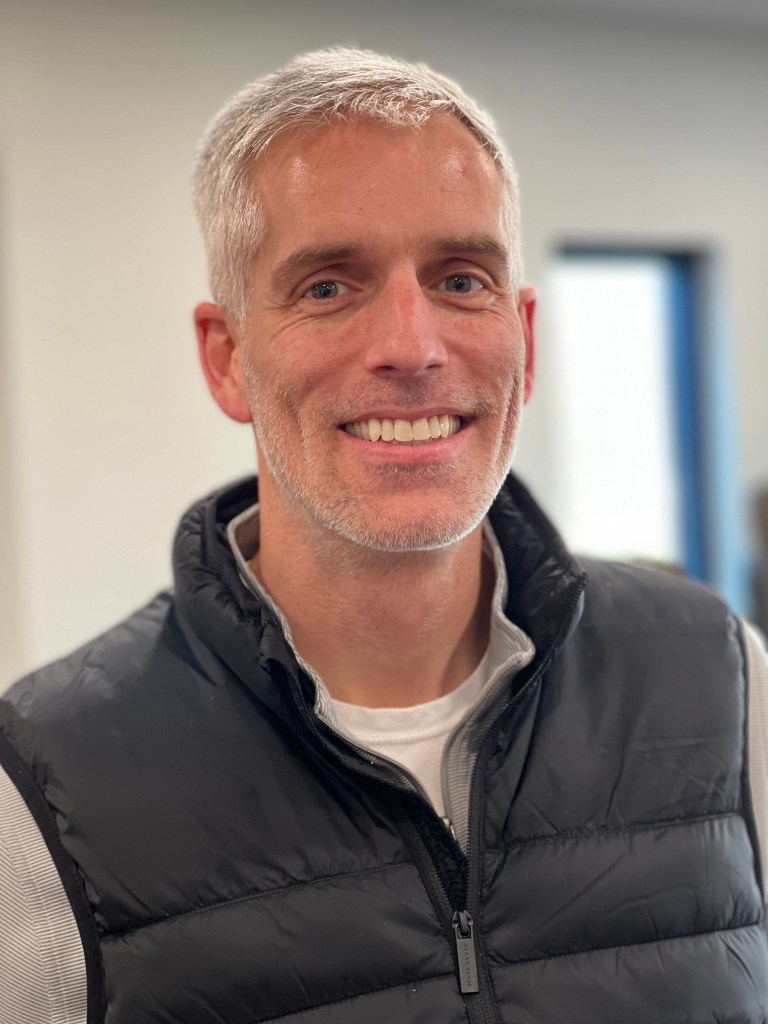
Ryan Heatherly, Senior Pastor at First United Methodist Church By BRAD DURHAM
One of the most historic churches and buildings in downtown McMinnville over the past 135 years that continues to serve the community is First United Methodist Church. Ryan Heatherly is in his fourth year as the Senior Pastor for First Methodist. He is an intelligent, well-spoken man who has a heart for ministering to the poor in McMinnville. Ryan has taken an active role in leading the volunteer-operated Cold Weather Shelter at the First United Methodist Outreach Building which is located in the old H.G. Hill grocery store building next to the Church.
Recently, I asked Ryan Heatherly to answer five questions, and the following are Ryan’s answers to those questions.
BD Newsletter: Can you give me a brief biography — for those who do not know you?
Ryan Heatherly: I have been a pastor since 2014. Grew up in Union City in West Tennessee. My dad was a teacher. I was always going to be in the public education system. I went to UT in Knoxville, and since my dad was an employee of the state of Tennessee, I received a 25% discount on tuition.
Since I didn’t know what I wanted to do, one day my dad said, “What about business?” And I said, “Okay.” That sounded reasonable enough, and I got a marketing degree. After graduation, I went into sales. I did professional sales for about eight years. My last two stints in sales were during 2008-2010. The economy was not doing well and was in the tank. In 2008, I was laid off with about 10,000 people in the company. I was doing logistics sales.
During this time, I made a connection as I was finishing a graduate degree at UT, so I went into medical sales. But that didn’t go well either. I was terminated for not hitting my number.
Through a series of interviews that followed after that and some assessments I had to do to try and get my next job, I felt a call to the ministry. That decision was validated by some interesting, unforeseen spiritual encounters and experiences. Long story short, I went into ministry as an underpaid and overworked youth director at a small church.
In that I found my calling…something that others saw in me that I did not see in myself. I feel like I found a purpose in my life that was missing running in the rat race of life, trying to chase a number.
I grew up in a small, rural United Methodist Church, which is why I am in the United Methodist Church. It is native to my experience and my Christian faith. I grew up in a youth group, and at various times, my parents were youth leaders. I got real involved in the church as a young person, especially in high school.
My hobbies include playing golf and basketball. I played a lot more golf in my childhood. Through golf on the high school golf team, I got involved in the Fellowship of Christian Athletes. Faith and sports have always been interesting to me. At various stops in my ministry, I have tried to incorporate those two things. I eventually laid down my golf clubs. My son is 11, and I spend a lot of time in the gym with him coaching his team and playing basketball. I would like to see the resurgence of a church league here in town.
I am married, and we have been married since 2010. We have one son. For about three years we were foster parents. There is a 21-year-old young man out there somewhere who means something to us. He reminds me a lot of the cases that I try to minister to today…that rings true.
BD NEWSLETTER: What is your vision for the Emergency Cold Shelter for men at FUMC?
Ryan Heatherly: I would say that is still in formation…part of my vision is owed to my experience when I was serving at Grace United Methodist Church in Mt. Juliet. We were one of the suburban churches helping at Nashville’s Room In The Inn. Room In The Inn is an ecumenical effort to house people during the cold weather months. As a volunteer and pastor on staff, I was one of the volunteers who would stay overnight with the homeless guests. We partnered with a Catholic Church in town a couple of miles away. They had the space, and I volunteered there.
My vision is rooted in that experience in which a lot of churches can work together. Volunteers can make sure that people do not freeze to death during the coldest months. I think the role I am in now is more challenging because it is more organizational. I am trying to help lead our church and others in the community to share in this ecumenical effort. I have seen this work in Nashville and suburban areas.
I think it has the potential to work well here in McMinnville, and we are planting seeds for cooperation among churches. There is one Gospel. There is one Lord. The message that is inescapable is Jesus Himself was a person who bounced around from place to place. He ministered to the impoverished, the unfortunate, those on the margins.
If we are going to believe Christ, if we believe His words and witness, I think some ministry to serve those who are less fortunate and to help them on their journey as their friend has to be part of our ministry. I think our campus at First United Methodist Church is extremely versatile. We have three different buildings.
When I came to McMinnville, I learned that we had an outreach building. One of my predecessors, Adam Rush, was instrumental in getting some of the ministries going with the homeless. There were showers and other resources for people in the outreach building, and I think he helped support those efforts.
For us to have an Outreach Building, I think it would be a shame to call it that and not live up to its name. If we are going to have an Outreach Building, it is imperative that we reach out to those in the community. Some of those in our community walk by our church several times a day. Some are homeless. Some are struggling with addiction. Some need mentors. Some have skills that can be used in the life of the church that are often overlooked.
I would like to see how we can leverage those skills among the people that we serve. Maybe they can be of help to the needs of the church and community. They could be put in places where they would be valued and relied upon. A small example of that is the rodent problem we have in the basement of the Outreach Center. A homeless guest helped me make a mouse trap, and I am going to put that in the basement and see if it works. I brought the tools and he did the labor, and together we did it. FYI – We just caught our first mouse!
I would like to figure out how we can help support people to move ahead in life. I don’t think many people say when they are growing up that they want to be homeless. I have never heard anyone seriously say that or sarcastically say that. Yet, that is where they find themselves. Some people are ready to work and walk through that process, and others may not be. I think it is important to be willing to work with anyone to see who is the most ready to benefit some guidance, support and nurturing. In some cases, they may need to be challenged to utilize their gifts and capabilities.
In summary, my experience at the Room In The Inn, the reality that we have an Outreach Building at First United Methodist Church, and the general life and witness of Jesus.
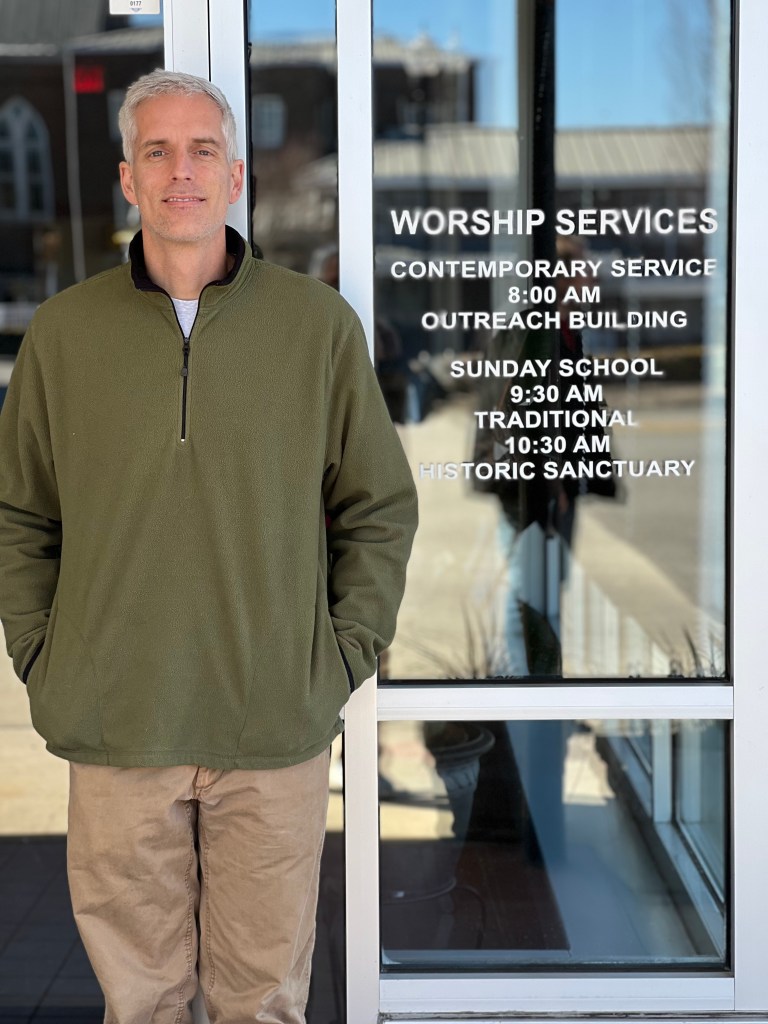
BD Newsletter: What part of the Gospels, teachings of Jesus inspired your vision?
Ryan Heatherly: Beginning with the Scriptures, I also think there is an experiential component to it as well…If I think about the early life of Jesus from his earliest days, his family was on the run. They were refugees in Egypt for some length of time. They settled in Nazereth, and as an older person, Jesus made Capernaum his hometown. He probably stayed with Peter’s mother-in-law a lot of the time.
Jesus himself said, “The Son of Man has nowhere to lay his head…” This was something that he was probably accustomed to, maybe comfortable with – not having a home. Jesus had a purpose, but he appeared to be comfortable with being homeless. That was part of his greater purpose. He was not settling down; he was always on the move. He had a nomadic lifestyle. I think He used that to do the greater good, to serve his ultimate calling — to save the lost.
There is an inescapable scripture that is well-known and cited often — Matthew 25:31-46. I just recently preached on this and used it as a platform to talk to our congregation to use our Outreach Building as a Cold Weather Shelter. I acknowledge the fact that we often do not know what is helpful and what is hurtful for underprivileged people or someone who lacks housing.
Jesus said, “Whatever you did to the least of these, you did to me.” On the flipside, whatever you don’t do for the least of these, you don’t do for Me. I think that is an inescapable challenge for those of us who take Jesus’ words seriously.
In that passage, He introduces the idea that it is a judgment of nations, which we sometimes overlook. I think that as one of the most privileged nations, we need to take seriously the call to think about those who are less fortunate. While we may be a rich nation in comparison to other nations in the world, I think it is our duty and responsibility to minister to those who don’t share in that prosperity.
At the conclusion of His teaching, Jesus said in Matthew 25:45, “In truth I tell you, in so far as you neglected to do this to one of the least of these, you neglected to do it to me.” When we leave somebody else out, Jesus would say that when we are overlooking Him, leaving Him out…we are leaving Him out of the equation of our life and our calling.
BD Newsletter: Do you have a strategic plan for the shelter and people experiencing homelessness in McMinnville?
Ryan Heatherly: I think our strategic plan is unfolding, coming to the surface. We may not have a strategic plan written down, but I also recognize that we could talk about things for a really long time and not act upon them. We are learning a lot. I am proud that we actually doing something as a church and community with the space and resources that we have.
We have plenty of resources in terms of financial contributions and human capital to do something that is worthwhile. Initially when I made the appeal to the congregation to go forth with this Cold Weather Shelter…I felt as though it was a need. We have the resources. We also had some experience with it on a short-term basis last year. We are now at a point to make a go at it, and along the way, we can do it increasingly well.
It hasn’t been perfect. My vision is to get as many churches involved as possible. Because of my experience with Room at the Inn, I do not think one church can solve the homeless challenge or epidemic. It is going to take more than me. It is going to take more than one church. If we are all ministering to the same community, it makes sense to me to join hands – to try and offer the resources and gifts that each church and civic organization can contribute.
One of the things we can offer as a church is space with the Outreach Center. We can live up to our name as an Outreach Center. That is what we are doing.
I hope that I have a much more concrete answer to that question a year from now.
BD NEWSLETTER: What do you like best about living in McMinnville?
Ryan Heatherly: I really like the outdoor scene here, the Barren Fork River. One of the baptisms we had was in Myers Cove, and I like the natural scenery. The proximity to the big city life is available if you want it. I grew up in a small town, I prefer living in a smaller town. McMinnville reminds me of the small-town environment that I prefer. Having lived in suburban Nashville, I cannot see myself living in a big city and enjoying it as much.
I also like that my family likes McMinnville a lot. There has never been a day when my wife or son have said they are looking forward to the next place we will live. It is more like I dread the day we have to leave. We have moved a lot. Hopefully, we won’t have to think about that for a long time.
Link to volunteer at the Cold Weather Shelter: https://www.signupgenius.com/go/70A0444ACAA2DAB9-54174785-cold#/
-
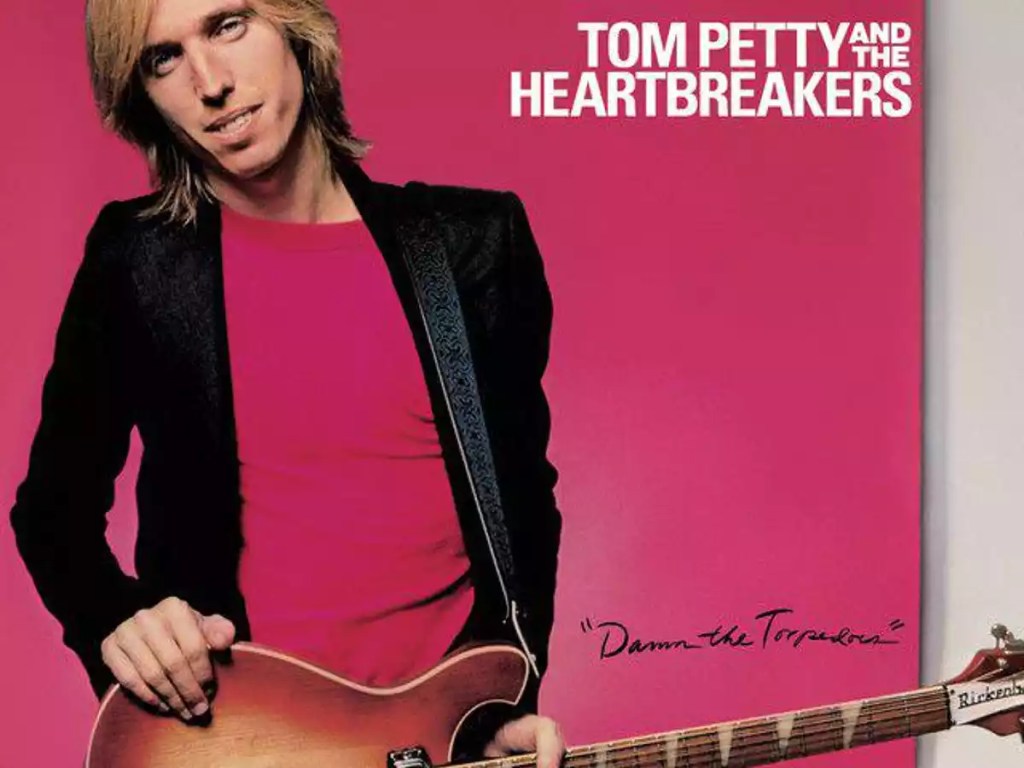
This morning I was reading a post on Facebook with random facts. One of the facts stated that outdoor cats live for 3 years and indoor cats can live up to 16 years. The next thing I did was google it, and this came up in my search:
“An indoor cat may live 15-17 years, while the life expectancy for outdoor cats is only 2-5 years, according to researchers at University of California-Davis. Dr. Jeff Levy, DVM, CVA, owner of House Call Vet NYC, also discourages owners from keeping cats outdoors.”
As I contemplated this, I visualized a cat I often see who lives outside. Then I started thinking about people living on the street and in tents in McMinnville. My mind also drifted to people who live outside in tents in refugee camps. Then Tom Petty’s song, “Refugee” popped into my head.
REFUGEE, BY TOM PETTY
We did somethin’ we both know it
We don’t talk too much about it
Ain’t no real big secret all the same
Somehow we get around it
Listen it don’t really matter to me, baby
You believe what you want to believe
You see, you don’t have to live like a refugee (don’t have to live like a refugee)Somewhere, somehow, somebody
Must have kicked you around some
Tell me why you want to lay there
Revel in your abandon
Honey, it don’t make no difference to me, baby
Everybody’s had to fight to be free
You see, you don’t have to live like a refugee (don’t have to live like a refugee)
Now baby, you don’t have to live like a refugee (don’t have to live like a refugee) NoBaby we ain’t the first
I’m sure a lot of other lovers been burned
Right now this seems real to you
But it’s one of those things
You gotta feel to be trueSomewhere, somehow, somebody
Must have kicked you around some
Who knows, maybe you were kidnapped
Tied up, taken away and held for ransom, honey
It don’t really matter to me, baby
Everybody’s had to fight to be free
You see, you don’t have to live like a refugee (don’t have to live like a refugee)
No, you don’t have to live like a refugee (don’t have to live like a refugee)
You don’t have to live like a refugee (don’t have to live like a refugee)
Oh, oh, ohSongwriters: Michael W Campbell / Thomas Earl Petty
Refugee lyrics © Gone Gator Music, Universal Music Publishing Group, Warner Chappell Music, Inc, Wixen Music Publishing
Tom Petty may have been singing about lovers, but it fits perfectly as I think about people who are experiencing homelessness. However, there is a catch for me personally. During the past year, I have been volunteering to help a little with people who are homeless. I am watching people leave a building after they can eat and shower to go live outside and sleep outdoors on the actual streets, sidewalks and in tents. I have come to the conclusion that I am enabling or helping them to live there by not doing something to help them live in a home.
So, I googled “life expectancy of a person living outdoors vs. indoors.” This is what appeared on my computer screen:
Generally, a person living primarily outdoors would have a significantly lower life expectancy compared to someone living indoors, due to increased exposure to environmental hazards like weather extremes, predators, accidents, and lack of access to basic necessities, making living entirely outdoors is considerably more risky for health and longevity.
Key points to consider:
- Environmental dangers:
Exposure to harsh weather conditions, including extreme heat, cold, rain, and storms, can lead to health complications and potential fatalities.
- Predators and accidents:
Individuals living outdoors are more vulnerable to attacks from wild animals and potential accidents due to lack of controlled environments.
- Access to healthcare:
Limited access to medical care and sanitation facilities when living outdoors can exacerbate health issues.
I don’t need medical experts to tell me that living outdoors shortens the life expectancy of someone. I have seen what happens with my own eyes. People’s health deteriorates rapidly over a few months of living outdoors or in conditions where the roof leaks and there is no electricity or running water. The hazards of living outdoors, especially when you are disabled are real. Thurman Crisp, a disabled veteran, was living on the streets in McMinnville, and he passed away on December 2, 2024 when he was crossing the street and hit accidentally by a vehicle.
Tom Petty was right, you don’t have to live like a refugee. But until I can help develop and implement a strategic plan to keep men and women from living outside in tents and living in a home, I believe that I am allowing people to live like refugees in McMinnville. And I am embarrassed to keep thinking and saying that there is nothing I can do about it.
Refugee on Spotify: https://open.spotify.com/track/4mcZYzoGwPRDdhWVlygiHf?si=a132825cb4534c93
Refugee on YouTube: https://youtu.be/fFnOfpIJL0M?si=6MMpcQ9SJ4BdbtYM
-
By Brad Durham
First United Methodist Church, St. Matthew’s Episcopal Church and H.O.M.E. are collaborating to provide a men’s shelter during cold weather at First Methodist’s Outreach Building. The staff is maintained by volunteers, and volunteers are needed to stay overnight with the guests. A signup link is below.
Link to signup to volunteer: https://www.signupgenius.com/go/70A0444ACAA2DAB9-54174785-coldfbclid=IwY2xjawHqXfZleHRuA2FlbQIxMAABHQhnXlkEqY5EM0GPdFgvtXlViplwYZsAffyVnlcEenqxfpBsdyKeWTEhHw_aem_E92inJlT5pNOrh5mTOtUjg#/
Registering at the link above with SignUpGenius will take only 5-10 minutes.
If you wish to speak with anyone about volunteering, please call First United Methodist Church at (931) 473-4419.
Volunteers will be asked to sign a code of conduct form and stay at the shelter from 8:30 PM to 7:30 AM.
GENERAL INFORMATION
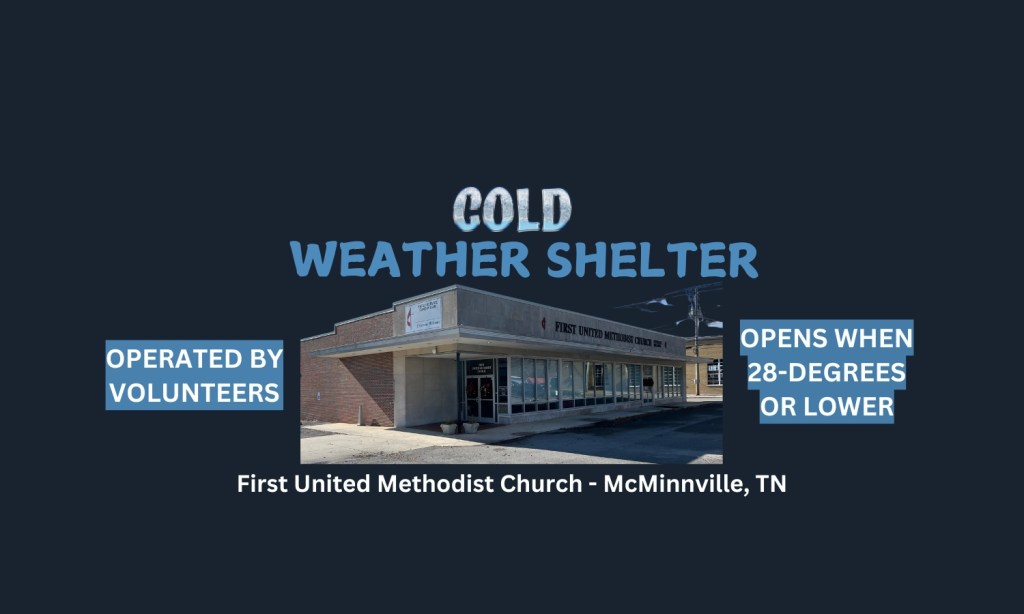
The McMinnville Cold Weather Shelter for men will open on a contingency basis – based upon two factors. When the temperature is 28-degrees or below (or 25-degree wind chill factor), the Cold Weather Shelter will open. The other factor will be if there are a sufficient number of volunteers to operate the overnight shelter.
McMinnville First United Methodist Church is hosting the McMinnville Cold Weather Shelter for men only from 6:00 PM to 7:30 AM. This is a collaboration with St. Matthew’s Episcopal Church, HOME and volunteers.
Please spread the word so that any male person experiencing homelessness in McMinnville and Warren County will have the opportunity to come inside during severe cold weather.
If you or anyone you know wishes to volunteer, please have them contact First United Methodist Church at (931) 473-4419.
-


By Brad Durham
Dylan was 24 in 1965, when he went electric at Newport. Listening to some of his songs from that period blows my mind.
I was nine years old in 1965, and I’m not sure I knew Dylan existed back then. I may have been 16 when I first really realized who Dylan was as a songwriter.
And I thought I was a decent music enthusiast when I was around 14, collecting 45s and listening to the Top 40 hits on WLS at night on my bedside radio. How did I miss this guy in 1965 when I was alive? It was all Beatles and what was on the radio and TV back then.
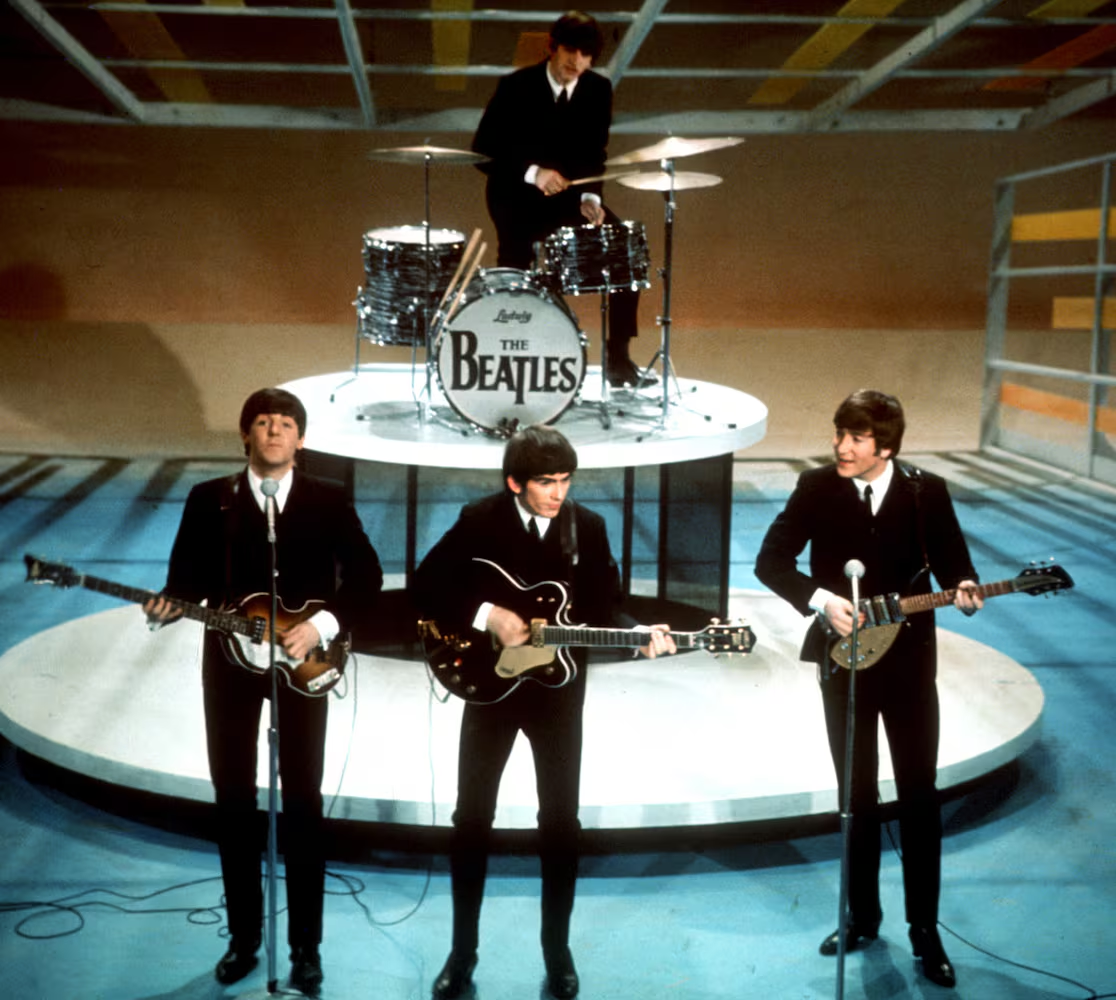

It wasn’t until I really started listening to music and buying albums that music became spiritual and meaningful to me. The album that made music personally meaningful to me was QUADROPHENIA. That crazy dude from England was speaking to my psychologically troubled mind and broken heart.


Then Dylan became like the Shakespeare rock and roll spokesman to me. But it was always Pete Townshend who gave me personal therapy in rock and roll.


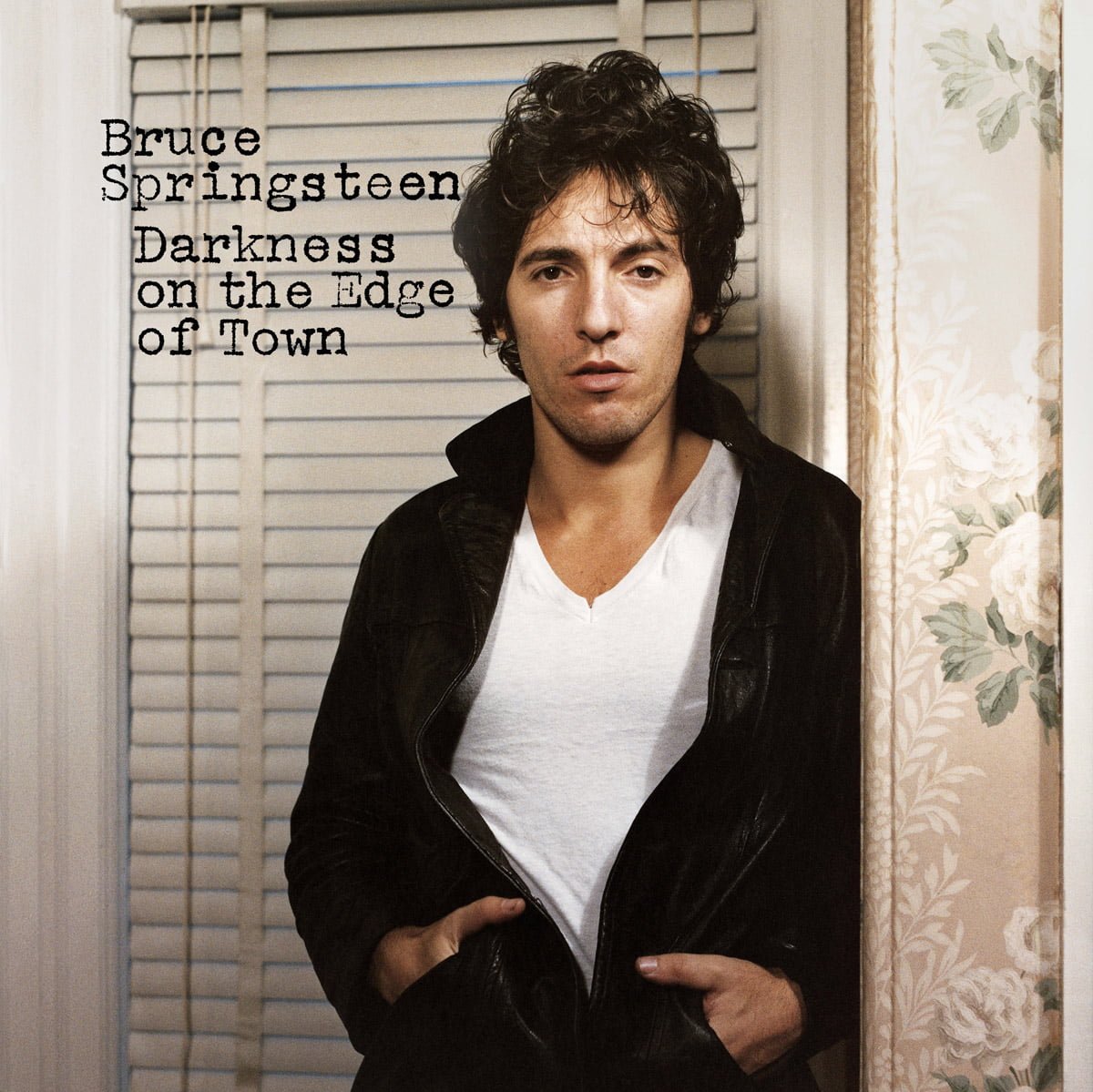
Then Springsteen jumped out to me with DARKNESS ON THE EDGE OF TOWN. I was already into Christian rock and roll at this point, but DARKNESS reached into the troubled psychological parts of my mind.
Then Jim Morrison’s poetry was put to music by the remaining Doors with the release of AN AMERICAN PRAYER. Jim Morrison’s writings and stories would change everything for me 38 years after the release of that record when I went to New Mexico to clean my doors of perception.
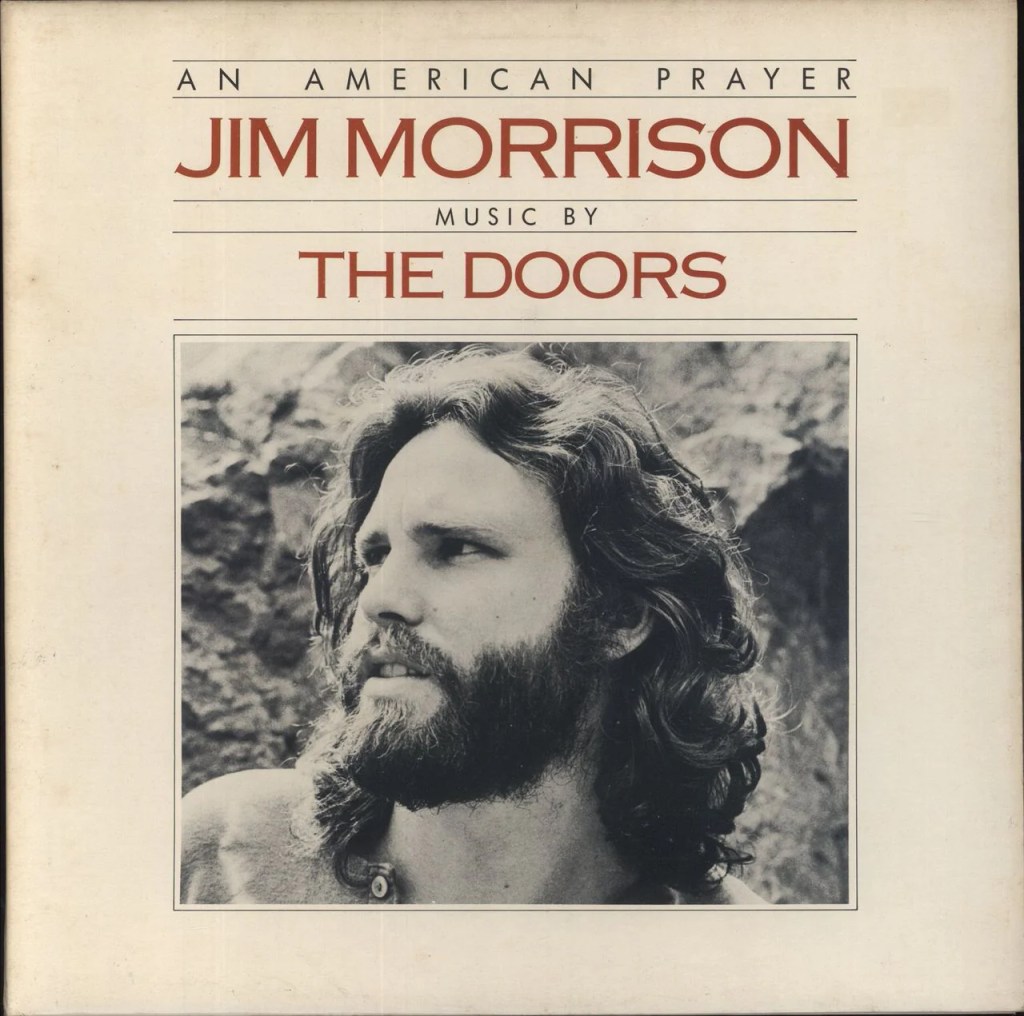
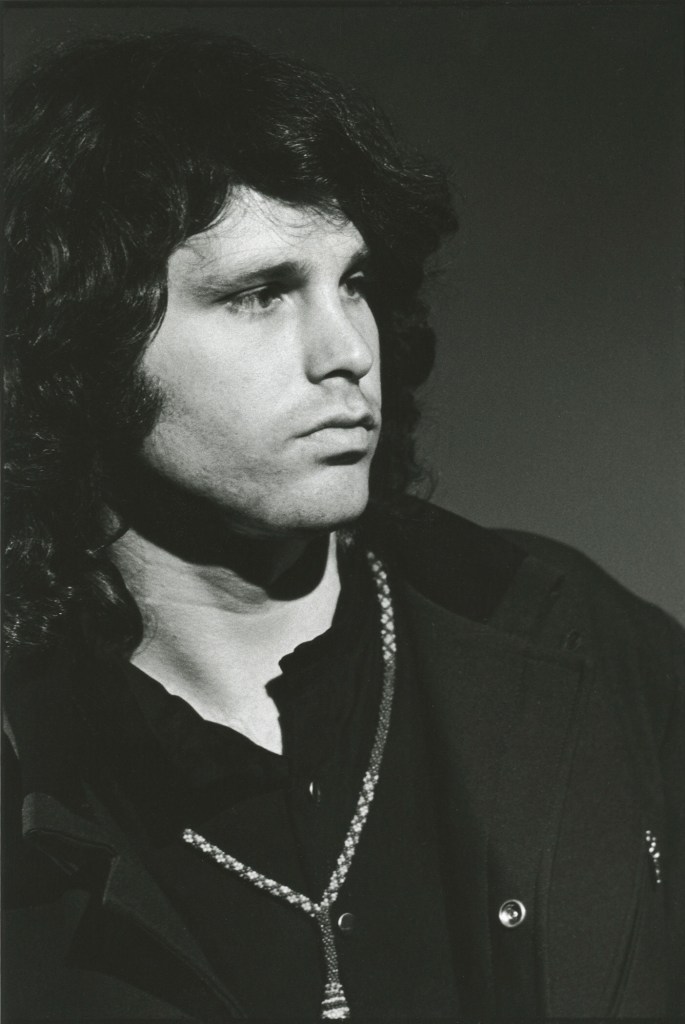
Jim Morrison Photo copyright Frank Lisciandro These artists and albums helped shape my life, for better or worse. They actually helped me make sense of my experiences and life. Not sure how I would have made it this far without them.
-

By Brad Durham
First United Methodist Church and St. Matthew’s Episcopal Church co-hosted a night at the Park Theater for people experiencing homelessness and underprivileged children. Guests at the party enjoyed free popcorn, cookies, and drinks. In addition, children were given gifts of stuffed animals and adults received a gift bag containing a gift card, winter hat, hand warmers, and a flashlight. The movies viewed were A CHARLIE BROWN CHRISTMAS and HOW THE GRINCH STOLE CHRISTMAS featuring Jim Carrey.
A few of the gifts that were leftover at the Park Theater will be given out to guests at the McMinnville Cold Weather Shelter in the near future.
THANK YOU TO THE HOSTS AND SUPPORTERS
Thank you to Pastor Ryan Heatherly and First United Methodist Church who also hosted a concert and meal for people who are experiencing homelessness prior to the movies at the Park Theater. It was part of First Methodist’s commitment to celebrating Happy Birthday for Jesus, which is the reason for the season.
Thank you to Rev. Charles McClain and St. Matthew’s Church for paying the fee to use the Park Theater and supplying gifts for the children. Thank you to Joe Harvey for helping direct the event at the Park Theater.
A big thank you for everyone who donated to support the Christmas Party. The movies, refreshments and gifts made this a special night for many people in McMinnville.
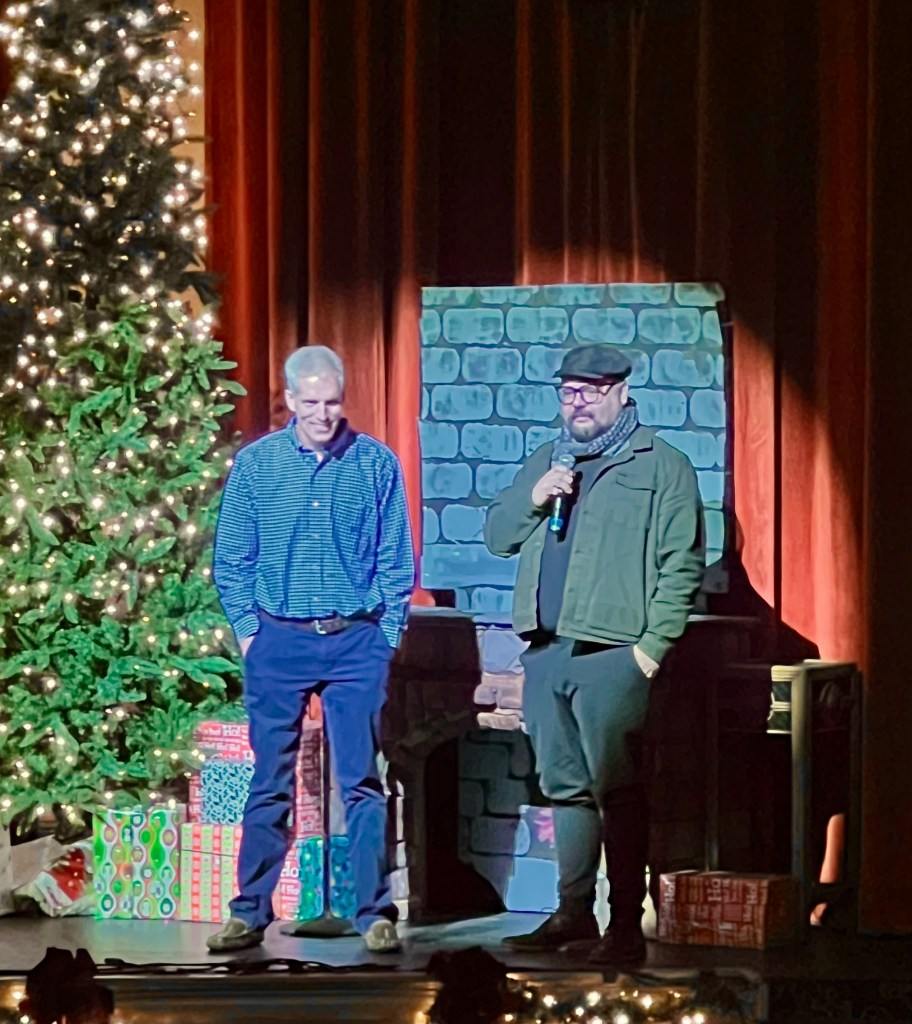
Pastor Ryan Heatherly and
Rev. Charles McClain.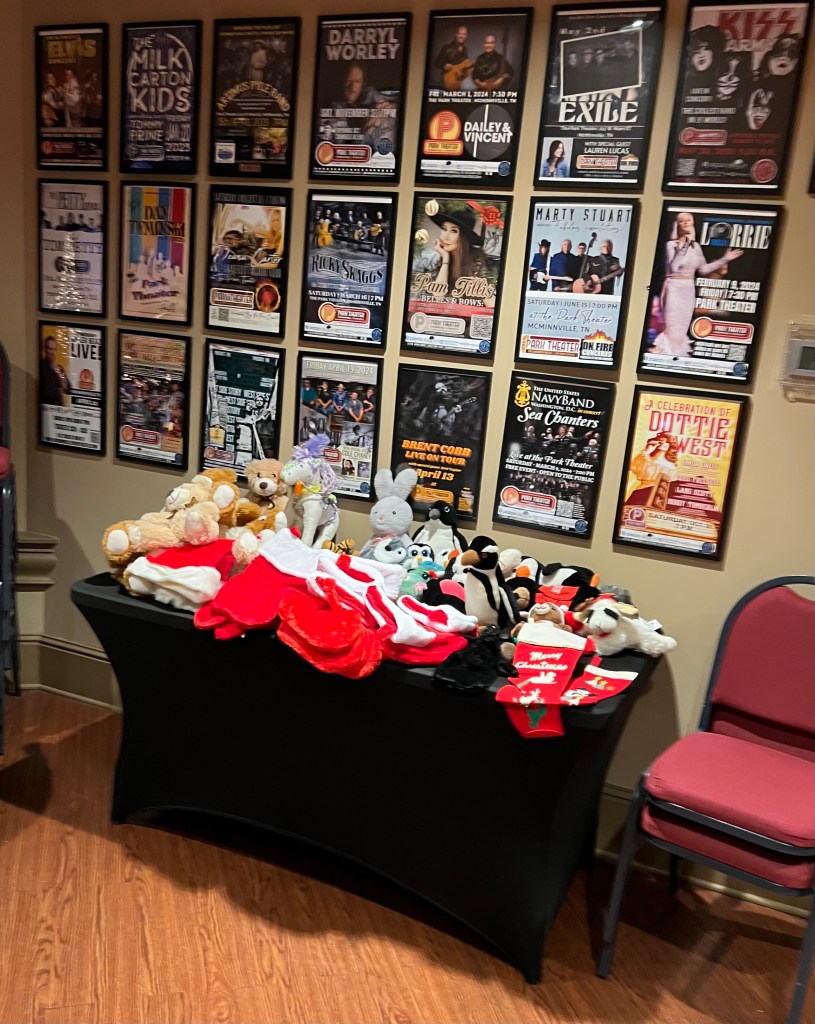
Stuffed animals donated for kids. 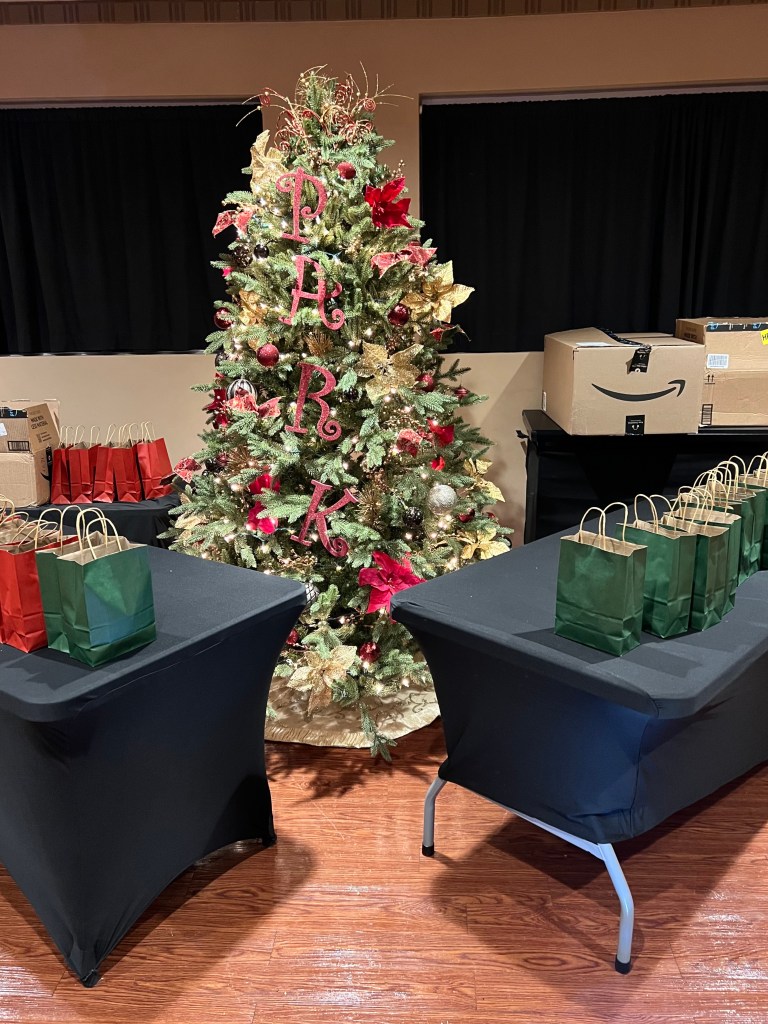
Gift bags donated for adults. 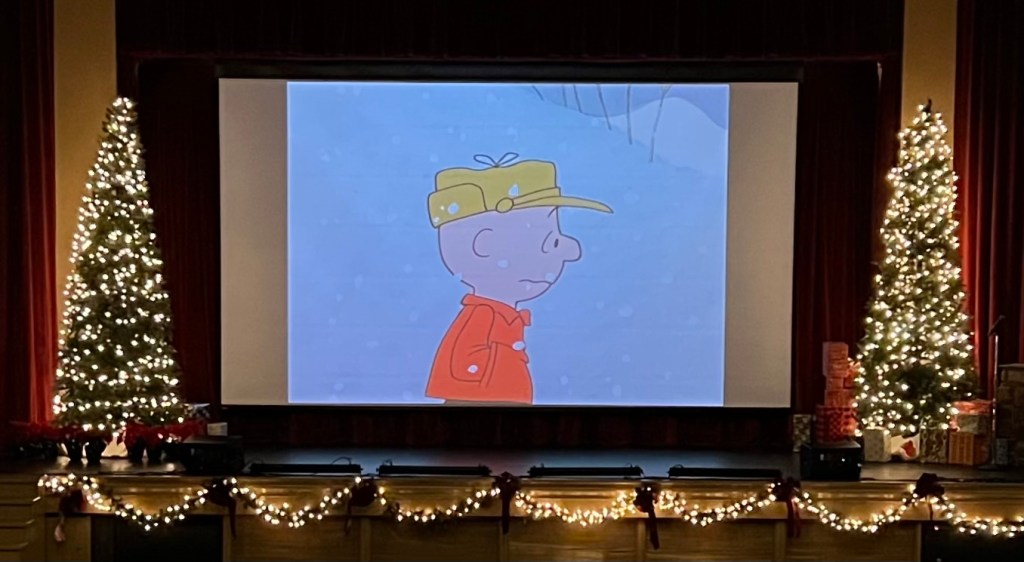

For Your Information…
McMinnville First United Methodist Church hosted a McMinnville Cold Weather Shelter for men on Wednesday night, December 11, from 6:00 PM to 7:30 AM the next day. This is an ongoing collaboration with St. Matthew’s Episcopal Church, HOME and volunteers.
The McMinnville Cold Weather Shelter for men will open on a contingency basis – based upon two factors. When the temperature is 28-degrees or below (or 25-degree wind chill factor), the Cold Weather Shelter will open. The other factor will be if there is a sufficient number of volunteers to operate the overnight shelter.
Please spread the word so that any male person experiencing homelessness in McMinnville and Warren County will have the opportunity to come inside during severe cold weather.
If you or anyone you know wishes to volunteer, please have them contact First United Methodist Church at (931) 473-4419.
A Message from Pastor Ryan Heatherly…
We would like to invite fellow church & community peers to join a community effort to shelter unhoused neighbors on the coldest nights. Please share as appropriate.
This coming weekend ( Dec. 20-22) is currently forecasted to be below 28 degrees, so we should plan to open 3 consecutive nights, provided we have enough volunteers. https://weather.com/weather/tenday/l/89e6c7bcef61709cb3d08151c449da1f0ec0f9ae78cb6632d1ba4281752e8c71
Being a weekend, hopefully we can utilize more volunteers in various roles. Breakfast should not be required Saturday, given the normal HOME schedule. Let us know if you have 1-2 men willing to stay Friday, Saturday, or Sunday, or for various other roles. Any meals should feed about 10 in number. On Wednesday, Dec. 11, 5-6 men stayed overnight + 2 volunteers. See attached for more information. Email or call me if you can help. Email: ryan@mcminnvillefumc.com Phone: 931-473-4419
-
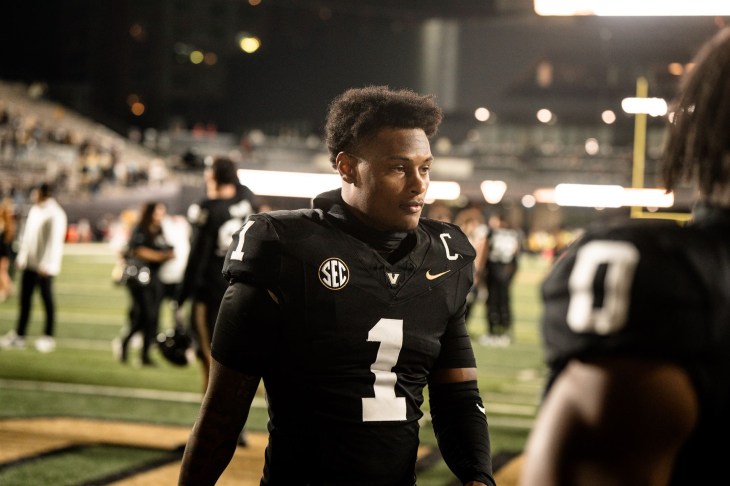


C.J. Taylor at Vanderbilt (photo provided) C.J. at Blackman 2020 (photo Brad Durham)
C.J. Taylor…
Matt Turner is the greatest Warren County football coach. When you haven’t won in 43 years, I think there is a new greatest coach of all-time.
Maybe they just need to look internal before looking for a new coach. Starts at the top of the food chain AD, Principal. All that. They need to figure themselves out first. Take a long stare in the mirror, and look internally.
Regarding the possibility of transferring to another high school…I was transferring to Oakland. Coach Sullens and Coach Turner talked me out of it.
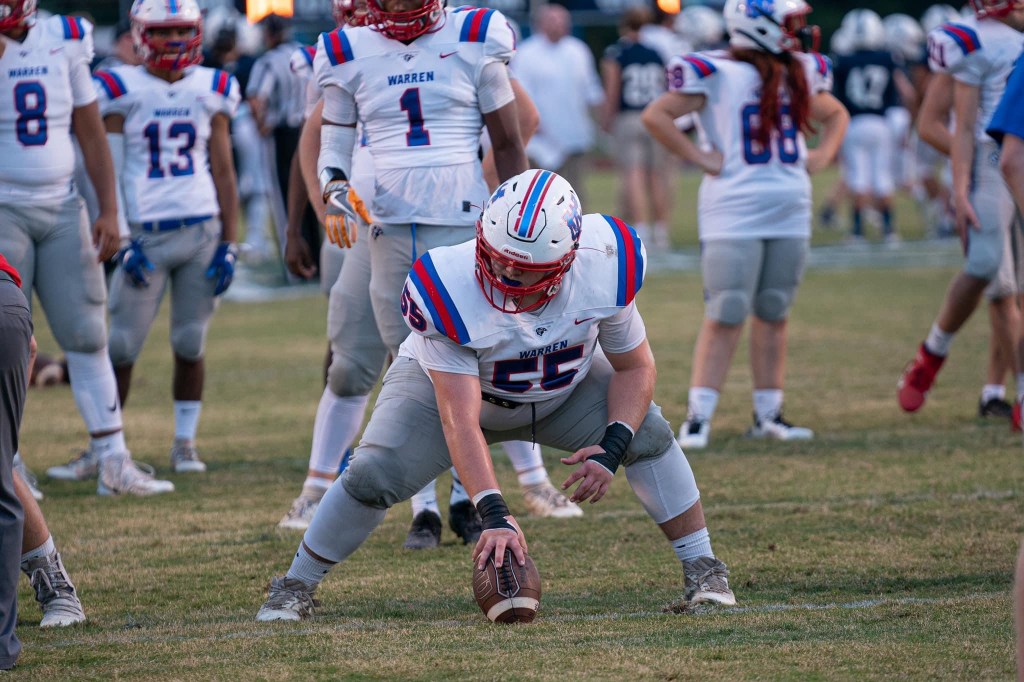
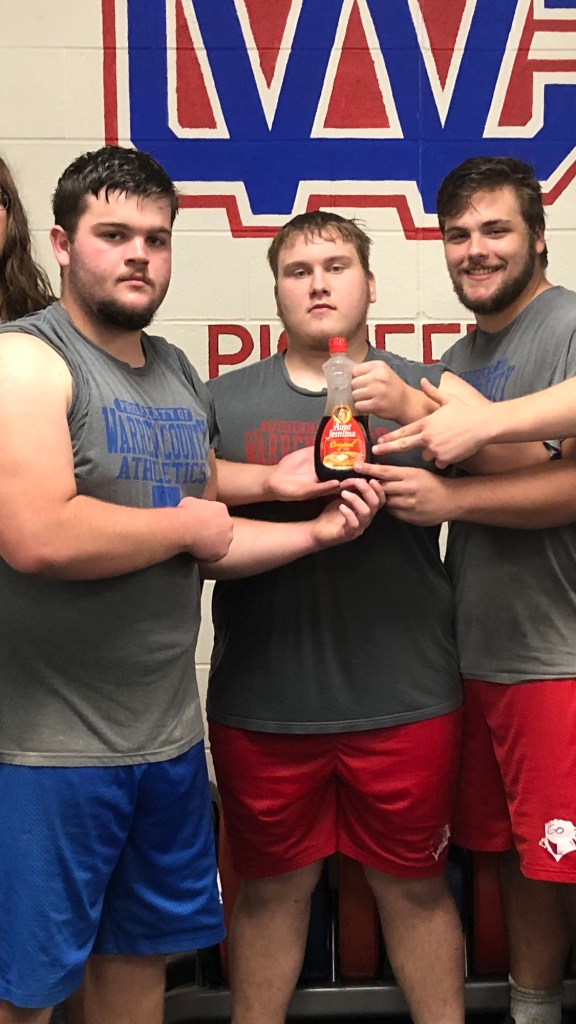
Doug Wells pregame 2020. The infamous, Syrup Squad, created by Doug Wells. Pictured are Braden Bottoms, Doug Wells and Kaden Jordan. (photos Brad Durham)
Doug Wells…
Coach Turner played a huge role in my life. He was a father figure, not just to me, but to several other guys as well. He has done so much for me — I will never be able to repay him. No one cares more about the well-being of Warren County football than that man.
Also, at times during our historical season in 2020, I didn’t always understand why Coach Turner would have us do certain things…like running 40 40’s every Monday or perfecting every play in our play book, but I do now. Looking back, he made us do everything right, down to the minute details. Because he didn’t want us to settle to be mediocre. I learned more about life during my time playing for him than football. He taught us how to love and how to be good men. Everyone has an opinion on Matt Turner and that’s fine. But one thing you can’t argue about is his dedication to Pioneer football and his dedication to changing young men’s lives.
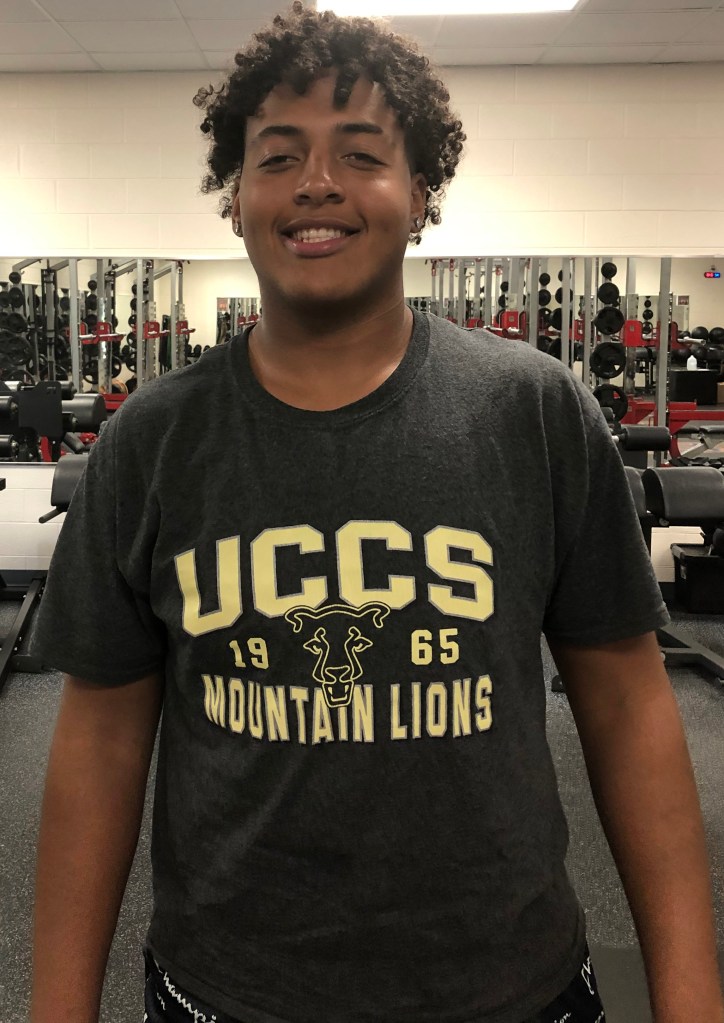
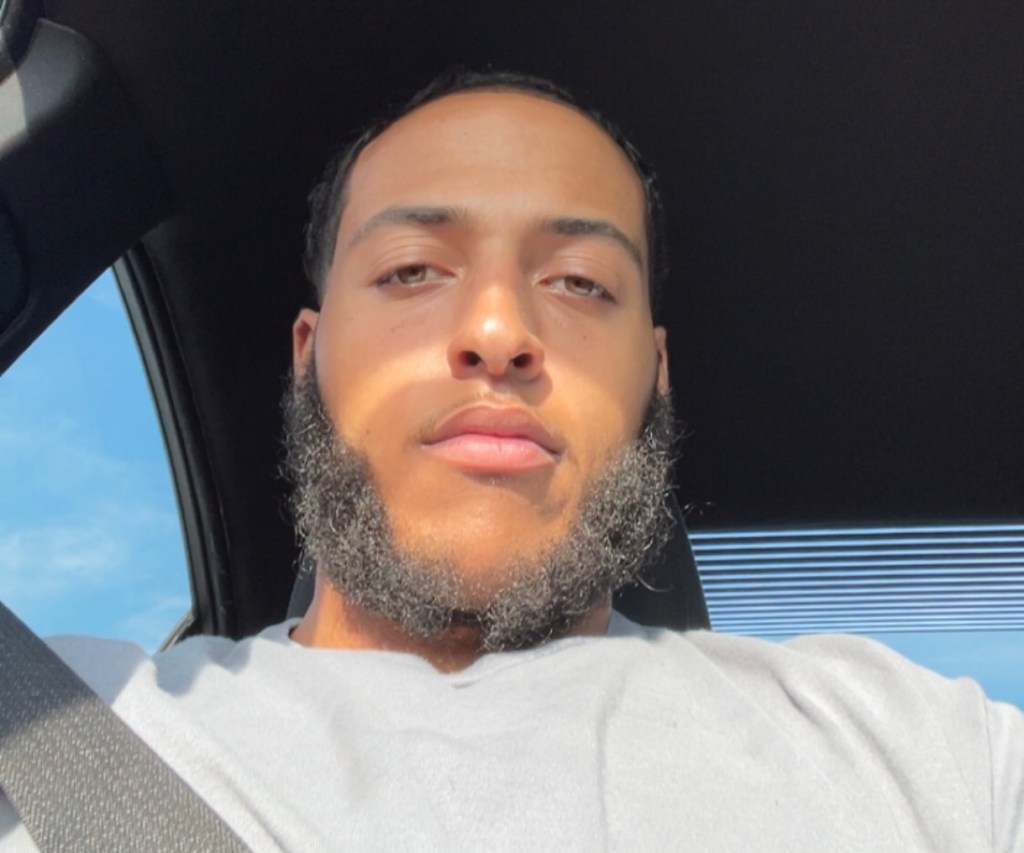
Aiden Cummings, WCHS Football Weight Room 2020 (photo Brad Durham). Aiden Cummings (photo provided)
Aiden Cummings…
“I am because we are” — do I know if that was something he made? No, but it was something he made us believe and it can describe how it felt playing under him. If one went, we all went. When the team is together and strong, we were unstoppable. Not just one player made the team. We all made the team.
I can agree with that not many coaches come in and try building relationships with as many players as he did. With that came trust, and we trusted him. And that got us those results, along with CJ having the performance he did, along with the o-line and the Holders. There are 5 or more players I could name as well. But considering we had put together some key players we had missed since middle school, I feel we would have still have been successful. Coach Turner was a former player, and as a coach, he understood us. On top of that he was local. He wanted it just as bad as us. He’d literally be out there with his hand in the dirt practicing. Head coaches don’t do that now. They just want to look good.
As for me playing football at Warren County that year, I had a debate about if I should play. I did play. But coming off the bad seasons we had, it was a real gut check time. Like a calling to reality. Just because we didn’t win this amount of games doesn’t mean we can’t work and get the team to the standard that we wanted to reach.
I do recall me wanting to quit with coach Turner as the coach but I don’t think he was the head coach. It had nothing to do with him, but after talking with him, he’d give you no other reason but to want to stay. He’d put that spark in you if you didn’t think you had it before.
Just ask about the pregame and halftime speeches. That man was bleeding Warren County, and I’m gonna say something extra for me. It’s sickening when you see a community turn against a coach that gave his all to the community. He had relationships with the players well enough to know how to coach them, but we also pushed for the relationships like that.
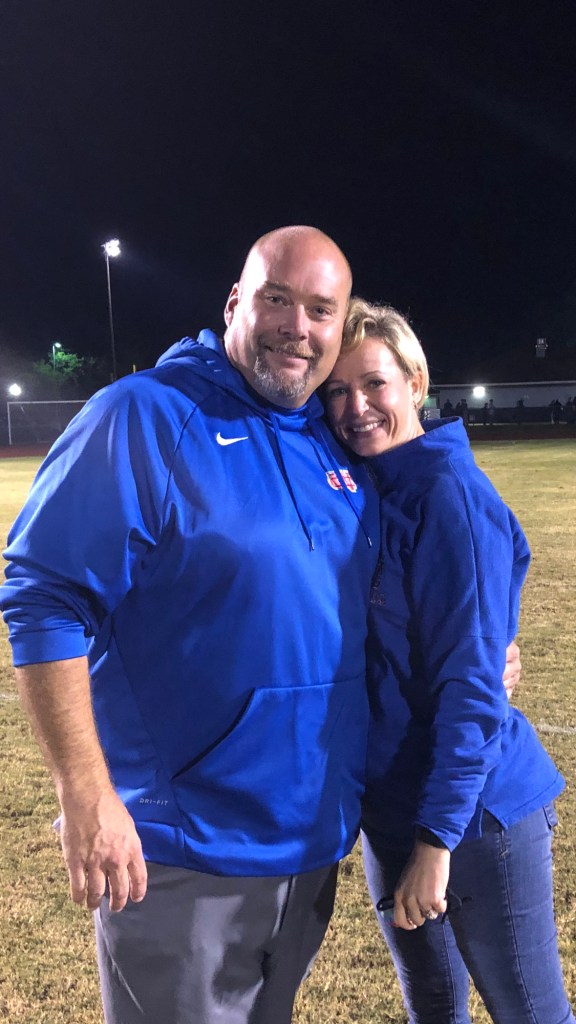
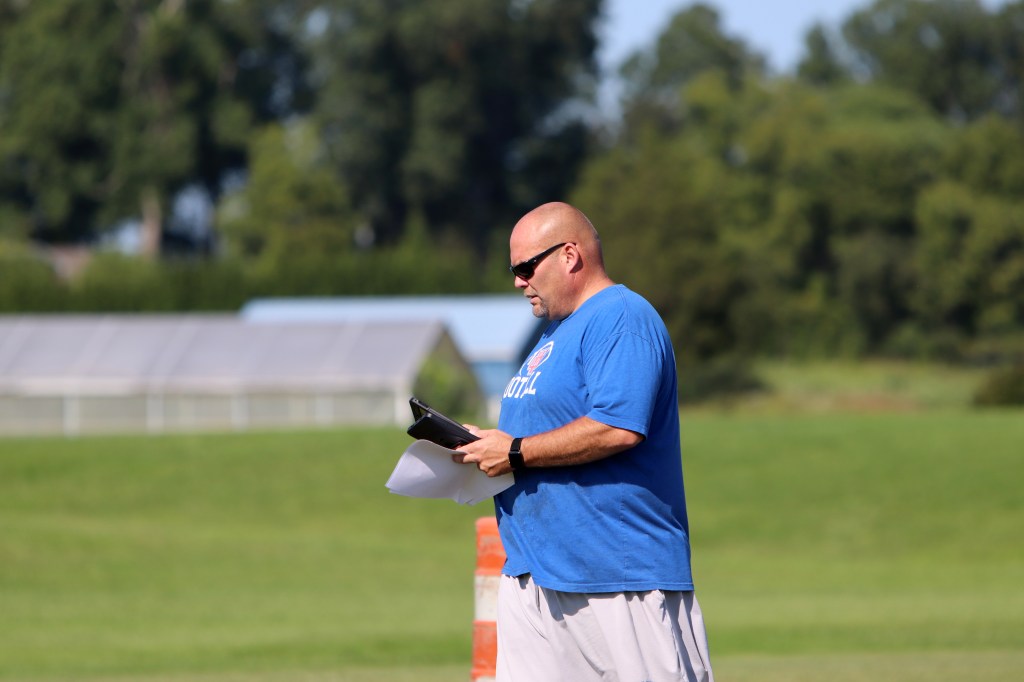
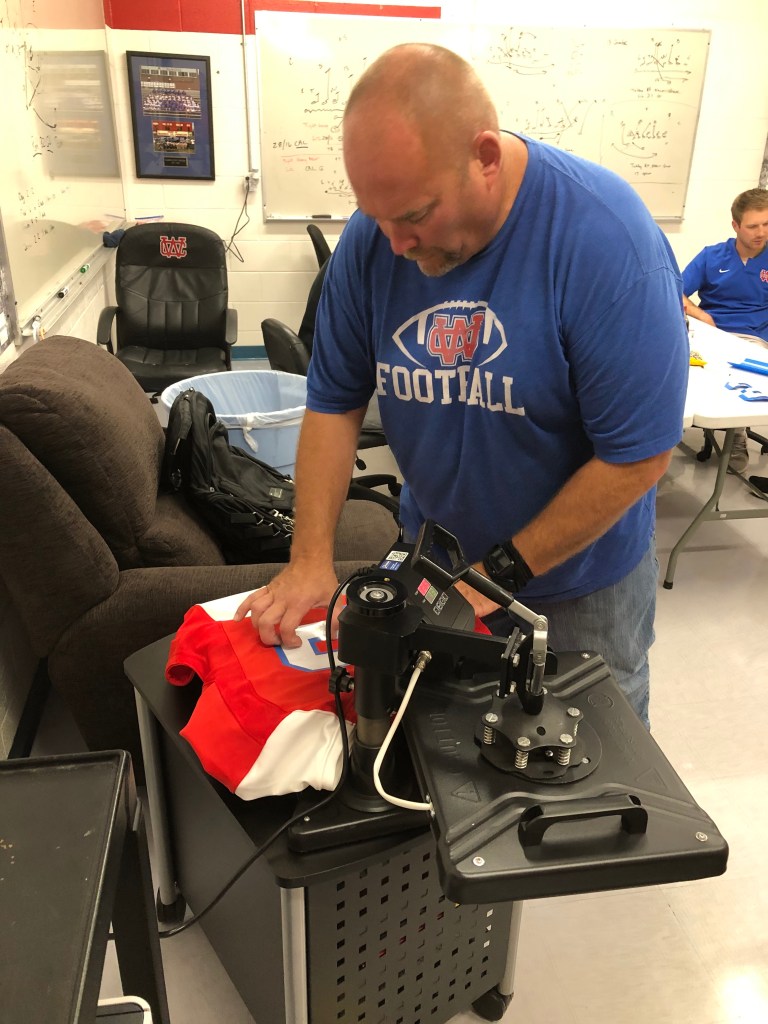
Matt and Autumn Turner after a game. Matt Turner at practice. Matt Turner working on a jersey. (photos Brad Durham)
-
By Brad Durham
Matt Turner deserved the opportunity to coach the Warren County High School football team for the next two years. He has dedicated himself to football since he was a student at Warren County Middle School. One coach out of 10 coaches in the past 34 years has led the football team to a winning season at Warren County High School. That coach is Matt Turner.
During the past 34 seasons, the high school Pioneer football team recorded nine 0-10 regular seasons. The head coaches of those teams were Franklin Fisher, Sid Fritts, Glen Campbell, Heath Woods, Gerald Tidwell, Chris Madewell, Tommy Johnson and Matt Turner. Every head football coach at Warren County who coached for two or more seasons experienced an 0-10 season except Tom Moore.
It is worth repeating. Only one out of the past 10 coaches in 34 Pioneer football seasons has had a winning season. Matt Turner led the Pioneers to an 8-3 season. Matt Turner has won only three games in the four seasons after his team broke the losing streak. Turner is not the only head coach who has struggled to win football games in Warren County.
There have been only 11 winning football seasons in the 56-year history of Warren County High School. 80% of Warren County’s high school football seasons have been losing seasons. Losing is the norm, not the exception.
Why does each administration keep hiring coaches without providing proper support and leadership for the program? Anyone who becomes superintendent or principal of the high school has to know the history of the football program.
I have had been able to witness the football program up close for the past 34 years, and in my opinion, there has been a lack of institutional support for the football program since Sid Fritts was the head coach. Everyone involved in the football program and administration since 1994 may disagree with me. From my perspective, the foundation has been cracked and the administration has failed to repair it.
It takes more than a head coach to support a high school football program. Until the Warren County Schools’ administration can give the proper level of support to the football program, it is not reasonable to expect any different outcomes.
Warren County keeps putting football coaches into a program that has a 34-year history of losing. The only coach who led his team to a winning season was Matt Turner. Principal Chris Hobbs thinks he has the ability to reboot the football program. I hope the people of Warren County have enough of an interest in the football program to actually hold Chris Hobbs responsible for the reboot.
Dr. Grant Swallows stated that he “feels the need to start fresh with a new person in the lead.” It is interesting that Swallows hired a communications director this summer, and he chose to release this statement through that person. Is that how Warren County Schools operates now? Is that the best use of public-school funds in a small town?
I asked Grant Swallows for an interview recently to discuss the status of Matt Turner’s position and the football program in general. I was given the school’s statement in an email. As a citizen in a small town, I find the lack of direct communication to the public regarding the release of a football coach surprising.
It is my hope that the Warren County public will demand more answers about why Matt Turner was not retained as head coach. And furthermore, what are the plans to repair the foundation of the high school football program? What makes this administration confident that they can reboot the program and start fresh with a better coach than Matt Turner?
It would be a mistake to say that this administration alone is responsible for the losing status of the high school football program. However, it would be accurate to state that the present administration bears some responsibility. Leadership starts at the top, and the present administration has not provided the leadership necessary to repair the cracked foundation of Warren County football.
For anyone paying attention, this is the same administration that hired Mendy Stotts to coach the girls basketball team. This is the same administration that intentionally ended Sable Winfree’s high school basketball career.
During the past 25 years, I have worked with hundreds of high school coaches from one end of the state to the other. I have observed a lot of strange decisions that many people in both small and large towns thought would never happen. Witnessing the end of Sable Winfree’s high school basketball career and Matt Turner’s tenure as the head football coach at Warren County High School are as strange as it gets.
To quote the late great Bishop Desmond Tutu, “when do we stop pulling people out of the river and go upstream and find out why they’re falling in?“
OFFICIAL STATEMENT FROM THE WARREN COUNTY SCHOOLS:
Warren County High School Announces Head Coaching Change
McMinnville, Tenn., November 15, 2024 – Warren County High School has announced a change in direction for the leadership of the Pioneer football program. Matt Turner served as the head coach beginning in 2019 and for the last six seasons. His tenure included highlights such as the Pioneers’ first winning season in recent years while simultaneously yielding Warren County’s first-ever Mr. Football in CJ Taylor.
WCHS Executive Principal Chris Hobbs commended Turner for the impact he made on the football program. “I want to personally thank Coach Turner for his dedication, integrity, and the countless hours he has devoted to our school and our students. No one has ever doubted any of those things. In our meetings to evaluate the state of Pioneer football, we felt we needed a ‘reboot’ and thus this decision became necessary,” he said.
Since the end of the 2024 season, Warren County High School has been formulating a plan for the future of the football team, including taking steps to play a more competitive, non-region schedule in 2025 and 2026.
“I want to thank Coach Matt Turner for his time as the head coach of our football program. He has been invaluable for many years and is a Pioneer to his core. His commitment and the investment into the lives of our student-athletes is second to none,” said Dr. Grant Swallows, Director of Schools, Warren County Schools. “With that said, Warren County High School is in the midst of a new course for the program and feels the need to start fresh with a new person in the lead. That decision should not diminish the fact that Matt Turner is an outstanding leader of young men and that he has done tremendous work over the last 6 seasons. The search for a new coach will begin immediately and will take place over the next few weeks,” he added.

 BD Newsletter
You must be logged in to post a comment.