-
By Brad Durham
Forty years ago, I volunteered and worked directly with the homeless in Boston and Cambridge, Massachusetts. My role involved placing homeless families into permanent housing using HUD rental subsidies. This experience, combined with research from Harvard and MIT on poverty and homelessness, was invaluable. I successfully blended my passion for music with advocacy by developing benefit concerts and a nonprofit organization that supported homeless children living with their families.
For the past 40 years, I did nothing to help the homeless. Everything I am about to share is directed primarily at myself. The catalyst for my transformation from inaction to action was volunteering at the First Methodist Outreach building to serve the homeless. What I witnessed there was strikingly different from the attempts I had participated in while in Massachusetts to house the unhoused. This experience motivated me to advocate for a shift in public and political will regarding chronic homelessness. In my hometown, many people who are homeless walk around all day, and some are literally sleeping on the sidewalks.
Warren County: Income Statistics & Projected Funding
Warren County has a total income of $2.1 billion. One percent of that income is $21 million, and 1% of that $21 million is $210,000. If 8,400 households contribute $25 each this year, we can raise the $210,000 needed, representing approximately 52% of the 16,203 households in Warren County. I believe this goal is achievable, allowing us to fund 10 rental subsidies and, in addition, develop separate supportive services and housing search teams. In essence, $210,000 could help end homelessness for 10 individuals or families and transform their lives.
Two Talks Featured Below
Two talks have significantly changed my perspective on addressing homelessness and improving the lives of the unhoused in McMinnville. My goal is simple: to collaborate with as many people as possible to place 10 unhoused families and/or individuals into permanent supportive housing within one year.
Inspiration #1 is a 90-second lecture by Nick Saban entitled, IMPORTANCE OF NOTHING.
Key highlights of Coach Saban’s talk include:
- You wake up in the morning, and you are entitled to nothing.
- Nobody owes you nothing.
- You can have talent, but if you don’t have discipline and you don’t execute and focus, what do you get? Nothing.
- If you are complacent and not paying attention to detail, what does that get you? Nothing.
- Nothing is acceptable but your best.
- Everything is determined by what you do and you trying to be your best so that you can build on positive performance. That’s the only thing – there should be nothing else.
- What we have to be focused on is what we need to do.
- Do not accept anything but our best.
Inspiration #2 is an 11-minute Ted Talk by Dr. Sam Tsemberis, who created Housing First in 1992, providing thousands of successful examples of permanent supportive housing.
Key highlights from Sam Tsemberis’ Ted Talk entitled ENDING HOMELESSNESS AND TRANSFORMING LIVES presented in 2012 include:
- We pay a price for ignoring homelessness, affecting not only those living on the streets but also ourselves.
- Ignoring the pain of homelessness requires us to shut down part of ourselves, leading to shared suffering that can be alleviated.
- Homeless individuals often face various clinical conditions, and failing to help them constructively leads us to label them as treatment-resistant.
- We tend to blame them for their suffering, forming implicit assumptions that they are not trying hard enough or have wasted their opportunities.
- The disconnect between individuals seeking housing and the systems requiring treatment or participation in programs has persisted for years.
- Our desperation to serve them has created transformative moments.
- Improving lives, both for the homeless and those providing service, requires a significant shift in approach.
- Our clinical expertise often misaligned with their needs; many prefer a stable home before treatment.
- The Housing First program, created in 1992, recognized their desire for simple dignity—a private space to live, cook, and sleep without being in crowded shelters.
- We had to set aside our preconceived notions about mental illness and acknowledge their reality.
- Accepting their perspectives allowed us to help them find housing of their choosing, and support teams helped them thrive beyond our expectations.
- With a home, they utilize their survival skills more effectively; studies show 85% success in housing and 20%-25% with treatment.
- Both Republicans and Democrats agree that providing housing is more cost-effective than leaving someone homeless.
- Housing First has proven effective by creating safe living environments and offering necessary services.
- Key lessons include respecting their wishes, valuing diverse perspectives, and recognizing that success relies on collaboration.
- Unlike diseases like cancer or Alzheimer’s, we have a clear solution for homelessness, though we lack the necessary political will. My advocacy aims to challenge this.
- Ending homelessness benefits those affected while healing society, fostering a more just and compassionate community.
MY CONCLUSION
As Sam Tsemberis mentioned in his TED talk, I often blame homeless individuals for their lack of housing and decision-making. I make judgments without knowing their real circumstances and history. The worst mistake I make is ignoring them. I mistakenly believe that simply showing up and discussing how to help the homeless means something. Watching someone leave a meal and walk into the night in search of a place to sleep is equivalent to doing nothing.
I have lacked the courage to turn my judgmental attitude and moral justifications into action to help provide permanent supportive housing. One fundamental lesson I have learned is that I cannot do it alone. It’s unrealistic to expect that I can simultaneously negotiate housing deals for the homeless, offer supportive services, and maintain my own full-time business.I have been doing a disservice to our homeless neighbors in McMinnville.
Action Step
Therefore, I am organizing a Homeless Summit and inviting every church, civic organization, elected official and private citizen to attend. The purpose of the Summit is to review the seeds that BEYOND THE BRIDGE planted in January and what has developed with those seeds. Dates for the Summit will be announced soon.
The Goal
My goal is to place 10 people and/or families who are homeless into permanent supportive housing within a year. With 8,400 households donating $25 each, we can raise the $210,000 needed to help end homelessness and transform lives. We can turn nothing into something. We can do our best to provide evidence-based solutions. Together we can heal homelessness and ourselves, transforming McMinnville into a more caring and just community for our neighbors who are homeless. 1% of 1% of the total income in our county can make it happen.
Footnotes: The source for the total county personal income is the Tennessee Department of Economic & Community Development: https://tnecd.com/county-profiles
The number of household metrics are from the American Community Survey (ACS) and the most recent US census reports using ChatGPT. www.censusreporter.org.
-
Below is a link to the NY TIMES column by David Brooks. It is worth reading, no matter your political affiliation. No matter how you voted, this article provides good insight. If you consider yourself a democrat, you definitely need to read it.
https://www.nytimes.com/2024/11/14/opinion/identity-groups-politics.html?unlocked_article_code=1.aE4.g2mo.DfYY-TNJ5NHc&smid=url-share: A COLUMN BY DAVID BROOKSDAVID BROOKS
Why We Got It So Wrong
Let me ask you a few questions:
If the Democrats nominated a woman to run for president, would you expect her to do better among female voters than the guy who ran in her place four years before?
If the Democrats nominated a Black woman to run for president, would you expect her to do better among Black voters than the white candidate who ran in her place four years before?
If the Republicans nominated a guy who ran on mass deportation and consistently said horrible things about Latino immigrants, would you expect him to do worse among Latino voters over time?
If the Democrats nominated a vibrant Black woman who was the subject of a million brat memes, would you expect her to do better among young voters than the old white guy who ran before her?
If you said yes to any of these questions, as I would have a month ago, you have some major rethinking to do, because all of these expectations were wrong.
In 2024, Kamala Harris did worse among Black voters than Joe Biden did in 2020. She did worse among female voters. She did much worse among Latino voters. She did much worse among young voters.
She did manage to outperform Biden among two groups: affluent people and white voters, especially white men. If there is one sentence that captures the surprising results of this election, it is this one from the sociologist Musa al-Gharbi: “Democrats lost because everyone except for whites moved in the direction of Donald Trump this cycle.”
Going into this campaign, I did not have that one on my bingo card.
Why were so many of our expectations wrong? Well, we all walk around with mental models of reality in our heads. Our mental models help us make sense of the buzzing, blooming confusion of the world. Our mental models help us anticipate what’s about to happen. Our mental models guide us as we make decisions about how to get the results we want.
Many of us are walking around with broken mental models. Many of us go through life with false assumptions about how the world works.
Where did we get our current models? Well, we get models from our experience, our peers, the educational system, the media and popular culture. Over the past few generations, a certain worldview that emphasizes racial, gender and ethnic identity has been prevalent in the circles where highly educated people congregate. This worldview emerged from the wonderful liberation movements that highlighted American life over the past seven decades: the civil rights movement, the women’s liberation movement, the gay rights movement, the trans rights movement.
The crucial assertion of the identitarian mind-set is that all politics and all history can be seen through the lens of liberation movements. Society is divided between the privileged (straight white males) and the marginalized (pretty much everyone else). History and politics are the struggle between oppressors and oppressed groups.
In this model, people are seen as members of a group before they are seen as individuals. When Biden picked his running mate in 2020 and his Supreme Court nominee in 2022, he told us he was going to pick a Black woman before he decided who it was going to be. In both cases her identity grouping came before her individual qualities.
In this model, society is seen as an agglomeration of different communities. Democrats thus produce separate agendas designed to mobilize Black men, women and so on. The goal of Democratic politics is to link all the oppressed and marginalized groups into one majority coalition.
In this model, individual cognition is de-emphasized while collective consciousness is emphasized. Groups are assumed to be relatively homogeneous. People are seen as representatives of their community. Standpoint epistemology reigns. This is the idea that a person’s ideas are primarily shaped not by individual preferences but by the experience of the group. It makes sense to say, “Speaking as a gay Hispanic man …” because a person’s thoughts are assumed to be dispatches from a communal experience.
This identity politics mind-set is psychologically and morally compelling. In an individualistic age, it gives people a sense of membership in a group. It helps them organize their lives around a noble cause, fighting oppression.
But this mind-set has just crashed against the rocks of reality. This model assumes that people are primarily motivated by identity group solidarity. This model assumes that the struggle against oppressive systems and groups is the central subject of politics. This model has no room for what just happened.
It turns out a lot of people don’t behave like ambassadors from this or that group. They think for themselves in unexpected ways.
It turns out that many people don’t see politics and history through the paradigm of liberation movements. They are concerned with all kinds of issues that don’t fit into the good-versus-evil mind-set of oppressor versus oppressed: How do you fix inflation? How can we bring down crime? What should our policy on Ukraine be?
Plenty of people are exhausted by the crude generalizations that are so common today. For example, analysts talk about gender wars and hypermasculine Trump supporters. But in most elections, as in this one, there’s not a vast difference between how men and women vote. The differences within the male and female populations are greater than the differences between these populations.
A lot of the group categories that identity politics rely on don’t make much sense. For example, the category “Hispanic voter” includes people of Mexican descent whose families have been in Texas for 350 years as well as families from Chile who came to New York a decade ago.
The category “people of color” doesn’t make sense, either, as a way to group individuals as a political force. America has been uniquely wretched to Black Americans, practicing structural racism that shows up today, for example, in the horrendous wealth gap between Black and white people. The diverse communities we call Asian and Hispanic Americans came here largely voluntarily. Many of them have been able to prosper and experience educational and income trajectories that are different from those of a community that has suffered hundreds of years of slavery and discrimination.
Even the most solid identity group categories are fluid. As a recent Pew Research Center study found, among people who married in 2022, 32 percent of Asian Americans married outside their ethnic group, as did 30 percent of Hispanics, 23 percent of Black people and 15 percent of white people. In one Pew survey 58 percent of Hispanics also identified as white.
The identity politics mind-set has made it harder to deal with nuts-and-bolts issues like how to address the homelessness crisis or reduce opioid deaths and how to run an institution in which people treat one another decently. Have you noticed that the places most rife with this mind-set (progressive cities and elite universities) have experienced one leadership failure after another?
This is a time when we all should be updating our mental models and making our view of society more complex. And I’m seeing a lot of that around me as people try to learn from what just happened.
But I’m also seeing many people who are still victims of conceptual blindness. They are so imprisoned by their mental models, they can interpret these results only in identity politics terms: Harris lost because America is racist (even though she did virtually the same as Biden did among white voters). Harris lost because America is sexist (even though she underperformed among women). Some people blamed white women for abandoning their Black sisters, as if lack of gender solidarity were the main thing going on here.
Identitarian takes are strewn across the media. The New Yorker ran an analysis piece headlined “How America Embraced Gender War.” Slate ran a piece called “Men Got Exactly What They Wanted.” The Guardian ran a piece called “Our Mistake Was to Think We Lived in a Better Country Than We Do.” If the election didn’t come out the way we wanted, it must be because of their groups’ bigotry against our groups.
As I try to update my own models, a few stray thoughts enter my mind. First, you don’t reduce racial, ethnic and gender bigotry by raising the salience of these categories and by exaggerating the differences between groups. Second, integration is better than separatism. Diverse societies prosper when people in different categories cooperate in respectful ways on a day-to-day basis, not when we divide people into supposedly homogeneous enclaves. Third, assimilation is not a dirty word, as long as it’s voluntary; it’s not a sin to feel that your love for America transcends your love for your ethnic group, and you don’t really love America if you despise half its people. Fourth, most of the world’s problems are caused by stupidity and human limitation, not because there’s some malevolently brilliant group of oppressors keeping everybody else down.
Fifth, seeing groups in all their complexity requires seeing individuals in all their complexity. To see people well, you have to see what makes them unique. You also have to see which groups they belong to. You also have to see their social location — where they fit in the economic, social and status hierarchies. When you’re able to see people at all three levels of reality, you’re beginning to see them holistically.
Finally, we need a social vision that doesn’t rely on zero-sum us/them thinking. During his first term, Trump unleashed a cultural assault based on his version of identity politics. The left responded by doubling down on its identitarian mind-set. We have to do better this time.
In 1959 the British jurist Patrick Devlin made a point that should haunt us: “Without shared ideas on politics, morals and ethics, no society can exist.” He added, “If men and women try to create a society in which there is no fundamental agreement about good and evil, they will fail; if having based it on common agreement, the agreement goes, the society will disintegrate.”
We need a social vision that is as morally compelling as identity politics but does a better job of describing reality. We need a national narrative that points us to some ideal and gives each of us a noble role in pursuing it. That’s the gigantic cultural task that lies ahead.
-

By Brad Durham

Pioneer quarterback, Brady Swallows is pursued by Tullahoma defender, Creed Adams, No. 2
There were contrasts between Warren County and Tullahoma Friday night at Nunley Stadium. Tullahoma was dominant on the field with a convincing 32-7 victory over the Pioneers. The visitors may have also dominated in the stands. Tullahoma filled their side of the stadium with fans and their band. They even had an overflow of fans onto the track. There were many empty seats on the home side of the field. Ultimately, it was a contrast of winning versus losing.
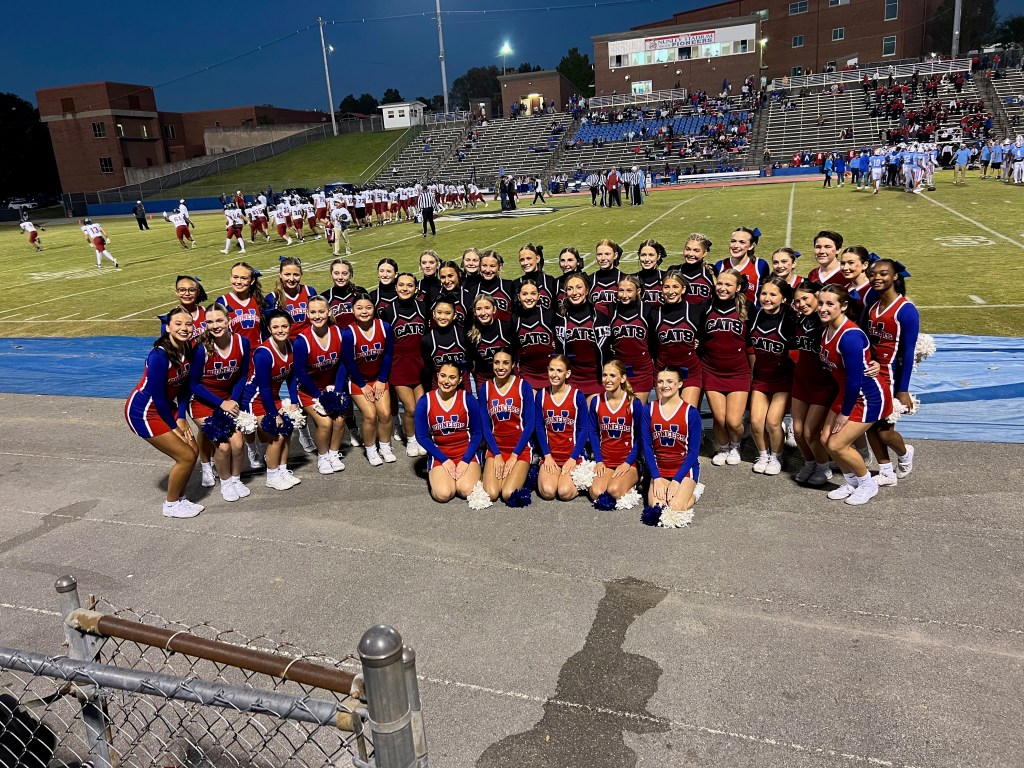
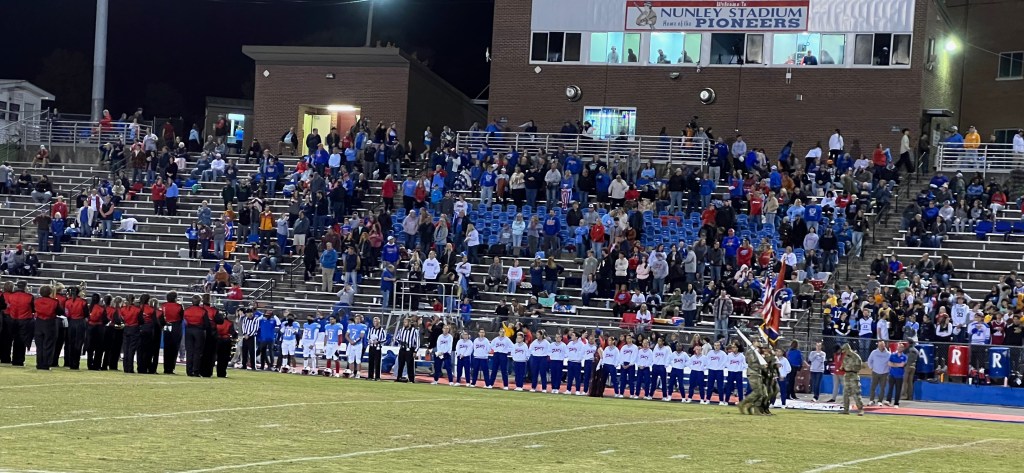
Tullahoma scored on all four of their possessions in the first half. Their only major flaws were on special teams — missed extra point conversions and a fumbled punt return.
In the first quarter, Tullahoma fumbled a punt return and Warren County recovered the football near midfield. The score was 6-0 in Tullahoma’s favor at this stage of the game. On their first play after recovering the fumble, Warren County executed a hook and lateral pass successfully for a 9-yard gain. Two plays later, a holding penalty negated a run by junior Isaiah Robledo that would have given the Pioneer’s a first down deep in Tullahoma territory. The inability to advance the ball after a big gain on first down forced the Pioneers to punt. Tullahoma scored two plays later to go up 12-0 with only :48 seconds left in the first quarter.
The second quarter was more of the same with Tullahoma scoring on their next two possessions that increased their lead to 25-0. Warren County threw a Hail Mary pass with :35 seconds left in the first half, which was intercepted. A touchdown-saving tackle near the goal line prevented Tullahoma from scoring again as time expired in the first half.
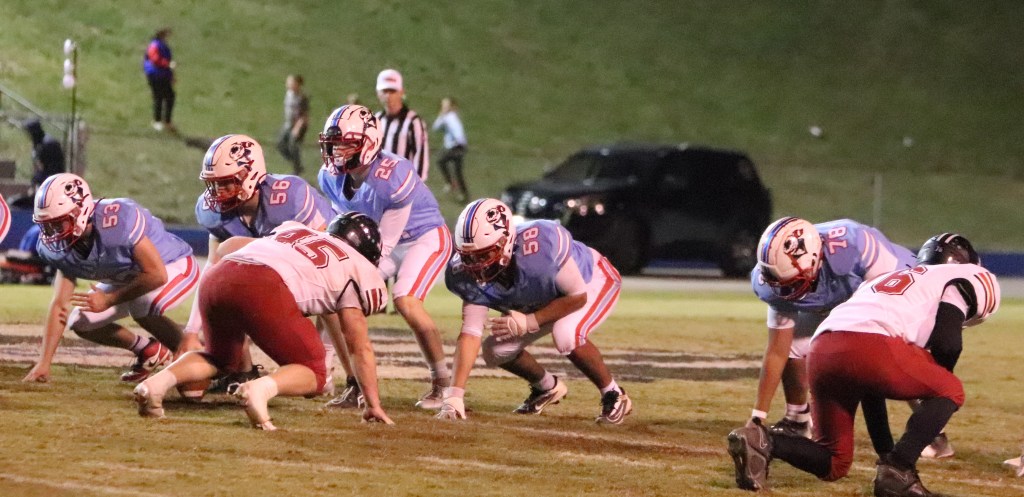
Freshman quarterback AJ Whitman, No. 25 is under center late in the second half against Tullahoma. Other Pioneer players are sophomore Ethan Holder, No. 56, junior Hayden Watts, No. 53, senior Jon-David Vanatta and freshman, David Franco, No. 78. No. 45 for Tullahoma is junior, Thomas Anderson. Tullahoma returned the opening second half kickoff for a touchdown. The extra point was good, and Tullahoma went up 32-0. Tullahoma started substituting players on both sides of the ball after its first defensive possession. Warren County mounted an impressive 88-yard scoring drive in the third quarter to put points on the board. There was no more scoring in the game which ended with a 32-7 win for Tullahoma.
POST GAME COMMENTS
After the game, coaches on both teams made similar comments about the Warren County football team. Pioneer offensive coordinator, Josh Harris indicated that the Pioneers are lacking size in certain areas, and were injured, which forced younger players to be in the game. Defensive coordinator Camron Bond said, “At this point in the season, we have some injuries and some younger guys are playing. They are making improvements. We have been undersized, and are struggling to make plays at the point of contact.”
Tullahoma head coach Coy Sisk, echoed what coaches Harris and Bond stated. Sisk said, “Warren County did what they could. They’re banging and doing what they can do. Defensively, they just got a little outmatched in the secondary. Their front line is pretty tough. Once you get in the backfield, they are just not as big as the guys they have been playing.”
A familiar face was wearing a different uniform in the game. Creed Adams, No. 2 was starting at linebacker for the Wildcats. His family moved to Tullahoma earlier this year. Adams is a senior and he is on track to play in his first playoff game. Creed is also experiencing his first winning season as a high school football player. Creed Adams was a freshman the year after the Pioneers went 8-3 in 2020. .
Creed Adams stood out in Warren County as a freshman because of his natural athletic ability and intense determination. Adams has a strong drive to excel at football. This spring he increased his strength in the weight room at Tullahoma. He has impressed his coaches at Tullahoma with his dedication and positive, respectful attitude.
Adams expressed some of his feelings about coming back to McMinnville and leaving with a victory. He said, “Of course I wanted to win and that makes me happy. But I like seeing all my guys too. Right now, we are 4-1 in the region, and we have big playoff hopes.” Before Creed Adams left the stadium, he went over and embraced his former coaches with hugs and spoke to his former head coach, Matt Turner.
Warren County head coach Matt Turner reflected after the game about what his team is experiencing. Turner said, “We have had a tough, tough schedule this year. Everybody on our schedule is either undefeated or has only a few losses. These boys (Pioneers) are playing well and giving it everything they’ve got. We don’t have much depth, and it is unfortunate that not enough of their classmates are out (on the football team). I am so proud of these guys who are out here busting their tail Monday through Thursday, and then showing up on Friday and giving it everything they’ve got.”
Turner continued, “We saw when Tullahoma started pulling out their number ones that we started being more competitive. That is where we are as a program. Tullahoma won a state championship a few years ago. They may be a smaller school, but they are a damn good football team. We have some good football players who are busting their tails, and we have another opportunity next week to go knock this goose egg off our record.”
The Pioneers are 0-8 for the season. Tullahoma is 5-3, and two of their losses were against larger 6A teams. Next week Warren County travels to Lebanon to face Wilson Central in a region game. Wilson Central is 2-6 and 0-4 in the region.
IN THEIR OWN WORDS
CREED ADAMS
MATT TURNER, WARREN COUNTY HEAD COACH
COY SISK, TULLAHOMA HEAD COACH
-
By Brad Durham
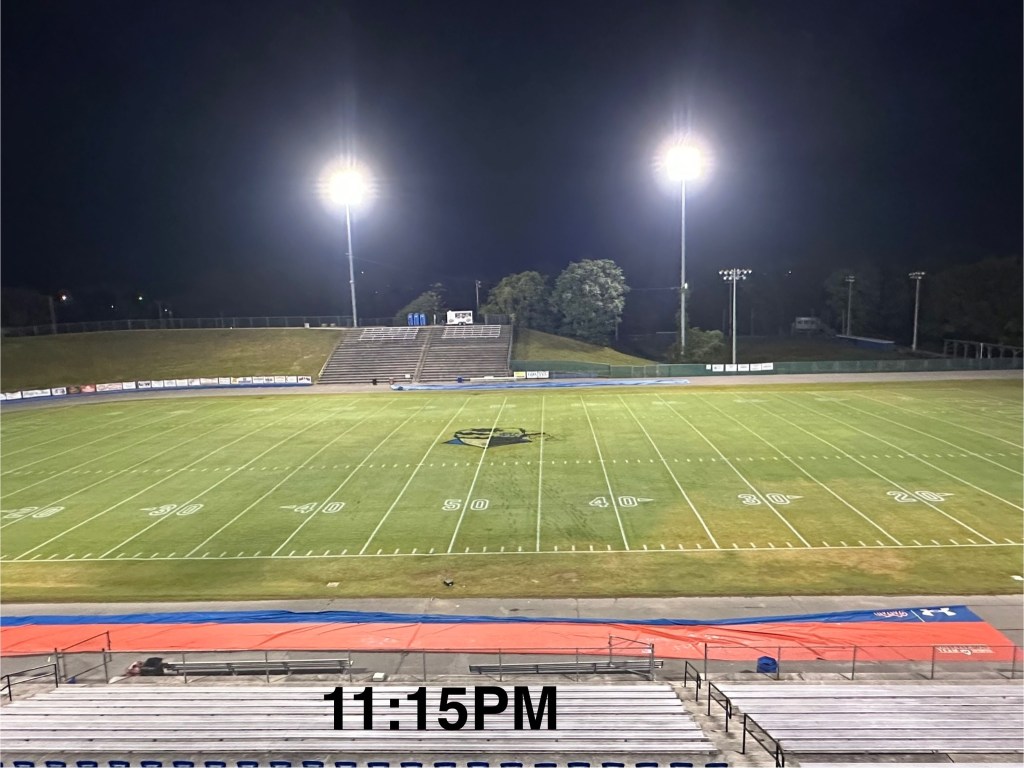
Photo is from the Warren County Pioneer Football Facebook Page Foreword: I listened to Simmons Says Podcast Facebook Fallout – Episode 37 (part 2) today while driving to schools. This was an exceptionally insightful and in-depth look at Warren County High School football. I have been thinking about a positive solution for Pioneer football, and the discussions in Jeff Simmons’ podcast provoked me to write down my thoughts. Both Jeff Simmons and Chris Sullens deserve praise for their contributions in this episode. Their ideas will make anyone think about potential positive changes for Warren County Football.
I encourage everyone who has any interest in Warren County Football to listen to the podcast: https://podcasts.apple.com/us/podcast/facebook-fallout-episode-37-part-2/id1647431281?i=1000670740389. The podcast is also on Spotify. Search Simmons Says Podcast.
My Modest Proposal…
The proposal is a plan to dramatically change the competitive nature of Warren County High School Football. Without building a new school, the school system would petition the TSSAA to divide the school into two (2) football teams, Warren East and Warren West. The division of the teams would change Warren County football from 6A (1,899 student enrollment) to two 4A teams (799 student enrollment).
Given the four decades of losing records in football, Warren County owes it to its students, parents and community to make a positive, systematic change to the football program. The TSSAA should not punish the Warren County High School Football program by continuing to enforce arbitrary classification rules that prevent consideration and changes to the quality of educational athletics.
Therefore, Warren County should petition the TSSAA to divide its football team into two 4A classifications for the next two years. Warren County agrees to not be playoff eligible in the first two years, which will not affect the existing teams in 4A Region 4 playoff eligibility. If one team becomes more competitive, it can request to be moved to the 5A classification. Until Warren County Football starts winning consistently, playing as one team in 6A should not be a consideration.
The existing teams in 4A Region 4 are:
Cumberland Co. High School (Crossville, TN)
DeKalb Co. High School (Smithville, TN)
Livingston Academy (Livingston, TN)
Macon Co. High School (Lafayette, TN)
Stone Memorial High School (Crossville, TN)
Upperman High School (Baxter, TN)
White Co. High School (Sparta, TN)
WARREN COUNTY PROPOSED ADMINISTRATION OF THE TWO TEAMS, WARREN EAST & WARREN WEST
The focus is to create competition between the two teams that will make each team more experienced and successful. Competition is the standard and competition will be the principle for coaching and playing the sport. There will be an emphasis on winning, not simply participating in the sport.
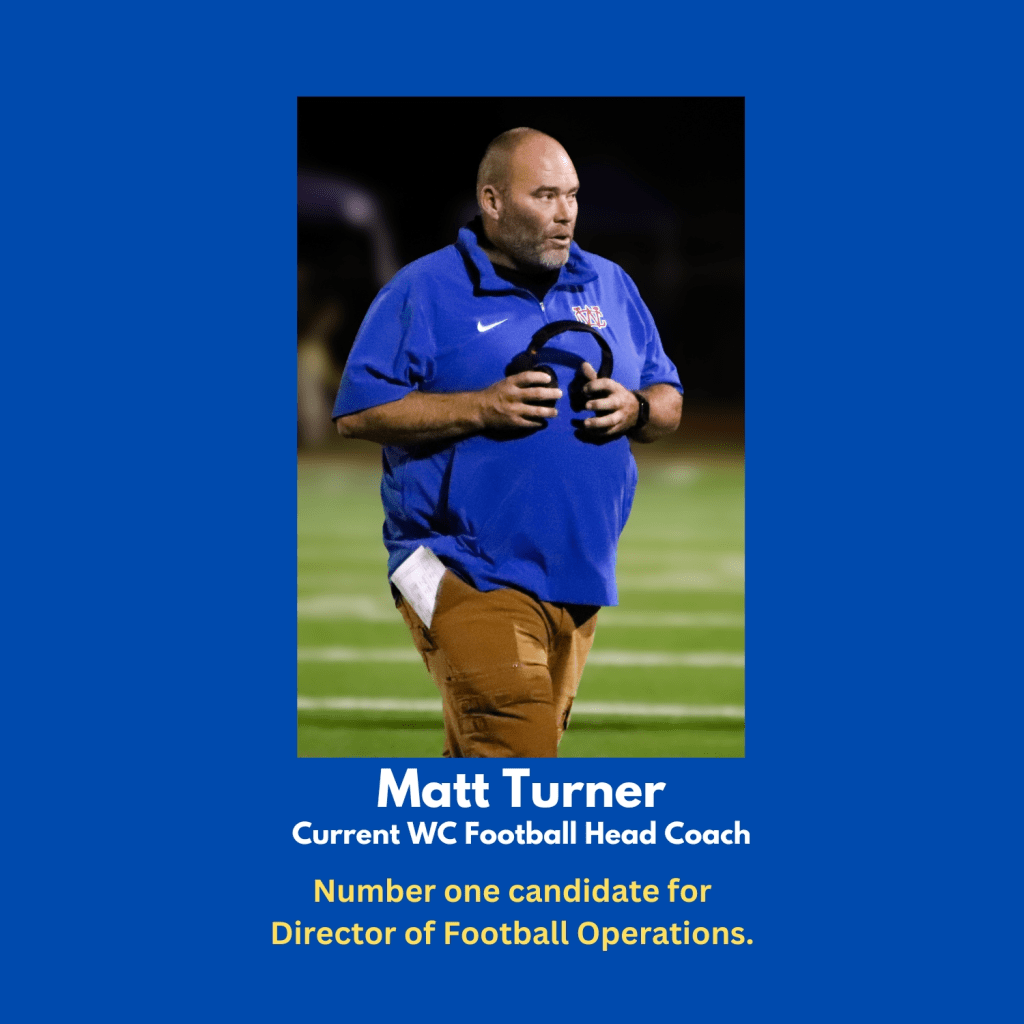
- A full-time Director of Football Operations will be hired. This person’s exclusively responsibility is to develop and support the two teams in an equitable fashion. This position will pay the Director $100,000 per year. It is a 12-month job. The Administrator will report directly to the high school principal and Director of Schools. The Director will develop a team of former coaches and players to support the coaches.
- Each head coach will be a full-time coaching position with no teaching responsibilities. Head coaches will be paid $80,000 for a 12-month job.
- Assistant coach supplements will be increased by $5,000 and coordinator positions will be increased by $10,000.
- The teams will be created by geography and a draft. The default draft will be which elementary school the students attended. To balance the teams, a draft will also be held to make the talent at each position for each team somewhat equal/competitive. For example, the two best quarterbacks should not be on the same team.
- Student-athletes will sign an agreement to not transfer during the season. The only way a player can transfer after a season is if the Director of Football Operations and both head coaches sign the waiver.
- The teams will practice together during the week and use the same facilities.
- More facilities will be created for locker rooms, coaches’ offices and meeting rooms.
- Teams will play five (5) games at home and five (5) away games. One team will play at home while the other team is on the road.
- Homecoming will be a home game between Warren East and Warren West.
- Homecoming will be a major fundraiser and form of competition. Freshmen and Seniors will support East. Sophomores and Juniors will support West. There will be competition and unity.
- Each team will raise money for their choice of homecoming queen. The queen who receives the most money will be crowned.
- Each grade will support their team the week of homecoming and sit in their own sections and cheer their team the week of the game. There will be a well-funded homecoming dance to reward each team.
- NIL deals will be pursued to support players on each team. Business, churches and communities will be asked to sponsor teams and schools.
- Players will be paid $50 each week of the season for playing in a game.
- Players will be paid an additional $100 for winning a game.
- Coaches who have a winning record will be given a free vehicle for one year.
- Teams who have a winning record get a free trip to Disneyworld during the Christmas break.
- Teams with a losing season get to do community service during the Christmas break.
- Both teams will enjoy a Christmas party together that will include less fortunate children in Warren County.
- Winning will be rewarded. Coaches will be held to standards of performance.
- There will be a weekly coaches’ show featuring both coaches.
- Home games will not be televised for free. Warren County will develop its own pay-to-stream game channel.
- A major sports psychologist such as Dr. Kevin Elko will be hired.
New developments will include a track at the high school and an extra practice field. One practice field will have lights. A grounds crew will be hired to take care of all the practice fields. A cleaning crew will be hired to wash practice and game gear. Coaches will not perform field maintenance or cleaning. Coaches will oversee players cleaning the locker room daily. The Director of Football Operations will supervise the field and cleaning crews.
The school system will do an analysis of the cost to implement this program and ask the county commissioners to fund the new programs. The City of McMinnville will also be asked to help fund the program since the City of McMinnville does not contribute any tax dollars to the Warren County School budget.
A Warren County Football Council will be created to help with fundraising and support of football on all levels in Warren County. The focus will be to become competitive on all levels of football and to increase the value of educational athletics for football participants.
-
By Brad Durham


REFLECTIONS
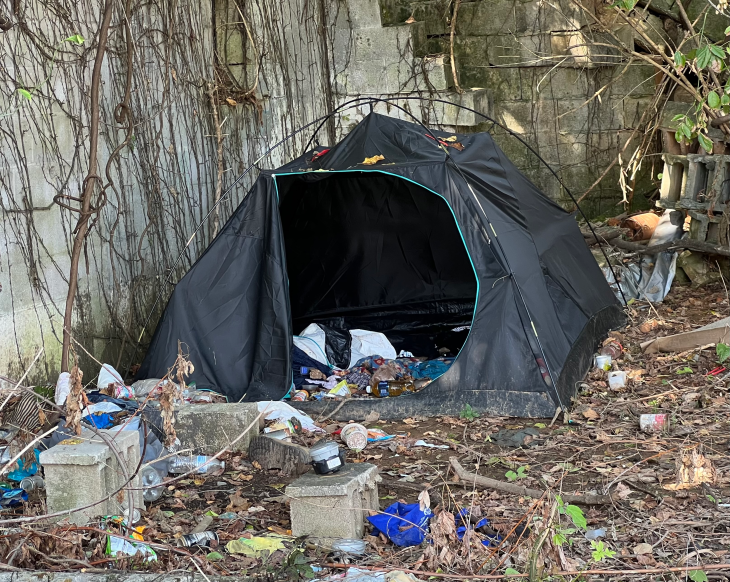
If we saw a dog walking on the street in downtown McMinnville, what would we do? If we saw a homeless person downtown who was exhausted from sleeping outside, what would we do? What if we saw people sleeping downtown, which they often do, what would we do?
Photo taken this summer in downtown McMinnville
Would we look at the dogs downtown and ignore them? Maybe, but if they were in the street, we probably would be concerned enough to do something. If I were to see my dog in the street downtown, I would pick her up and take her home.
Would I take my dog back to obedience school when I catch her downtown? Okay, dog, you have to start all over and when you learn to obey my commands, you can come back inside the house. Or do I simply bring the dog inside, give her shelter from the elements, and work on a plan to keep the dog off the streets again?

Back to Square One? 
In a Home. I am not implying that helping people overcome homelessness is easy, but I believe we have to deal with the complexity of the issue. What are we going to do about it? Doesn’t every person deserve shelter, a home? We put criminals in jail with a roof over their heads, don’t we? Why don’t we put criminals in a fenced-in field with no roof, walls, or protection from the weather? Why do we give criminals shelter, meals, bathrooms and showers, but allow the homeless people to live unprotected in the elements?

Jail Cell We don’t let our dogs or animals roam into dangerous, life-threatening elements. Why do we rationalize doing nothing for the homeless in McMinnville?
This is what I often tell myself…It is not my job. I am too busy. I do not have enough resources. Our city does not have the resources, staff to help them.
But we have the staff and resources to lock up the criminals…
I know that I struggle with all of these issues. I wonder how I can work and pay my own bills. I wonder if I am helping people in my family enough or at all. Am I taking proper care of myself?
Who am I to advocate for policies for the homeless? What if they do not cooperate with me? I tell myself it’s too hard to help them. What is my moral obligation to people experiencing homelessness?
For moral guidance, Jesus is my supreme authority. He told a story, “For I was hungry, and you never gave me anything to drink, I was a stranger and you never made me welcome, lacking clothes and you never clothed me, sick and in prison and you never visited me. Then it will be their turn to ask, “Lord when did we see you hungry or thirsty, a stranger or lacking clothes, sick or in prison, and did not come to your help?” Then he will answer, “In truth, I tell you, in so far as you neglected to do this to one of the least of these, you neglected to do it to me.” (Matthew 25:42-45)
THE HOMELESS NEED HOMES
Personally, I believe we have to use our minds, hearts and souls to develop positive solutions for the homeless. First and foremost, we need to help the homeless secure permanent supportive housing.
We need to know today how many homeless people there are in McMinnville. How many people have we helped secure permanent supportive housing in McMinnville this year? Start quantifying the problem and developing short and long- term strategies.
There are basically three ways to help homeless people afford housing. (1) Secure apartments with rental subsidies tied to the unit. (2) Rental subsidies that help pay rent for the homeless person or family with private landlords. (3) The third way is to develop new affordable housing with low-income tax credits and other funding that is targeted to help the homeless.
We need to start with proper intake and record-keeping with every homeless person. Who is homeless and who is helping them in McMinnville are two things we should be aware of every day. We need to streamline our services to the homeless; make the services efficient and not duplicate them.
Next, we need to tie together supportive services for the homeless that starts helping them on the street and follows them into housing. This will help homeless people in McMinnville secure and maintain permanent housing.
First and foremost, the homeless need a friend who will not judge them and be present with them – with no agenda to fix them. We need educational services, job training, financial counseling, mental health counseling, drug and alcohol abuse counseling, etc.
We also need someone dedicated to exclusively working on housing search for the homeless in McMinnville. We need to be pursuing funding for rental subsidies, and long-term development of new and affordable housing.
We need a navigational center where the homeless can temporarily stay as they connect with help to secure permanent housing.
The complex, seemingly impossible solutions become more basic and solvable as we wrestle with the philosophical issues on a practical level. Helping the homeless secure a home solves the problem. It becomes possible when we have public support and funding.
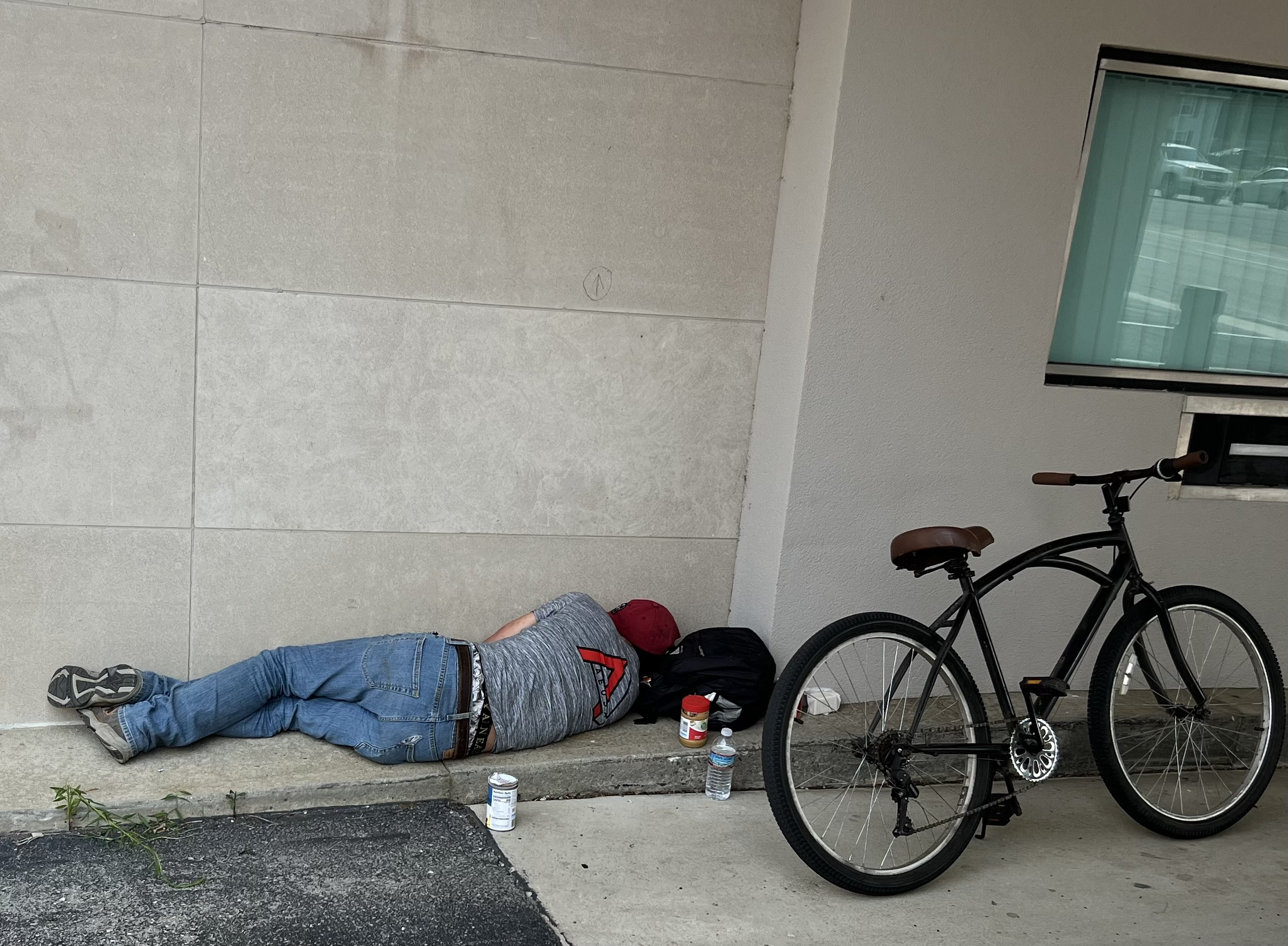
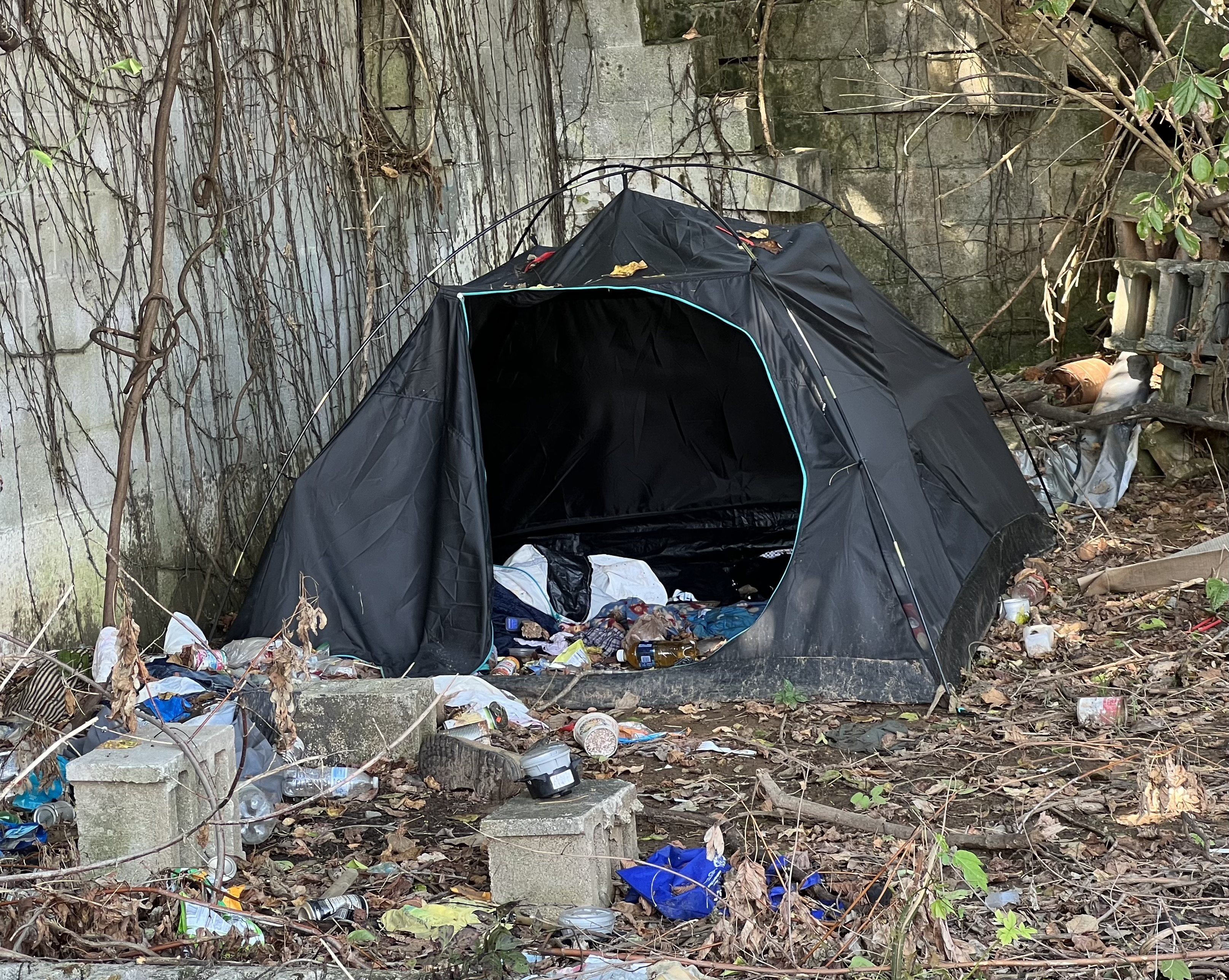
PERSON SLEEPING DOWNTOWN. THE TENT IS NEXT TO THE DOWNTOWN SERVICE STATION ON SPARTA STREET.
When we see people living this way, what then must we do?
The more we help people who are living on our sidewalks, parking lots and in tents move into permanent supportive housing, the more we will help ourselves and everyone in McMinnville live a better life.
-
“I want to thank all of you all for your help,” James Albert.
By Brad Durham
A SUCCESSFUL OUTCOME
James Albert is no longer homeless, and he is finally in his own home. He moved into his apartment in McMinnville on Friday, August 30, 2024.
There is a long list of people to thank for helping James Albert. Sheila Fann and Connie Fox with HOME helped keep James Albert off the street by placing him in a motel for several days, and then they placed him in a tiny home at Prosperity Point for approximately four months.
Everyone who donated to the campaign to help James Albert secure permanent housing helped keep James Albert safe. Everyone’s donations provided Albert with necessities such as a phone and furniture for his apartment. All of the individual donations have given James Albert a fresh start. Everyone’s donation made a vital difference.
Leland Northcutt and John Phillips helped move James into his apartment. Leland Northcutt has been a major supporter and motivator to help James Albert secure a permanent home.
Ryan Heatherly and everyone at First United Methodist Church helped administer the Fund (from donations) to help James Albert stay off the streets and find a safe, secure home. Tena Basham and Jimmy Haley helped consistently with their compassion and time. The Mission Committee at First United Methodist also helped. St. Matthew’s Episcopal Church also contributed to the James Albert Fund.
H.A.R.T., the Continuum of Care for HUD funding for the homeless in the Upper Cumberland region was a major help. The Crossville Housing Authority is supplying the rental assistance with HUD funding that makes James Albert’s apartment affordable. James Albert only pays 30% of his adjusted income toward rent. Vivian Walker with H.A.R.T., and Cindy Turner, Jamie Young and Kathy Vanlandingham with the Crossville Housing Authority worked diligently to make the rental assistance possible for James Albert.



James Albert’s Apartment
HOLES IN THE SAFETY NET
Placing a homeless person into permanent housing is not an easy process, and the safety net for the homeless in McMinnville has severe holes, which causes many people to live on the streets indefinitely. Affordable housing is extremely limited. The Fair Market Rent (FMR) that HUD allows for rental assistance in McMinnville is too low — it is not “fair”. Supportive services for the homeless population are severely lacking at best, and are virtually non-existent at worst, especially after a homeless person or family are placed into permanent housing.
POSITIVE SOLUTIONS
These are four considerations for strategic planning that would strengthen the safety net for the homeless in McMinnville:
- Build more affordable housing with low-income tax credits and project-based rental subsidies.
- Secure more rental subsidies for the homeless and low-income families in McMinnville.
- Create a Housing Search position to help the homeless and low-income families find and secure permanent housing.
- Develop full-time supportive services that includes a Master of Social Work (MSW) position and peer-to-peer counselors. A Multi-Service Center in the city would be optimal.
The full-time staff to assist the homeless would be cost-effective. McMinnville has several homeless individuals in the county jail at a minimal cost of $41 dollars a day. River Park hospital absorbs emergency health care costs for the vast majority of the homeless population. Our police and government resources are being used to service the homeless in a multitude of ways, which redirects our limited resources to take care of the homeless. Unfortunately, emergency services without supportive services do not produce permanent housing solutions.
Our limited resources could be put to better use providing long-term permanent solutions for the homeless. We all need the benefit of government assistance in some shape or form. McMinnville has to decide if it wants to redirect some of its limited resources to better serving the homeless and low-income families.
One question we must continue to ask ourselves is how long can we drive by people who are sleeping in our church parking lots, under our bridges, and in unsafe environments such as our woods.
-
By Brad Durham

SABLE WINFREE FROM HER DAYS ON THE LADY PIONEER BASKETBALL TEAM The judge determined that playing high school sports in Tennessee is a privilege, not a right. Since the judge ruled that none of Sable Winfree’s rights were violated, there was not a lack of due process. The judge ruled that it makes no difference if Winfree lost a college scholarship because of her dismissal from the high school team. This part of the lawsuit was dismissed with prejudice, which means it cannot be refiled or relitigated.
The judge questioned the defamation part of the lawsuit; specifically questioned what the f-word was and the harm it created. This part of the lawsuit was dismissed without prejudice, which means that Winfree can still choose to refile the lawsuit with more relevant evidence.
The court’s decision does not state nor imply that the school system was at not at fault for how the school system handled Sable Winfree’s dismissal from the high school basketball team. The decision simply means that there were no circumstances that warranted due process.
Warren County Schools did not retain Mendy Stotts as a basketball coach, and Stotts is no longer employed by the school system. One can draw his/her own conclusions as to why Stotts is no longer employed in Warren County.
What has never been sufficiently answered publicly or privately is why Sable Winfree was dismissed from the team. Moreover, no public substantive explanation has been given by the Warren County Schools regarding the “dismissal” of Mendy Stotts as the girls high school basketball coach.
No consequences for the “bad” hire and tenure of Mendy Stotts as the girls head basketball coach. No consequences for the mistreatment of Sable Winfree by Mendy Stotts, head principal Chris Hobbs and the Director of Schools, Grant Swallows. A tragedy and a moral injustice without any consideration for Sable Winfree’s well-being and future.
My Present Thoughts about Coverage of the Lawsuit and Sable Winfree
I wrote the above comments on August 2, and to be honest, I was too busy to follow up on it. There was not a lack of concern on my part. Initially, I thought I had contributed everything I could as an advocate for Sable Winfree. Yet, this morning I read Jeffery Simmons column, “Court battles and peak pettiness,” and I became compelled to respond to it on my newsletter.
An image from the Wizard of Oz came to mind as I read Simmons’ column, the cowardly lion.

The cowardly lion from the Wizard of Oz. Jeffery, it is not about you, and the lawsuit was not a joke! Stop blaming Sable Winfree for being kicked off the team by a lunatic coach.
Verbatim excerpts from Simmons’ August 16 column:
If there’s one court I wished to avoid being required to be, it was the Eastern District of the United States District Court for the possible Sable Winfree v. Warren County School District trial. It seems like I’ll be able to dodge that visit.
But when it comes to what I think, nothing has really changed from my original opinion 10 months ago, where I wrote, “What I don’t agree with, particularly in the growing social discussion, is that this is a very black and white issue where either Sable is right and the admin and coach are wrong or Sable is wrong and the coaching staff and admin did the right thing. Personally, I think the blame can go around.”
As I wrote back then, “Personally, I think everybody screwed up here, dating back to May (2023), and it feels like only one person – Sable – is having to pay for their mistakes.”
When I read those comments, this is what I heard in my head: “IF I WAS THE KING OF THE FOREST…” – the cowardly lion from the Wizard of Oz.
There are more characters is this sad saga who share the cowardly lion persona. Todd Willmore who conducted an internal investigation for the Warren County Schools that was lame and incompetent. Chris Hobbs, who was unprofessional and shared inappropriate comments with parents. Robin Phillips who took the attack and defend the institution position with the school system against Sable Winfree. Grant Swallows, who had the opportunity to prevent the dismissal of Sable Winfree from the team and defended his underlings’ decisions. Last and not least, every member of the School Board stayed silent and refused to stand up for Sable Winfree.
Do good people act as cowards sometimes? Absolutely. We all do. Everyone had the opportunity to redeem themselves and correct their mistakes. None of the people mentioned did that. They all doubled down on their decisions, which lacked courage.
Guess who was not a coward! Sable Winfree. Sable immediately went on record stating what she thought about being dismissed from the team. You can read her thoughts here…https://bdnewsletter.news/2023/12/01/a-new-interview-with-sable-winfree/
I would like to acknowledge Michael Galligan’s fortitude and courageous behavior in becoming Sable Winfree’s attorney. A lawyer has to be brave in a small town to confront the only school system with a lawsuit. Mr. Galligan did this pro bono, and he deserves credit for covering Sable Winfree’s back. The deck was stacked against Sable, and Galligan defended her. He initially attempted to have her readmitted to the team, but Grant Swallows and others did not cooperate.
You know who admired Sable Winfree’s performance on the basketball court? Kyle Turnham. When I covered high school sports a few years ago, I made it a habit to ask every opposing coach about Sable Winfree. Turnham told me one night in the Shelbyville Central gym, when he was coaching the Shelbyville girls team, that Sable was the leader of the Lady Pioneers. He said the entire offense ran through her, and if you wanted to beat the Lady Pioneers, you had to stop Sable Winfree.
I became an advocate for Sable Winfree from the first night I saw her play basketball. She was shot out of a cannon as a freshman, and every opposing coach respected how she played. She made the Lady Pioneers better.
Sam Walker has written a book entitled, The Captain Class: The Hidden Force That Creates the World’s Greatest Teams. In the book, he states the following:
“The most critical ingredient in a team that achieves and sustains historic greatness is the character of the player who leads it.”
Sable Winfree led the Lady Pioneers offense and helped establish the personality of the Lady Pioneers for three years. The Lady Pioneers became one of the top 10 teams in the state by her junior year. That is the way I wish to remember Sable Winfree’s basketball career in Warren County.
Sable Winfree has a fearless heart. I am grateful that I got to see her play basketball.
-
By Brad Durham
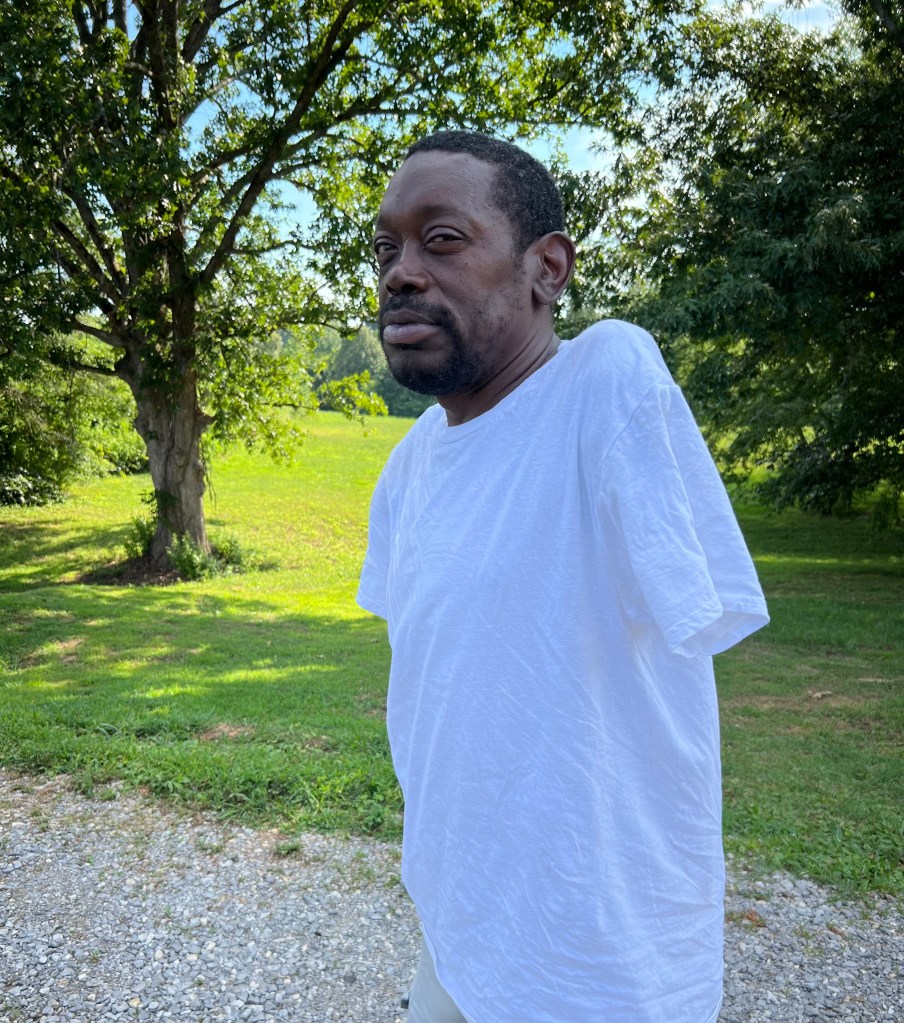
James Albert – July 2024 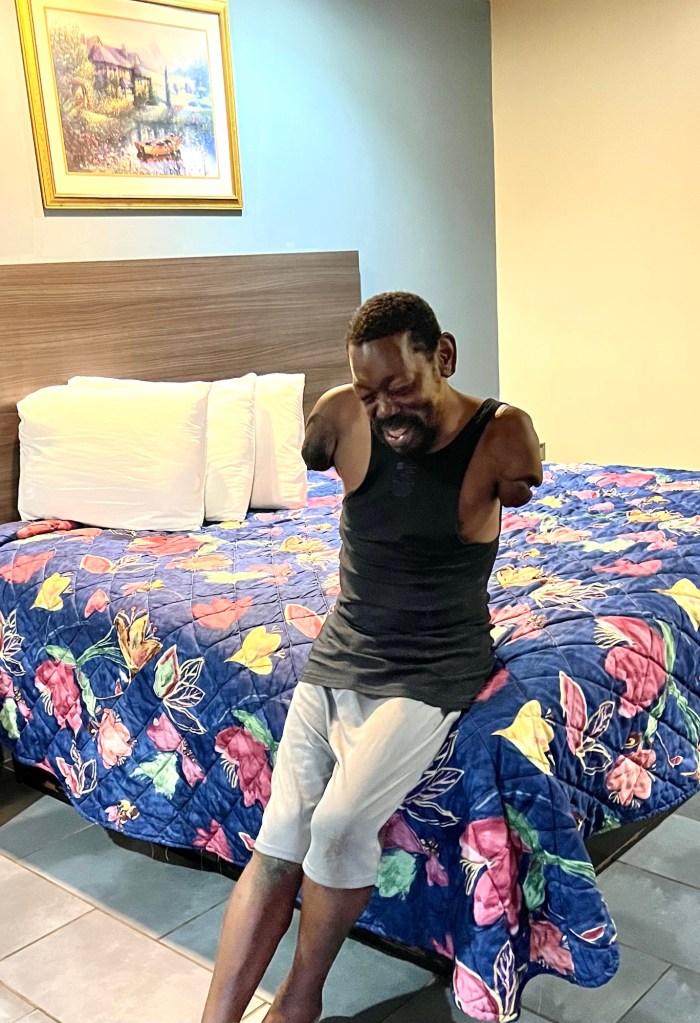
James Albert – May 2024 GUARANTEED RENT AND SUPPORTIVE SERVICES
James Albert has recently received a rental voucher that pays the fair market rate for McMinnville. 70% of James’s rent is paid by the federal government (HUD) and 30% is paid by James. His rent will be guaranteed, and he will have supportive services to help clean his apartment, wash his clothes, provide meals, etc.
If you are a landlord or know a landlord who has a vacancy and wants to help James Albert move into a permanent home, please contact Brad Durham. Please share this newsletter on your Facebook page and with anyone who may have a lead on an apartment.
JAMES ALBERT’S HISTORY
10 years ago, James Albert lost both arms at the shoulder in an accident working for an electric company. The company he worked for will not release any information about the accident without a subpoena from a lawyer. Whatever money was received in a settlement was spent a long time ago. This is something that James and I will look into with a lawyer.
James became homeless in May of this year for the first time in his life. HOME has helped keep James in safe, emergency housing. The clock is ticking, and we need to secure a permanent place for James to live.
PLEASE SPREAD THE WORD
Because James Albert cannot drive, we wish to find a place for him in town so that he can walk to where he wishes to go. James attends free meals weekly, and he likes to be in a community with friends.
Simply sharing this newsletter with one person will help. Please text the link to this article to anyone you know who can help James Albert secure an apartment. Telling someone about it will help. The goal is to find a landlord who will rent an apartment to James Albert at the fair market value.
PLEASE CONTACT BRAD DURHAM WITH ANY LEADS
My phone number is 615-838-4426 and my email is brad412@benlomand.net.
Thank you for any leads on apartments and/or landlords you can offer. One thing every homeless person like James Albert wants is a permanent home. Any help will be greatly appreciated.
-
Introduction by Brad Durham
Approximately 40 years ago, Joyce Tavon was one of my supervisors as I conducted housing searches for the homeless in Boston. Joyce and other friends have recently been helping me understand the best solutions for ending homelessness. Joyce Tavon wrote this article in response to the Supreme Court’s ruling that a community may ban people from sleeping outside. Link: https://www.newschannel5.com/news/nashville-advocate-reacts-to-scotus-ruling-on-sleeping-outside
This guest article was previously published by CommonWealth BEACON on July 3. Link: https://commonwealthbeacon.org/opinion/dont-penalize-people-for-being-poor-and-lacking-housing/
Supreme Court decision addresses a symptom of homelessness but provides no real solution
by JOYCE TAVON 4 days ago
Joyce Tavon is the CEO of the Massachusetts Housing and Shelter Alliance.

How best should a community respond when a person has nowhere to live or even a safe place to sleep at night? Should we give them a ticket for pitching a tent in a local park? Arrest them for sleeping on a bench? Or can we commit to finding actual solutions to address this crisis and strengthen our communities?
Recently, in Johnson vs. Grants Pass, the US Supreme Court ruled that a community may ban people from sleeping outside even when there is no adequate shelter or housing available. People may be fined or arrested for sleeping in a tent, on a bench, or even in their own cars.
At the Massachusetts Housing & Shelter Alliance, we are deeply disturbed by this decision. These prohibitions don’t solve the problem; they just drive people further into a downward spiral. Individuals with nowhere to go will be pushed from place to place as their encampments are cleared. As a result, vital documents will likely be lost, and homelessness and all its subsequent trauma exacerbated. Homeless individuals will be saddled with criminal records that will make it even more difficult for them to secure housing or a job. Instead of solving the problem, this punitive approach will create new obstacles to stability.
At the Massachusetts Housing & Shelter Alliance, however, we are not fighting for the right of someone to sleep on a park bench – we are striving to develop real solutions. We build partnerships with city hall, the police, and service providers that solve homelessness by providing housing, engagement, and support. The alliance has done this before in collaboration with communities from Chelsea to Worcester to Pittsfield. When resources, strategic planning, and political will are brought to bear, we can significantly reduce homelessness.
Understandably, communities don’t want people to camp in their public parks and playgrounds. But banning these acts of desperation won’t resolve the crisis.
We’ve always done better here in Massachusetts. Starting in the 1980s, we provided emergency shelter as a first response. Over the years, we’ve learned that offering housing along with the necessary wraparound services is the most effective response of all. We were early adopters of the Housing First model, moving vulnerable people to affordable housing quickly and, with the stability of a roof over their heads, connecting them with essential services such as health care.
The data shows this approach works, with more than 80 percent remaining housed for as many as seven years following the initial intervention. In the early 2000s, as we added more housing coupled with the necessary safety net of support, chronic homelessness was dramatically reduced.
Recently, homelessness has been rising in Massachusetts, especially in our smaller Gateway Cities that lack shelter capacity and a robust housing infrastructure. While the media has covered the plight of desperate migrant families coming to our state, a quieter crisis was already brewing here among adults struggling with poverty, often combined with mental illness or addiction and with few options for housing, services, or treatment.
We also know that homelessness disproportionately impacts people of color. To further complicate an already complex situation, the fastest growing group of newly homeless in the country – and by all indications in Massachusetts as well – are people aged 50 and over. Many have never been homeless before. Losing a job or spouse or receiving a massive rent increase is pushing more and more older adults out of their homes and into their cars or to campsites.
The solution to the homelessness crisis is simple, but it’s not always easy, and moving forward requires political will. We need to redouble efforts to partner with our communities and invest resources in housing with life-changing services. In response to the housing crisis, the governor has called for the creation of 200,000 units by 2030 at all income levels. Based on available data, we are advocating for 10,000 of those units to be supportive housing for our most vulnerable neighbors who are experiencing long-term homelessness.
Our Commonwealth has a long history of innovation and creative problem solving. Let’s apply that can-do approach to this statewide challenge rather than penalizing people for the crime of being poor with nowhere to go.
-
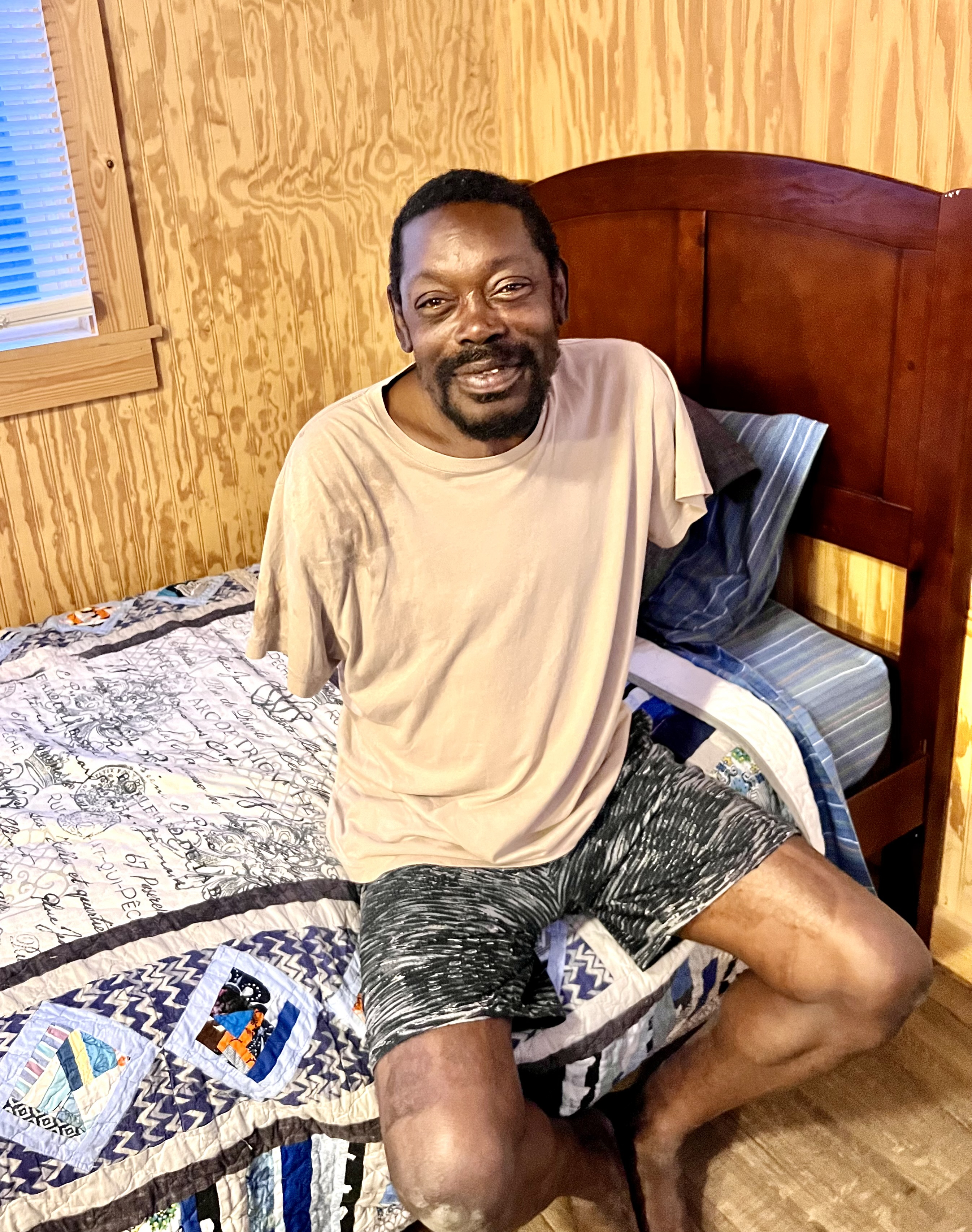
James Albert at HOME’s Prosperity Point, May 15, 2024. By Brad Durham
The purpose of this fundraiser is to help provide for James V. Albert’s emergency housing, food, and daily needs until he is placed into permanent housing. Any of these funds that have not been used for emergency purposes will be used to help James once he has permanent housing. Tuesday, May 21st is the last day to contribute to this fund on the app (see link below).
Link to support James V. Albert:
HOW THE JAMES V. ALBERT FUND IS ADMINISTERED
First United Methodist Church is receiving all monies for the James V. Albert Fundraiser. The Mission Committee is overseeing the distribution of the funds.
If you do not wish to donate online, you can mail a check or cash to:
First United Methodist Church
c/o James Albert Fund
200 West Main Street
McMinnville, TN 37110JAMES ALBERT’S TRAGIC ACCIDENT THAT COST HIM HIS ARMS
10 years ago, James Albert lost both arms at the shoulder in an accident working on electrical lines. The company he worked for will not release any information about the accident without a subpoena from a lawyer. Whatever money was received in a settlement was spent a long time ago. This is something that James and I will look into with a lawyer.
HOME (Homeless of McMinnville Effort)
HOME has generously paid for James Albert’s initial stay at the Scottish Inns, and on Wednesday, May 15, James moved into a tiny house at Prosperity Point. Prosperity Point is owned and operated by HOME. Sheila Fann, HOME Co-Director, told James Albert that he can stay at Prosperity Point until July.
RELEASE OF INFORMATION
James Albert signed a Release of Information form with me for the purpose of helping him secure rental assistance (vouchers -and Section 8) from HUD via the Crossville Housing Authority, in addition to supportive services from various agencies. There are housing vouchers for homeless individuals, and as soon as we have James’ physical social security card, we will submit that application. That should happen very soon.
I am not comfortable releasing or sharing all of James’ personal information publicly, yet I am going to share some so that it is clear what resources are being pursued for him. His personal history can be shared to some degree, but for various reasons, it is not appropriate to share all of his history.
WHY MONEY IS NEEDED FOR JAMES V. ALBERT
When I asked HOME if they could pay for a hotel room for James Albert on Wednesday, May 8, I was told that I would have to be his case manager. I said that I would take care of James, and that my focus was to get him into permanent housing as soon as possible.
The process of securing rental assistance unfortunately can take months to complete. I want to make certain that there is money to provide emergency housing until James is placed into permanent housing. There is no guarantee that James can stay at Prosperity Point until he has a permanent place to live.
James receives a disability check from Social Security and some money for food with his U Card. His insurance is with United Health Care, and it is very helpful. Vanderbilt Hospital is where James receives all of his medical care. Meals on Wheels started providing James with meals last week. James regularly attends a few free meals offered by churches during the week.
Any money that is not used for James’s personal items and emergency needs will be put toward his permanent housing. Presently, there is no guarantee that James will receive rental assistance, and there are long waiting lists for all public assistance housing in McMinnville.
EXISTING SERVICES THAT ARE BEING PURSUED
The Upper Cumberland Development District (UCDD) has referred James Albert to the CHOICES program. Services that may be provided include homemaker aid, personal care, meals, legal aid, etc.
Home health care is something that is also being pursued. James is very good at scheduling his own doctor appointments and transportation to Vanderbilt University Medical Center. James takes meds daily, and he can cook and prepare meals for himself.
HOLES IN THE SAFETY NET FOR HOMELESS PEOPLE IN MCMINNVILLE
One of the reasons I started this fundraiser for James Albert is because there was no place for James to go or stay when he became homeless. James said, “I would have died if I had not gotten into that hotel when I did.” He was homeless for three days.
McMinnville needs full-time staff to help navigate anyone who is homeless to a safe and secure emergency place to live; in addition to directing homeless individuals and families to existing services. The predominant alternative for most individual homeless people is to live on the street, under bridges and in tents – which people are doing right now in McMinnville. Nothing good happens on the street, under bridges and in tents.
MY FOCUS FOR JAMES ALBERT
I asked James what he wanted, and he said that he wants a permanent place to live. He does not want to live in a group home. I told James that I would do my best to help him get rental assistance and a permanent place to live.
The solution to being homeless is a home, a permanent home. The stress that James was under in his former living situation led to him becoming homeless. Being on the street for a few days with no arms led to more stress and trauma. It created health concerns and James immediately scheduled his own appointment with a Vanderbilt doctor.
HOUSING FIRST – RAPID REHOUSING
The approach I am taking is an innovation that began decades ago in the work around the country to solve homelessness. The plan is to put homeless people in housing first with supportive services. If someone becomes homeless such as James, that person is rapidly put back into permanent housing.
James Albert became homeless for the first time on May 4th. He has never been arrested. He is fully capable of living independently with supportive services.
Several weeks ago, I began the process of asking Nicole Mosley, City Police Commissioner and Sheriff Jackie Matheny, Jr., if they could provide data on how much money was spent arresting and incarcerating homeless individuals in 2022 and 2023. I also asked Dale Humphrey, CEO of Ascension Saint Thomas River Park, how much money he thought the hospital had spent caring for the homeless population in McMinnville during the past two years.
I believe a business approach to solving homelessness in McMinnville will reveal that putting homeless people into housing first with supportive services will be cost effective. The savings of placing homeless individuals into housing with services versus the cost of arresting, prosecuting, incarcerating, and health care should be significant. A study should also reveal that the same people who become homeless keep recycling through the courts, jail and hospital.
FUNDING FOR HOMELESS PROGRAMS AND AFFORDABLE HOUSING
In late April, I visited with Vivian Walker, Homeless Program Advocate for HART (Homeless Advocacy for Rural Tennessee). The following is from the HART website:
WHO IS THE HOMELESS ADVOCACY FOR RURAL TENNESSEE CONTINUUM OF CARE?
HART is the Upper Cumberland Continuum of Care that covers an 18-county area in Tennessee. We are a collaborative and diverse group of community-based social service providers, county and city officials, private citizens, and faith-based organizations that began meeting in 2001.
Since 2003 this Continuum has been awarded over $6 million in HUD funding for homeless programs through the McKinney-Vento Homeless Assistance Act. Programs that have been awarded HUD funding include faith-based, private, and government funded organizations.
WHAT IS A CONTINUUM OF CARE?
The Department of Housing and Urban Development (HUD) allocates homeless assistance grants to organizations that participate in local homeless assistance program planning networks. Each of these networks is called a Continuum of Care (CoC).The CoC awarded $833,377 for the Upper Cumberland in 2023 to assist the homeless. 16 of the 18 counties in HART did not apply for funding. Not a single nonprofit from Warren County has ever applied for the CoC funding for the homeless.
Another source of funding for the homeless and affordable housing is the THDA (Tennessee Housing Development Agency). The THDA is another routing source of HUD money. This is a partial list of what the THDA provides:
- Housing Choice Voucher
- Low Income Energy Assistance Program
- Low Income Water Assistance Program
- TNHousingSearch.org
- Tax Credits
- Section 8 Projects-Based Assistance
POSITIVE SOLUTION TO HOMELESSNESS IN MCMINNVILLE
In January, I invited Philip Mangano to speak to people working with the homeless in McMinnville, including County Executive Terry Bell, Mayor Ryle Chastain and City Manager, Nolan Ming. Mr. Mangano served as President George W. Bush’s Executive Director of the White House’s U.S. Interagency Council on Homelessness.
The heart of Mangano’s presentation was housing first, a concept to end homelessness, not to provide endless services. Mangano stressed that data clearly supports the housing first policy. Mangano said, “Mayors know the cost involved related to caring for a homeless person. A homeless person incurs expenses that a community pays for such as health care, mental health, police, court costs, addiction, etc.” Mangano stated that a city spends between $25,000 to $138,000 a year in services for a homeless person who can ricochet through law enforcement and health care systems in the community..
A permanent home is the most cost-effective solution to homelessness because it stabilizes the homeless person. When a homeless person is safe and secure in a home, the health care, mental health care, and other services are more easily identified and effective. The services follow the homeless person into a home.
It is my hope that a nonprofit in McMinnville can apply for HUD money from the Continuum of Care and THDA. A stronger safety net with full-time staff can be cost-effective in serving the homeless.
One thing every homeless person like James Albert wants is a permanent home. I firmly believe with our community’s support, McMinnville can provide a stronger safety net and more positive solutions to homelessness.
-

Video Message from James V. Albert
By Brad Durham
I have known James Albert since January. We met at the outreach breakfast at First United Methodist Church’s Auxiliary Building. James Albert peaked my interest because he could eat and do so many things — with no arms. When I saw him early last week on the street, I was shocked to learn that he had become homeless. Immediately, I knew that I had to try and help him.
A SEVERE DISABILITY
It is not easy doing all the things you have to do to survive and thrive when one is homeless. If you are homeless and have no arms, taking care of yourself becomes more challenging. James lost his arms in a tragic accident working on electrical lines 10 years ago in Murfreesboro. The settlement money no longer exists. The reality is that he cannot work and needs rental assistance, as well as supportive services.
James can make calls on his phone, which was broken. We are in the process of getting James a new phone. He can prepare a lot of his own meals, change his own clothes, take a bath — by himself.
A TEAM OF SUPPORT
I contacted Sheila Fann at HOME, and she said HOME would help pay for a hotel room for a few nights. I immediately began trying to learn the details of why James is homeless. I asked James to sign a Release of Information form (which he did by writing with a pen in his mouth). HOME has been helpful. Ryan Heatherly, the Senior Pastor at First United Methodist Church has been helpful. Jimmy Haley has been helpful during the Saturday morning outreach and in many other ways. Several people have donated money to help James Albert, and I am very grateful for each gift.
AN APPEAL FOR DONATIONS
I am making another appeal for donations. The link will work this time, and I am asking everyone to share the link with people they know. If 400 people donate $25, we will reach our goal of $10,000.
LINK TO SUPPORT JAMES V. ALBERT: CLICK HERE
HOW THE MONEY WILL HELP
First and foremost, money will be spent to provide safe housing for James until permanent housing is secured. Efforts are being made to get James into housing other than a hotel, which is burning cash. There is no emergency housing for homeless men in McMinnville. That is something that will hopefully change in the future, but right now, I am an advocate for James and asking for help — to keep him safe.
The second emergency expense is food. A lot of meals can be donated, but that requires coordinated volunteer help. Connecting James to free meals and food is part of the present effort to help him. Unfortunately, there are times where James needs meals — the morning, certain evenings, especially on the weekends.
There are other everyday items James needs such as body wash, detergent, laundry mat services, etc. Some of these things can be donated, and sometimes they are not readily available. James also needs help paying for the UCHRA bus. Everything is being done to stretch every dollar, and what is not spent on emergency expenses will go toward providing items for permanent housing.
James receives disability from Social Security and some food assistance through his insurance. One of the reasons James is homeless is because there was a disagreement over handling his money with his helper, whom he lived with for 10 years. I am not sure of all the details, and that is water over the dam. Steps are being taken to ensure that James will personally manage all of his money in the future. Last week he set up his own bank account to make that happen.
OTHER WAYS TO HELP
LANDLORDS. Once James has a rental voucher, his rent will be guaranteed. A landlord will not have to worry about nonpayment. And James will have a team of supportive services helping him.
PERSONAL NAVIGATORS-ASSISTANTS. James needs personal navigators/assistants who can help direct him to various places such as free meals, where to get his clothes washed, help with cleaning his living space, preparing meds, etc. Someone needs to check with James each day presently and in the future. This volunteer position will often require running errands and sometimes taking James where he needs to go.
THE PARABLE OF THE GOOD SAMARITAN
A couple of weeks ago, before James was homeless, someone reminded me of the Good Samaritan parable. Someone asked Jesus who is my neighbor? Jesus replied by telling the story of a man who was beaten and robbed by bandits, and was left half dead. A priest was traveling and saw the beaten man, but walked by him on the other side of the road.
In similar fashion, a Levite saw the wounded man, but also passed him by. Then a Samaritan traveler came to the location and saw the man. He bandaged the man’s wounds and took him to an Inn. He paid the innkeeper and asked him to take care of the man. The Samaritan also promised to pay any extra expenses for the man on his way back.
Jesus asked, “Which of these three do you think proved himself to be a neighbor to the man who fell into the hands of the bandits?” The answer was the man who showed pity towards him. Jesus said, “Go and do the same yourself.”
CALL TO ACTION
If for any reason you are compelled to help James, please do one of three things.
1. Click on the link above and make a donation.
2. Seek out landlords who may provide a permanent place for James to live.
3. Become a personal Navigator/Assistant one day a week for James.
4. Please share this appeal to help support James with 5-10 friends.
Call or email me if you wish to help with housing or personally assisting James Albert.
Cell: (615) 838-4426 Email: brad412@benlomand.net
If you wish to mail a check or give cash instead of donating on the above link, please make checks payable to:
First United Methodist Church
c/o James Albert Fund
200 West Main Street
McMinnville, TN 37110

 BD Newsletter
You must be logged in to post a comment.