-
By Brad Durham
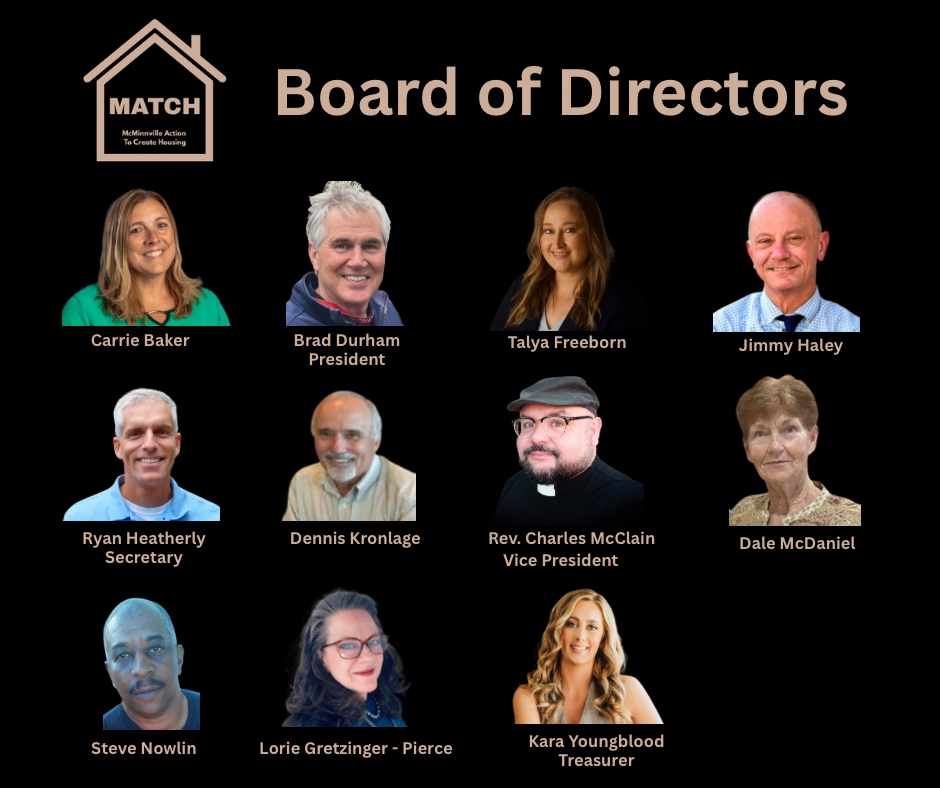
WHAT IS MATCH
Recently, the McMinnville Action To Create Housing (MATCH) hosted the documentary film Beyond The Bridge at the Park Theater on January 22, 2026. I founded MATCH and invited people to join the Board to assist the poorest of the poor in McMinnville—our homeless neighbors. My vision for MATCH is to operate as a 100% volunteer effort focusing on three areas: advocacy, managing resources, and developing programs.
OUR FIRST ACTION
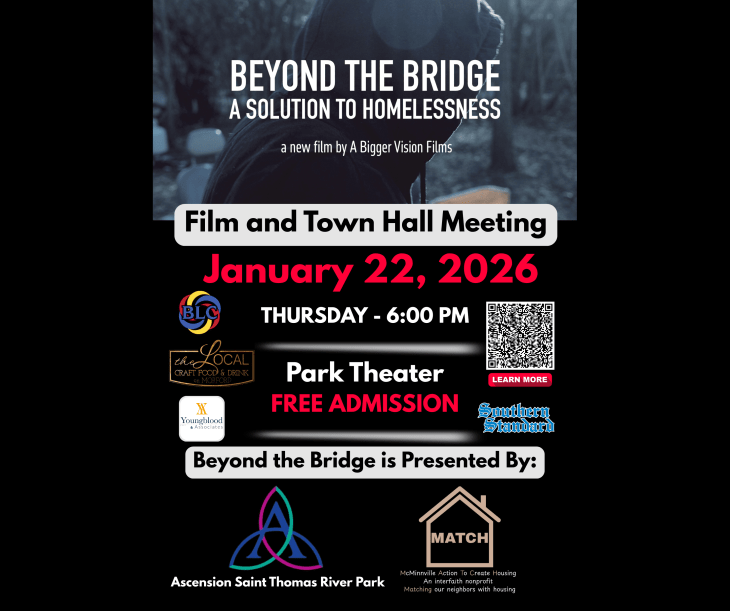
Our first action as a nonprofit was to advocate publicly for permanent supportive housing for the unhoused in our county by presenting the film Beyond The Bridge and hosting a Town Hall Meeting afterward. What is permanent supportive housing? It is an evidence-based solution to homelessness that quickly places a homeless person or family into an apartment, usually owned by a private landlord. Two key components are the supportive services that follow the individual into permanent housing and a rental subsidy that helps address the issue of housing affordability.
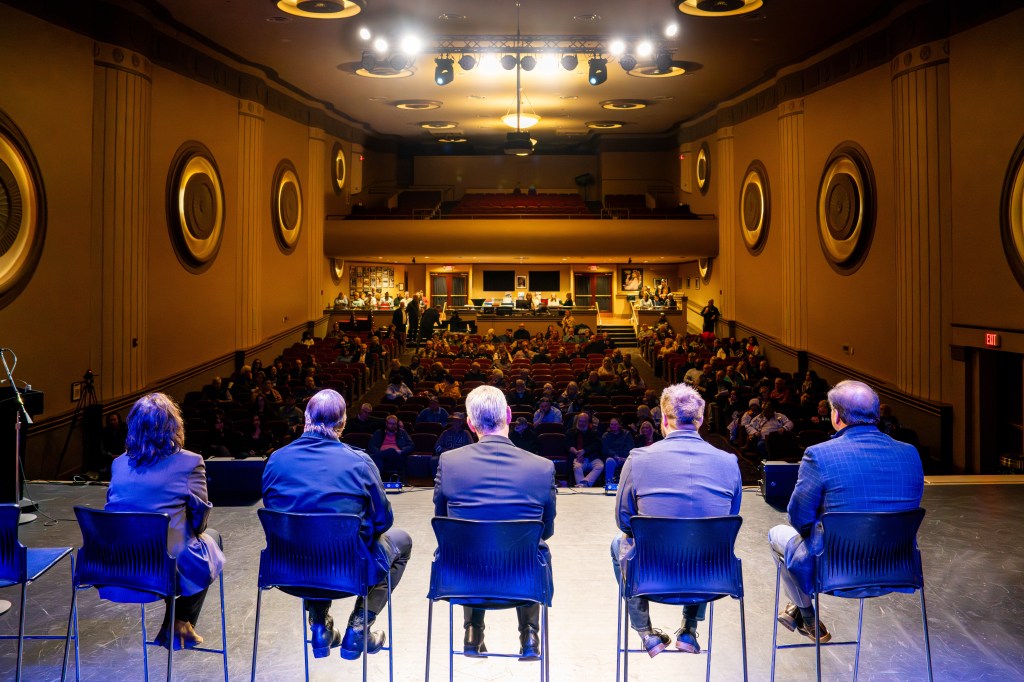
The Town Hall Meeting featured City Mayor Ryle Chastain, County Executive Terry Bell, UCDD/UCHRA Executive Director Mark Farley, Regional President of Ascension Saint Thomas Neal Kelley, and Sheila Fann, the Executive Director of HOME. I served as the moderator in my role as president of MATCH. Ninety percent of the questions came from the audience of 250 people.
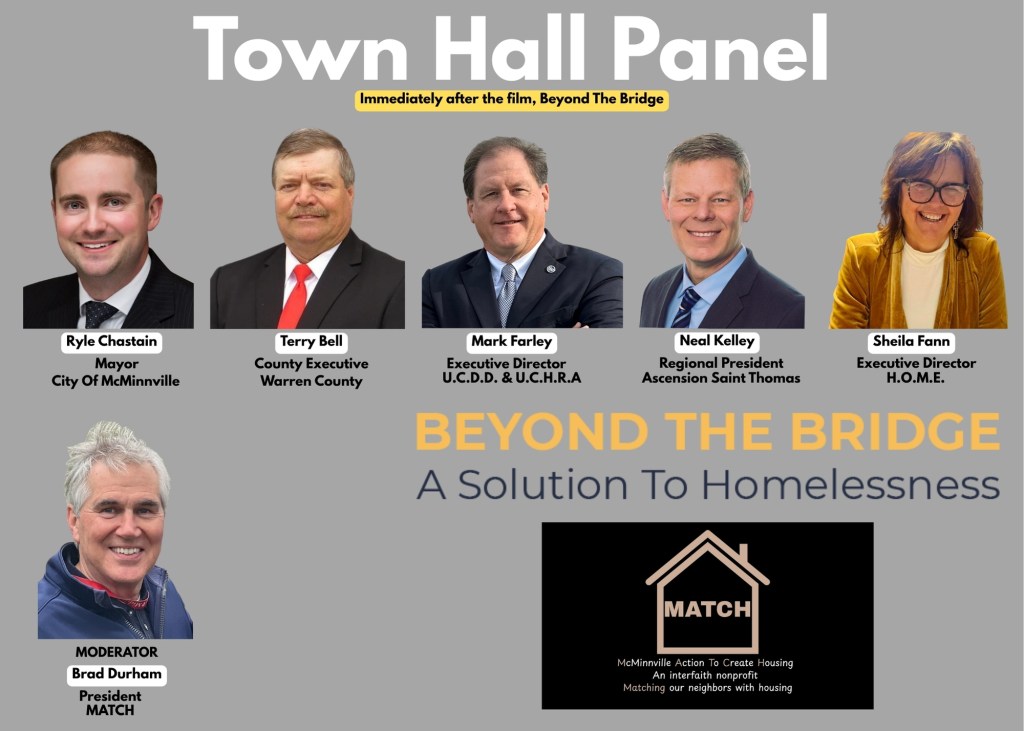
ROUNDTABLE
The clear message from the Town Hall Meeting was that the mayor, county executive, executive director of UCDD/UCHRA, and the regional president of Ascension were all interested in sitting at a roundtable to develop and implement a public policy for creating permanent supportive housing. MATCH successfully advocated for permanent supportive housing in a forum that was free and open to everyone in McMinnville.
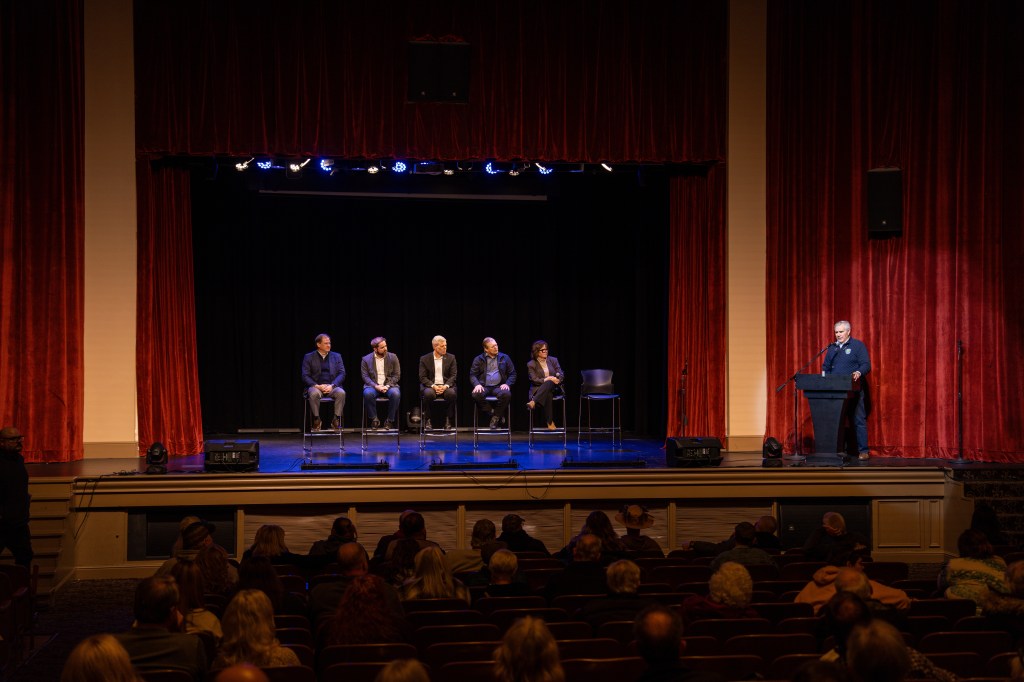
Town Hall Meeting after Beyond The Bridge. Panel and Moderator.
SPONSORS – SUPPORTERS
Our presenting sponsor, Ascension Saint Thomas River Park, donated $10,000 to help us create awareness and foster community involvement. Other sponsors included Ben Loman Connect, Security Federal Savings Bank, Youngblood and Associates, The Local, St. Matthews Episcopal Church, First United Methodist Church, the Southern Standard, and over 100 private citizens. Roland Advertising provided free billboard promotion for the event.
TWO OTHER POINTS OF FOCUS
MATCH has two other major focuses: resource management and program development. These are issues we wish to discuss at the roundtable with elected officials, regional and local service providers, business leaders, and private citizens. We have met individually and as a group with our police chief, the sheriff, the District Attorney, public defenders, and judges to discuss collaboration in addressing the disproportionate burden our unhoused neighbors create in these areas. There is a term often used to describe the pattern that the homeless follow—from hospitals to law enforcement, to courts, and then to jail—known as “frequent fliers” or “frequent users.”
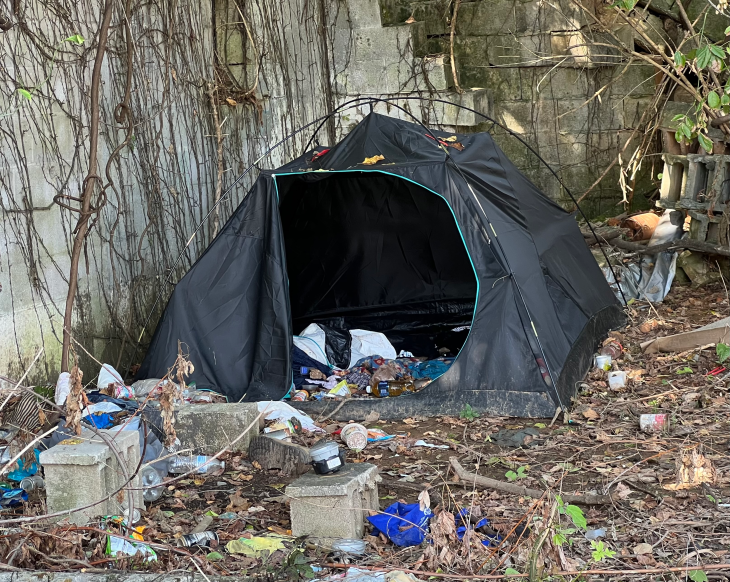
Tent in Downtown McMinnville during the past two years…
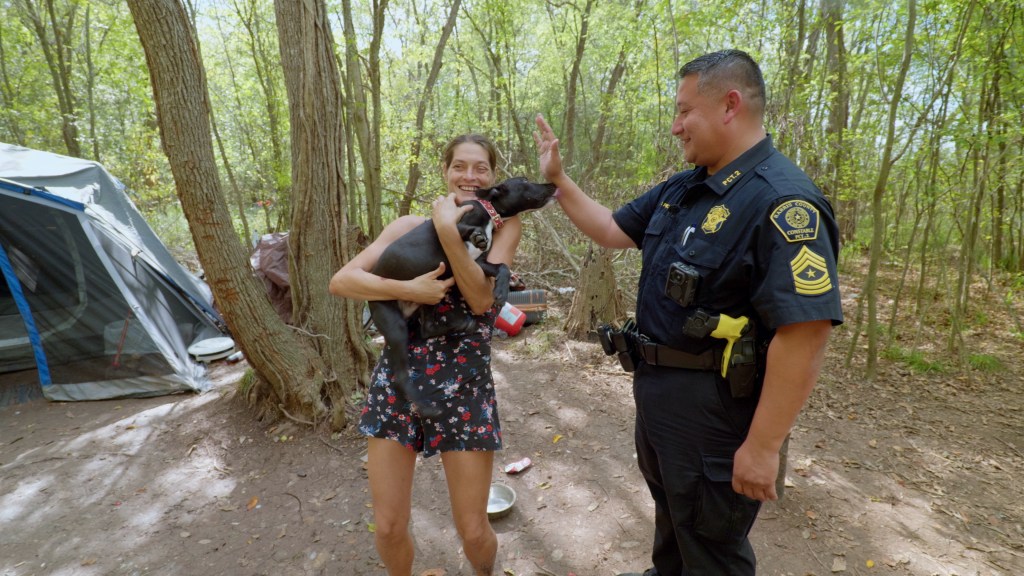
Scene from Beyond The Bridge – Houston police outreach worker to the homeless.
CONSERVE PUBLIC RESOURCES
MATCH aims to conserve limited public resources by leading our homeless frequent users from this cycle by helping them transform into permanent supportive housing. To achieve this, we need to manage funding resources at the local, regional, state, and federal levels to develop full-time staff who can assist the homeless in navigating their way to permanent supportive housing.

Various levels of funding to support permanent supportive housing.
REPLICATE THE DOCUMENTARY FILM
If we had presented a great science fiction film like Star Wars by George Lucas and said we wanted to replicate the Rebel Base and Storm Troopers in McMinnville, you would think we were crazy! Yet, we showed a documentary film presenting an evidence-based positive solution to homelessness at the Park Theater and expressed our desire to replicate it in McMinnville.
BEDFORD FALLS VS POTTERSVILLE
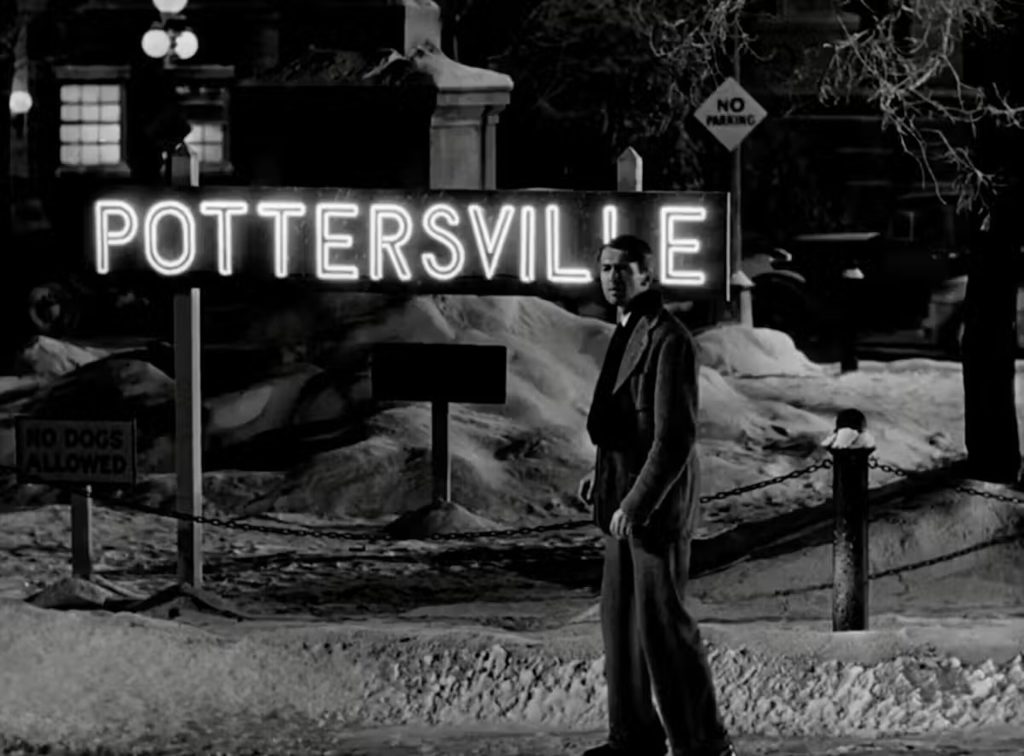
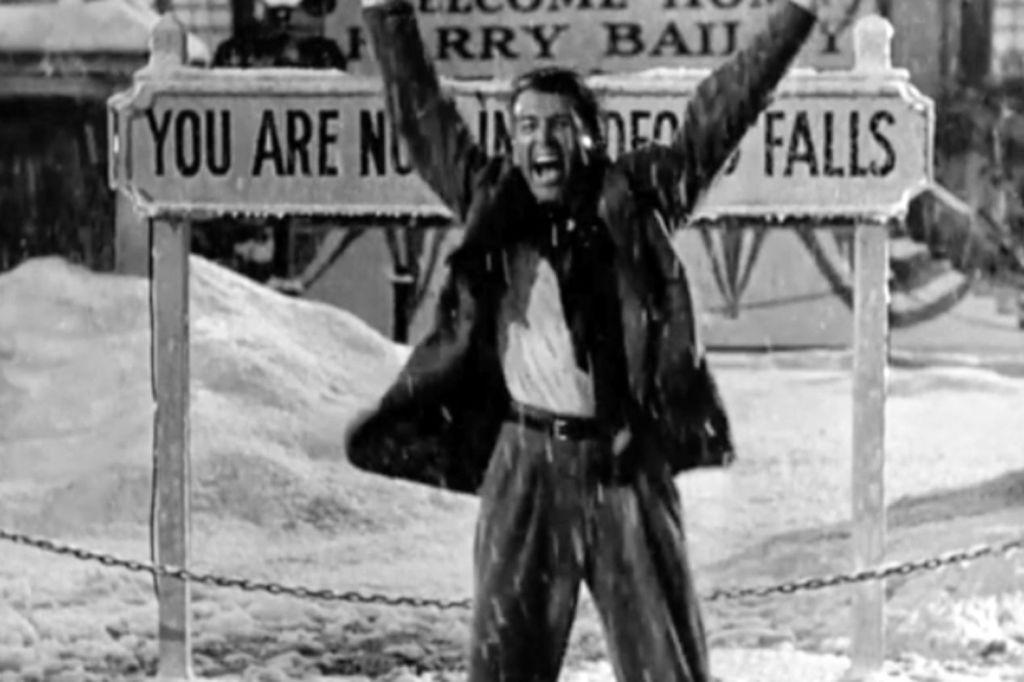
Let me use another film analogy: Frank Capra’s It’s A Wonderful Life, which many of us enjoy watching each Christmas. I am asking everyone throughout McMinnville and Warren County: Do you want McMinnville to be a Pottersville or a Bedford Falls?
CALL TO ACTION
There is something each of us can do to support the poorest of the poor in our community. You can become a positive advocate for permanent supportive housing, contribute your skills, resources, and compassion to help.
Watch this video and contact MATCH if you want to be part of the solution to homelessness in McMinnville by helping develop permanent supportive housing for our homeless neighbors.
-
BY BRAD DURHAM
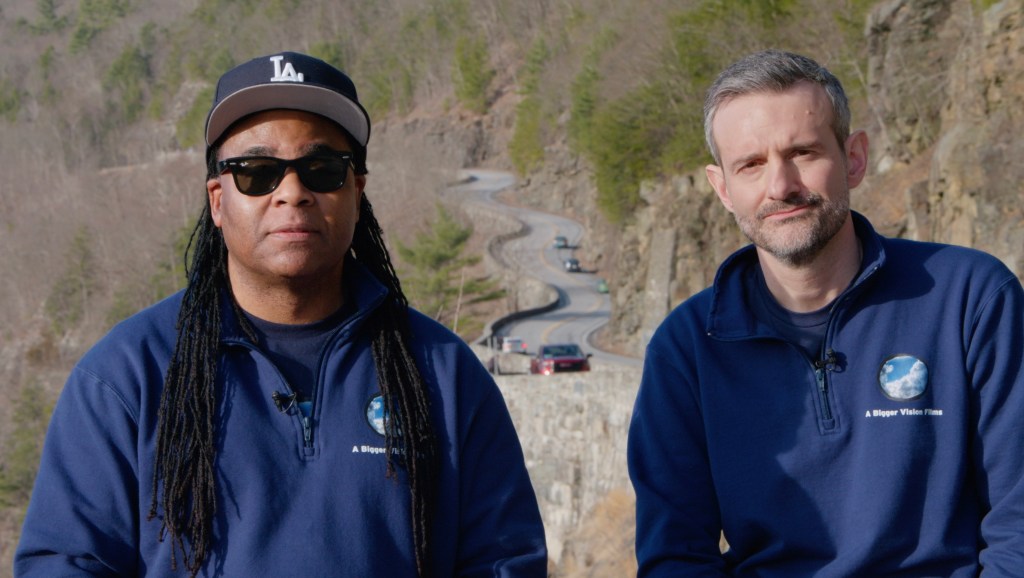
Left to right: Don Sawyer and Tim Hashko MATCH (McMinnville Action To Create Housing) is bringing the film, Beyond The Bridge to the Park Theater on January 22, 2026. A Town Hall Meeting will take place immediately after the film. The filmmakers, Tim Hashko and Don Sawyer will be in McMinnville the day of the film and at the screening for various meetings. This interview serves as an introduction to them and their experiences in making the film.
BD Newsletter: Why did you make the documentary film, Beyond The Bridge?
Tim Hashko and Don Sawyer: Most documentaries about homelessness focus on how sad, lonely, and what a pathetic state people experiencing homelessness are in. This is true. But what needs to happen to fix the situation? We thought that if America can successfully keep a space station orbiting the earth for many years now, America can also successfully solve homelessness. We just didn’t believe solving homelessness is beyond the capability of this country, so we set out on a journey to discover the solution for ourselves.

BD Newsletter: What is the most common reason towns have not developed a strategic plan to solve homelessness? What is the common denominator in these towns?
Tim Hashko and Don Sawyer: There are two very common reasons communities struggle when it comes to creating an effective strategic plan to address homelessness. First, in most communities, there is a deep, unspoken belief that homelessness is an intractable problem that can never be solved. If you don’t believe you can solve the problem, then you will never solve the problem – a fundamental principle when pursuing any goal. Second, most communities (sometimes inadvertently) set their homeless response systems up to serve their local government, service providers and the housed public. In other words, the welfare of these groups are prioritized over the welfare of the people experiencing homelessness. For many communities the priority of their homeless response system is to get the homeless population out of sight and out of mind instead of meeting them at their need and leading them out of homelessness – when this is the objective of a homeless response system, it will always end in failure.
Have you seen a difference in the approach and resources committed to solving homelessness in small and large cities? In other words, have you seen small towns practice the same plans large towns use?
Tim Hashko and Don Sawyer: The scale is different, but the fundamentals are the same. Large cities tend to have more resources and more complex systems, while small towns often assume those models do not apply to them. What we found is that the core strategies that work in big cities also work in small communities when they are adapted to local conditions. In fact, small towns often have an advantage because relationships are closer and change can happen faster.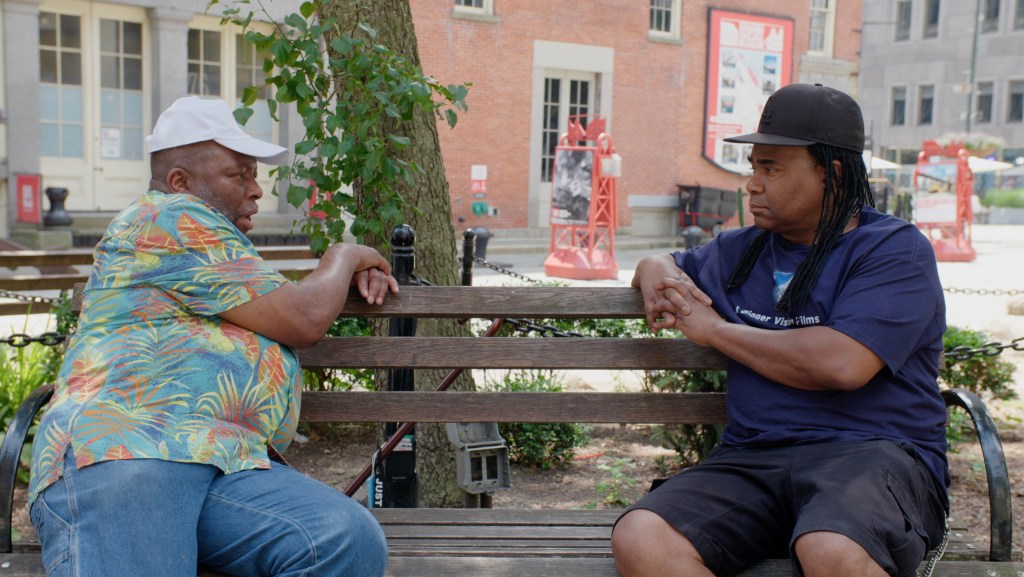
Don Sawyer interviewing Rob Robinson, a prominent
community organizer, activist and formerly homeless.BD Newsletter: What is the number one reason you want people to see your film?
Tim Hashko and Don Sawyer: To change perspectives on people experiencing homelessness, and to learn why homelessness exists in this country. Then, we want people to see that homelessness is solvable by deploying the blueprint we show in the film, which applies to every community no matter how big or small a community is. Ultimately, we’d like people to understand that if they want different results in their efforts to address homelessness, they will have to band together as a community to make it happen – everyone has a role.
BD Newsletter: Why should a private citizen, service provider, business person, and elected officials see this film? On the other hand, is there anyone in McMinnville who should not see Beyond The Bridge?
Tim Hashko and Don Sawyer: Homelessness affects the entire community, and solutions require participation from everyone. The film gives private citizens a clearer understanding of what actually works, service providers a framework for stronger collaboration with other organizations, business leaders insight into how they can help, and elected officials examples of effective leadership grounded in results rather than theory.There is no one who should not see this film. It is not political and it does not promote a single ideology. It presents evidence, lived experience, and real world solutions, and invites the whole community into a more productive conversation.
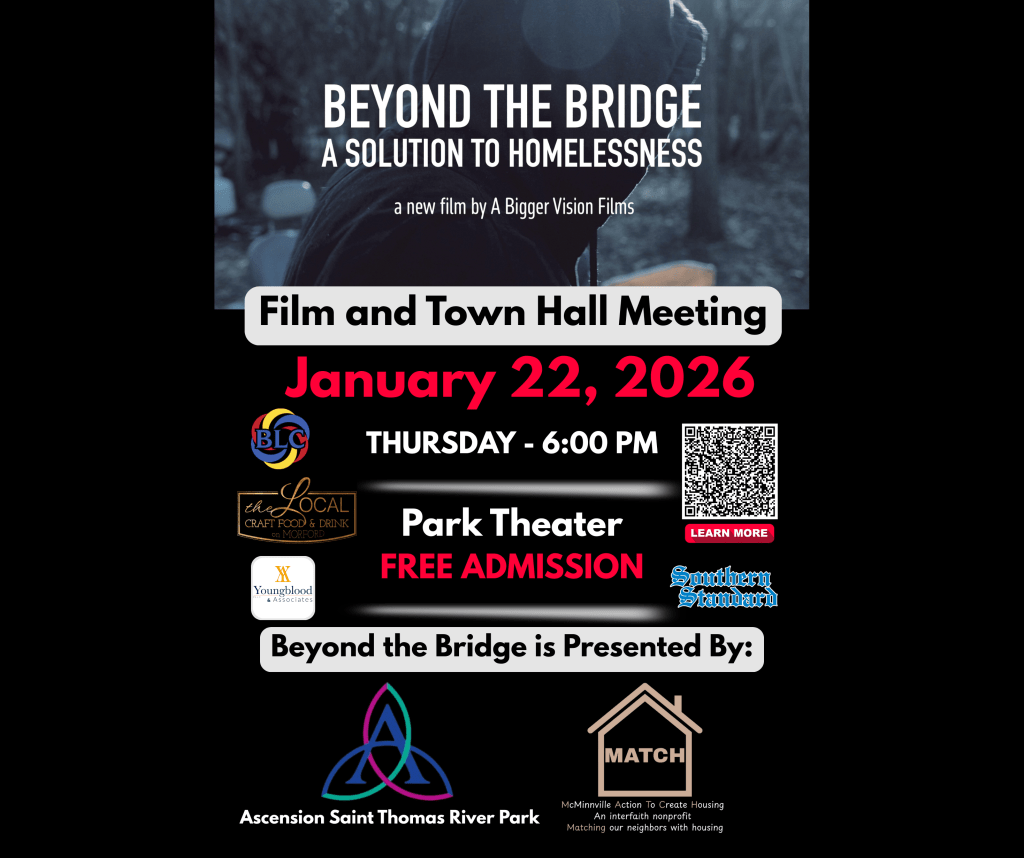
Please plan to attend this event—admission is free! By reserving a ticket, you’ll secure your spot and receive a convenient reminder, ensuring you don’t miss out on this exciting experience. Click on the link below to reserve your ticket today.
-
By Brad Durham
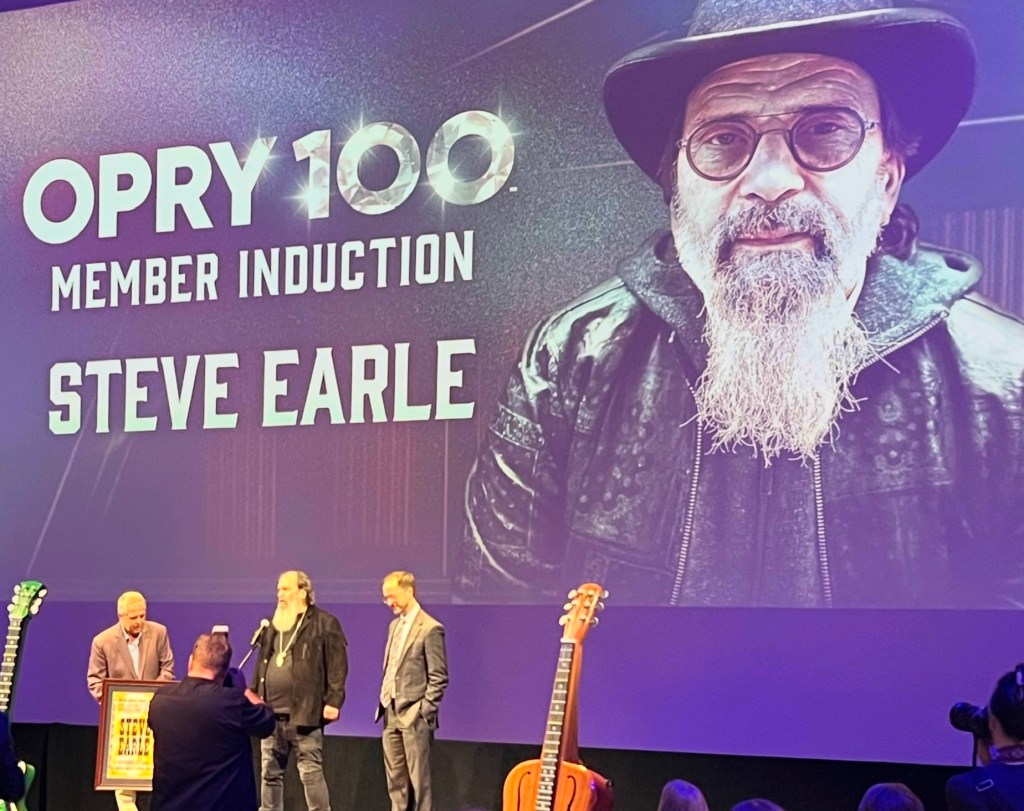
Left to right: State Representative Bo Mitchell, Steve Earle and Mayor Freddie O’Connell
A Personal Reflection
My connection to the Grand Ole Opry is a story woven with irony, chance, and profound influence.
The Grand Ole Opry was a place my uncle Hal Durham dedicated four decades of his life to — first as an Emcee at the historic Ryman Auditorium downtown, as Program Director at WSM Radio, and ultimately as General Manager when the new Opry House opened in 1974.
Through my uncle, I was inadvertently introduced to Steve Earle by T-Bone Burnett, an encounter that significantly altered the course of my life. That chance connection opened doors I never anticipated, reaffirming how moments of irony and chance can shape our futures in unexpected and meaningful ways.
The Beginning of a Quest
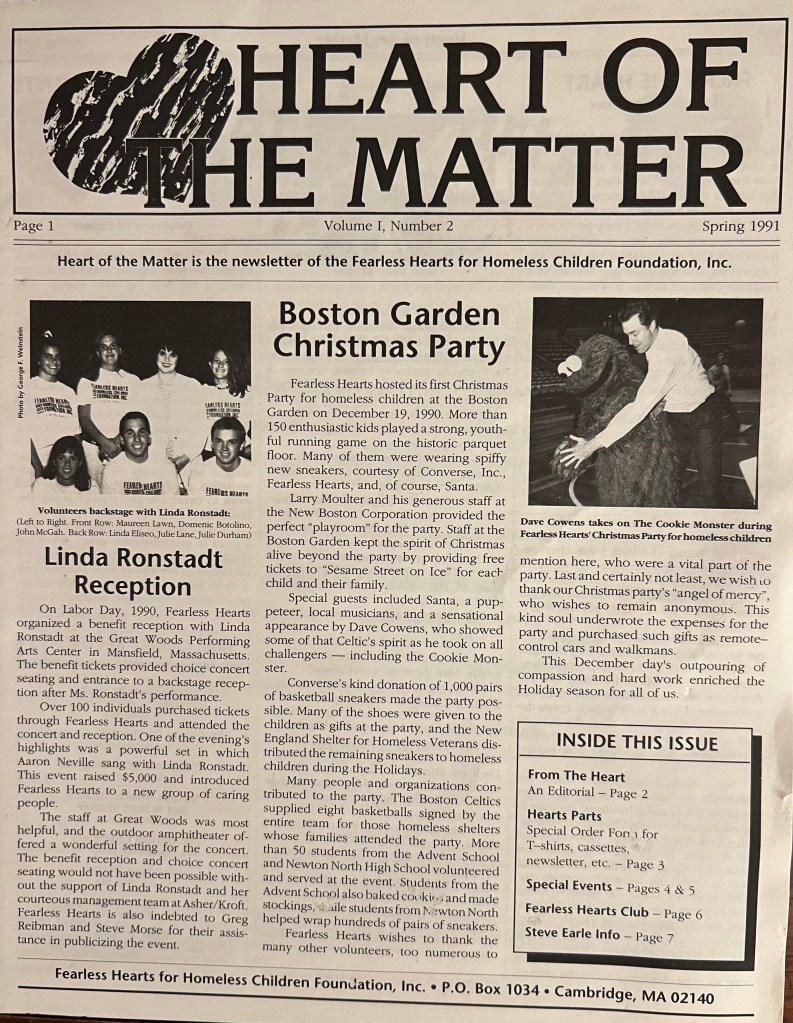
The idea to organize a benefit concert first took shape in 1986, during my time working at the Multi-Service Center for the Homeless with the Cambridge Department of Human Services. My role was to help place homeless families into permanent housing. At that time, Philip Mangano, the director of the center, had brokered a deal with Harvard University to host a benefit concert at Harvard Stadium.
Around the same period, T-Bone Burnett had just released a new country album, which gave me an idea. Eager to bring high-profile artists to the event, I mentioned this to my uncle, Hal Durham, encouraging him to invite Burnett to the Grand Ole Opry. My ultimate plan was to surprise Burnett at his appearance with a request for him to reach out to Pete Townshend of The Who and other renowned artists, to perform at the benefit concert and help make a difference.
The Irony Unfolds
On September 17, 2025, I was in the audience as Steve Earle was inducted into the Grand Ole Opry — a moment that felt almost surreal. It was on that very stage in 1986 that I first became aware of Steve Earle.
After weeks of persuading my uncle to book T-Bone Burnett, he unexpectedly called one day. He asked if I wanted T-Bone Burnett to appear at the Opry. He said, “If you want him to play, he will. If you don’t, he won’t.” I was stunned by such an offer and quickly said yes, hoping Burnett’s appearance might help us gain access to major acts.
Fast forward to Burnett’s performance at the Opry in 1986. My uncle introduced us backstage. I vividly remember: T-Bone Burnett had asked my uncle why he hadn’t asked Steve Earle to perform at the Opry. At that time, I had no idea who Earle was, but I made a mental note to check out Steve Earle’s music.
That’s Show Business
That night at the Opry, my uncle pointed to Dolly Parton’s sister and said, “See that woman over there? That’s Stella Parton. She’s been asking me to put her on the Opry for six weeks. She asked if Burnett was my nephew.” Clearly, T-Bone Burnett wasn’t as well-known in 1986 as he is today.
Afterward, T-Bone and I went out to eat, and he promised to speak with Pete Townshend and get back to me. Unfortunately, he never returned my calls. That’s show business — you win some, you lose some.
The Dream Became Reality
A few weeks later, I was back in Boston, and to my surprise, Steve Earle was performing at the Paradise Club. I attended his show and was blown away by his performance. He had just released Exit 0, the follow-up to Guitar Town. My curiosity about Steve Earle grew even more after witnessing his live set. I shared my plan to organize a benefit concert for the homeless with him. Without hesitation, he agreed to participate. That moment created a great positive visitation of energy in my life.
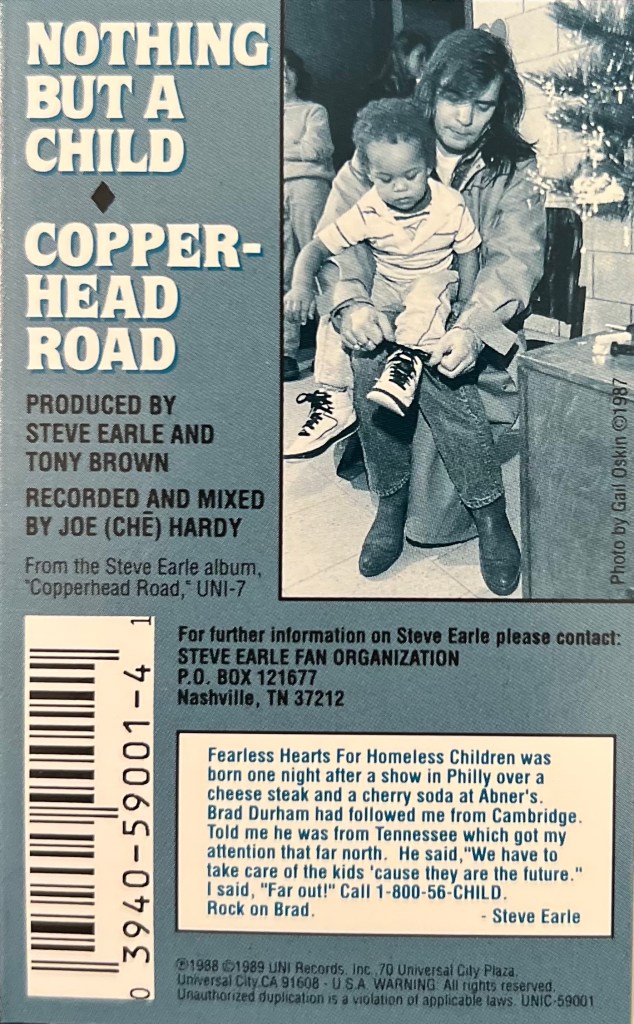
Steve Earle profoundly influenced my life. His generosity in performing benefit concerts inspired me to start Fearless Hearts for Homeless Children in Boston. His support turned my dream of using music to help the homeless into reality. Steve’s active participation helped me find my path as an advocate for the homeless.
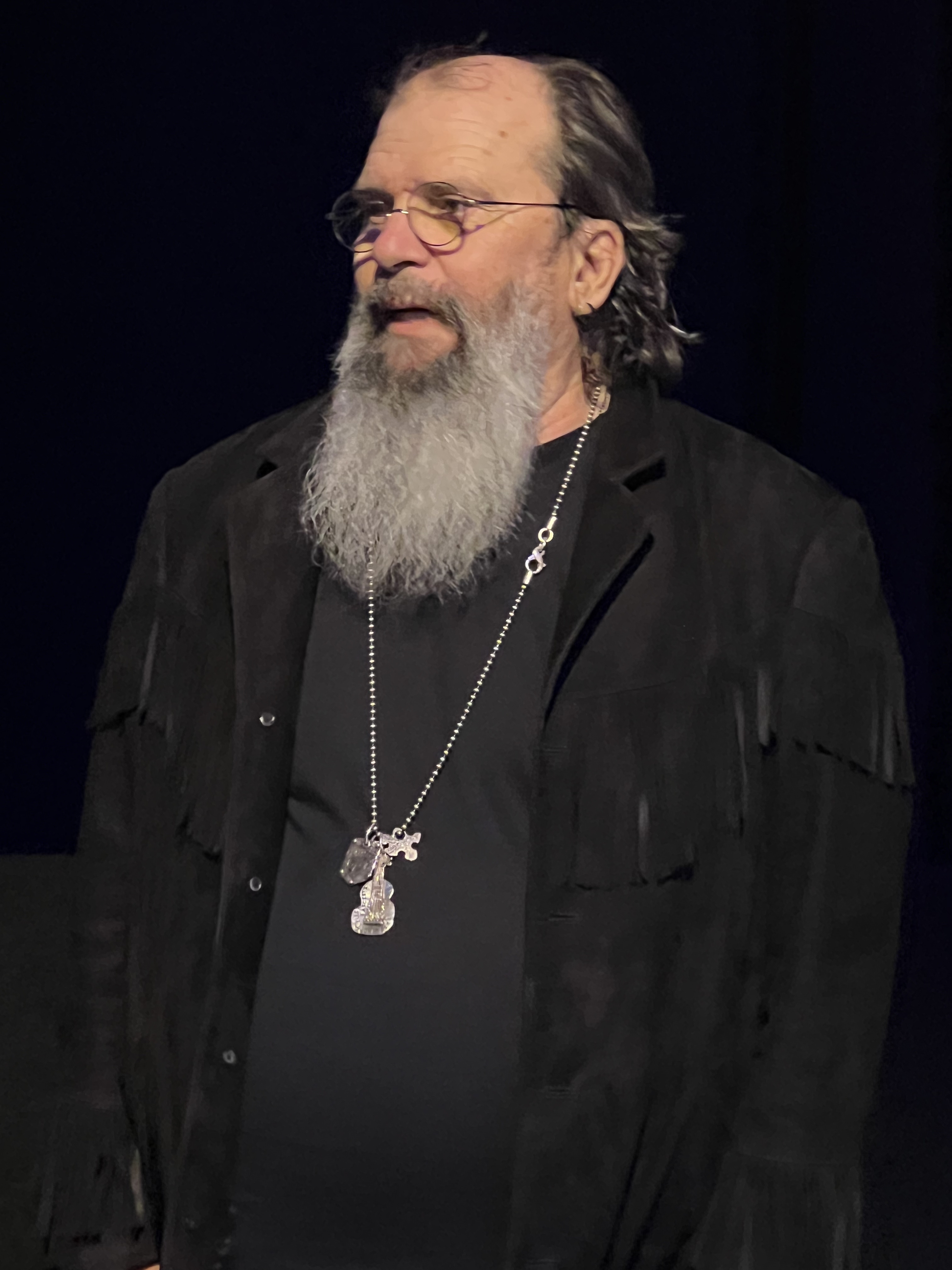
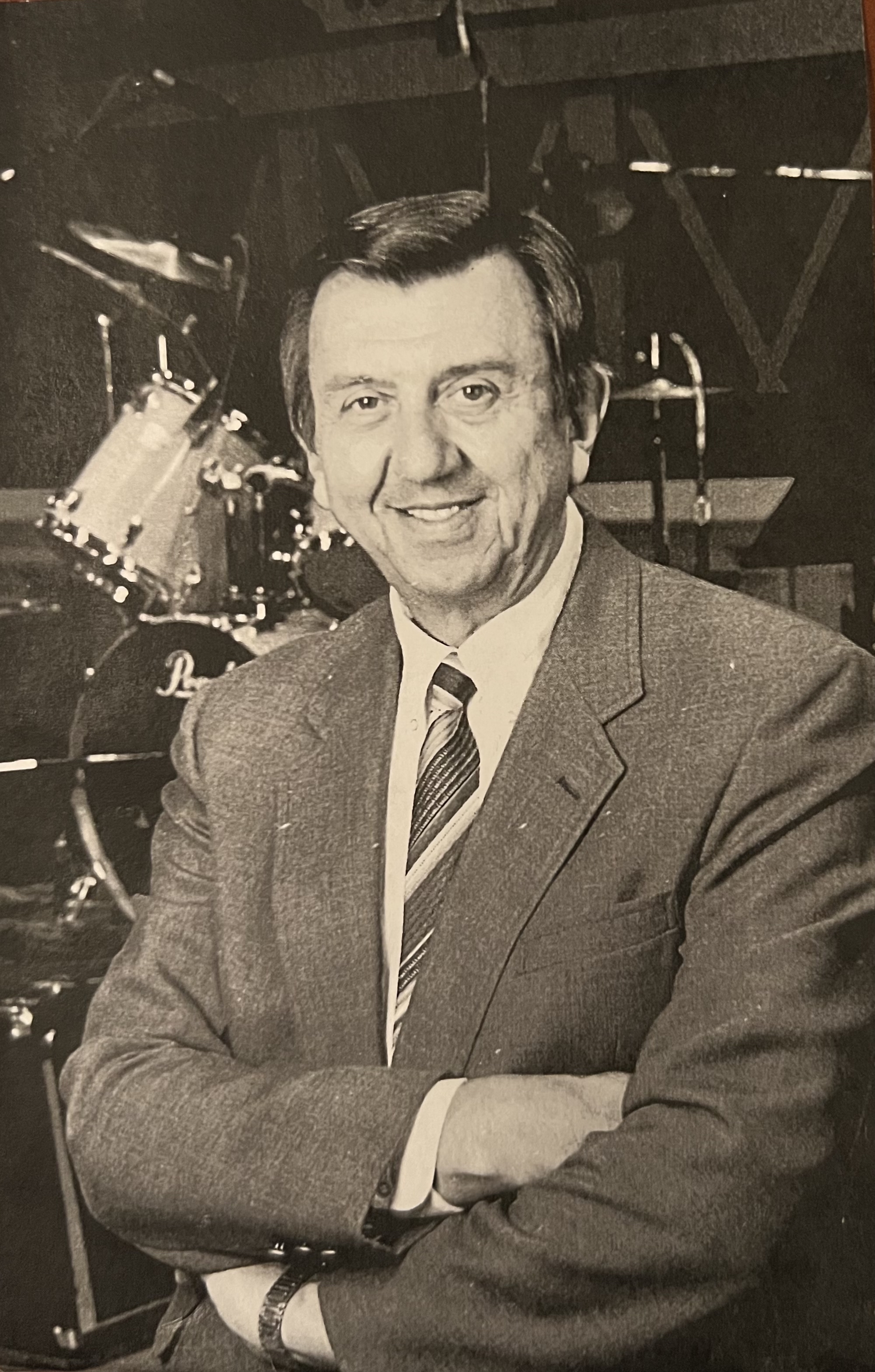
Left: Steve Earle; Right Hal Durham
Irony and Influence
My Uncle Hal had a major impact on my life. I had the honor of delivering his eulogy, during which I stated he was always the smartest person in the room—though he never needed to prove it. His intelligence shone through naturally, with grace and dignity. He was a steady, rational voice during some of my traumatic early years.
Steve Earle is a passionate and determined man. He has composed many outstanding songs, and on September 17, 2025, the Grand Ole Opry became even better by inducting him as a member.
Last night, two men—Hal Durham and Steve Earle—occupied my thoughts at the Grand Ole Opry. That, truly, is irony.
-
AUTHOR, STREET CHAPLAIN, ACTIVIST & NONPROFIT LEADER
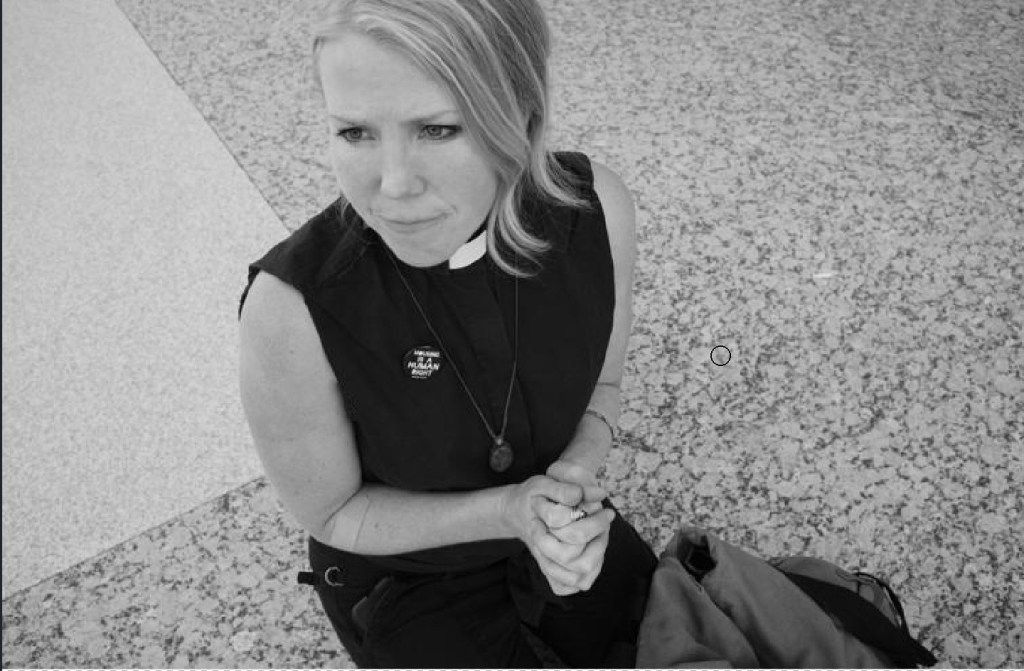
LINDSEY KRINKS BY BRAD DURHAM
Recently, Lindsey Krinks visited McMinnville and spoke to a group of people working with unhoused individuals in the community. Not only did Krinks travel 70 miles to reach McMinnville, but she has traveled a great distance in her lifetime—going from South Carolina to David Lipscomb University, then to Vanderbilt Divinity School. She has made her way from Tent City to Otter Creek to Legislative Plaza. Throughout her journey, she has undergone transformative experiences rooted in a spiritual quest.
After inviting Lindsey Krinks to meet with us, I read her book, Praying with Our Feet. As I read her autobiography, I couldn’t help but think of Joseph Campbell’s Hero’s Journey. The hero embarks on an adventure beyond the ordinary and returns with a message. Lindsey’s story mirrors this: she has faced moments of almost breaking down physically, mentally, and spiritually—yet she persevered and was transformed. Her drive to serve the poorest of the poor—the homeless—has fueled her journey.
For me, reading Lindsey’s book felt like uncovering stories of saints such as Saint Francis of Assisi and Mother Teresa—people who led lives of profound transformation and became signposts along the journey of imitating Christ.
Lindsey Krinks is the real deal—she is a street chaplain, author, activist, and nonprofit leader. She is the co-founder of Open Table Nashville. I’m grateful she visited us to share her story and an excerpt from her book, Praying with Our Feet.
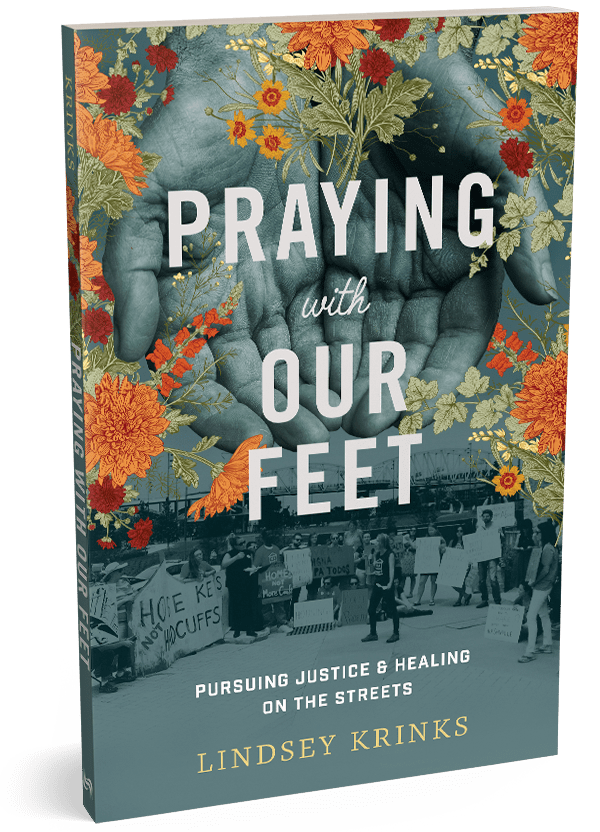
After the meeting, I asked Lindsey a few questions. The following is part of that interview during lunch at The Local in McMinnville.
BD NEWSLETTER: What motivated you to work with the homeless?
LINDSEY KRINKS: Growing up, members of my family—their experiences with homelessness—shaped my perspective. My cousin and uncle experienced homelessness, and I initially thought it was a personal decision on their part. But when I got to college in Nashville, I realized that poverty is much more widespread than individual choices. I started re-reading the Hebrew prophets and the Gospels, and a conviction grew in me: if we are truly followers of Christ, we must go where Jesus went. We are called to the margins—to love, to extend our hand, share food, and provide shelter. And if we take Matthew 25 seriously, we are also called to find Christ there.
Understanding how widespread and systemic the problem is—beyond personal failures—has deepened my call to be the hands and feet of Christ. Compassion at this larger level is justice. That’s a significant part of what pulled me into this work. But once I built relationships with people on the street, I was amazed by who they are and what they had survived. After forming those relationships, there was no way I could go back to anything else. It has been the most raw, real, and transformative experience I’ve ever been part of.
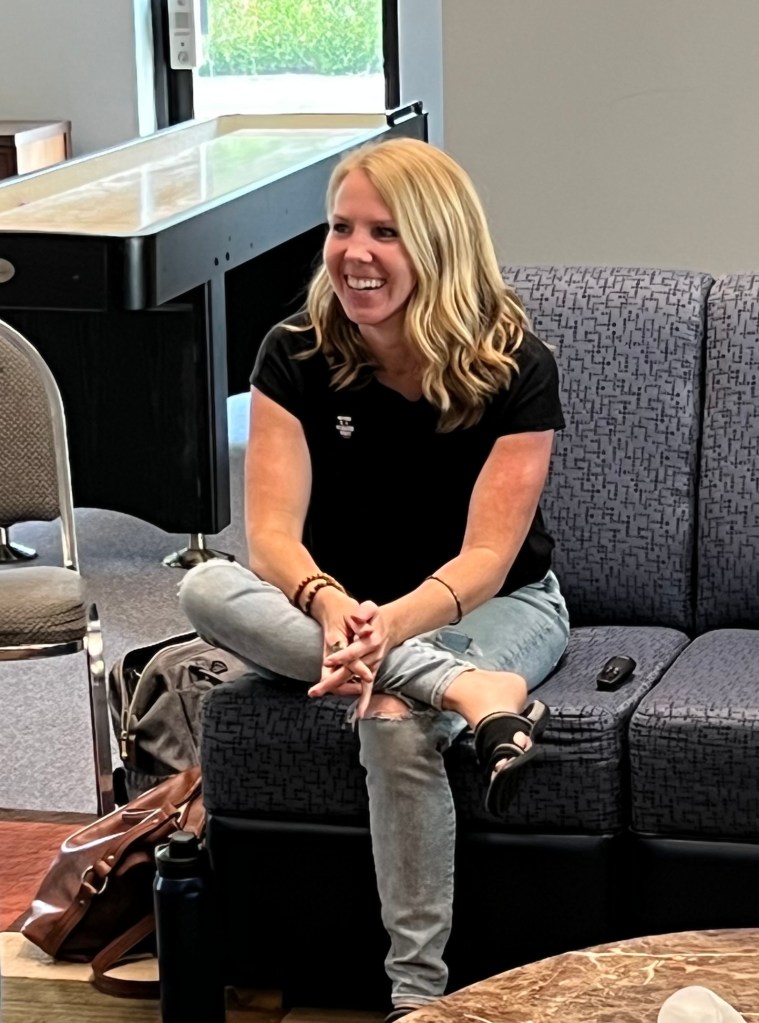
LINDSEY KRINKS SPEAKING IN MCMINNVILLE, JUNE 20, 2025 BD NEWSLETTER: What influenced you to attend Vanderbilt Divinity School after graduating from David Lipscomb University?
LINDSEY KRINKS: I started becoming involved with issues of homelessness and affordable housing during my time at Lipscomb. Influences included dedicated teachers, books I was reading, and a service club that truly changed me.
I was introduced to authors like Shane Claiborne (The Irresistible Revolution), Dorothy Day (The Long Loneliness), and saints such as St. Francis and Mother Teresa. Those are the things that started working on me as I graduated from Lipscomb as a young adult and thinking about what I wanted to do in the world.
I met Charlie Strobel, founder of the Room at the Inn and homeless services in Nashville—someone I considered a literal saint living among us.
I took a few years off after college to work on the streets. I spent two years with AmeriCorps in a homeless outreach program within a mental health agency. The questions of faith, suffering, and liberation kept haunting me. I wanted to explore these issues theologically, which led me to Vanderbilt Divinity School. I knew the school had the tools I needed, and I also had gained tools at Lipscomb. Vanderbilt welcomed me warmly. As a young Church of Christ member, I had a phenomenal experience—meeting others wrestling with Scripture, reflecting deeply, and sharpening my faith and commitments.
BD NEWSLETTER: In your book, you mention a Vanderbilt professor who asked what you were running from. Could you describe the context of that question and how you found the answer years later?
LINDSEY KRINKS: During my first or second year at Vanderbilt, I was part of a small group discussing pastoral care. I was exhausted, burning the candle at both ends—working at shelters, trying to help everyone around me. It’s common for “fixers” to go full throttle…but if done excessively, it’s unhealthy.
My professor noticed I was doing good work but not in a sustainable way. After I expressed my exhaustion, she asked, “What are you running from?” I was defensive and replied, “I am not running from anything.”
It took digging into therapy to realize and say, “Oh, I keep falling into this over-functioning fixer role because of the family system dynamic that was ingrained in me. I was also struggling with survivor’s guilt. I work on the margins and was seeing people on the streets dying from preventable causes. Globally, I was seeing poverty on an enormous scale. Looking at my own family system, I’ve lost cousins and uncles—one of my uncles died on the street and another uncle died after getting out of prison. I’ve watched family systems implode. I had been navigating survivor’s guilt. I believed that if I’ve survived these toxic systems, then I had to try to pull everyone out of these systems.
We see this with war veterans and people who survive childhood trauma. Once I got to the root of that and started to name it, I could begin to respond from a place of love rather than guilt. Love is a deeper well—one that says I am committed to working toward a world where everyone is whole and can thrive.
Yes, I was taken aback by that question from the professor. When someone sticks a finger in our wounds, removes the Band-Aid, and says, “It’s here”—ouch! I encourage all of us to do that kind of work.
BD NEWSLETTER: There’s a point in your life that you describe in your book when you decided to dedicate your life to working with the poor. Can you describe how that commitment manifested?
LINDSEY KRINKS: I’ve always been drawn to healing work. My dad was a pediatrician, and healing felt like a natural calling—it was ingrained in me. I initially wanted to pursue physical therapy in undergrad because the medical field made sense to me. I also wanted a comfortable life, and I saw how some family members worried about finances, so I wanted to avoid that stress.
It was through rereading the prophets and the gospels—holding up examples like Dorothy Day, St. Francis, Mother Teresa, Martin Luther King, and others—who leaned into discomfort to become personally transformed and participate in larger societal change through faith. Once I started working on the street, met Charlie Strobel, and connected with friends on the streets through the Nashville Homeless Power Project, everything fell into place.
There’s a quote I encountered in college that resonated deeply: You are not called to be comfortable; you are called to be faithful. That shook me up.
My faith drew me toward the margins. That is where I discovered that God didn’t need to be taken there – God was already present in the tents and alleys, the underpasses and camps. As Jesus says in Matthew 25, you will meet him on the margins: “When I was thirsty, you gave me water. When I was hungry, you gave me food. When I needed clothing, you clothed me…
There are these passages in scriptures. It was absolutely a calling.
You can order Lindsey Krinks’ book, PRAYING WITH OUR FEET here: https://bakerbookhouse.com/products/235899
You can learn more about Lindsey Krinks at her website: https://www.lindseykrinks.com

LINDSEY KRINKS -
By Brad Durham
Upcoming Events to Support Our McMinnville Community
The public is invited to attend and lend your support to two important upcoming events focused on assisting our homeless neighbors.
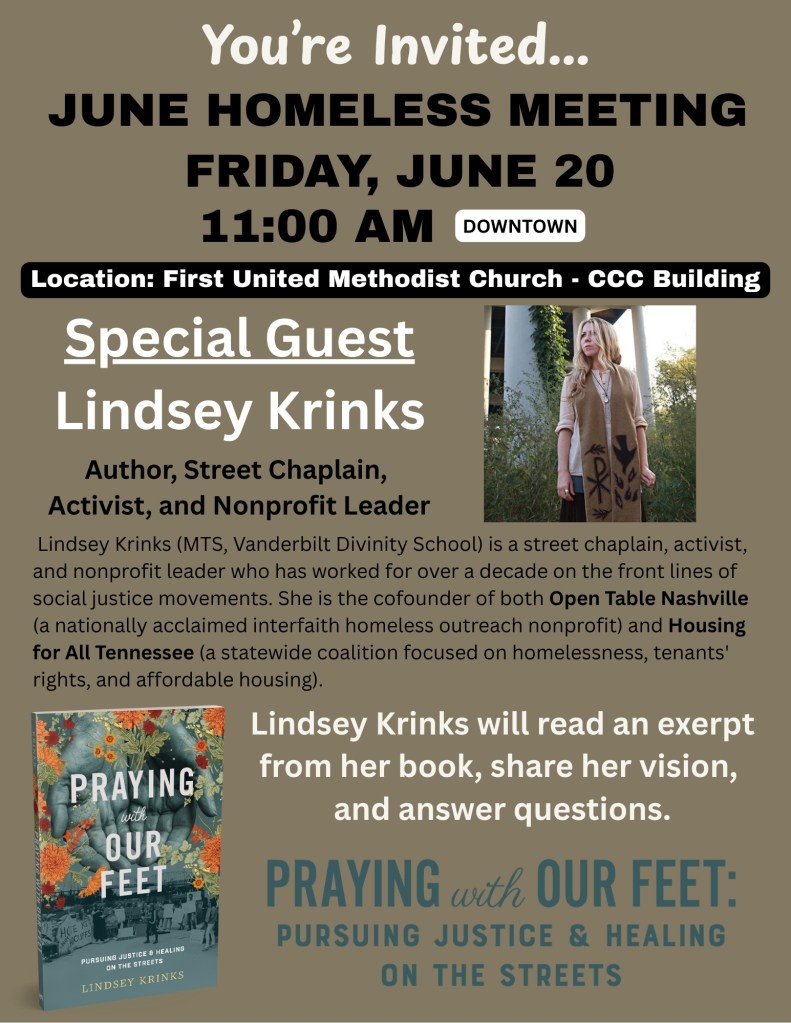
Special Guest Event with Lindsey Krinks
FREE ADMISSION
Date: Friday, June 20, at 11:00 AM
Location: Christian Community Center, First United Methodist Church DowntownLindsey Krinks is an author, street chaplain, activist, and nonprofit leader who works closely with the unhoused community in Nashville. She will be reading an excerpt from her book Praying with Our Feet, sharing her vision for activism, and answering questions. This event is part of a regular meeting of individuals working with our homeless neighbors in McMinnville.
Benefit Car Wash to Support Our Homeless Neighbors
Tickets: $10 in advance; $15 Day of Car Wash
Date: Saturday, June 21, from 8:00 AM to 5:00 PM
Location: First United Methodist Church Downtown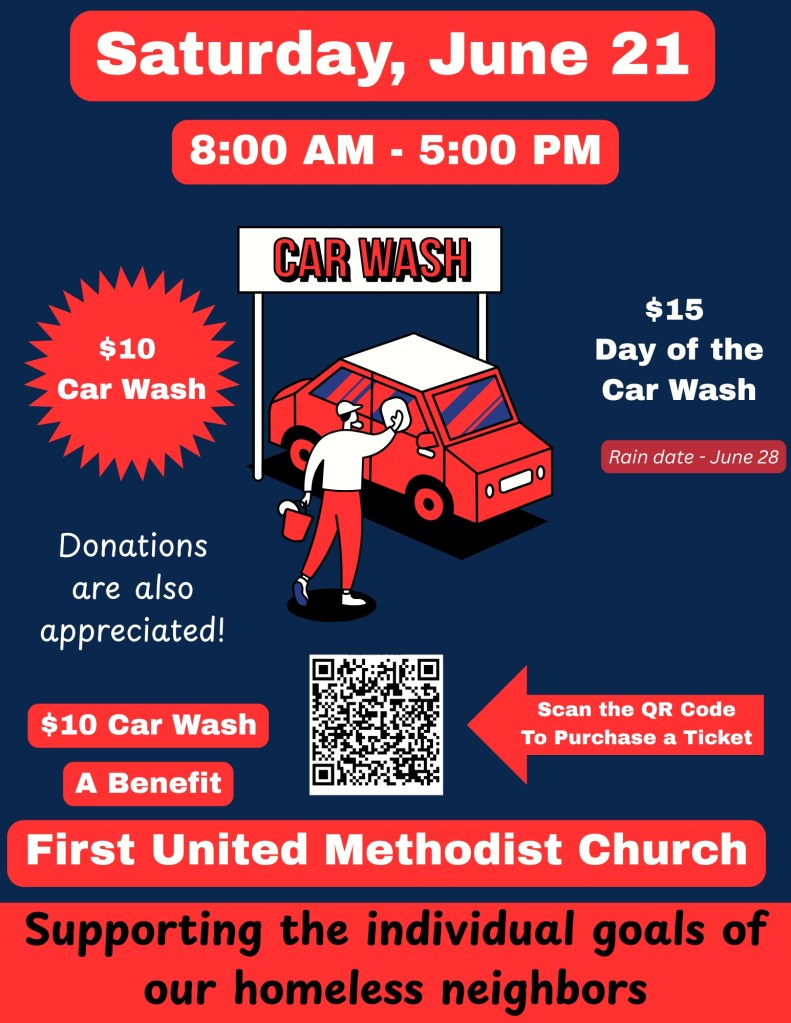
Join us for a car wash fundraiser to benefit our unhoused neighbors. Tickets and donations can be purchased in advance through the link below. All proceeds support the personal goals of those working on the car wash and aid our community.
LINK TO PURCHASE CAR WASH TICKETS AND/OR MAKE A DONATION:
Please share this newsletter with family and friends.
For questions, comments, or suggestions, please contact Brad Durham at (615) 838-4426 or via email at brad412@benlomand.net.
Thank you for your support!
-
By BRAD DURHAM
PROLOGUE
Over the last 26 years, I’ve had the privilege of collaborating with numerous coaches, assisting them in raising funds for their high school teams. At a coaching conference, I discovered a remarkable book titled COACHED FOR LIFE. This inspiring narrative recounts how two dedicated teachers guided and molded 37 young men during a championship season, leaving a lasting impact on their lives. While the fall of 1974 at Middlesex School didn’t boast a dream football team, we had a man who imparted lessons that extended far beyond the field—Brad Kingman’s legacy continues to resonate even after his passing.
A classmate, “I’ve not seen those guys in 50 years; why do I want to see them now!”
Everyone has his own reason to attend or ignore his 50th High School Reunion. My motivation was to see some friends I had not seen in many decades, and I had something pulling at me to be there. I was not sure what it was, but once I drove onto campus, it hit me…it was Brad Kingman. His spirit lives!
(Brad Kingman passed away on August 17, 2012: https://www.legacy.com/us/obituaries/wickedlocal-concordjournal/name/bradford-kingman-obituary?id=9486613)
u003cstrongu003eVideo of the circle in the middle of Middlesex’s campus.u003c/strongu003e Looking out over the Circle at the 50th Reunion, a basic question popped into my head, what is the purpose, the mission of Middlesex? I looked it up…
Middlesex School helps students find their promise through rigorous intellectual, physical, creative, and ethical education. We value integrity, kindness, inclusivity, excellence, and engagement in service of our community and the wider world.
MY PROMISE
The promise I made to myself about the 50th Reunion was to resolve my deep regret about breaking my word to Brad Kingman. The rigorous Middlesex education was clearly beneficial. The major ethical lesson that I should have learned at Middlesex eluded me for decades. I was out of alignment before I went to Middlesex, and as much as Brad Kingman and the school tried to guide me in the right direction, I resisted.
FOUR CARDINAL VIRTUES
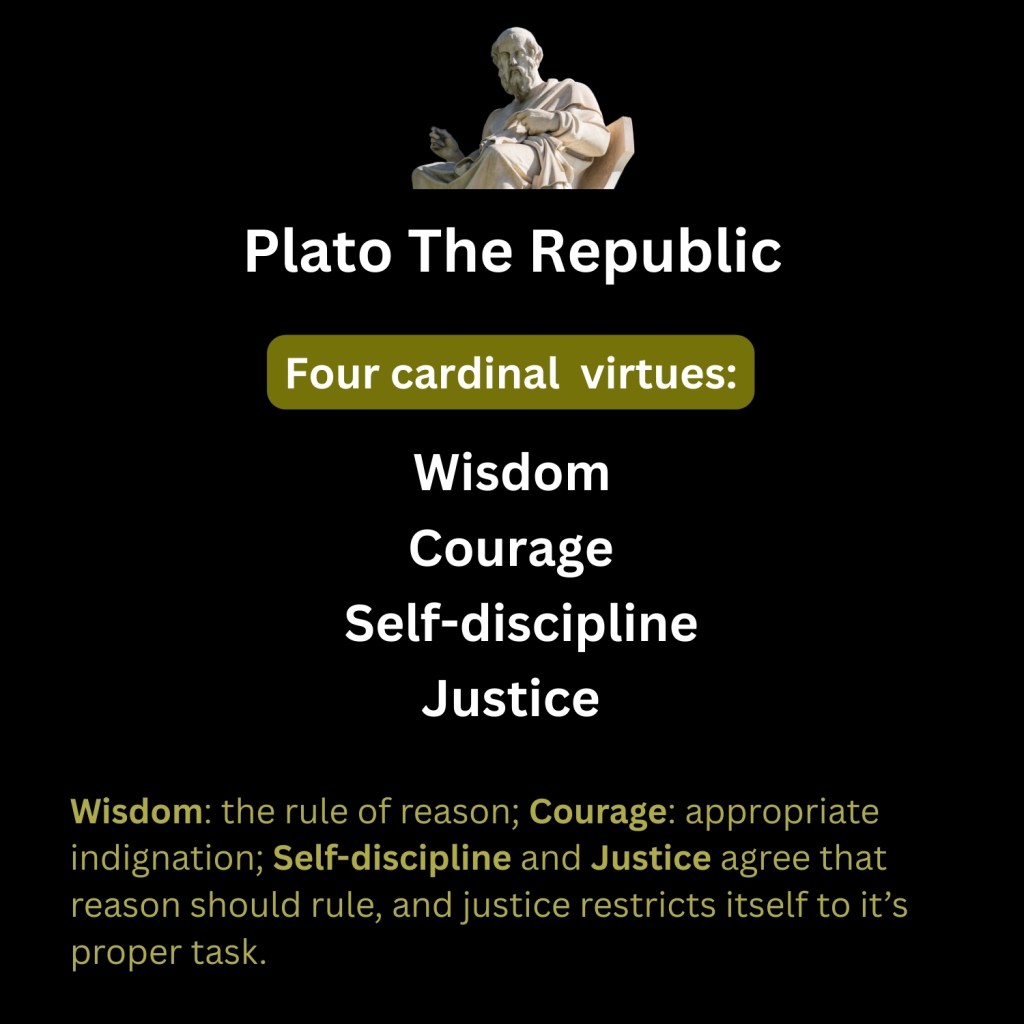
Plato presents four cardinal virtues in The Republic. They are wisdom, courage, self-discipline and justice. When I entered Middlesex as a student, I was lacking in all four of these virtues. I was self-consumed, not making the best and brightest personal choices. Early childhood trauma had hijacked me.
SENIOR YEAR – MY TRANSGRESSION
When I came back to Middlesex early for football my senior year, I started off on the wrong foot. The year before, I had asked Brad Kingman, who was my advisor and Dean of Middlesex School, if I could drive my MG up from Tennessee after the break. Jamie Jones had asked me to visit him on the Cape after school ended, and I mentioned that I wanted to have my car. Mr. Kingman said, “Okay” — on one condition – that I not bring the MG back my senior year.

BD and Jamie Jones, April 26, 2025 I drove the MG back to Concord for my final year, and my second stop was Mr. Kingman’s house. Why? I was stupid and out of alignment. He told me that he wanted my plates and keys to the car. I refused. During the next few months, we had a few intense meetings inside and outside of his office.

MG MIDGET MODEL OWNED BY BRAD DURHAM THE CRASH
The night after the final football game, I crashed my MG down the street from Jamie Jones’ house on the Cape. Word traveled back to Middlesex. Crashing my car was an existential metaphor. I was crashing in every sense of the word.
Mr. Kingman probably discussed the issue of my MG with the Headmaster and staff during the Fall of 1974. One fall day, John DeQ. Briggs, Jr., the Assistant Headmaster, approached me in Alumni Hall. He said, “There was a time when I thought you represented Middlesex well. Now, I do not know what the hell to think!” And he walked away.
THE DEMAND TO LEAVE CAMPUS FOR A SEMESTER
A few days later in November, Brad Kingman called me into his office. He asked me what I was going to do next semester. I told him that I had fulfilled my credits, and I was going to do an independent study and play sports. He said that I wasn’t. I said that I was. Mr. Kingman then said, “I’ve been here a long time. You are not going to make it. You will get expelled and not get into the college you want to attend.”
I was shocked; the game was over. It was obvious that Mr. Kingman was tired of dealing with me, and I was close to being expelled. Maybe he was going to expel me but reconsidered. I don’t know…but I knew I had to change my plans
MANY YEARS LATER…THE BENEFITS OF THERAPY
Doing cognitive reconstruction work in therapy created clarity and helped decrease some of my misplaced shame. For example, I developed a better understanding of how I was not responsible for my parent’s divorce and my mother’s death. No matter what I learned as I grew older, the mixed-up perspective of a child was tough to correct emotionally.
My parents divorced when I was in the seventh grade, and two years later, I found my mother dead in her bed. Many years later, I realized that I did not have the foundation as a kid to deal with the childhood trauma. I came to Middlesex ready to explode without proper guardrails. Those were guardrails that no longer existed for multiple reasons.
Intellectually, I could understand that I was not totally responsible for the breakup and tragedy in my family. But I blamed myself for causing problems. I was a rebel. I was angry. I defied authority constantly. I simply did not know why I thought and felt the way I did. Often, I questioned my own behavior.
UNDERSTANDING MY 18-YEAR-OLD BEHAVIOR
Therapy helped me better understand my history of self-destructive behavior. 50 years after being told that I had to leave campus for my last semester, I can better understand what transpired. I was spiraling out of control. Brad Kingman was trying to help me align with the proper virtues. I was resistant, defiant.
If I had simply given Brad Kingman the plates and keys to my car, and apologized for breaking my word, who knows what would have happened. Unfortunately, I did not have the wisdom and courage to do the right thing in 1974/1975. Mr. Kingman gave me many opportunities to correct my decision-making, and I refused. I was clueless.
I am extremely grateful that Brad Kingman stood his ground and did his job. He protected Middlesex, and he protected me from myself. I cannot explain my stupid behavior. Moreover, I am not making any excuses. Yet, I can understand why I was so out of alignment.
PEOPLE – RELATIONSHIPS MAKE THE DIFFERENCE
Seeing all my classmates was genuinely heartwarming and inspirational. Everybody added something to the experience of being at Middlesex. The Class of 1975 had some great characters, and every one of them made a contribution. Jamie Jones, Blair Villa and Spence Sloan together with George Noble did a great job of making everything happen for the 50th.
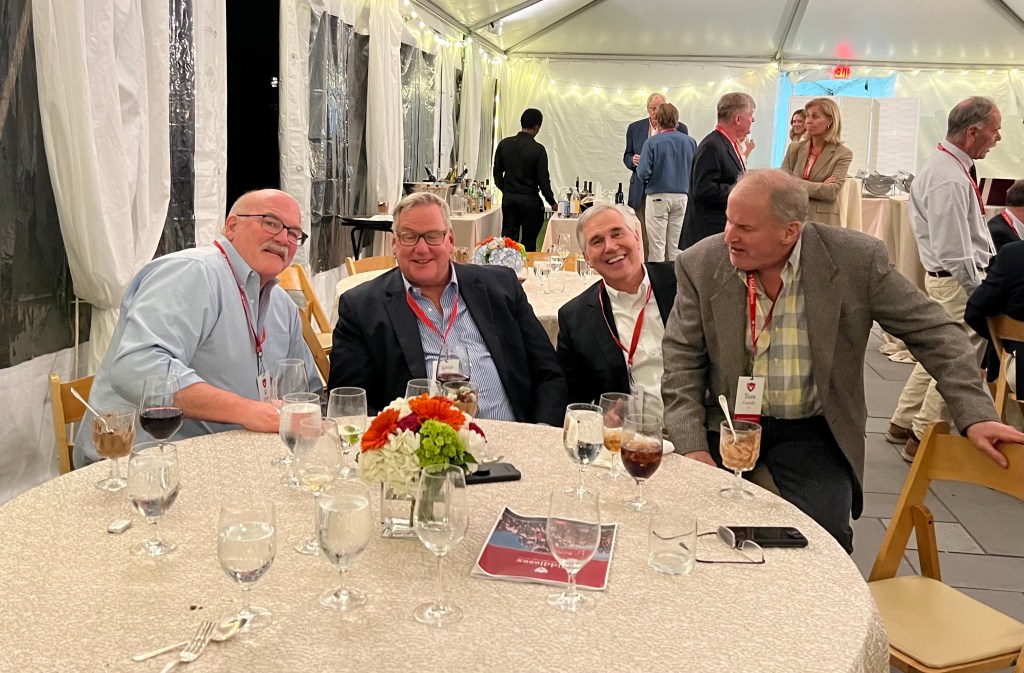
Ki Haden, Jamie Jones, BD, Tom Costello 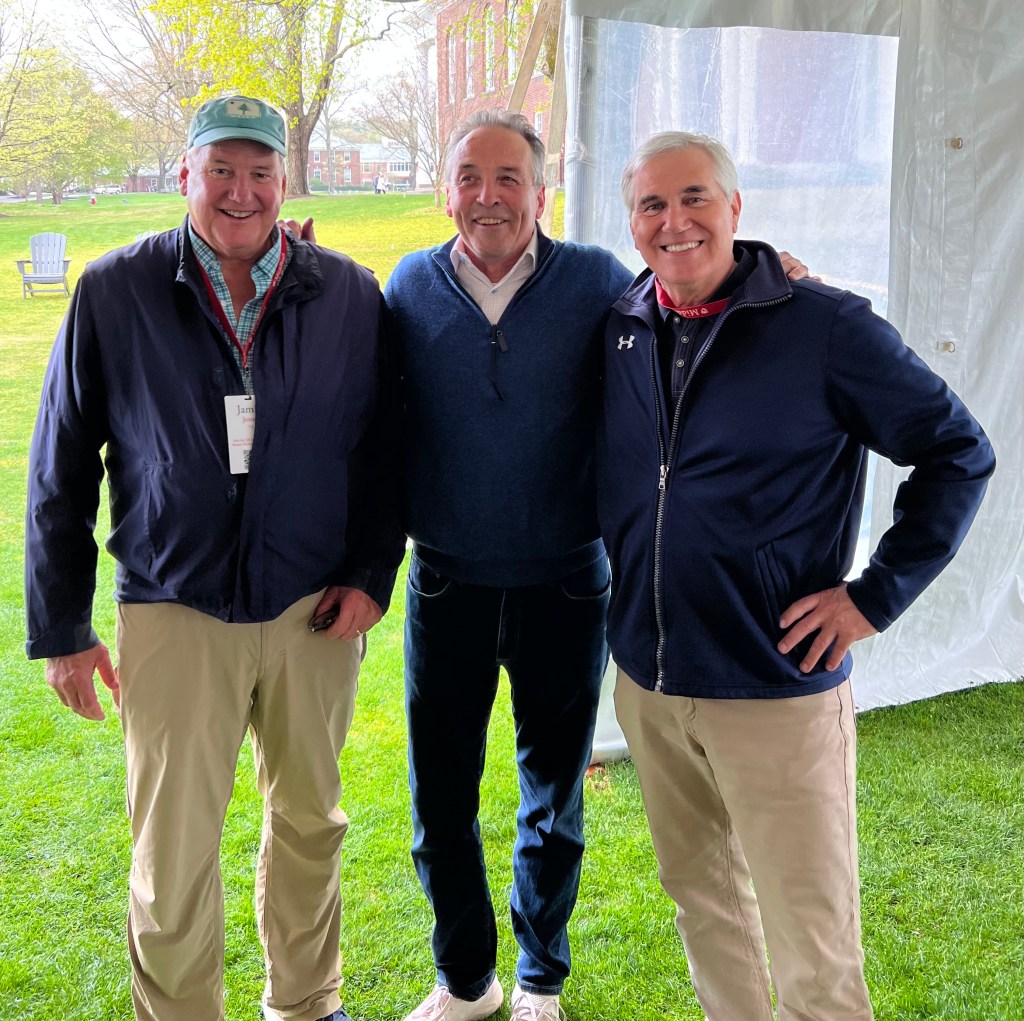
Jamie Jones, Jack Finigan, BD 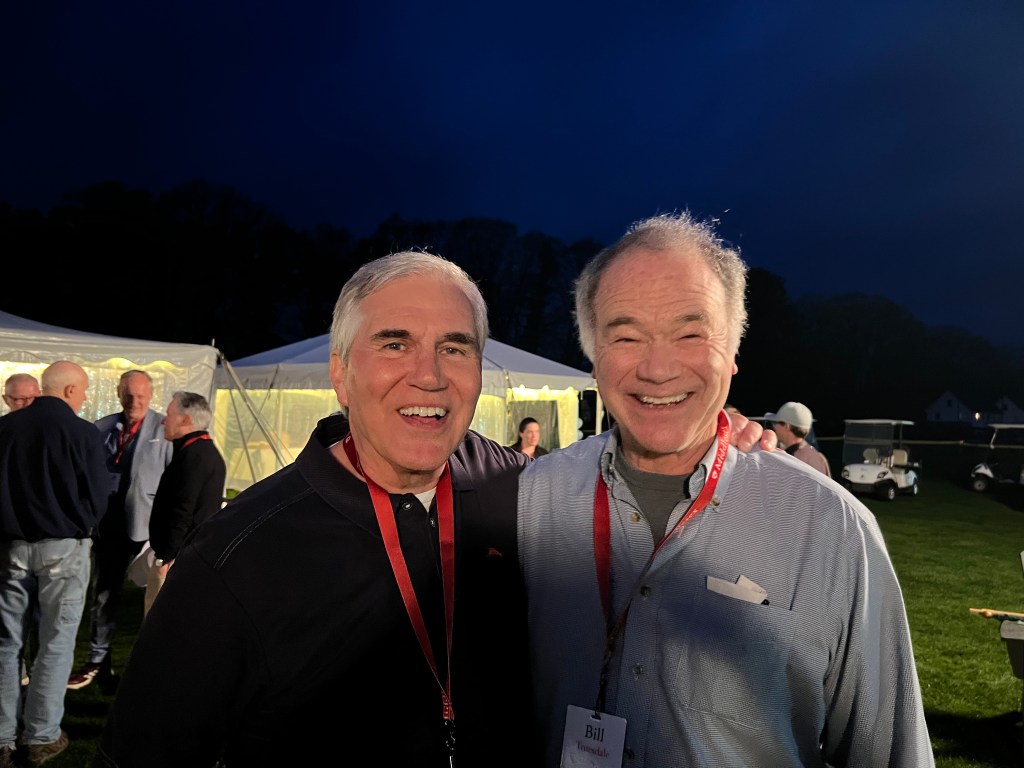
BD, Bill Trousdale 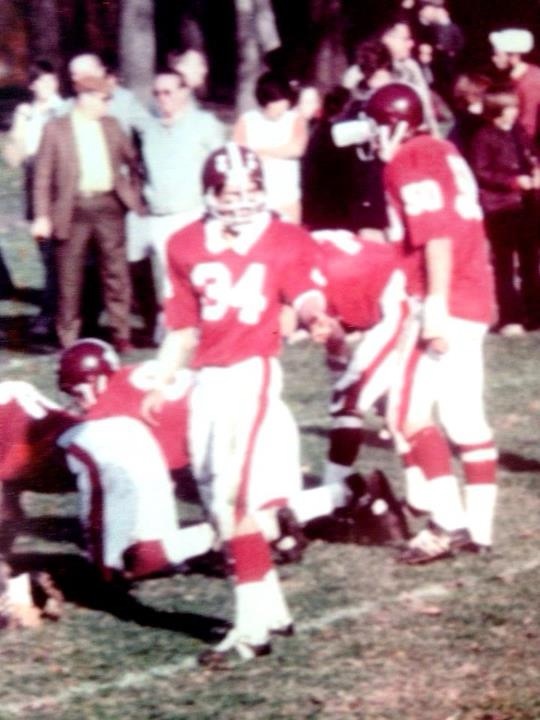
BD, #34 Fall of 1974 
BD pointing to his senior plaque of QUADROPHENIA 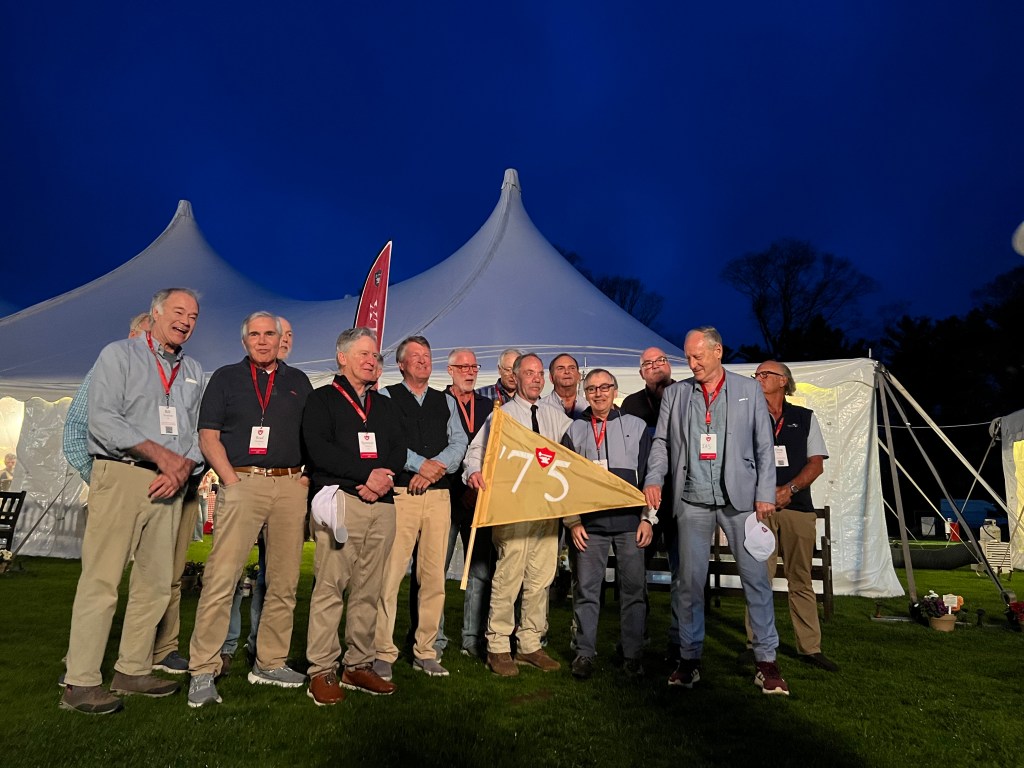
MIDDLESEX SCHOOL CLASS OF 1975 – 50TH REUNION BRAD KINGMAN, A LASTING INFLUENCE
Of course, I regret not being able to see Brad Kingman to apologize and thank him. In many respects, I was 50 years too late.
From my perspective, there were several moments when Mr. Kingman tried to persuade me to change my behavior. He used logic. He used intimidation. He ambushed me. In therapeutical terms, he tried to help me have “corrective emotional experiences.” He saw that I was making bad choices, and he genuinely tried to redirect me.
Brad Kingman was a good man. I hope he knew that I respected him for being firm and consistent. He made a major difference in my life. I choose to interpret his demand that I leave campus as an act of compassion — helping me avoid a tragedy. The rest is history!
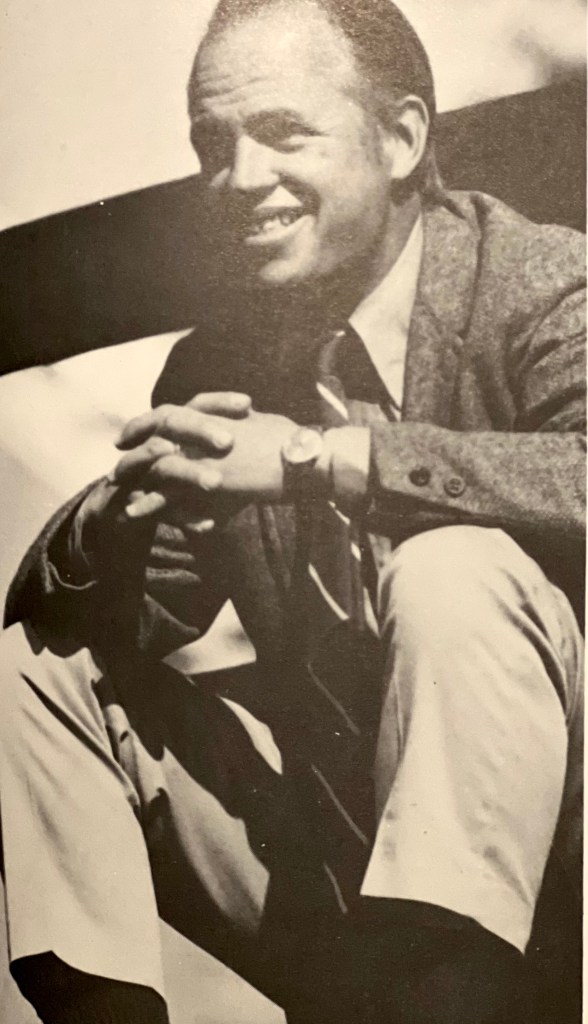
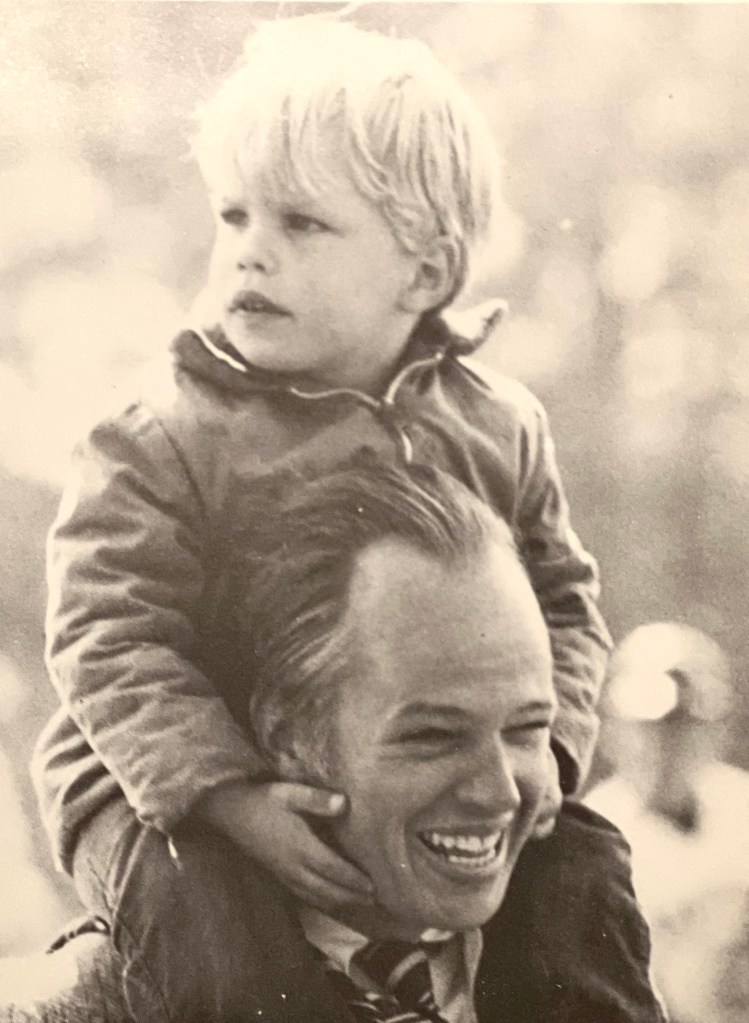
Brad Kingman, Dean of Faculty 1974 Middlesex School Yearbook Photos
EPILOGUE
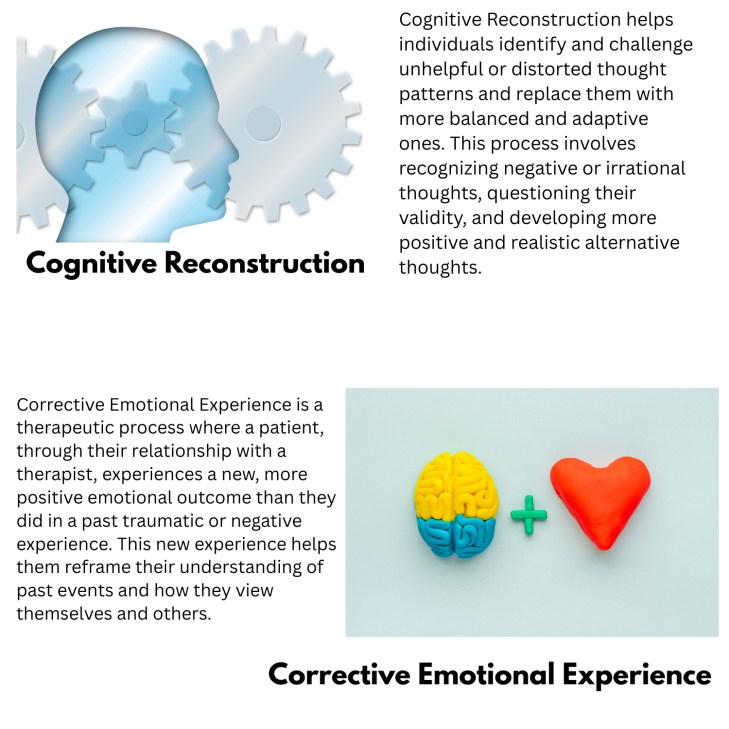
The day I left to go to my 50th Reunion at Middlesex, I saw my therapist of the past 20 years for the last time in Nashville. She is retiring. She was an unconventional therapist who would often insist that I focus on two things during my early years of therapy: cognitive reconstruction and corrective emotional experience. She was the first person to convince me that I had experienced childhood trauma. I learned that untreated trauma can lead to being out of alignment with your values.
My therapist actually started as my daughter’s therapist, and as I was going through a divorce 15 years ago, she became my therapist. Previous to going into therapy with this woman, nothing I had tried was able to unlock the psychological issues. Making a Christian commitment my sophomore year in college probably helped prevent me from partying out of school…flunking out. Therapy, cognitive behavioral therapy to be specific, with a great therapist helped me to understand my most severe issues.
The two major concepts that helped me are amplified below. I was very fortunate to have people such as Brad Kingman and my therapist, Amy Powell in my life. They taught me lessons that are valuable for a lifetime.
-
By BRAD DURHAM
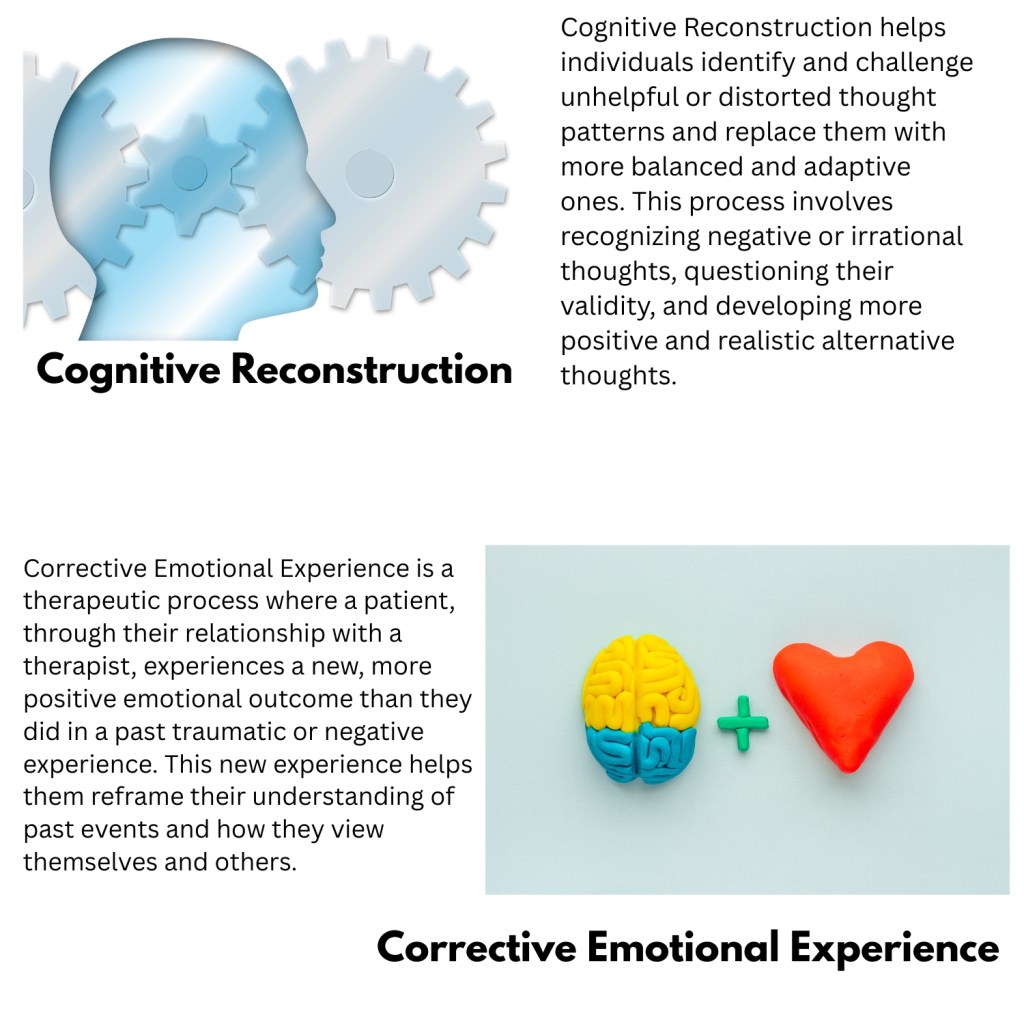
The day I left to go to my 50th Reunion at Middlesex, I saw my therapist of the past 20 years for the last time in Nashville. She is retiring. She was an unconventional therapist who would often insist that I focus on two things during my early years of therapy: cognitive reconstruction and corrective emotional experience. She was the first person to convince me that I had experienced childhood trauma. I learned that untreated trauma can lead to being out of alignment with your values.
WHY I WAS COMPELLED TO COME BACK…
A classmate, “I’ve not seen those guys in 50 years; why do I want to see them now!”
Everyone has his own reason to attend or ignore his 50th High School Reunion. My motivation was to see some friends I had not seen in many decades, and I had something pulling at me to be there. I was not sure what it was, but once I drove onto campus, it hit me…it was Brad Kingman. His spirit lives!
(Brad Kingman passed away on August 17, 2012: https://www.legacy.com/us/obituaries/wickedlocal-concordjournal/name/bradford-kingman-obituary?id=9486613)
Video of the circle in the middle of Middlesex’s campus. Looking out over the Circle at the 50th Reunion, a basic question popped into my head, what is the purpose, the mission of Middlesex? I looked it up…
Middlesex School helps students find their promise through rigorous intellectual, physical, creative, and ethical education. We value integrity, kindness, inclusivity, excellence, and engagement in service of our community and the wider world.
MY PROMISE
The promise I made to myself about the 50th Reunion was to resolve my deep regret about breaking my word to Brad Kingman. The rigorous Middlesex education was clearly beneficial. The major ethical lesson that I should have learned at Middlesex eluded me for decades. I was out of alignment before I went to Middlesex, and as much as Brad Kingman and the school tried to guide me in the right direction, I resisted.
FOUR CARDINAL VIRTUES
Plato presents four cardinal virtues in The Republic. They are wisdom, courage, self-discipline and justice. When I entered Middlesex as a student, I was lacking in all four of these virtues. I was self-consumed, not making the best and brightest personal choices. Early childhood trauma had hijacked me.
SENIOR YEAR – MY TRANSGRESSION
When I came back to Middlesex early for football my senior year, I started off on the wrong foot. The year before, I had asked Brad Kingman, who was my advisor and Dean of Middlesex School, if I could drive my MG up from Tennessee after the break. Jamie Jones had asked me to visit him on the Cape after school ended, and I mentioned that I wanted to have my car. Mr. Kingman said, “Okay” — on one condition – that I not bring the MG back my senior year.
BD and Jamie Jones, April 26, 2025 I drove the MG back to Concord for my final year, and my second stop was Mr. Kingman’s house. Why? I was stupid and out of alignment. He told me that he wanted my plates and keys to the car. I refused. During the next few months, we had a few intense meetings inside and outside of his office.
MG MIDGET MODEL OWNED BY BRAD DURHAM THE CRASH
The night after the final football game, I crashed my MG down the street from Jamie Jones’ house on the Cape. Word traveled back to Middlesex. Crashing my car was an existential metaphor. I was crashing in every sense of the word.
Mr. Kingman probably discussed the issue of my MG with the Headmaster and staff during the Fall of 1974. One fall day, John DeQ. Briggs, Jr., the Assistant Headmaster, approached me in Alumni Hall. He said, “There was a time when I thought you represented Middlesex well. Now, I do not know what the hell to think!” And he walked away.
THE DEMAND TO LEAVE CAMPUS FOR A SEMESTER
A few days later in November, Brad Kingman called me into his office. He asked me what I was going to do next semester. I told him that I had fulfilled my credits, and I was going to do an independent study and play sports. He said that I wasn’t. I said that I was. Mr. Kingman then said, “I’ve been here a long time. You are not going to make it. You will get expelled and not get into the college you want to attend.”
I was shocked; the game was over. It was obvious that Mr. Kingman was tired of dealing with me, and I was close to being expelled. Maybe he was going to expel me but reconsidered. I don’t know…but I knew I had to change my plans
MANY YEARS LATER…THE BENEFITS OF THERAPY
Doing the cognitive reconstruction work in my therapy created clarity and helped decrease some of my misplaced shame. For example, I developed a better understanding of how I was not responsible for my parent’s divorce and my mother’s death. No matter what I learned as I grew older, the mixed-up perspective of a child was tough to correct emotionally.
My parents divorced when I was in the seventh grade, and two years later, I found my mother dead in her bed. Many years later, I realized that I did not have the foundation as a kid to deal with the childhood trauma. I came to Middlesex ready to explode without proper guardrails. Those were guardrails that no longer existed for multiple reasons.
Intellectually, I could understand that I was not totally responsible for the breakup and tragedy in my family. But I blamed myself for causing problems. I was a rebel. I was angry. I defied authority constantly. I simply did not know why I thought and felt the way I did. Often, I questioned my own behavior.
UNDERSTANDING MY 18-YEAR-OLD BEHAVIOR
Therapy helped me better understand my history of self-destructive behavior. 50 years after being told that I had to leave campus for my last semester, I can better understand what transpired. I was spiraling out of control. Brad Kingman was trying to help me align with the proper virtues. I was resistant, defiant.
If I had simply given Brad Kingman the plates and keys to my car, and apologized for breaking my word, who knows what would have happened. Unfortunately, I did not have the wisdom and courage to do the right thing in 1974/1975. Mr. Kingman gave me many opportunities to correct my decision-making, and I refused. I was clueless.
I am extremely grateful that Brad Kingman stood his ground and did his job. He protected Middlesex, and he protected me from myself. I cannot explain my stupid behavior. Moreover, I am not making any excuses. Yet, I can understand why I was so out of alignment.
PEOPLE – RELATIONSHIPS MAKE THE DIFFERENCE
Seeing all my classmates was genuinely heartwarming and inspirational. Everybody added something to the experience of being at Middlesex. The Class of 1975 had some great characters, and every one of them made a contribution. Jamie Jones, Blair Villa and Spence Sloan together with George Noble did a great job of making everything happen for the 50th.
Ki Haden, Jamie Jones, BD, Tom Costello Jamie Jones, Jack Finigan, BD BD, Bill Trousdale BD, #34 Fall of 1974 BD pointing to his senior plaque of QUADROPHENIA MIDDLESEX SCHOOL CLASS OF 1975 – 50TH REUNION BRAD KINGMAN, A LASTING INFLUENCE
Of course, I regret not being able to see Brad Kingman to apologize and thank him. In many respects, I was 50 years too late.
From my perspective, there were several moments when Mr. Kingman tried to persuade me to change my behavior. He used logic. He used intimidation. He ambushed me. In therapeutical terms, he tried to help me have “corrective emotional experiences.” He saw that I was making bad choices, and he genuinely tried to redirect me.
Brad Kingman was a good man. I hope he knew that I respected him for being firm and consistent. He made a major difference in my life. I choose to interpret his demand that I leave campus as an act of compassion — helping me avoid a tragedy. The rest is history!
Brad Kingman, Dean of Faculty 1974 Middlesex School Yearbook Photos
-
By Brad Durham
Three alarming facts about the high cost of homelessness have been discussed recently in a local McMinnville group of homeless service providers and volunteers. Number one: the homeless live about 30 years less than Americans who live in a home. Number two: It cost the taxpayers less to place a homeless person into permanent housing than to keep a person in the Warren County jail for a year. Number three: The homeless are a portion of the self-pay patients who are uninsured or underinsured, costing Ascension Saint Thomas River Park Hospital several million dollars a year in charitable health care.
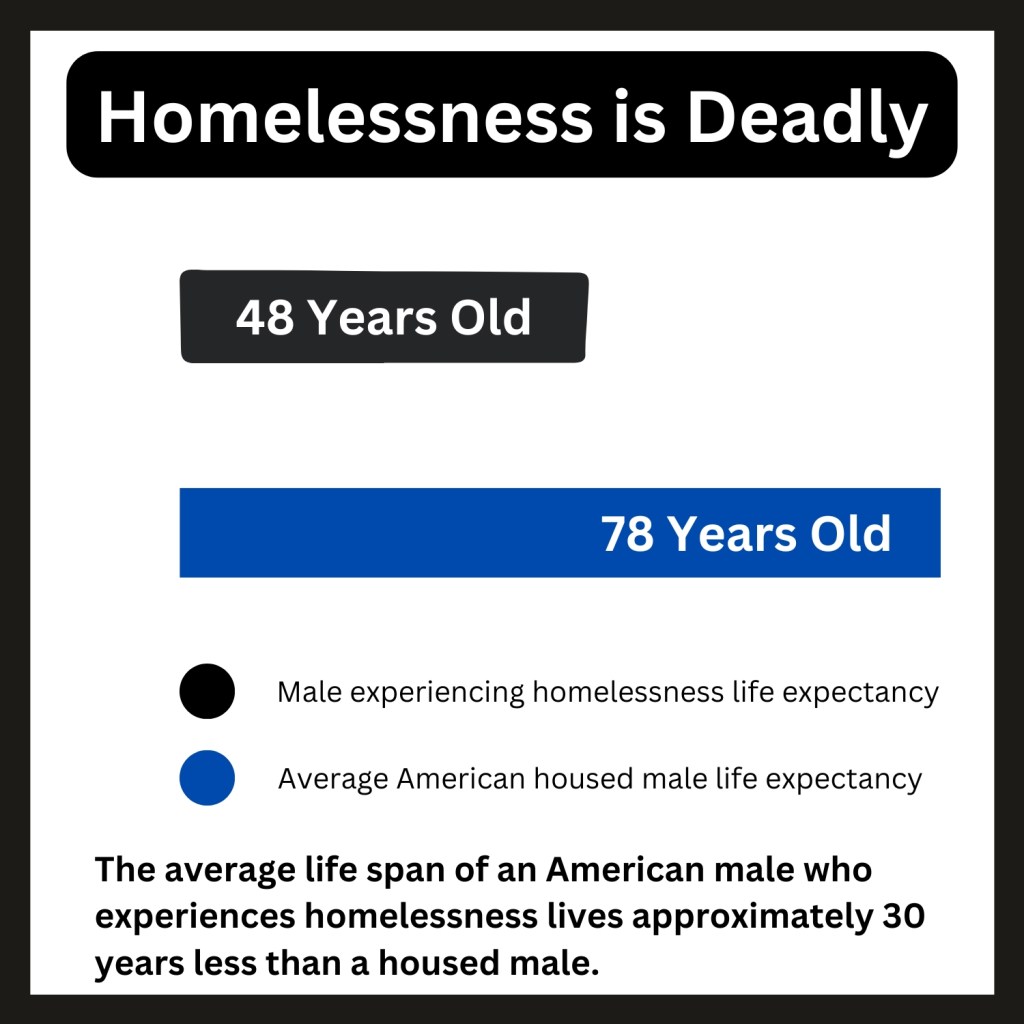
Dale Humphrey, President and CEO of Saint Thomas River Park Hospital, informed the group earlier this month that homeless men die about 30 years earlier than their peers who live in a home. Clearly, anyone who lives on the street, under a bridge or in a tent for an extended period of time pays the highest price of homelessness. Being homeless without proper housing is not healthy. While the homeless’ illnesses may not be much different than the non-homeless population, the homeless illnesses are usually much more severe and typically managed worse due to difficulty in cleanliness, nutrition, access to follow up care, and access to proper medication. Humphrey stated that stress is obviously a contributing factor.
Dale Humphrey also informed the group that the hospital has $7 million in charitable health care per month, and a significant portion of that charitable health care is contributed to the McMinnville homeless population.
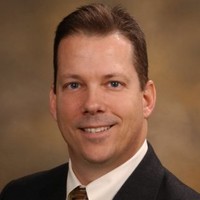
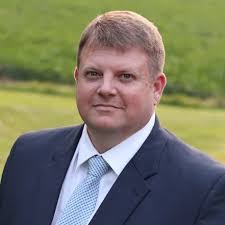
Left to right, President and CEO, Dale Humphrey and Sheriff Jackie Matheny, Jr.
During the February meeting, Sheriff Jackie Matheny, Jr. spoke to the group and stated that at least 12 of the 258 inmates in the Warren County Jail were homeless. Sheriff Matheny also confirmed that the minimal cost to the taxpayers to keep someone in the local jail is $41 dollars a day. Taxpayers pay more to keep someone in the Warren County jail than taxpayers pay to keep someone in subsidized, affordable housing. See the image below for a detailed illustration.
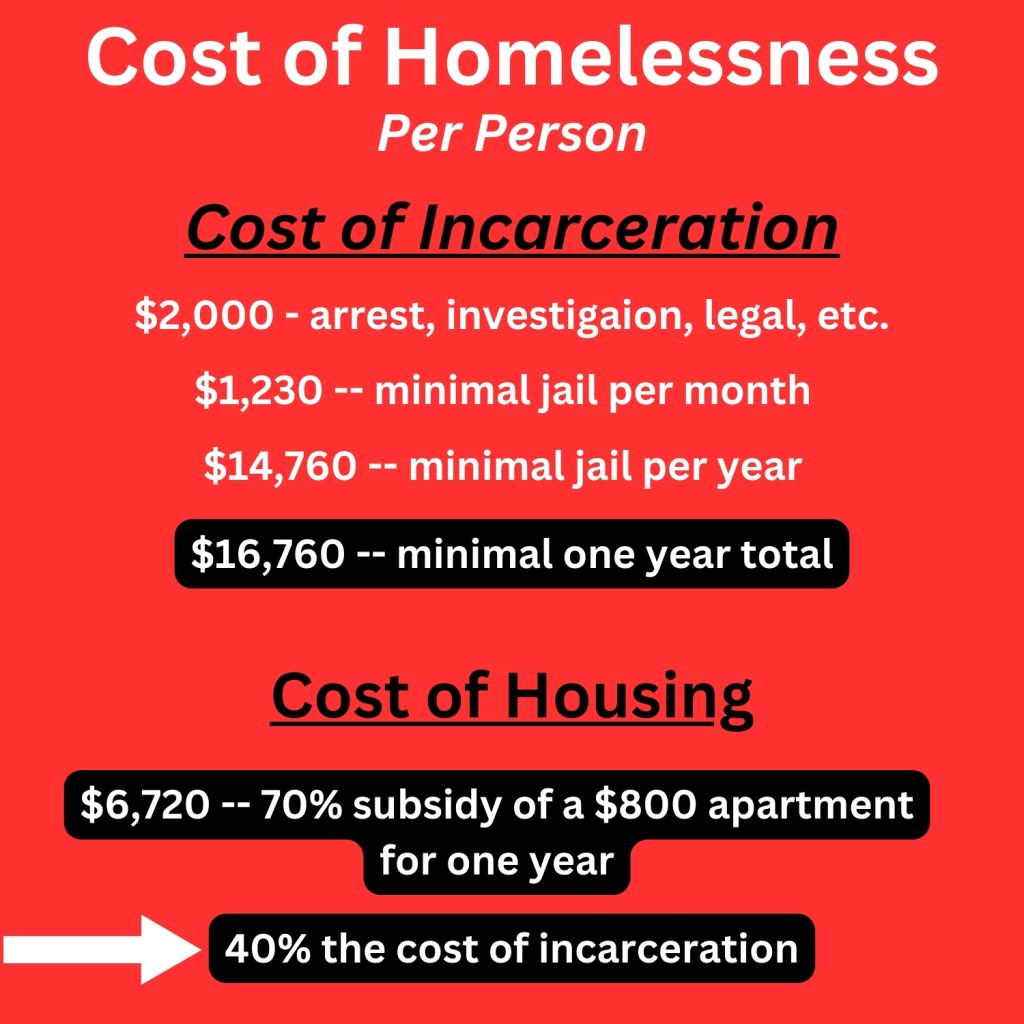
* The cost of arrest, investigation and legal fees are estimated.
SUBSIDIZED PERMANENT SUPPORTIVE HOUSING…A COST-EFFECTIVE SOLUTION
A local nonprofit or city/county government can apply for HUD funding to provide permanent supportive housing for the homeless. HUD offers rental assistance that pays 70% of the rent on privately-owned apartments. The subsidy for an $800 apartment would be $560 a month. That is $18.60 per day, which is 45% of the cost to keep someone in the Warren County jail.
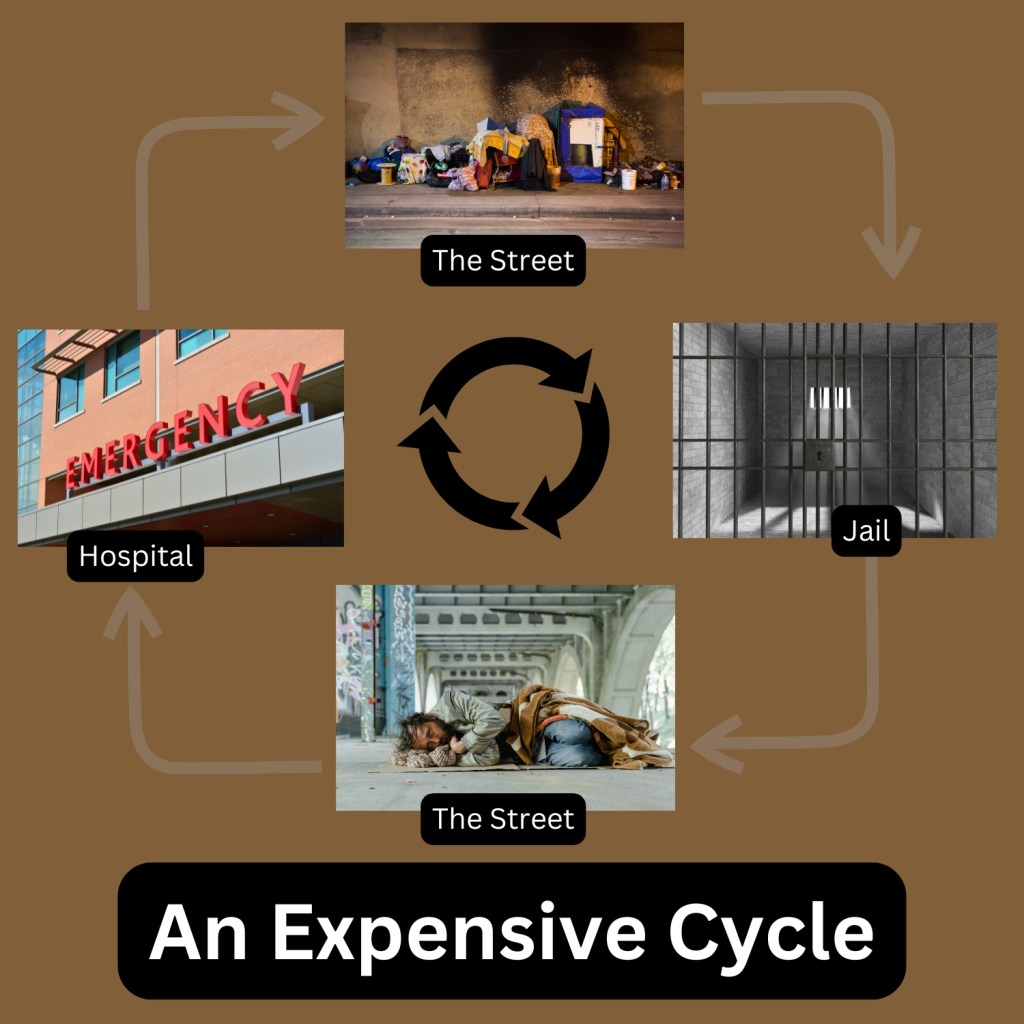
Common themes from both Sheriff Jackie Matheny. Jr. and Dale Humphrey were the high rates of recidivism and recycling of the same homeless population through the jail and hospital. Placing people who are experiencing homelessness into permanent supportive housing can extend lives — in addition to saving taxpayers and the local hospital a lot of money. All of this begs the question of how to develop a cost-effective solution to homelessness in McMinnville.
BEYOND THE BRIDGE: A POSITIVE SOLUTION TO HOMELESSNESS PROMO
Readers of this newsletter are encouraged to see the film, Beyond The Bridge. The film is a documentary about solutions to homelessness. The filmmakers traveled over 40,000 miles and studied positive solutions to homelessness. The film highlights solutions in two cities. Beyond The Bridge is showing at Otter Creek Church on West End in Nashville at 6:00 PM on Thursday, April 3. Tickets are free and must be reserved online. This is a link to information about the film and tickets:https://asolutiontohomelessness.com
Full disclosure, I have been promoting a plan to create affordable housing for 10 homeless people in McMinnville. I am personally looking forward to learning more about positive solutions to homelessness from Beyond the Bridge and the discussion after the film. Nashville Mayor Freddie O’Connell and the filmmakers will be at the event.
For more information, please attend the monthly homeless meetings in McMinnville. The next meeting will be Friday, April 25, at 11:00 AM, at St. Matthews Episcopal Church.
-

By Brad Durham
Recently, there was an article in The New York Times, “The Theory of Media That Explains 15 Years of Politics.” The article explains how the media has changed from a very small number of trusted sources to an abundance of questionable digital sources. Link: https://www.nytimes.com/2025/02/25/opinion/ezra-klein-podcast-martin-gurri.html?unlocked_article_code=1.2k4.ku6r.CXinZpISRmjN&smid=url-share
The New York Times article is full of insights about the disruptions to the media. It is worth reading, especially if you are interested in how national politics have been shaped by the different forms of media in recent elections.
Reading the article made me think about the traditional media sources in McMinnville. There were no digital platforms or internet when I grew up. Baby boomers such as myself experienced the media in our youth much differently than we do in 2025.
THAT WAS THEN…
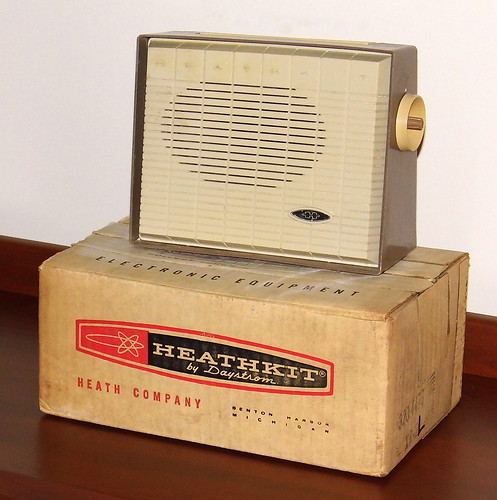
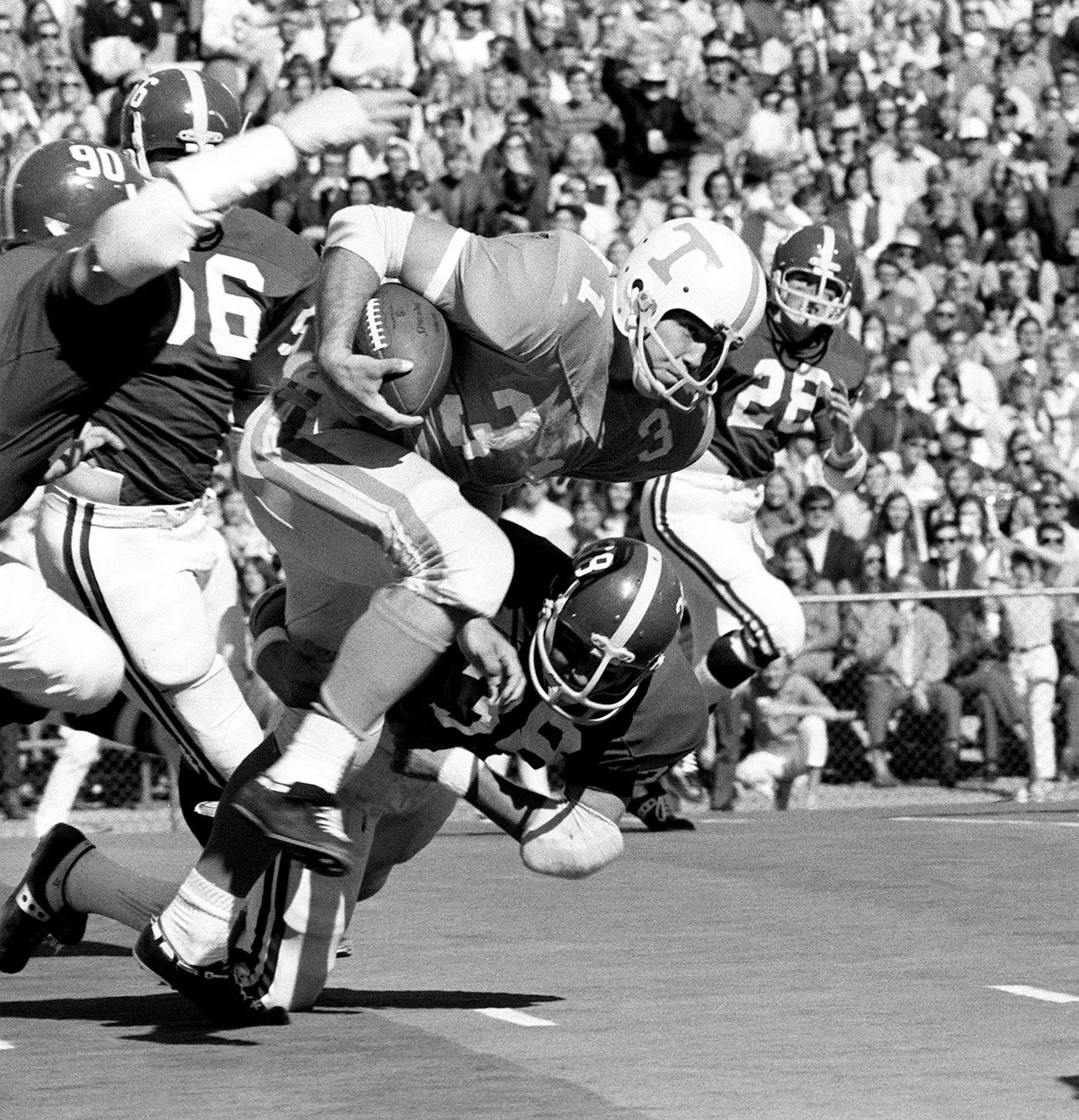
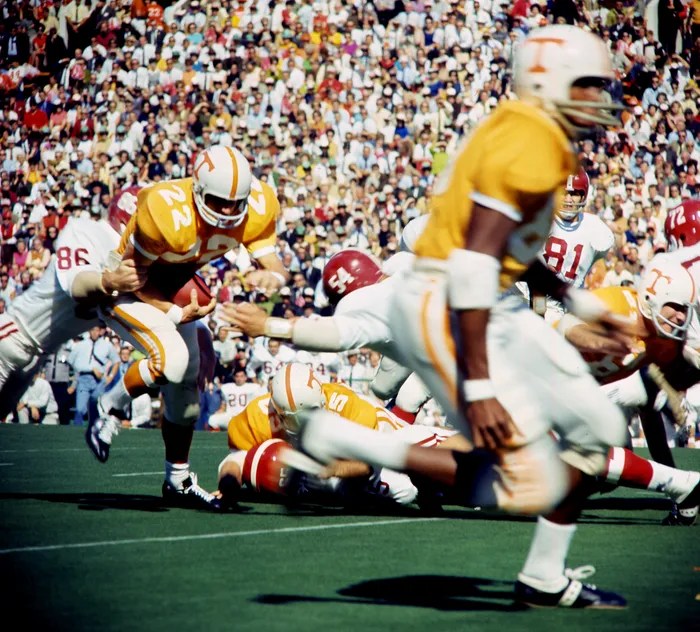
When I was in the eighth grade during 1970, I would often go to bed listening to WLS-AM out of Chicago playing the Top Forty Hits on the radio. My radio was a Heathkit that I had put together myself. I would go downtown and buy 45 vinyl records of the songs I really liked and wanted to listen to on my turntable/stereo. On Sunday mornings, I would read the newspaper to learn college football scores, stories and pictures from Saturday’s games. Radio and the newspaper were primary sources of music and information.
In November of 1963, when I was seven years-old, I vividly remember hearing my father call into my uncle Hal’s radio show in McMinnville on WBMC-AM from Dallas. My dad was reporting that President Kennedy had been shot. My dad’s call had beaten the newswire report to the station, and my uncle recorded the phone call. The radio station replayed the news report from my dad a few times that day – after verifying the story from national sources.
My father and uncle, Aaron and Hal Durham, worked at WMMT-AM in high school, and then worked their way through college working at radio stations in Knoxville. My father later purchased WAKI-AM (formerly WMMT) in the early 1970s. My uncle Hal became Program Director at WSM and later the General Manager of the Grand Ole Opry.
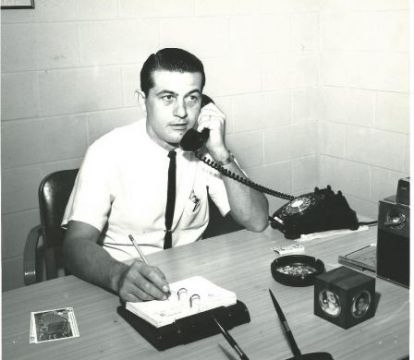
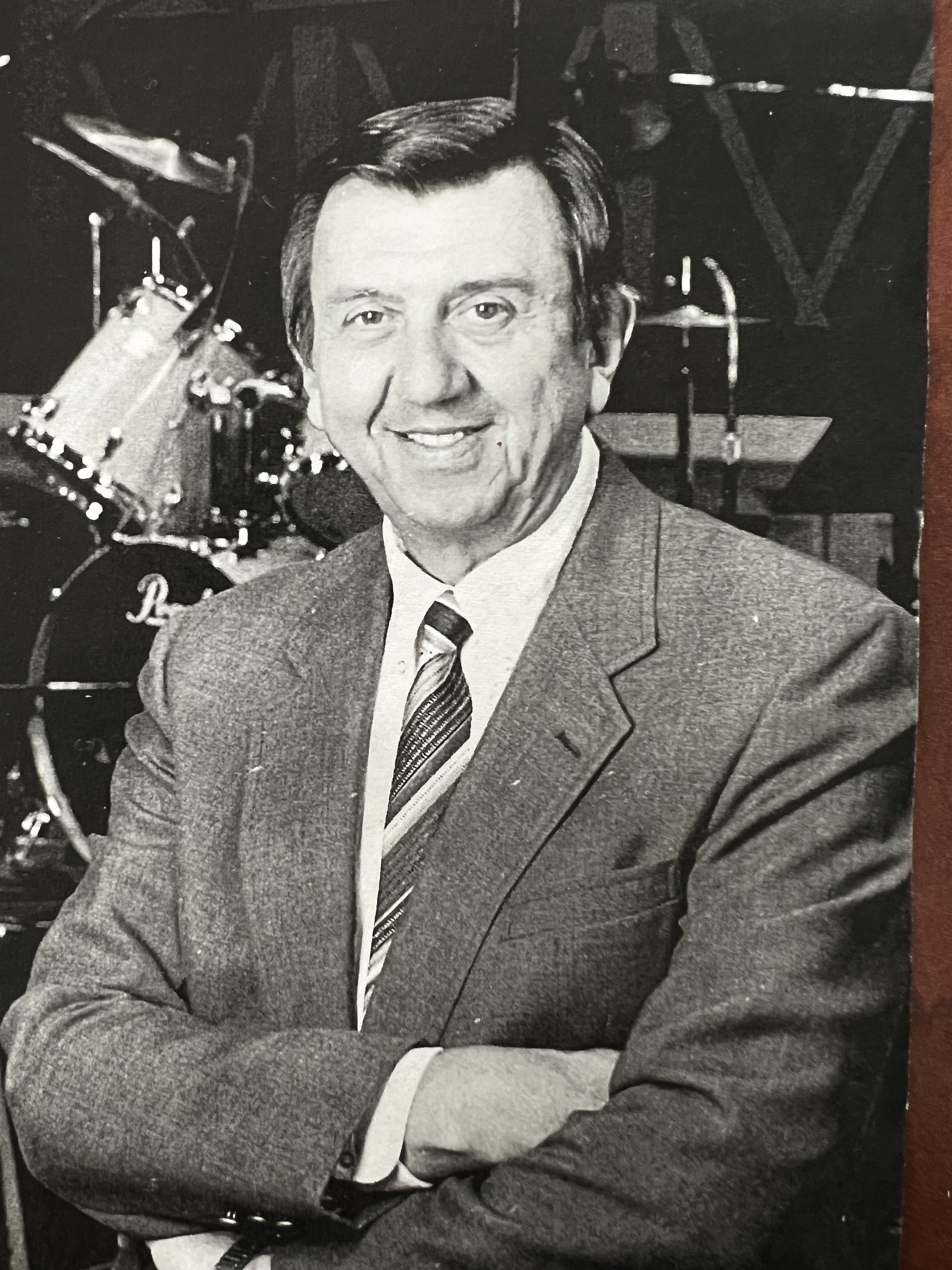
Left to right: Aaron Durham during his days as owner/manager of WJLE-AM; Hal Durham, General Manger at the Grand Ole Opry.
I would be interested in what my father and uncle would think about the future of the radio stations and newspaper in McMinnville. When they were broadcasters in college, radio was how people normally first learned about a news story. News headlines were at the top of the hour on radio stations. Today, it is extremely rare for radio to be someone’s first source of headline news. Nobody is waking up on Sunday morning to first learn about college football scores from the day before in a newspaper.
If someone is under 30, I might as well be talking about watching the first man to walk on the moon or riding in a horse and buggy. My early media encounters resemble nothing a 30-year-old has experienced. If someone is under 40, he has probably have never listened to a radio in their bedroom or had a newspaper delivered to his home.
LOCAL NEWSPAPER AND RADIO STATION OWNERS
The local newspaper is clearly undergoing changes as it announced its publisher is retiring. The Southern Standard is owned by a private company, Morris Multimedia, located in Savannah, Georgia. Link: https://morrismultimedia.com Morris Multimedia owns over 20 newspapers in five states and six television stations in five states.
The local radio stations are owned by Main Street Media, which has two local owners in a partnership with a third owner who does not live in McMinnville. Main Stree Media also owns radio stations in Sparta and Crossville. Link: https://mainstreetmedia.llc Main Street Media, who owns the radio stations, is not to be confused with Main Street Media of Tennessee, which owns at least 18 newspapers. Link: https://mainstreetmediatn.com It would be confusing if Main Street Media of Tennessee purchased the local newspaper, which is not out of the realm of possibilities.
IMPROVISE, ADAPT & OVERCOME
Talk radio helped radio adapt and thrive in a changing world. No individual changed the format as dramatically as Rush Limbaugh. His syndicated radio show transformed the midday slump of radio listeners (and advertisers) into millions of listeners across the country. Limbaugh became not only an influential republican commentator, he also became a best-selling author and direct-to-consumer salesman.
At least one of the four local McMinnville radio stations has added video and social media to its local talk shows to increase its audience. Radio has only one revenue source – advertising. Unless the local radio stations can develop some type of subscription base and direct-to-consumer revenue, they must rely exclusively on advertising dollars to exist.
Newspapers have also experienced disruptions and challenges. Making newspapers available online and through apps with subscriptions have helped newspapers modify its distribution and survive. The New York Times has had success digitally by expanding into podcasts, audio versions of articles, and adding games to its subscription package.
The local newspaper does have a digital subscription option and an app. The newspaper also offers some video content, and it also uses social media to market its stories. The local newspaper has not added podcasts, audio versions or games to its content.
THE MAJOR OBSTACLE
The digital disruptions are formidable, but the major obstacle to the survival of local radio and the newspaper in McMinnville is the economic landscape. The number of large grossing, locally-owned retail businesses has decreased significantly in the past 50 years. The domination of corporately-owned businesses and family-cartels like Walmart have wiped out numerous local businesses.
Franchises became more dominant locally, and are often owned by corporations not located in McMinnville. Amazon became a dominant retailer online. Eventually, many of the locally owned clothing, hardware, grocery stores, etc. ceased to exist. The option of shopping out-of-town has always been a factor.
The economic changes caused the number of ads on the radio and in the newspaper to diminish. As advertising revenues declined, so did the number of staff at the local radio stations and newspaper. The majority of programming on the local radio stations is presently satellite radio that is not locally produced. The newspaper has less original content and less printed pages than it had 30-50 years ago.
MARKET VALUE OF TRADITIONAL LOCAL MEDIA HAS DROPPED
The four local radio stations sold in the past year for less than half of their selling price in 1999. It is a tough business that keeps decreasing in value. The radio stations presently have its second set of owners since the hometown owners sold the stations to Clear Channel in 1999. The logical assumption is that the market value of the local newspaper has also declined as well during the past 25 years.
If people fall out of the habit of listening to local radio and purchasing a local newspaper, the odds of bringing those listeners and readers back are not very favorable. Replacing older consumers of local media with a new, younger group of listeners and readers is an extremely challenging task. Today’s youth obtains their entertainment and news on TikTok and Instagram for free, not radio stations and newspapers. Facebook has the most social media traffic, but it skews to an older demographic.
QUESTIONS THE MCMINNVILLE PUBLIC AND BUSINESSES WILL ANSWER
Will people change their habits and listen to local radio and read the local newspaper in greater numbers in 2025? Will advertising dollars increase for the radio stations and newspaper in McMinnville? Will local radio and newspaper help shape local political campaigns? Can McMinnville stay aware of itself and its history without local radio and a newspaper? Will the local radio stations and newspaper be around in another 25 years?
The changes over the next few months will most likely determine what the future holds for the local radio stations and newspaper. For an older person such as myself, I will not be listening to the radio on my nightstand for the top hits, nor will I be scanning a newspaper for sports’ scores.
Changing people’s habits is challenging. Unless the local traditional media can successfully change people’s habits of obtaining news, information and entertainment in McMinnville, the local media will continue to decline in terms of influence and relevance.
-
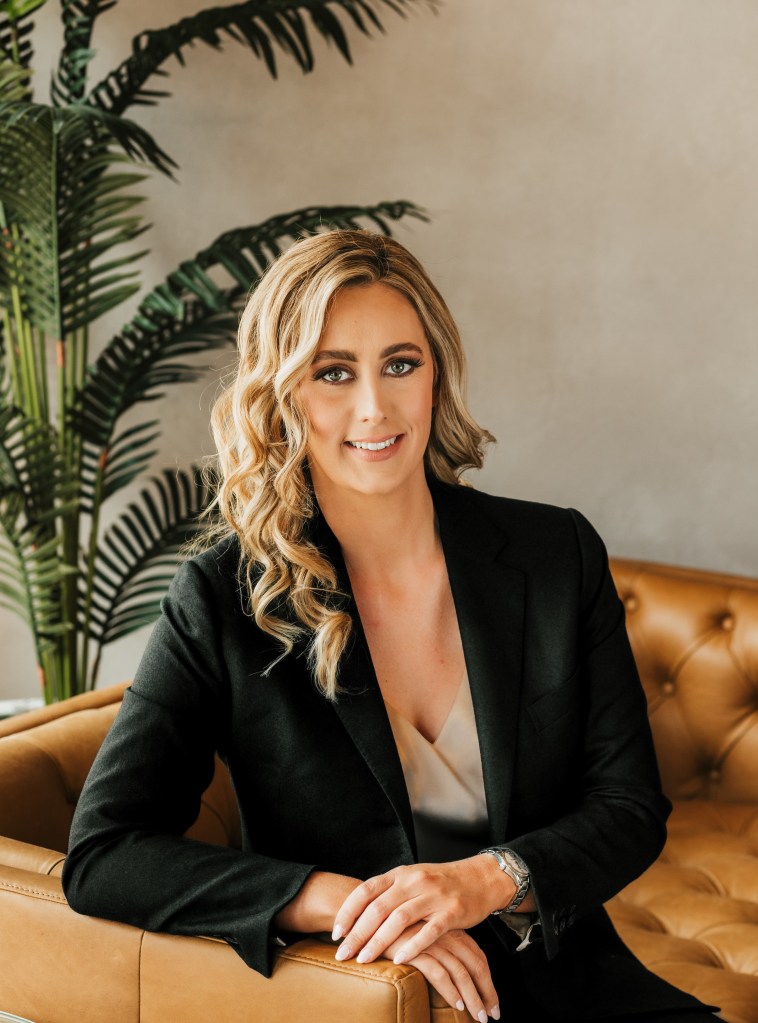
Attorney Kara Youngblood
By Brad Durham
When I grew up in McMinnville many decades ago, there were no “immigrants” that I was aware of in my hometown. As I grew older, I eventually came to the conclusion that almost all of us are “immigrants.” It has become a hot topic recently. Some polls had immigration as a top five issue in last year’s 2024 presidential election.
Personally, I did not become aware of any new immigrants in McMinnville until the 1980s. There were not any Hispanics living in McMinnville that I was aware of when I grew up here. The last US Census states that 10.1% of the Warren County population is Hispanic or Latino. Link:https://www.census.gov/quickfacts/fact/table/warrencountytennessee/PST045224
The population has changed over the decades, and I believe that that is a good change. I am very grateful for the vibrant and hard-working Hispanic community in McMinnville. There is one family in particular that has enriched my life tremendously with their friendship and fellowship.
The campaign and recent rhetoric about immigrants and deportation by President Trump concerns me. The executive order which attempts to end automatic citizenship for babies born on American soil actually shocked me.
That executive order was blocked and reported by the New York Times on Thursday, January 23: In a hearing held three days after Mr. Trump issued his executive order, a Federal District Court judge, John C. Coughenour, sided with Washington, Arizona, Illinois and Oregon, the four states that sued, signing a restraining order that blocks Mr. Trump’s executive order for 14 days, renewable upon expiration. “This is a blatantly unconstitutional order,” he said.
Link to article: https://www.nytimes.com/live/2025/01/23/us/trump-news#judge-blocks-birthright-citizenship
To better understand these issues, I asked McMinnville’s immigration expert, Attorney Kara Youngblood, five questions via email. The following are those questions and answers.
BD Newsletter: Please share your perspective on what is happening with federal immigration policies, and do you have a prediction on what the outcome will ultimately be regarding the birthright to citizenship issue?
Kara Youngblood: The implementation of the new immigration policies will likely result in extended processing times, heightened scrutiny of immigration applications, increased discretion granted to immigration officers and prosecutors, as well as a backlog of cases within immigration courts. It is particularly noteworthy that a federal judge appointed by President Reagan issued the injunction. Given the recent rulings by the Supreme Court, it is reasonable to anticipate that the executive order will ultimately be invalidated, even by the most conservative of courts.
BD Newsletter: Do you foresee any differences between the federal policies/laws and state and local policies/laws? In other words, will federal policies override all local and state policies?
Kara Youngblood: With the recent passage of the state bill that felonizes any vote of an elected official against federal immigration policy it seems like federal may win out. However, it should be noted that both the recent executive orders and this aforementioned state bill are likely unconstitutional and will most likely be immediately challenged.
Under federal preemption law, federal law generally takes precedence over state law if they conflict.
BD Newsletter: How active is ICE (U.S. Immigration and Customs Enforcement) in McMinnville and Warren County? Does this federal law enforcement agency have an office here?
Kara Youngblood: At present, ICE does not maintain an office in McMinnville or Warren County; however, it is anticipated that their presence will increase in the near future, particularly in light of Governor Lee’s initiative to establish a Centralized Immigration Enforcement Division (CIEO). Gov. Lee’s agenda also aims to incentivize local governments to collaborate in the enforcement of federal immigration policies and allocate funding to support both federal and state immigration efforts. Additionally, we can expect an expansion of ICE activities, particularly as ‘sensitive’ areas, such as schools and places of worship, are no longer protected under the same restrictions. Since 2011, such locations were considered ‘sensitive’ and were off-limits to ICE raids except under specific, limited circumstances; however, under the previous Trump administration, these areas were no longer classified as ‘sensitive’ and thus are now subject to enforcement actions.
BD Newsletter: What would you advise an immigrant who is not a U.S. citizen and living in McMinnville to do, in addition to contacting your office for legal consultation?
Kara Youngblood: Know your rights and if you are here lawfully, be sure you keep proof of that with you. We have created a “Know Your Rights” campaign on the Youngblood & Associates social media platforms that will be published over the next few weeks. Keep an eye out for those.
BD Newsletter: What percentage of your clients live in McMinnville and Warren County?
Kara Youngblood: I cannot answer this question. I believe Tenn. Sup. Ct. R. 8, RPC 1.6 would apply in this instance which prohibits me from sharing client information individually or collectively without their consent.
Bonus Question: What motivated you to practice immigration law?
Kara Youngblood: My father has owned and operated a nursery in Morrison my whole life. The immigrant population is an integral part of the agricultural industry. I was exposed to the immigration system from a young age, seeing the vast expanse of how immigration shaped the lives of those that worked side by side with my father, and who ultimately became like a part of our family. From the positive impacts of the green card and naturalization processes to negative consequences of immigration detentions and deportations, I was privy to a world that most US citizens never see. I found the complexity of this facet of the law interesting and knew the positive impact I could have for many people if I studied it and offered solutions to the many qualified individuals that simply needed someone on their side to navigate the complex system for them.
I always say that unlike many other types of law, no one loses when I win a case. Most of my clients have already positively integrated into our community, but my services allow them to finally do so out of the shadows and with the peace of mind that every person deserves.

Attorney Kara Youngblood in her office.
BD Newsletter Footnote: The following is a brief overview of Kara Youngblood’s professional career.
Kara Youngblood is the founding attorney of Youngblood & Associates, which is dedicated to providing legal immigration services to individuals and families and labor solutions for green industry employers. Website: www.youngbloodassociates.com
Youngblood is also the owner of The Local on Morford restaurant, which is part of the major renovation projects she has undertaken on Morford Street. Kara Youngblood was elected to office as a City Alderman in 2024 and is chairman of the Building & Grounds committee. She also serves on the Tourism & Marketing, Parks & Recreation, and Water & Wastewater committees.
Youngblood was Valedictorian of her Warren County High School senior class, Middle Tennessee State University, Bachelor of Science, and The University of Memphis—Cecil C. Humphreys School of Law, Juris Doctor, Law.

 BD Newsletter
You must be logged in to post a comment.