MATCH (McMinnville Action To Create Housing) is bringing the film, Beyond The Bridge to the Park Theater on January 22, 2026. A Town Hall Meeting will take place immediately after the film. The filmmakers, Tim Hashko and Don Sawyer will be in McMinnville the day of the film and at the screening for various meetings. This interview serves as an introduction to them and their experiences in making the film.
BD Newsletter: Why did you make the documentary film, Beyond The Bridge?
Tim Hashko and Don Sawyer: Most documentaries about homelessness focus on how sad, lonely, and what a pathetic state people experiencing homelessness are in. This is true. But what needs to happen to fix the situation? We thought that if America can successfully keep a space station orbiting the earth for many years now, America can also successfully solve homelessness. We just didn’t believe solving homelessness is beyond the capability of this country, so we set out on a journey to discover the solution for ourselves.
BD Newsletter: What is the most common reason towns have not developed a strategic plan to solve homelessness? What is the common denominator in these towns?
Tim Hashko and Don Sawyer: There are two very common reasons communities struggle when it comes to creating an effective strategic plan to address homelessness. First, in most communities, there is a deep, unspoken belief that homelessness is an intractable problem that can never be solved. If you don’t believe you can solve the problem, then you will never solve the problem – a fundamental principle when pursuing any goal. Second, most communities (sometimes inadvertently) set their homeless response systems up to serve their local government, service providers and the housed public. In other words, the welfare of these groups are prioritized over the welfare of the people experiencing homelessness. For many communities the priority of their homeless response system is to get the homeless population out of sight and out of mind instead of meeting them at their need and leading them out of homelessness – when this is the objective of a homeless response system, it will always end in failure.
Have you seen a difference in the approach and resources committed to solving homelessness in small and large cities? In other words, have you seen small towns practice the same plans large towns use?
Tim Hashko and Don Sawyer: The scale is different, but the fundamentals are the same. Large cities tend to have more resources and more complex systems, while small towns often assume those models do not apply to them. What we found is that the core strategies that work in big cities also work in small communities when they are adapted to local conditions. In fact, small towns often have an advantage because relationships are closer and change can happen faster.
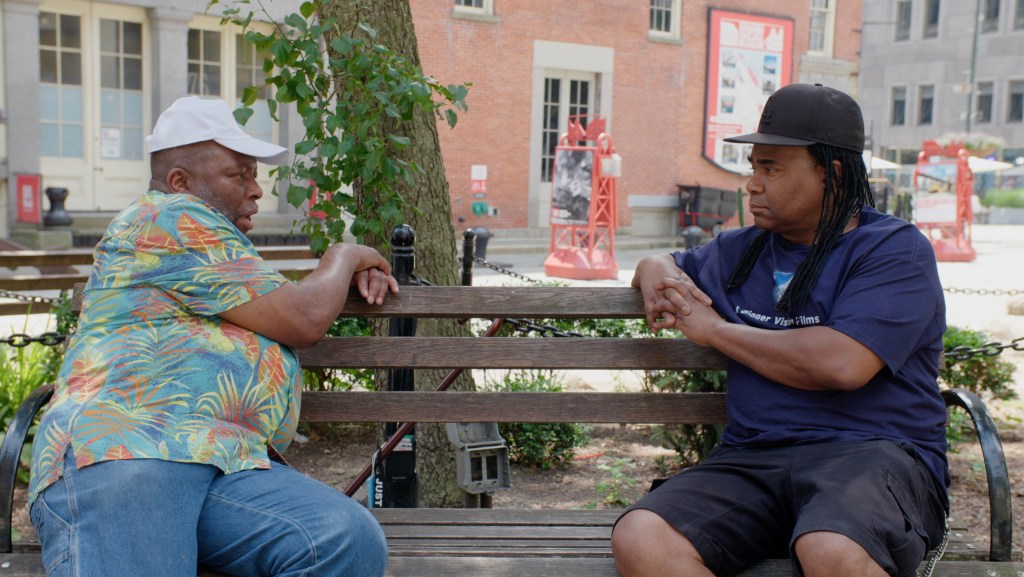
Don Sawyer interviewing Rob Robinson, a prominent community organizer, activist and formerly homeless.
BD Newsletter: What is the number one reason you want people to see your film?
Tim Hashko and Don Sawyer: To change perspectives on people experiencing homelessness, and to learn why homelessness exists in this country. Then, we want people to see that homelessness is solvable by deploying the blueprint we show in the film, which applies to every community no matter how big or small a community is. Ultimately, we’d like people to understand that if they want different results in their efforts to address homelessness, they will have to band together as a community to make it happen – everyone has a role.
BD Newsletter: Why should a private citizen, service provider, business person, and elected officials see this film? On the other hand, is there anyone in McMinnville who should not see Beyond The Bridge?
Tim Hashko and Don Sawyer: Homelessness affects the entire community, and solutions require participation from everyone. The film gives private citizens a clearer understanding of what actually works, service providers a framework for stronger collaboration with other organizations, business leaders insight into how they can help, and elected officials examples of effective leadership grounded in results rather than theory.
There is no one who should not see this film. It is not political and it does not promote a single ideology. It presents evidence, lived experience, and real world solutions, and invites the whole community into a more productive conversation.
Please plan to attend this event—admission is free! By reserving a ticket, you’ll secure your spot and receive a convenient reminder, ensuring you don’t miss out on this exciting experience. Click on the link below to reserve your ticket today.
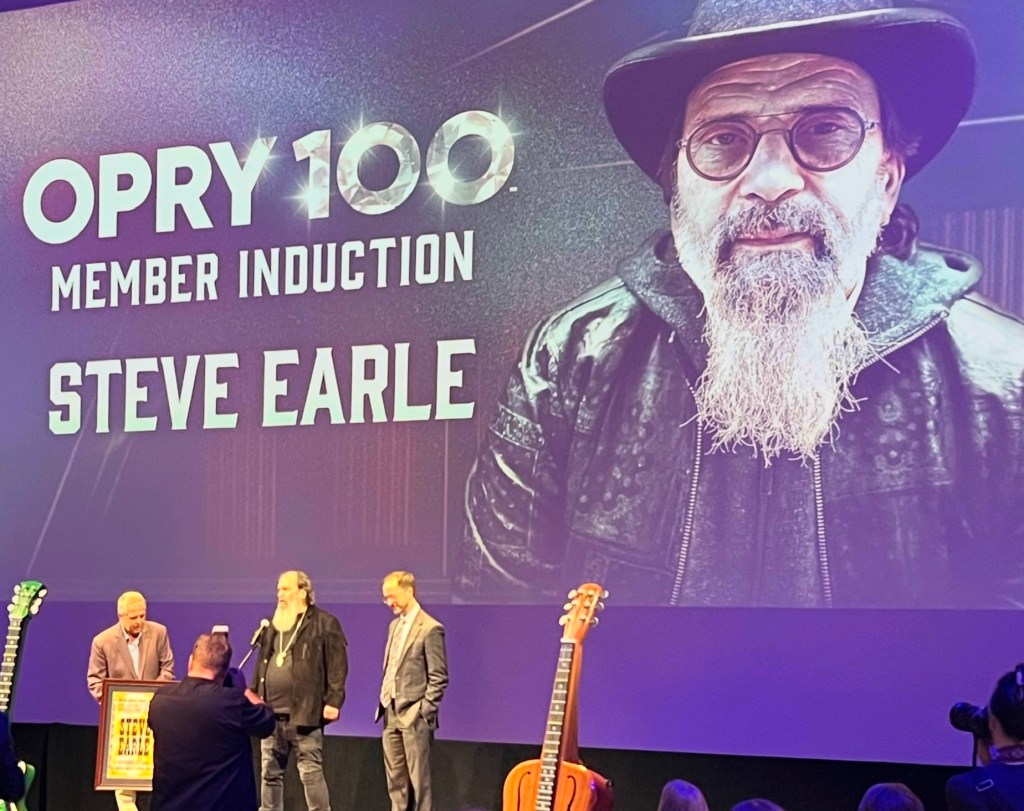
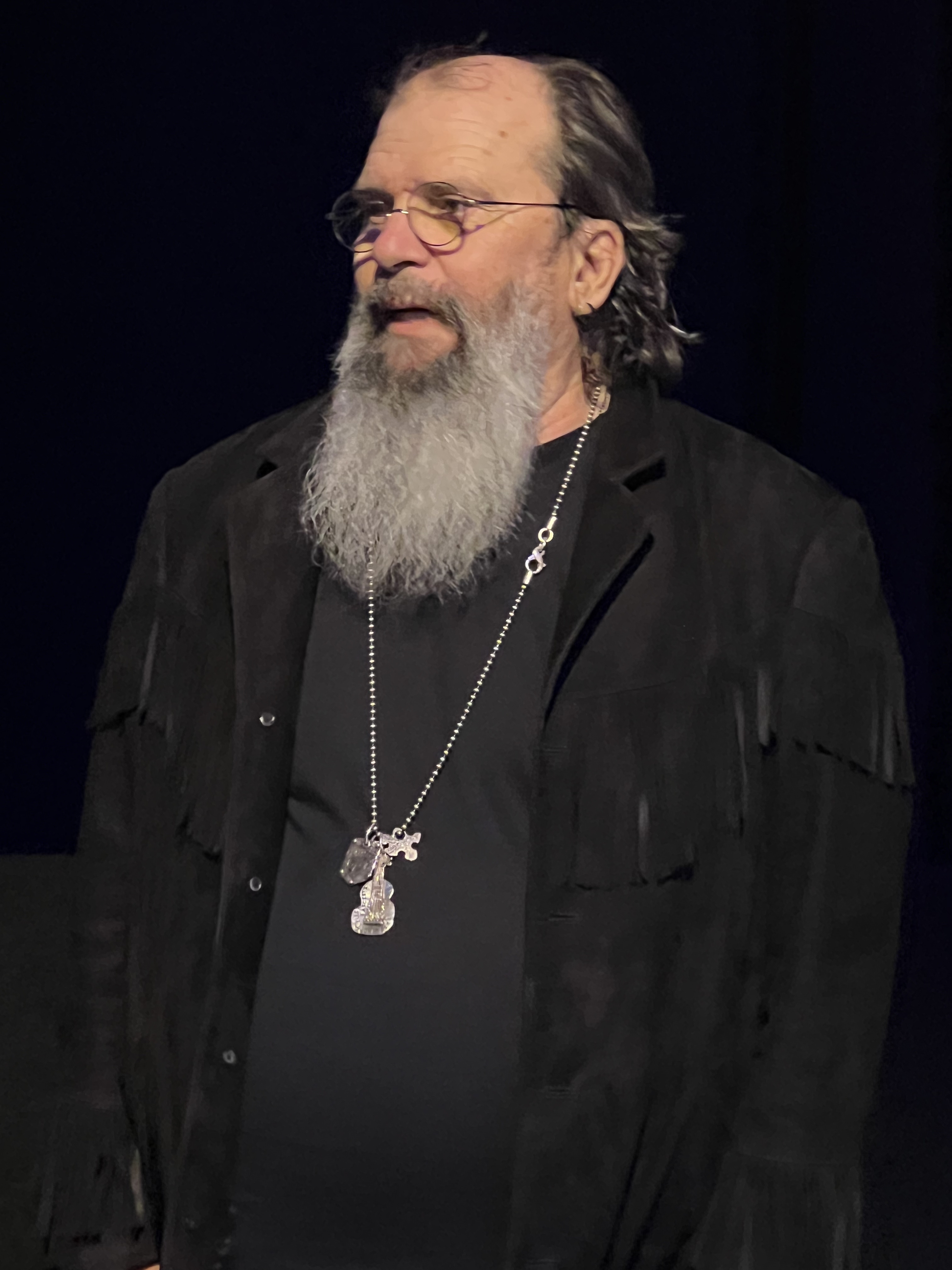
Left to right: State Representative Bo Mitchell, Steve Earle and Mayor Freddie O’Connell
A Personal Reflection
My connection to the Grand Ole Opry is a story woven with irony, chance, and profound influence.
The Grand Ole Opry was a place my uncle Hal Durham dedicated four decades of his life to — first as an Emcee at the historic Ryman Auditorium downtown, as Program Director at WSM Radio, and ultimately as General Manager when the new Opry House opened in 1974.
Through my uncle, I was inadvertently introduced to Steve Earle by T-Bone Burnett, an encounter that significantly altered the course of my life. That chance connection opened doors I never anticipated, reaffirming how moments of irony and chance can shape our futures in unexpected and meaningful ways.
The Beginning of a Quest
The idea to organize a benefit concert first took shape in 1986, during my time working at the Multi-Service Center for the Homeless with the Cambridge Department of Human Services. My role was to help place homeless families into permanent housing. At that time, Philip Mangano, the director of the center, had brokered a deal with Harvard University to host a benefit concert at Harvard Stadium.
Around the same period, T-Bone Burnett had just released a new country album, which gave me an idea. Eager to bring high-profile artists to the event, I mentioned this to my uncle, Hal Durham, encouraging him to invite Burnett to the Grand Ole Opry. My ultimate plan was to surprise Burnett at his appearance with a request for him to reach out to Pete Townshend of The Who and other renowned artists, to perform at the benefit concert and help make a difference.
The Irony Unfolds
On September 17, 2025, I was in the audience as Steve Earle was inducted into the Grand Ole Opry — a moment that felt almost surreal. It was on that very stage in 1986 that I first became aware of Steve Earle.
After weeks of persuading my uncle to book T-Bone Burnett, he unexpectedly called one day. He asked if I wanted T-Bone Burnett to appear at the Opry. He said, “If you want him to play, he will. If you don’t, he won’t.” I was stunned by such an offer and quickly said yes, hoping Burnett’s appearance might help us gain access to major acts.
Fast forward to Burnett’s performance at the Opry in 1986. My uncle introduced us backstage. I vividly remember: T-Bone Burnett had asked my uncle why he hadn’t asked Steve Earle to perform at the Opry. At that time, I had no idea who Earle was, but I made a mental note to check out Steve Earle’s music.
That’s Show Business
That night at the Opry, my uncle pointed to Dolly Parton’s sister and said, “See that woman over there? That’s Stella Parton. She’s been asking me to put her on the Opry for six weeks. She asked if Burnett was my nephew.” Clearly, T-Bone Burnett wasn’t as well-known in 1986 as he is today.
Afterward, T-Bone and I went out to eat, and he promised to speak with Pete Townshend and get back to me. Unfortunately, he never returned my calls. That’s show business — you win some, you lose some.
The Dream Became Reality
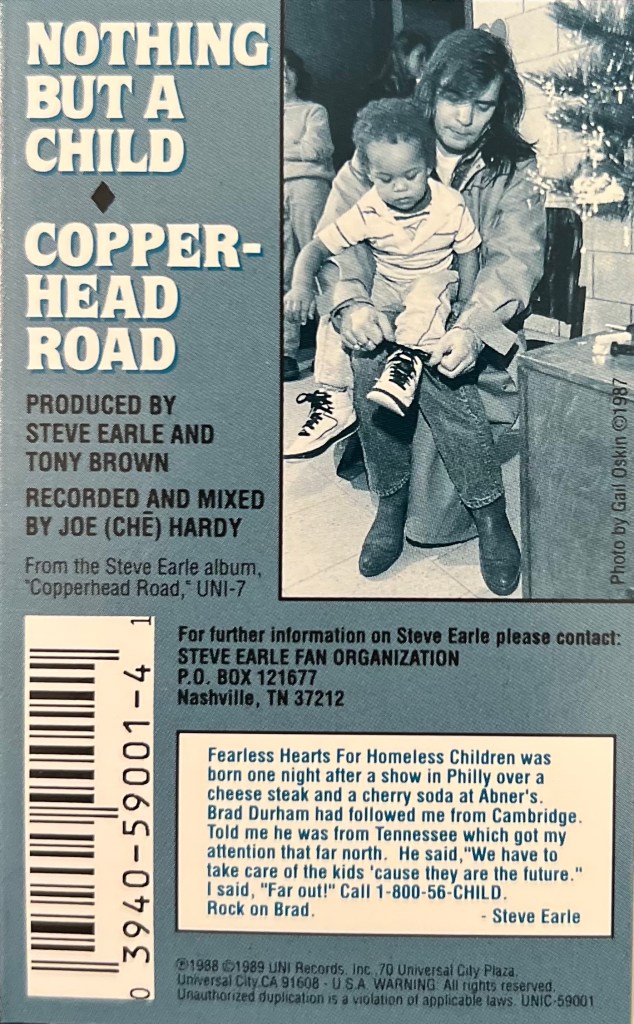
A few weeks later, I was back in Boston, and to my surprise, Steve Earle was performing at the Paradise Club. I attended his show and was blown away by his performance. He had just released Exit 0, the follow-up to Guitar Town. My curiosity about Steve Earle grew even more after witnessing his live set. I shared my plan to organize a benefit concert for the homeless with him. Without hesitation, he agreed to participate. That moment created a great positive visitation of energy in my life.
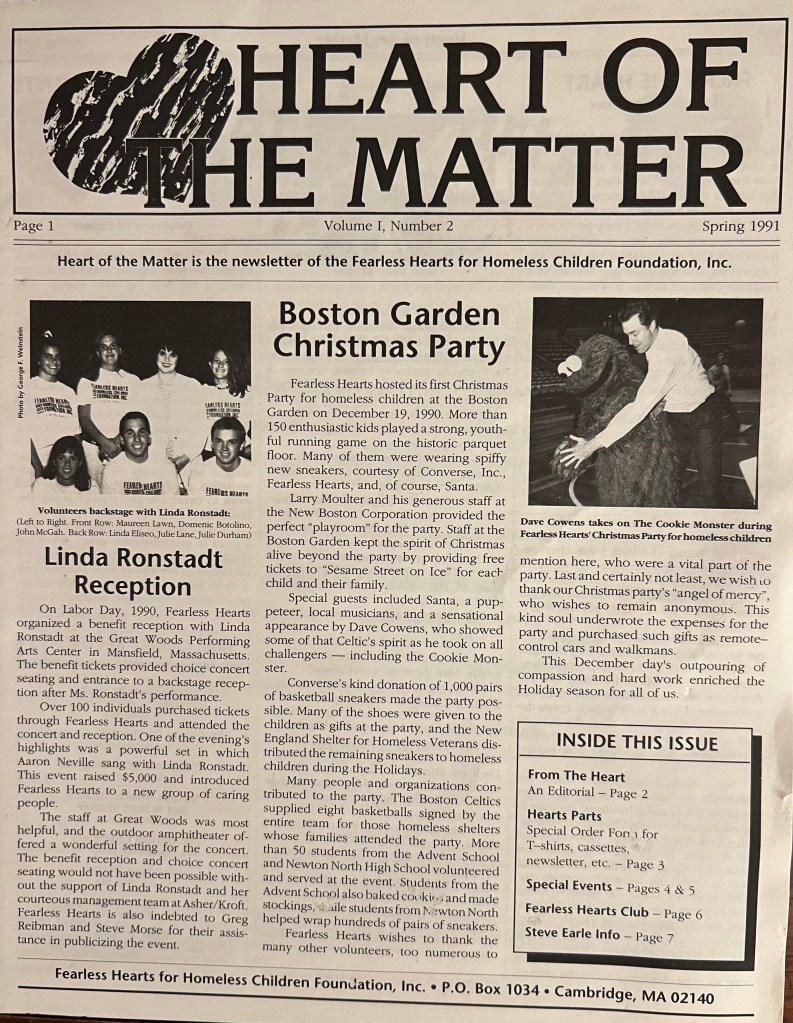
Steve Earle profoundly influenced my life. His generosity in performing benefit concerts inspired me to start Fearless Hearts for Homeless Children in Boston. His support turned my dream of using music to help the homeless into reality. Steve’s active participation helped me find my path as an advocate for the homeless.
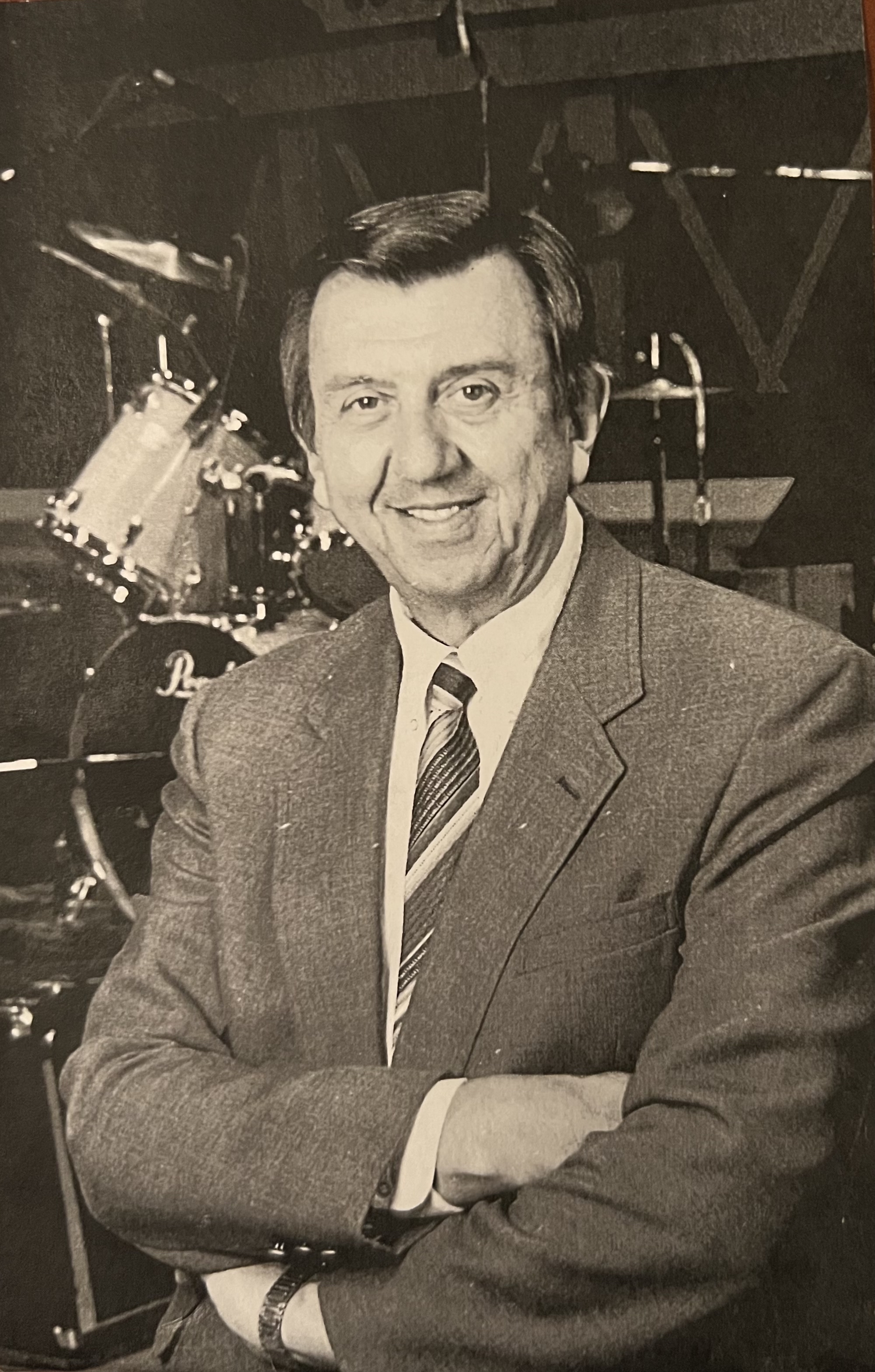
Left: Steve Earle; Right Hal Durham
Irony and Influence
My Uncle Hal had a major impact on my life. I had the honor of delivering his eulogy, during which I stated he was always the smartest person in the room—though he never needed to prove it. His intelligence shone through naturally, with grace and dignity. He was a steady, rational voice during some of my traumatic early years.
Steve Earle is a passionate and determined man. He has composed many outstanding songs, and on September 17, 2025, the Grand Ole Opry became even better by inducting him as a member.
Last night, two men—Hal Durham and Steve Earle—occupied my thoughts at the Grand Ole Opry. That, truly, is irony.
The New York Times article is full of insights about the disruptions to the media. It is worth reading, especially if you are interested in how national politics have been shaped by the different forms of media in recent elections.
Reading the article made me think about the traditional media sources in McMinnville. There were no digital platforms or internet when I grew up. Baby boomers such as myself experienced the media in our youth much differently than we do in 2025.
THAT WAS THEN…
When I was in the eighth grade during 1970, I would often go to bed listening to WLS-AM out of Chicago playing the Top Forty Hits on the radio. My radio was a Heathkit that I had put together myself. I would go downtown and buy 45 vinyl records of the songs I really liked and wanted to listen to on my turntable/stereo. On Sunday mornings, I would read the newspaper to learn college football scores, stories and pictures from Saturday’s games. Radio and the newspaper were primary sources of music and information.
In November of 1963, when I was seven years-old, I vividly remember hearing my father call into my uncle Hal’s radio show in McMinnville on WBMC-AM from Dallas. My dad was reporting that President Kennedy had been shot. My dad’s call had beaten the newswire report to the station, and my uncle recorded the phone call. The radio station replayed the news report from my dad a few times that day – after verifying the story from national sources.
My father and uncle, Aaron and Hal Durham, worked at WMMT-AM in high school, and then worked their way through college working at radio stations in Knoxville. My father later purchased WAKI-AM (formerly WMMT) in the early 1970s. My uncle Hal became Program Director at WSM and later the General Manager of the Grand Ole Opry.
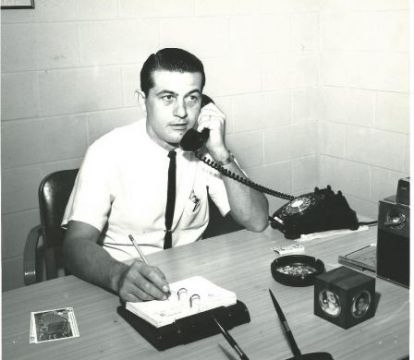
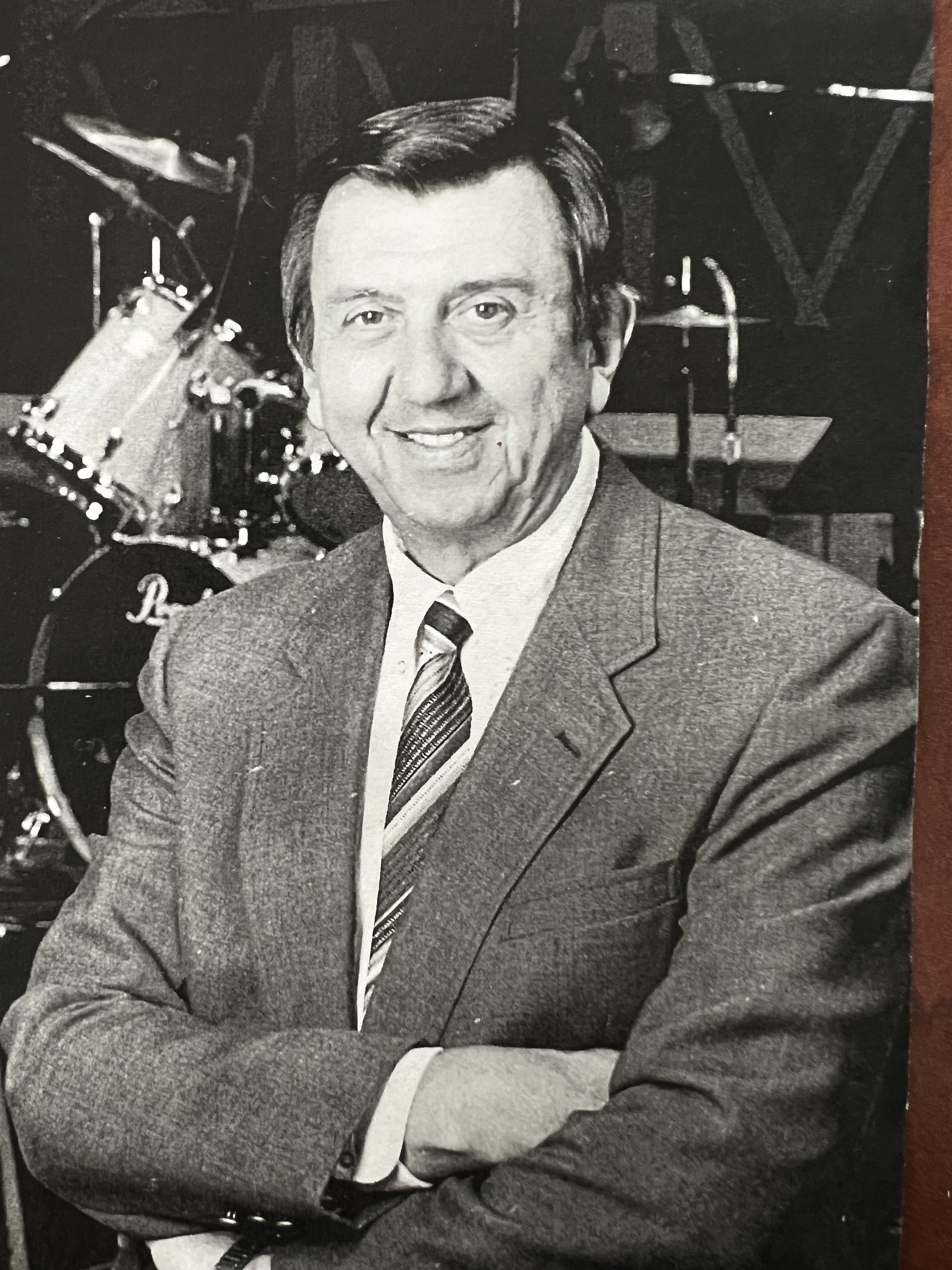
Left to right: Aaron Durham during his days as owner/manager of WJLE-AM; Hal Durham, General Manger at the Grand Ole Opry.
I would be interested in what my father and uncle would think about the future of the radio stations and newspaper in McMinnville. When they were broadcasters in college, radio was how people normally first learned about a news story. News headlines were at the top of the hour on radio stations. Today, it is extremely rare for radio to be someone’s first source of headline news. Nobody is waking up on Sunday morning to first learn about college football scores from the day before in a newspaper.
If someone is under 30, I might as well be talking about watching the first man to walk on the moon or riding in a horse and buggy. My early media encounters resemble nothing a 30-year-old has experienced. If someone is under 40, he has probably have never listened to a radio in their bedroom or had a newspaper delivered to his home.
LOCAL NEWSPAPER AND RADIO STATION OWNERS
The local newspaper is clearly undergoing changes as it announced its publisher is retiring. The Southern Standard is owned by a private company, Morris Multimedia, located in Savannah, Georgia. Link: https://morrismultimedia.comMorris Multimedia owns over 20 newspapers in five states and six television stations in five states.
The local radio stations are owned by Main Street Media, which has two local owners in a partnership with a third owner who does not live in McMinnville. Main Stree Media also owns radio stations in Sparta and Crossville. Link: https://mainstreetmedia.llc Main Street Media, who owns the radio stations, is not to be confused with Main Street Media of Tennessee, which owns at least 18 newspapers. Link: https://mainstreetmediatn.com It would be confusing if Main Street Media of Tennessee purchased the local newspaper, which is not out of the realm of possibilities.
IMPROVISE, ADAPT & OVERCOME
Talk radio helped radio adapt and thrive in a changing world. No individual changed the format as dramatically as Rush Limbaugh. His syndicated radio show transformed the midday slump of radio listeners (and advertisers) into millions of listeners across the country. Limbaugh became not only an influential republican commentator, he also became a best-selling author and direct-to-consumer salesman.
At least one of the four local McMinnville radio stations has added video and social media to its local talk shows to increase its audience. Radio has only one revenue source – advertising. Unless the local radio stations can develop some type of subscription base and direct-to-consumer revenue, they must rely exclusively on advertising dollars to exist.
Newspapers have also experienced disruptions and challenges. Making newspapers available online and through apps with subscriptions have helped newspapers modify its distribution and survive. The New York Times has had success digitally by expanding into podcasts, audio versions of articles, and adding games to its subscription package.
The local newspaper does have a digital subscription option and an app. The newspaper also offers some video content, and it also uses social media to market its stories. The local newspaper has not added podcasts, audio versions or games to its content.
THE MAJOR OBSTACLE
The digital disruptions are formidable, but the major obstacle to the survival of local radio and the newspaper in McMinnville is the economic landscape. The number of large grossing, locally-owned retail businesses has decreased significantly in the past 50 years. The domination of corporately-owned businesses and family-cartels like Walmart have wiped out numerous local businesses.
Franchises became more dominant locally, and are often owned by corporations not located in McMinnville. Amazon became a dominant retailer online. Eventually, many of the locally owned clothing, hardware, grocery stores, etc. ceased to exist. The option of shopping out-of-town has always been a factor.
The economic changes caused the number of ads on the radio and in the newspaper to diminish. As advertising revenues declined, so did the number of staff at the local radio stations and newspaper. The majority of programming on the local radio stations is presently satellite radio that is not locally produced. The newspaper has less original content and less printed pages than it had 30-50 years ago.
MARKET VALUE OF TRADITIONAL LOCAL MEDIA HAS DROPPED
The four local radio stations sold in the past year for less than half of their selling price in 1999. It is a tough business that keeps decreasing in value. The radio stations presently have its second set of owners since the hometown owners sold the stations to Clear Channel in 1999. The logical assumption is that the market value of the local newspaper has also declined as well during the past 25 years.
If people fall out of the habit of listening to local radio and purchasing a local newspaper, the odds of bringing those listeners and readers back are not very favorable. Replacing older consumers of local media with a new, younger group of listeners and readers is an extremely challenging task. Today’s youth obtains their entertainment and news on TikTok and Instagram for free, not radio stations and newspapers. Facebook has the most social media traffic, but it skews to an older demographic.
QUESTIONS THE MCMINNVILLE PUBLIC AND BUSINESSES WILL ANSWER
Will people change their habits and listen to local radio and read the local newspaper in greater numbers in 2025? Will advertising dollars increase for the radio stations and newspaper in McMinnville? Will local radio and newspaper help shape local political campaigns? Can McMinnville stay aware of itself and its history without local radio and a newspaper? Will the local radio stations and newspaper be around in another 25 years?
The changes over the next few months will most likely determine what the future holds for the local radio stations and newspaper. For an older person such as myself, I will not be listening to the radio on my nightstand for the top hits, nor will I be scanning a newspaper for sports’ scores.
Changing people’s habits is challenging. Unless the local traditional media can successfully change people’s habits of obtaining news, information and entertainment in McMinnville, the local media will continue to decline in terms of influence and relevance.
When I grew up in McMinnville many decades ago, there were no “immigrants” that I was aware of in my hometown. As I grew older, I eventually came to the conclusion that almost all of us are “immigrants.” It has become a hot topic recently. Some polls had immigration as a top five issue in last year’s 2024 presidential election.
Personally, I did not become aware of any new immigrants in McMinnville until the 1980s. There were not any Hispanics living in McMinnville that I was aware of when I grew up here. The last US Census states that 10.1% of the Warren County population is Hispanic or Latino. Link:https://www.census.gov/quickfacts/fact/table/warrencountytennessee/PST045224
The population has changed over the decades, and I believe that that is a good change. I am very grateful for the vibrant and hard-working Hispanic community in McMinnville. There is one family in particular that has enriched my life tremendously with their friendship and fellowship.
The campaign and recent rhetoric about immigrants and deportation by President Trump concerns me. The executive order which attempts to end automatic citizenship for babies born on American soil actually shocked me.
That executive order was blocked and reported by the New York Times on Thursday, January 23: In a hearing held three days after Mr. Trump issued his executive order, a Federal District Court judge, John C. Coughenour, sided with Washington, Arizona, Illinois and Oregon, the four states that sued, signing a restraining order that blocks Mr. Trump’s executive order for 14 days, renewable upon expiration. “This is a blatantly unconstitutional order,” he said.
To better understand these issues, I asked McMinnville’s immigration expert, Attorney Kara Youngblood, five questions via email. The following are those questions and answers.
BD Newsletter: Please share your perspective on what is happening with federal immigration policies, and do you have a prediction on what the outcome will ultimately be regarding the birthright to citizenship issue?
Kara Youngblood: The implementation of the new immigration policies will likely result in extended processing times, heightened scrutiny of immigration applications, increased discretion granted to immigration officers and prosecutors, as well as a backlog of cases within immigration courts. It is particularly noteworthy that a federal judge appointed by President Reagan issued the injunction. Given the recent rulings by the Supreme Court, it is reasonable to anticipate that the executive order will ultimately be invalidated, even by the most conservative of courts.
BD Newsletter: Do you foresee any differences between the federal policies/laws and state and local policies/laws? In other words, will federal policies override all local and state policies?
Kara Youngblood: With the recent passage of the state bill that felonizes any vote of an elected official against federal immigration policy it seems like federal may win out. However, it should be noted that both the recent executive orders and this aforementioned state bill are likely unconstitutional and will most likely be immediately challenged.
Under federal preemption law, federal law generally takes precedence over state law if they conflict.
BD Newsletter: How active is ICE (U.S. Immigration and Customs Enforcement) in McMinnville and Warren County? Does this federal law enforcement agency have an office here?
Kara Youngblood: At present, ICE does not maintain an office in McMinnville or Warren County; however, it is anticipated that their presence will increase in the near future, particularly in light of Governor Lee’s initiative to establish a Centralized Immigration Enforcement Division (CIEO). Gov. Lee’s agenda also aims to incentivize local governments to collaborate in the enforcement of federal immigration policies and allocate funding to support both federal and state immigration efforts. Additionally, we can expect an expansion of ICE activities, particularly as ‘sensitive’ areas, such as schools and places of worship, are no longer protected under the same restrictions. Since 2011, such locations were considered ‘sensitive’ and were off-limits to ICE raids except under specific, limited circumstances; however, under the previous Trump administration, these areas were no longer classified as ‘sensitive’ and thus are now subject to enforcement actions.
BD Newsletter: What would you advise an immigrant who is not a U.S. citizen and living in McMinnville to do, in addition to contacting your office for legal consultation?
Kara Youngblood: Know your rights and if you are here lawfully, be sure you keep proof of that with you. We have created a “Know Your Rights” campaign on the Youngblood & Associates social media platforms that will be published over the next few weeks. Keep an eye out for those.
BD Newsletter: What percentage of your clients live in McMinnville and Warren County?
Kara Youngblood: I cannot answer this question. I believe Tenn. Sup. Ct. R. 8, RPC 1.6 would apply in this instance which prohibits me from sharing client information individually or collectively without their consent.
Bonus Question:What motivated you to practice immigration law?
Kara Youngblood: My father has owned and operated a nursery in Morrison my whole life. The immigrant population is an integral part of the agricultural industry. I was exposed to the immigration system from a young age, seeing the vast expanse of how immigration shaped the lives of those that worked side by side with my father, and who ultimately became like a part of our family. From the positive impacts of the green card and naturalization processes to negative consequences of immigration detentions and deportations, I was privy to a world that most US citizens never see. I found the complexity of this facet of the law interesting and knew the positive impact I could have for many people if I studied it and offered solutions to the many qualified individuals that simply needed someone on their side to navigate the complex system for them.
I always say that unlike many other types of law, no one loses when I win a case. Most of my clients have already positively integrated into our community, but my services allow them to finally do so out of the shadows and with the peace of mind that every person deserves.
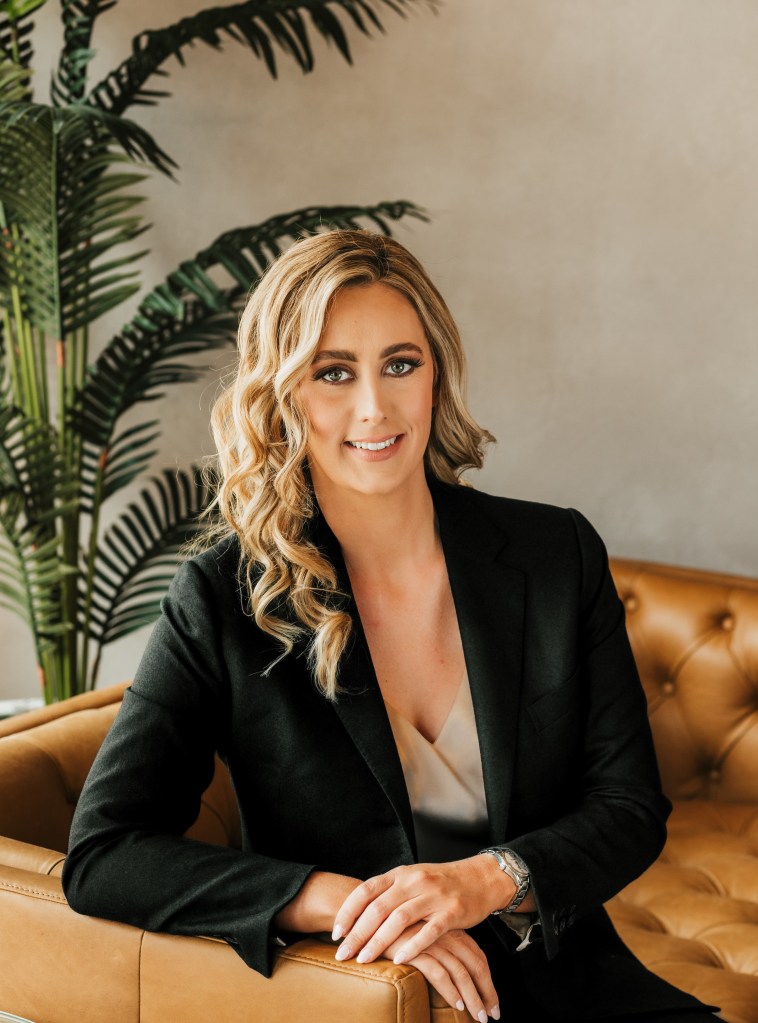
Attorney Kara Youngblood in her office.
BD Newsletter Footnote:The following is a brief overview of Kara Youngblood’s professional career.
Kara Youngblood is the founding attorney of Youngblood & Associates, which is dedicated to providing legal immigration services to individuals and families and labor solutions for green industry employers. Website: www.youngbloodassociates.com
Youngblood is also the owner of The Local on Morford restaurant, which is part of the major renovation projects she has undertaken on Morford Street. Kara Youngblood was elected to office as a City Alderman in 2024 and is chairman of the Building & Grounds committee. She also serves on the Tourism & Marketing, Parks & Recreation, and Water & Wastewater committees.
Youngblood was Valedictorian of her Warren County High School senior class, Middle Tennessee State University, Bachelor of Science, and The University of Memphis—Cecil C. Humphreys School of Law, Juris Doctor, Law.
This morning I was reading a post on Facebook with random facts. One of the facts stated that outdoor cats live for 3 years and indoor cats can live up to 16 years. The next thing I did was google it, and this came up in my search:
“An indoor cat may live 15-17 years, while the life expectancy for outdoor cats is only 2-5 years, according to researchers at University of California-Davis. Dr. Jeff Levy, DVM, CVA, owner of House Call Vet NYC, also discourages owners from keeping cats outdoors.”
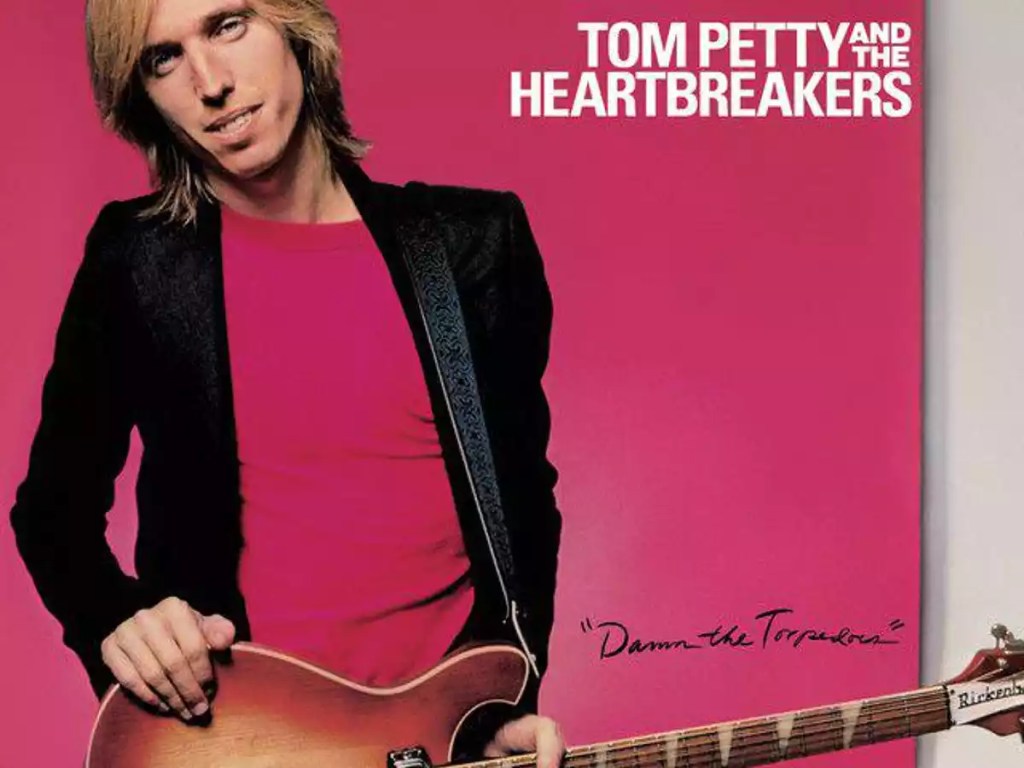
As I contemplated this, I visualized a cat I often see who lives outside. Then I started thinking about people living on the street and in tents in McMinnville. My mind also drifted to people who live outside in tents in refugee camps. Then Tom Petty’s song, “Refugee” popped into my head.
REFUGEE, BY TOM PETTY
We did somethin’ we both know it We don’t talk too much about it Ain’t no real big secret all the same Somehow we get around it Listen it don’t really matter to me, baby You believe what you want to believe You see, you don’t have to live like a refugee (don’t have to live like a refugee)
Somewhere, somehow, somebody Must have kicked you around some Tell me why you want to lay there Revel in your abandon Honey, it don’t make no difference to me, baby Everybody’s had to fight to be free You see, you don’t have to live like a refugee (don’t have to live like a refugee) Now baby, you don’t have to live like a refugee (don’t have to live like a refugee) No
Baby we ain’t the first I’m sure a lot of other lovers been burned Right now this seems real to you But it’s one of those things You gotta feel to be true
Somewhere, somehow, somebody Must have kicked you around some Who knows, maybe you were kidnapped Tied up, taken away and held for ransom, honey It don’t really matter to me, baby Everybody’s had to fight to be free You see, you don’t have to live like a refugee (don’t have to live like a refugee) No, you don’t have to live like a refugee (don’t have to live like a refugee) You don’t have to live like a refugee (don’t have to live like a refugee) Oh, oh, oh
Songwriters: Michael W Campbell / Thomas Earl Petty
Tom Petty may have been singing about lovers, but it fits perfectly as I think about people who are experiencing homelessness. However, there is a catch for me personally. During the past year, I have been volunteering to help a little with people who are homeless. I am watching people leave a building after they can eat and shower to go live outside and sleep outdoors on the actual streets, sidewalks and in tents. I have come to the conclusion that I am enabling or helping them to live there by not doing something to help them live in a home.
So, I googled “life expectancy of a person living outdoors vs. indoors.” This is what appeared on my computer screen:
Generally, a person living primarily outdoors would have a significantly lower life expectancy compared to someone living indoors, due to increased exposure to environmental hazards like weather extremes, predators, accidents, and lack of access to basic necessities, making living entirely outdoors is considerably more risky for health and longevity.
Key points to consider:
Environmental dangers:
Exposure to harsh weather conditions, including extreme heat, cold, rain, and storms, can lead to health complications and potential fatalities.
Predators and accidents:
Individuals living outdoors are more vulnerable to attacks from wild animals and potential accidents due to lack of controlled environments.
Access to healthcare:
Limited access to medical care and sanitation facilities when living outdoors can exacerbate health issues.
I don’t need medical experts to tell me that living outdoors shortens the life expectancy of someone. I have seen what happens with my own eyes. People’s health deteriorates rapidly over a few months of living outdoors or in conditions where the roof leaks and there is no electricity or running water. The hazards of living outdoors, especially when you are disabled are real. Thurman Crisp, a disabled veteran, was living on the streets in McMinnville, and he passed away on December 2, 2024 when he was crossing the street and hit accidentally by a vehicle.
Tom Petty was right, you don’t have to live like a refugee. But until I can help develop and implement a strategic plan to keep men and women from living outside in tents and living in a home, I believe that I am allowing people to live like refugees in McMinnville. And I am embarrassed to keep thinking and saying that there is nothing I can do about it.
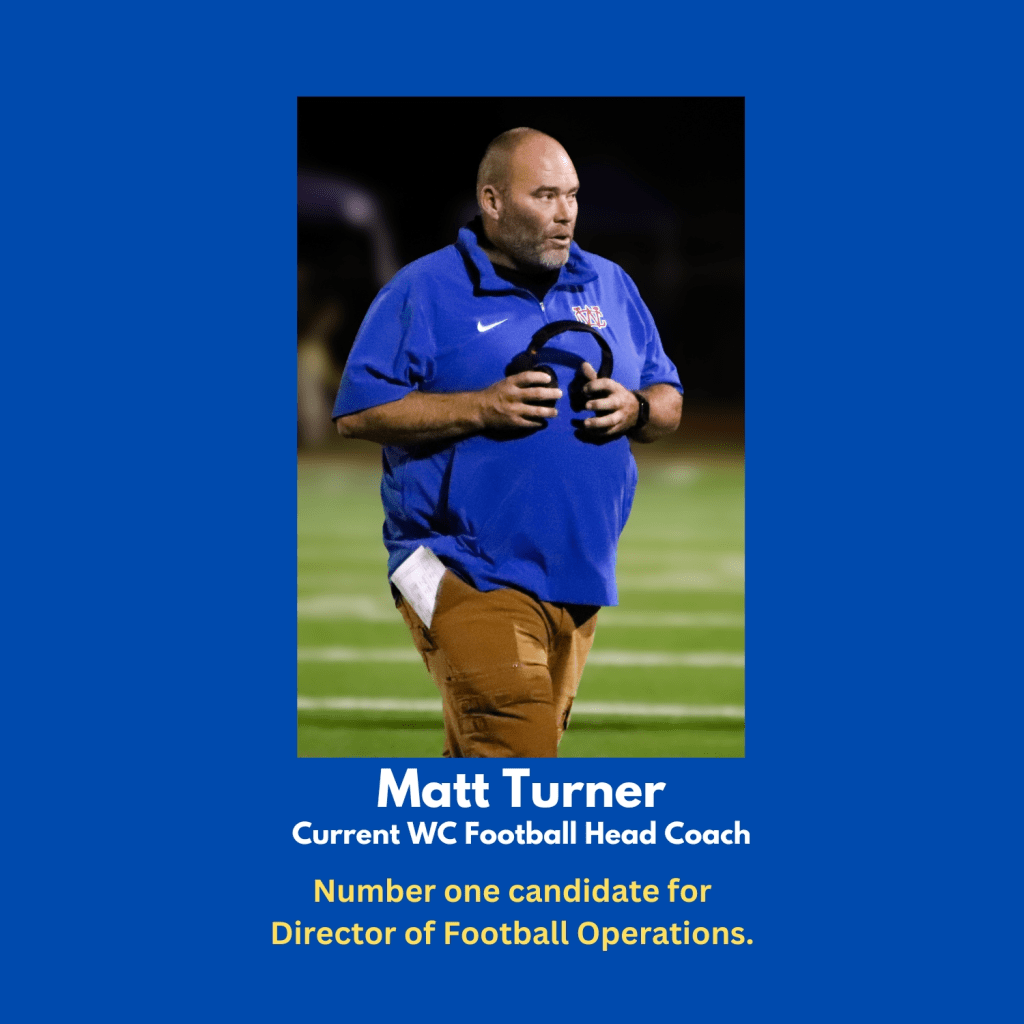
Matt Turner deserved the opportunity to coach the Warren County High School football team for the next two years. He has dedicated himself to football since he was a student at Warren County Middle School. One coach out of 10 coaches in the past 34 years has led the football team to a winning season at Warren County High School. That coach is Matt Turner.
During the past 34 seasons, the high school Pioneer football team recorded nine 0-10 regular seasons. The head coaches of those teams were Franklin Fisher, Sid Fritts, Glen Campbell, Heath Woods, Gerald Tidwell, Chris Madewell, Tommy Johnson and Matt Turner. Every head football coach at Warren County who coached for two or more seasons experienced an 0-10 season except Tom Moore.
It is worth repeating. Only one out of the past 10 coaches in 34 Pioneer football seasons has had a winning season. Matt Turner led the Pioneers to an 8-3 season. Matt Turner has won only three games in the four seasons after his team broke the losing streak. Turner is not the only head coach who has struggled to win football games in Warren County.
There have been only 11 winning football seasons in the 56-year history of Warren County High School. 80% of Warren County’s high school football seasons have been losing seasons. Losing is the norm, not the exception.
Why does each administration keep hiring coaches without providing proper support and leadership for the program? Anyone who becomes superintendent or principal of the high school has to know the history of the football program.
I have had been able to witness the football program up close for the past 34 years, and in my opinion, there has been a lack of institutional support for the football program since Sid Fritts was the head coach. Everyone involved in the football program and administration since 1994 may disagree with me. From my perspective, the foundation has been cracked and the administration has failed to repair it.
It takes more than a head coach to support a high school football program. Until the Warren County Schools’ administration can give the proper level of support to the football program, it is not reasonable to expect any different outcomes.
Warren County keeps putting football coaches into a program that has a 34-year history of losing. The only coach who led his team to a winning season was Matt Turner. Principal Chris Hobbs thinks he has the ability to reboot the football program. I hope the people of Warren County have enough of an interest in the football program to actually hold Chris Hobbs responsible for the reboot.
Dr. Grant Swallows stated that he “feels the need to start fresh with a new person in the lead.” It is interesting that Swallows hired a communications director this summer, and he chose to release this statement through that person. Is that how Warren County Schools operates now? Is that the best use of public-school funds in a small town?
I asked Grant Swallows for an interview recently to discuss the status of Matt Turner’s position and the football program in general. I was given the school’s statement in an email. As a citizen in a small town, I find the lack of direct communication to the public regarding the release of a football coach surprising.
It is my hope that the Warren County public will demand more answers about why Matt Turner was not retained as head coach. And furthermore, what are the plans to repair the foundation of the high school football program? What makes this administration confident that they can reboot the program and start fresh with a better coach than Matt Turner?
It would be a mistake to say that this administration alone is responsible for the losing status of the high school football program. However, it would be accurate to state that the present administration bears some responsibility. Leadership starts at the top, and the present administration has not provided the leadership necessary to repair the cracked foundation of Warren County football.
For anyone paying attention, this is the same administration that hired Mendy Stotts to coach the girls basketball team. This is the same administration that intentionally ended Sable Winfree’s high school basketball career.
During the past 25 years, I have worked with hundreds of high school coaches from one end of the state to the other. I have observed a lot of strange decisions that many people in both small and large towns thought would never happen. Witnessing the end of Sable Winfree’s high school basketball career and Matt Turner’s tenure as the head football coach at Warren County High School are as strange as it gets.
To quote the late great Bishop Desmond Tutu, “when do we stop pulling people out of the river and go upstream and find out why they’re falling in?“
OFFICIAL STATEMENT FROM THE WARREN COUNTY SCHOOLS:
Warren County High School Announces Head Coaching Change
McMinnville, Tenn., November 15, 2024 – Warren County High School has announced a change in direction for the leadership of the Pioneer football program. Matt Turner served as the head coach beginning in 2019 and for the last six seasons. His tenure included highlights such as the Pioneers’ first winning season in recent years while simultaneously yielding Warren County’s first-ever Mr. Football in CJ Taylor.
WCHS Executive Principal Chris Hobbs commended Turner for the impact he made on the football program. “I want to personally thank Coach Turner for his dedication, integrity, and the countless hours he has devoted to our school and our students. No one has ever doubted any of those things. In our meetings to evaluate the state of Pioneer football, we felt we needed a ‘reboot’ and thus this decision became necessary,” he said.
Since the end of the 2024 season, Warren County High School has been formulating a plan for the future of the football team, including taking steps to play a more competitive, non-region schedule in 2025 and 2026.
“I want to thank Coach Matt Turner for his time as the head coach of our football program. He has been invaluable for many years and is a Pioneer to his core. His commitment and the investment into the lives of our student-athletes is second to none,” said Dr. Grant Swallows, Director of Schools, Warren County Schools. “With that said, Warren County High School is in the midst of a new course for the program and feels the need to start fresh with a new person in the lead. That decision should not diminish the fact that Matt Turner is an outstanding leader of young men and that he has done tremendous work over the last 6 seasons. The search for a new coach will begin immediately and will take place over the next few weeks,” he added.
Below is a link to the NY TIMES column by David Brooks. It is worth reading, no matter your political affiliation. No matter how you voted, this article provides good insight. If you consider yourself a democrat, you definitely need to read it.
If the Democrats nominated a woman to run for president, would you expect her to do better among female voters than the guy who ran in her place four years before?
If the Democrats nominated a Black woman to run for president, would you expect her to do better among Black voters than the white candidate who ran in her place four years before?
If the Republicans nominated a guy who ran on mass deportation and consistently said horrible things about Latino immigrants, would you expect him to do worse among Latino voters over time?
If the Democrats nominated a vibrant Black woman who was the subject of a million brat memes, would you expect her to do better among young voters than the old white guy who ran before her?
If you said yes to any of these questions, as I would have a month ago, you have some major rethinking to do, because all of these expectations were wrong.
In 2024, Kamala Harris did worse among Black voters than Joe Biden did in 2020. She did worse among female voters. She did much worse among Latino voters. She did much worse among young voters.
She did manage to outperform Biden among two groups: affluent people and white voters, especially white men. If there is one sentence that captures the surprising results of this election, it is this one from the sociologist Musa al-Gharbi: “Democrats lost because everyone except for whites moved in the direction of Donald Trump this cycle.”
Going into this campaign, I did not have that one on my bingo card.
Why were so many of our expectations wrong? Well, we all walk around with mental models of reality in our heads. Our mental models help us make sense of the buzzing, blooming confusion of the world. Our mental models help us anticipate what’s about to happen. Our mental models guide us as we make decisions about how to get the results we want.
Many of us are walking around with broken mental models. Many of us go through life with false assumptions about how the world works.
Where did we get our current models? Well, we get models from our experience, our peers, the educational system, the media and popular culture. Over the past few generations, a certain worldview that emphasizes racial, gender and ethnic identity has been prevalent in the circles where highly educated people congregate. This worldview emerged from the wonderful liberation movements that highlighted American life over the past seven decades: the civil rights movement, the women’s liberation movement, the gay rights movement, the trans rights movement.
The crucial assertion of the identitarian mind-set is that all politics and all history can be seen through the lens of liberation movements. Society is divided between the privileged (straight white males) and the marginalized (pretty much everyone else). History and politics are the struggle between oppressors and oppressed groups.
In this model, people are seen as members of a group before they are seen as individuals. When Biden picked his running mate in 2020 and his Supreme Court nominee in 2022, he told us he was going to pick a Black woman before he decided who it was going to be. In both cases her identity grouping came before her individual qualities.
In this model, society is seen as an agglomeration of different communities. Democrats thus produce separate agendas designed to mobilize Black men, women and so on. The goal of Democratic politics is to link all the oppressed and marginalized groups into one majority coalition.
In this model, individual cognition is de-emphasized while collective consciousness is emphasized. Groups are assumed to be relatively homogeneous. People are seen as representatives of their community. Standpoint epistemology reigns. This is the idea that a person’s ideas are primarily shaped not by individual preferences but by the experience of the group. It makes sense to say, “Speaking as a gay Hispanic man …” because a person’s thoughts are assumed to be dispatches from a communal experience.
This identity politics mind-set is psychologically and morally compelling. In an individualistic age, it gives people a sense of membership in a group. It helps them organize their lives around a noble cause, fighting oppression.
But this mind-set has just crashed against the rocks of reality. This model assumes that people are primarily motivated by identity group solidarity. This model assumes that the struggle against oppressive systems and groups is the central subject of politics. This model has no room for what just happened.
It turns out a lot of people don’t behave like ambassadors from this or that group. They think for themselves in unexpected ways.
It turns out that many people don’t see politics and history through the paradigm of liberation movements. They are concerned with all kinds of issues that don’t fit into the good-versus-evil mind-set of oppressor versus oppressed: How do you fix inflation? How can we bring down crime? What should our policy on Ukraine be?
Plenty of people are exhausted by the crude generalizations that are so common today. For example, analysts talk about gender wars and hypermasculine Trump supporters. But in most elections, as in this one, there’s not a vast difference between how men and women vote. The differences within the male and female populations are greater than the differences between these populations.
A lot of the group categories that identity politics rely on don’t make much sense. For example, the category “Hispanic voter” includes people of Mexican descent whose families have been in Texas for 350 years as well as families from Chile who came to New York a decade ago.
The category “people of color” doesn’t make sense, either, as a way to group individuals as a political force. America has been uniquely wretched to Black Americans, practicing structural racism that shows up today, for example, in the horrendous wealth gap between Black and white people. The diverse communities we call Asian and Hispanic Americans came here largely voluntarily. Many of them have been able to prosper and experience educational and income trajectories that are different from those of a community that has suffered hundreds of years of slavery and discrimination.
Even the most solid identity group categories are fluid. As a recent Pew Research Center study found, among people who married in 2022, 32 percent of Asian Americans married outside their ethnic group, as did 30 percent of Hispanics, 23 percent of Black people and 15 percent of white people. In one Pew survey 58 percent of Hispanics also identified as white.
The identity politics mind-set has made it harder to deal with nuts-and-bolts issues like how to address the homelessness crisis or reduce opioid deaths and how to run an institution in which people treat one another decently. Have you noticed that the places most rife with this mind-set (progressive cities and elite universities) have experienced one leadership failure after another?
This is a time when we all should be updating our mental models and making our view of society more complex. And I’m seeing a lot of that around me as people try to learn from what just happened.
But I’m also seeing many people who are still victims of conceptual blindness. They are so imprisoned by their mental models, they can interpret these results only in identity politics terms: Harris lost because America is racist (even though she did virtually the same as Biden did among white voters). Harris lost because America is sexist (even though she underperformed among women). Some people blamed white women for abandoning their Black sisters, as if lack of gender solidarity were the main thing going on here.
Identitarian takes are strewn across the media. The New Yorker ran an analysis piece headlined “How America Embraced Gender War.” Slate ran a piece called “Men Got Exactly What They Wanted.” The Guardian ran a piece called “Our Mistake Was to Think We Lived in a Better Country Than We Do.” If the election didn’t come out the way we wanted, it must be because of their groups’ bigotry against our groups.
As I try to update my own models, a few stray thoughts enter my mind. First, you don’t reduce racial, ethnic and gender bigotry by raising the salience of these categories and by exaggerating the differences between groups. Second, integration is better than separatism. Diverse societies prosper when people in different categories cooperate in respectful ways on a day-to-day basis, not when we divide people into supposedly homogeneous enclaves. Third, assimilation is not a dirty word, as long as it’s voluntary; it’s not a sin to feel that your love for America transcends your love for your ethnic group, and you don’t really love America if you despise half its people. Fourth, most of the world’s problems are caused by stupidity and human limitation, not because there’s some malevolently brilliant group of oppressors keeping everybody else down.
Fifth, seeing groups in all their complexity requires seeing individuals in all their complexity. To see people well, you have to see what makes them unique. You also have to see which groups they belong to. You also have to see their social location — where they fit in the economic, social and status hierarchies. When you’re able to see people at all three levels of reality, you’re beginning to see them holistically.
Finally, we need a social vision that doesn’t rely on zero-sum us/them thinking. During his first term, Trump unleashed a cultural assault based on his version of identity politics. The left responded by doubling down on its identitarian mind-set. We have to do better this time.
In 1959 the British jurist Patrick Devlin made a point that should haunt us: “Without shared ideas on politics, morals and ethics, no society can exist.” He added, “If men and women try to create a society in which there is no fundamental agreement about good and evil, they will fail; if having based it on common agreement, the agreement goes, the society will disintegrate.”
We need a social vision that is as morally compelling as identity politics but does a better job of describing reality. We need a national narrative that points us to some ideal and gives each of us a noble role in pursuing it. That’s the gigantic cultural task that lies ahead.
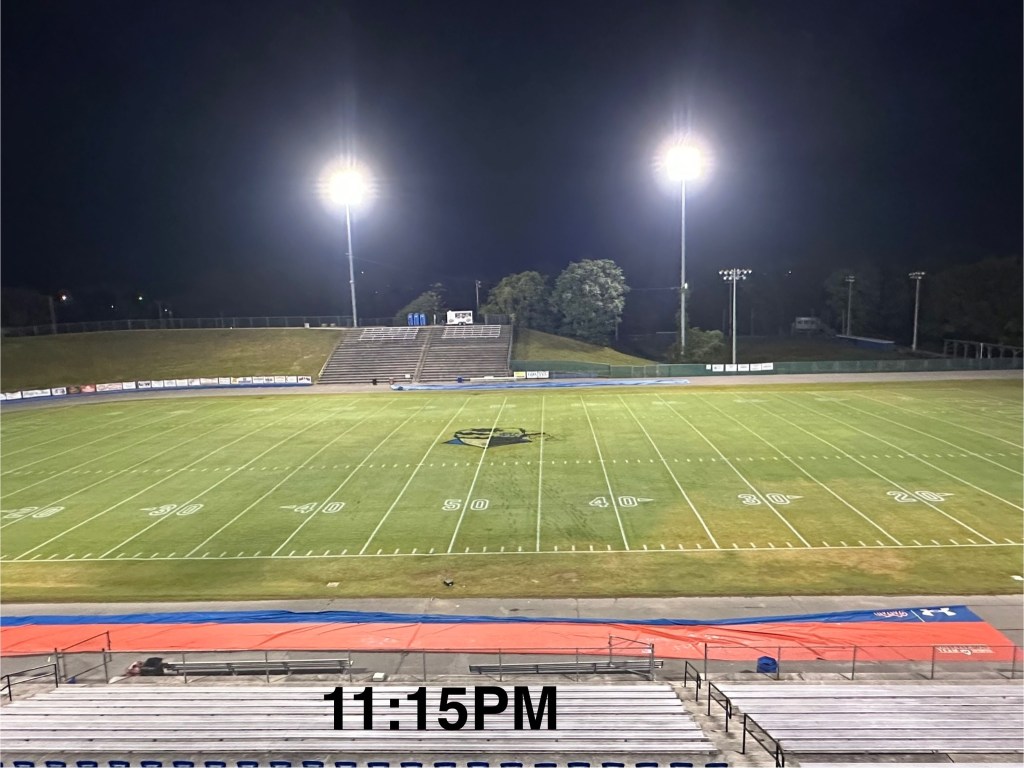
Photo is from the Warren County Pioneer Football Facebook Page
Foreword: I listened to Simmons Says Podcast Facebook Fallout – Episode 37 (part 2) today while driving to schools. This was an exceptionally insightful and in-depth look at Warren County High School football. I have been thinking about a positive solution for Pioneer football, and the discussions in Jeff Simmons’ podcast provoked me to write down my thoughts. Both Jeff Simmons and Chris Sullens deserve praise for their contributions in this episode. Their ideas will make anyone think about potential positive changes for Warren County Football.
The proposal is a plan to dramatically change the competitive nature of Warren County High School Football. Without building a new school, the school system would petition the TSSAA to divide the school into two (2) football teams, Warren East and Warren West. The division of the teams would change Warren County football from 6A (1,899 student enrollment) to two 4A teams (799 student enrollment).
Given the four decades of losing records in football, Warren County owes it to its students, parents and community to make a positive, systematic change to the football program. The TSSAA should not punish the Warren County High School Football program by continuing to enforce arbitrary classification rules that prevent consideration and changes to the quality of educational athletics.
Therefore, Warren County should petition the TSSAA to divide its football team into two 4A classifications for the next two years. Warren County agrees to not be playoff eligible in the first two years, which will not affect the existing teams in 4A Region 4 playoff eligibility. If one team becomes more competitive, it can request to be moved to the 5A classification. Until Warren County Football starts winning consistently, playing as one team in 6A should not be a consideration.
WARREN COUNTY PROPOSED ADMINISTRATION OF THE TWO TEAMS, WARREN EAST & WARREN WEST
The focus is to create competition between the two teams that will make each team more experienced and successful. Competition is the standard and competition will be the principle for coaching and playing the sport. There will be an emphasis on winning, not simply participating in the sport.
A full-time Director of Football Operations will be hired. This person’s exclusively responsibility is to develop and support the two teams in an equitable fashion. This position will pay the Director $100,000 per year. It is a 12-month job. The Administrator will report directly to the high school principal and Director of Schools. The Director will develop a team of former coaches and players to support the coaches.
Each head coach will be a full-time coaching position with no teaching responsibilities. Head coaches will be paid $80,000 for a 12-month job.
Assistant coach supplements will be increased by $5,000 and coordinator positions will be increased by $10,000.
The teams will be created by geography and a draft. The default draft will be which elementary school the students attended. To balance the teams, a draft will also be held to make the talent at each position for each team somewhat equal/competitive. For example, the two best quarterbacks should not be on the same team.
Student-athletes will sign an agreement to not transfer during the season. The only way a player can transfer after a season is if the Director of Football Operations and both head coaches sign the waiver.
The teams will practice together during the week and use the same facilities.
More facilities will be created for locker rooms, coaches’ offices and meeting rooms.
Teams will play five (5) games at home and five (5) away games. One team will play at home while the other team is on the road.
Homecoming will be a home game between Warren East and Warren West.
Homecoming will be a major fundraiser and form of competition. Freshmen and Seniors will support East. Sophomores and Juniors will support West. There will be competition and unity.
Each team will raise money for their choice of homecoming queen. The queen who receives the most money will be crowned.
Each grade will support their team the week of homecoming and sit in their own sections and cheer their team the week of the game. There will be a well-funded homecoming dance to reward each team.
NIL deals will be pursued to support players on each team. Business, churches and communities will be asked to sponsor teams and schools.
Players will be paid $50 each week of the season for playing in a game.
Players will be paid an additional $100 for winning a game.
Coaches who have a winning record will be given a free vehicle for one year.
Teams who have a winning record get a free trip to Disneyworld during the Christmas break.
Teams with a losing season get to do community service during the Christmas break.
Both teams will enjoy a Christmas party together that will include less fortunate children in Warren County.
Winning will be rewarded. Coaches will be held to standards of performance.
There will be a weekly coaches’ show featuring both coaches.
Home games will not be televised for free. Warren County will develop its own pay-to-stream game channel.
A major sports psychologist such as Dr. Kevin Elko will be hired.
New developments will include a track at the high school and an extra practice field. One practice field will have lights. A grounds crew will be hired to take care of all the practice fields. A cleaning crew will be hired to wash practice and game gear. Coaches will not perform field maintenance or cleaning. Coaches will oversee players cleaning the locker room daily. The Director of Football Operations will supervise the field and cleaning crews.
The school system will do an analysis of the cost to implement this program and ask the county commissioners to fund the new programs. The City of McMinnville will also be asked to help fund the program since the City of McMinnville does not contribute any tax dollars to the Warren County School budget.
A Warren County Football Council will be created to help with fundraising and support of football on all levels in Warren County. The focus will be to become competitive on all levels of football and to increase the value of educational athletics for football participants.
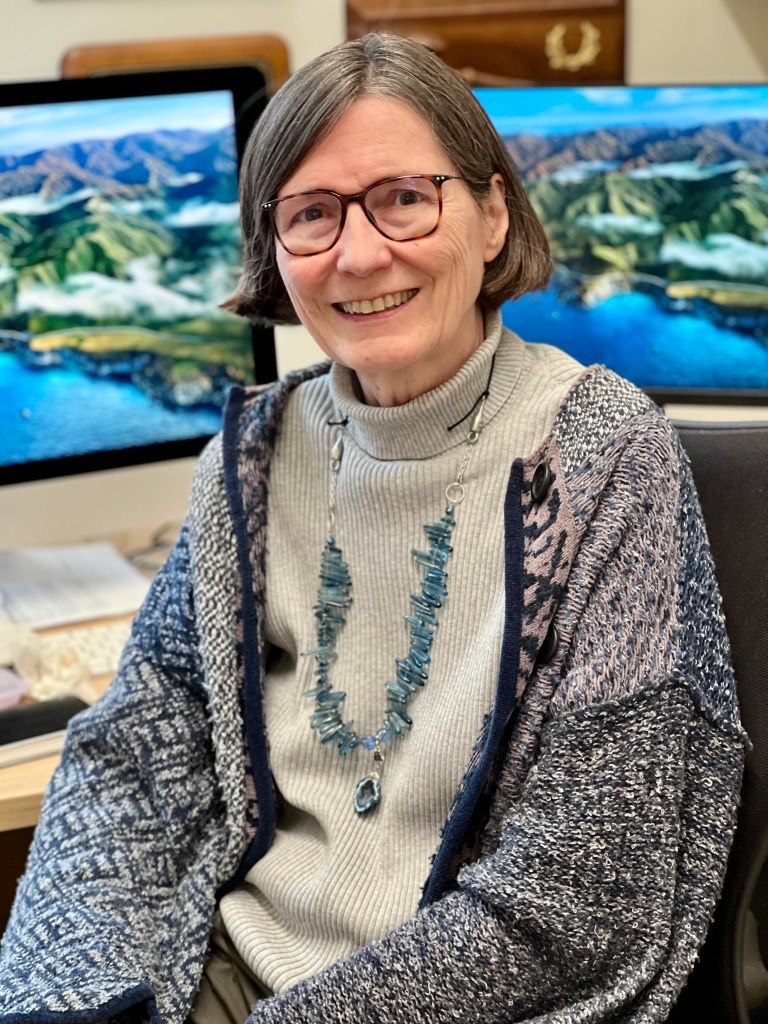
Professor and author Marybeth Shinn in her office at Vanderbilt University. Feb. 29, 2024.
By Brad Durham
On Thursday afternoon, February 29, I visited with Beth Shinn in her office at Vanderbilt University. Near the end of our conversation, she said something that stood out, “Homelessness is the worst manifestation of income and racial inequality in our country.” Shinn’s statement clearly illustrates the challenges facing the homeless population.
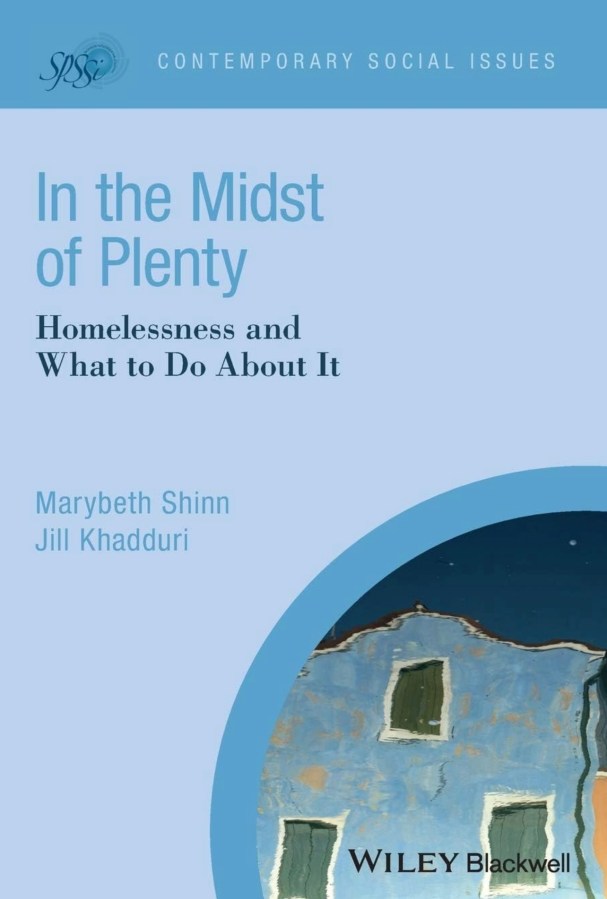
The following are excerpts from my interview with the professor and author of IN THE MIDST OF PLENTY – HOMELESSNESS AND WHAT TO DO ABOUT IT. I highly recommend purchasing the book and reading it. There is a wealth of research and positive solutions for ending homelessness in Shinn’s book.
Brad Durham: Please describe your background and position at Vanderbilt University.
Beth Shinn: I am a professor at Vanderbilt, and I have been studying how to prevent and end homelessness for over 30 years.
Brad Durham: Would you say that you have a passion for researching that and looking at solutions for homelessness?
Beth Shinn: That is my central focus.
Brad Durham: What made homelessness your central focus?
Beth Shinn: When homelessness started going out of skid rows and onto the streets, I was a young mother in New York. My kids would say, “Why is that person living there, why is somebody sleeping there? It is pretty hard these days to recapture the shock that we had at first seeing this in the mid-1980s.
Brad Durham: When did you start at Vanderbilt?
Beth Shinn: 16 years ago.
Brad Durham: In your 30 years of research, what have you found to be the best approach to solving homelessness?
Beth Shinn: We have a lot of evidence, and it is different for different folks. For families, a large-scale experiment that I was involved with, The Family Option Study, randomized nearly 2,300 families to housing intervention services. What we learned was that giving families access to housing vouchers that held their housing cost to 30% of their income not only ended homelessness, but also has radiating benefits for other aspects of family life.
Access to the vouchers reduced psychological distress and substance abuse, it reduced domestic violence, food insecurity… Some of the things that can cause homelessness were reduced simply by making housing affordable. Kids school attendance improved; their behaviors improved. We are in the field now with a 13-year follow-up to that study to see how long the affects lasted. How did being a kid in one of those families that had access to housing vouchers change the trajectories into adulthood? In another year or so, we will know the answer to that.
For folks with serious mental illness and substance-abuse problems, the approach that is evidenced-based and seems to work best is the original Housing First approach to supportive housing. People get housing with private landlords directly from the street without any prerequisites, and services under their control. The wraparound services are the ones that the people choose. Wraparound services include mental health services, substance-abuse services, but also vocational services for people who ask for job help, educational services, recreational services to help people build community. That approach has been shown in experimental studies to work much better than approaches that require people to be clean and sober before coming indoors.
There are some advantages to scattered-site housing with private landlords as opposed to putting people with problems all in the same buildings. Being in the same building is more convenient for the service providers, but not necessarily for the environment that people are trying to manage.
We also know something about the prevention of homelessness. The biggest issue there is identifying the people who are at-risk. The most common program is eviction-prevention. But most people who are evicted, do not become homeless.
One study in Chicago looked at people who called up the eviction hotline and qualified for the program. They compared people who called at times when there was money and when there was not money. What they found out was that when people called up when there was money, about half a percent became homeless in the next six months. When people called up and there was no money available, less than 2% of the people became homeless over the next six months. So the eviction help reduced homelessness, but 98% of the people who called up even when there was no help did not become homeless.
Eviction prevention helps, but that is not where most people who are experiencing homelessness are coming from. People who have a place from which they can be evicted are better off in terms of housing than folks who don’t.
Resources are the problem. We have shown that with resources, we can end homelessness. The country has cut homelessness for military veterans in half since 2010. That happened because we put in the resources. There was supportive housing for veteran families and other programs. There was preventive screening for veterans who came into veteran health services. They were asked questions about current homelessness, worries about insecurities about the future…
I don’t believe anyone should be homeless. We can fix it if we wanted to, but fixing it involves both getting people who are currently homeless out of that state and stopping generating more. At this point we are pitching people into homelessness faster than we are getting them out. Homelessness is rising.
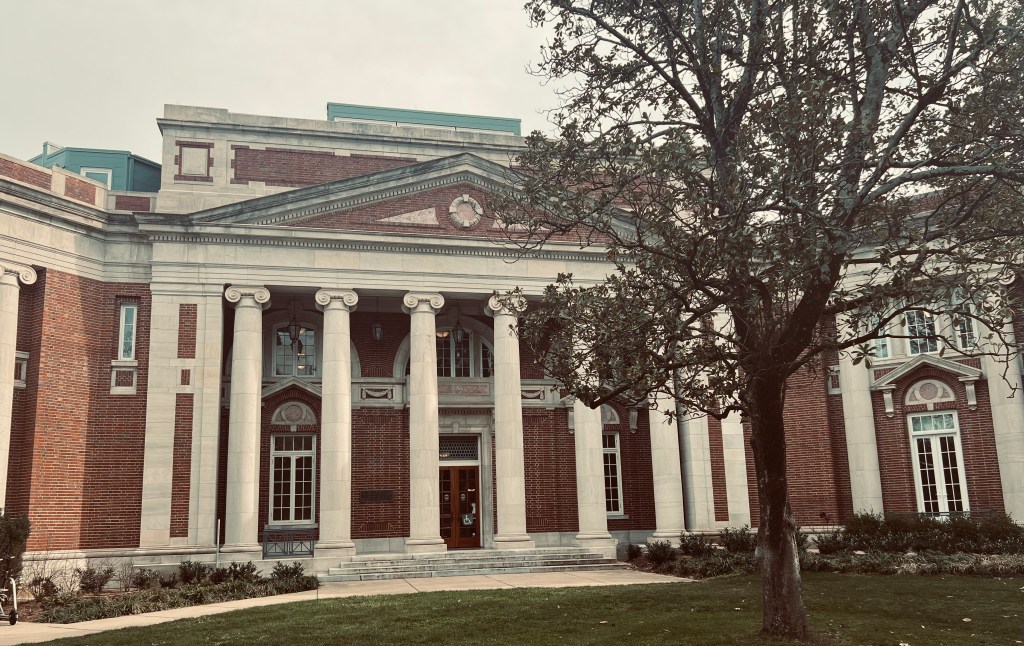
Mayborn Building, Vanderbilt University…location of Professor Shinn’s office.
Brad Durham: How do you change the public will so that the public cannot stomach having homeless individuals living on the street and in tents? There is a tent city area right outside downtown Nashville, not too far from us right now.
Beth Shinn: That is a good question. In this part of the country, one could appeal to moral values and religious tenets, “love thy neighbor.” If I could answer your question, I would be shouting it from the rooftops.
There is a lack of affordable housing. Nationwide, we have the highest level of “worst case of housing needs” since we started tracking these things. Worst case housing needs are people who are below 50% of the median income and are paying more than 50% of their income toward housing or living in seriously deficient housing. At this point nationally, we have 8.5 million renters who fall into that category as of 2021, which is the most recent report. That is the highest number we have ever had.
Those are people who are really strapped…people who are living below 50% of area median income and are paying more than 50% of their income for rent, which does not leave much room for paying anything else.
Brad Durham: How would you define homelessness?
Beth Shinn: There are two basic definitions of homelessness. There is what the Housing and Urban Development (HUD) uses, which sometimes is called literal homelessness. Someone who is sleeping outdoors or a place where people are not intended to sleep such as a bus station or in a shelter or other homeless serving programs.
There is a broader definition that the Department of Education uses that includes additional folks: the largest group is people who are doubled up in other households because they cannot afford a place of their own. There are some additional groups such as folks staying temporarily in hotels.
Those are the two big definitions. We try to count the people who are homeless according to the HUD definition in January. That number is going up. We try to count the number of people in schools who fit the Department of Education definition. That doesn’t count anyone who is below school age. In Nashville, that number is looking worse as well.
About a third of the people who experience homelessness are a part of families. The age that you are most likely to be in a homeless shelter in the United States is infancy.
Brad Durham: The Finnish model in your book is encouraging and inspiring. They eliminated homelessness.
Beth Shinn: We are wealthier than Finland. We could choose to do it. It’s a choice.
Brad Durham: Do we have the federal and state money to do it in Tennessee?
Beth Shinn: There is money through HUD, and the housing choice voucher program is something that needs to be expanded. The other thing the Feds do is the Low Income Housing Tax Credit, and that helps developers create more affordable housing. Even with that tax credit, developers cannot develop and maintain housing that poor people can afford. LIHTC helps developers provide housing to people who are at about 80% of median income. Getting that down to 30% of area median income is really tough, and that is where the need is.
If you look at the people who are experiencing homelessness, they are around 15% of area median income. Disability benefits are too low to afford a studio apartment anywhere.
State and local funds can help, but regulations are part of what is causing homelessness. In Nashville, we have down-zoned the number of units that are permitted. In 1950, you could have built a duplex or triplex in a place where now only single-family homes are permitted. We need to allow for greater density. We need housing on transportation corridors. Some people like to say that it is the housing and transportation cost that we should be looking at together. It doesn’t really help if you can get housing way out (from work) because it increases the transportation cost of commuting to work.
Zoning requirements for parking are another thing that makes housing more expensive to build. Nashville is removing zoning requirements for parking downtown. There is a tradeoff between having more parking spaces or more housing units.
The Tennessee state legislature has tied our hands to incentivize developers to build affordable housing. You can’t say in Tennessee that we will give you a zoning variance to build more units if 10% of them are more affordable. The legislature has nixed that from happening.
State and local funding can help, but state and local regulations hurts. We need changes to state and local regulations to make it more possible to build affordable housing.
Brad Durham: Are you optimistic in what you are seeing in your research, or are you pessimistic about the numbers you are seeing in respect to solving homelessness?
Beth Shinn: What leaves me optimistic is that we generally know what to do. It is really at this point a question of resources. We have shown that we know how to end homelessness with families. We have shown how to end homelessness for people with serious mental illness and substance abuse disorders. We have shown how to end homelessness for veterans. It is matter of resources and political will.
It is not a matter of the poor are always going to be with us and we don’t know what to do, so we should just bury our heads in the sand. We have a lot of knowledge. We know something about prevention. We could know more there. We know something about what is generating homelessness. There is a GAO report that indicates that for every $100 increase in rent in a city (technically a continuum of care) there is a 9% increase in homelessness.
We need to build things that are not all mansions. We need to build smaller homes, what used to be called starter homes. Not everyone needs three bedrooms and 2.5 bathrooms and a white picket fence. We need to offer more kinds of housing to people.
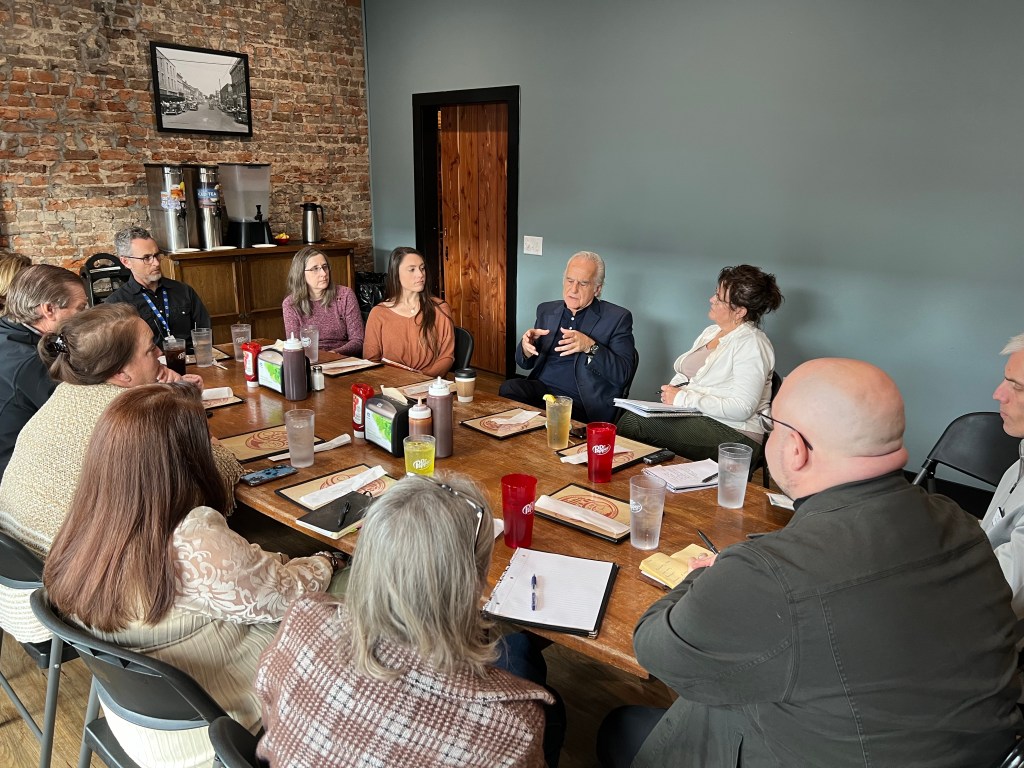
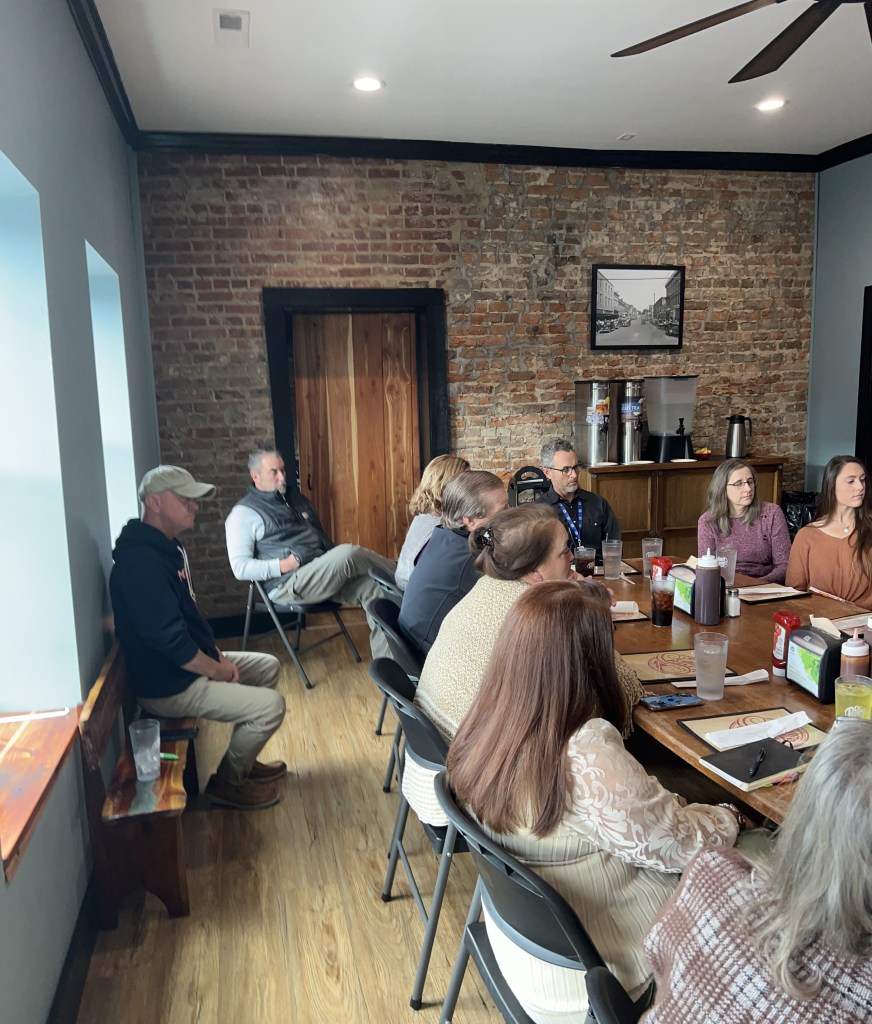
For a list of who attended the meeting, go to the end of this letter.
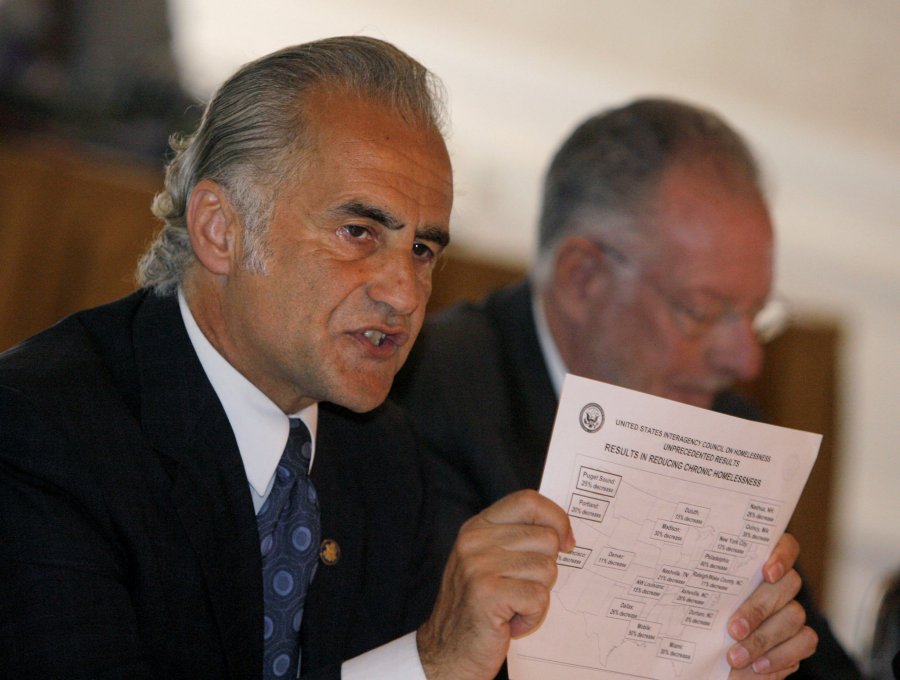
On Friday morning, January 26, a group of 14 McMinnvillians gathered for a presentation by Philip F. Mangano. Mr. Mangano served as President George W. Bush’s Executive Director of the White House’s U.S. Interagency Council on Homelessness. Brad Durham, who worked with Mr. Mangano in Cambridge, Massachusetts placing homeless families into permanent housing, invited Mangano to McMinnville.
HOUSING FIRST SOLUTION
The heart of Mangano’s presentation was housing first, a concept to end homelessness, not to provide endless services. Mangano stressed that data clearly supports the housing first policy.
COST-EFFECTIVE SOLUTION FOR CITIES
It is cost-effective to place a homeless person or family in permanent housing versus a shelter or transitional housing. Mangano said, “Mayors know the cost involved related to caring for a homeless person. A homeless person incurs expenses that a community pays for such as health care, mental health, police, court costs, addiction, etc.” Mangano stated that a city spends between $25,000 to $138,000 a year in services for a homeless person.
STABLIZES A HOMELESS PERSON
A permanent home is the most cost-effective solution to homelessness because it stabilizes the homeless person. When a homeless person is safe and secure in a home, the health care, mental care, and other services are more easily identified and effective. The services follow the homeless person into a home.
WHAT EVERY HOMELESS PERSON WANTS
Mangano emphasized that there is one thing every homeless person says that he or she wants — when asked — is a place to live, a home. Although the housing first solution appears to be self-evident, Mangano stated that homeless advocates often act out of genuine compassion by providing transitional housing and services that create a perpetual cycle of services that sadly do not end homelessness.
Another major desire homeless people ask for is a job. Mangano said, “Homelessness results in an unraveling of social capital – the loss of friends and family.” Clearly, when an individual or family is homeless, that person or family have busted through every possible safety net and hit the street. A homeless person is completely alone…lonely. A homeless person intuitively knows that a job will provide friends — the social capital everyone needs.
Philip Mangano suggested a book by Robert Putnam to better understand how the social fabric has diminished in America’s recent history. That book is Robert Putnam’sBOWLING ALONE: The Collapse and Revival of American Community. The book was developed from Putnam’s essay entitled, “Bowling Alone: America’s Declining Social Capital.”
A COMMON FRUSTRATION AND PERCEPTION
Several members of Friday’s gathering stated that there is no affordable housing in McMinnville. Mangano replied, “Homeless advocates in every city say that. That is a common perception. The response requires innovative thinking and a commitment to housing first principles.”
THREE BOOK RECOMMENDATIONS
Philip Mangano worked with three researchers and authors who have worked with executives in the corporate world to find solutions to business problems. These authors helped research and provide the framework for successful housing first models and policies.
Using Gladwell’s book and homeless research as a resource, Mangano said, “Investing resources into the most challenging and difficult parts of homelessness from an economic perspective leads to a decline in homelessness.” Conversely, providing compassionate emergency services without a housing first policy does not effectively create a decline in homelessness.
Mangano’s alluded to examples of creative solutions involving converting motels into housing that have services onsite. He also mentioned manufactured housing as a cost-effective solution for a homeless person or family.
Clayton Christensen’s book, THE INNOVATORS DILEMMA offered examples of how businesses seeking to move to the next step often failed when using the solutions suggested by the sales force. On the other hand, businesses seeking to move to the next step often succeeded when their researched focused on the consumers and solutions they wanted.
SUMMATION
The general thesis of Mangano’s presentation was that research and data from across the country, in large and small cities, clearly shows that housing first is the best solution to homelessness. Creative innovations to decrease homelessness have often come from unsuspected sources such as private industry and listening to the homeless population. The solution that works best for everyone is housing a homeless person or family — not long-term emergency services that allow the homeless to perpetually experience trauma and instability.
PEOPLE ATTENDING THE MEETING
Carrie Baker, UCHRA Director
Terry Bell, County Executive
Courtney Breedlove, Program Director, Families in Crisis
Brad Durham, Private Citizen
Sheila Fann, Connie Fox, Co-Directors of HOME
Beth Gallagher, Private Citizen
Jimmy Haley, former Mayor and County Executive
Steve Harvey, City Alderman
Ryan Heatherly, Senior Pastor, First United Methodist Church
Rayah Kirby, Realtor
Philip Mangao, President & CEO American Roundtable to Abolish Homelessness
Nolan Ming, McMinnville City Administrator
Rev. Charles McClain, Priest, St. Matthew’s Episcopal Church
Kristy Stubblefield, Executive Director, Families in Crisis
As the meeting came to close, members expressed the desire to work together and collaborate, to meet again in three weeks. It is hoped that the meeting will lead to some type of homeless alliance in McMinnville.









 BD Newsletter
You must be logged in to post a comment.