-
By Brad Durham
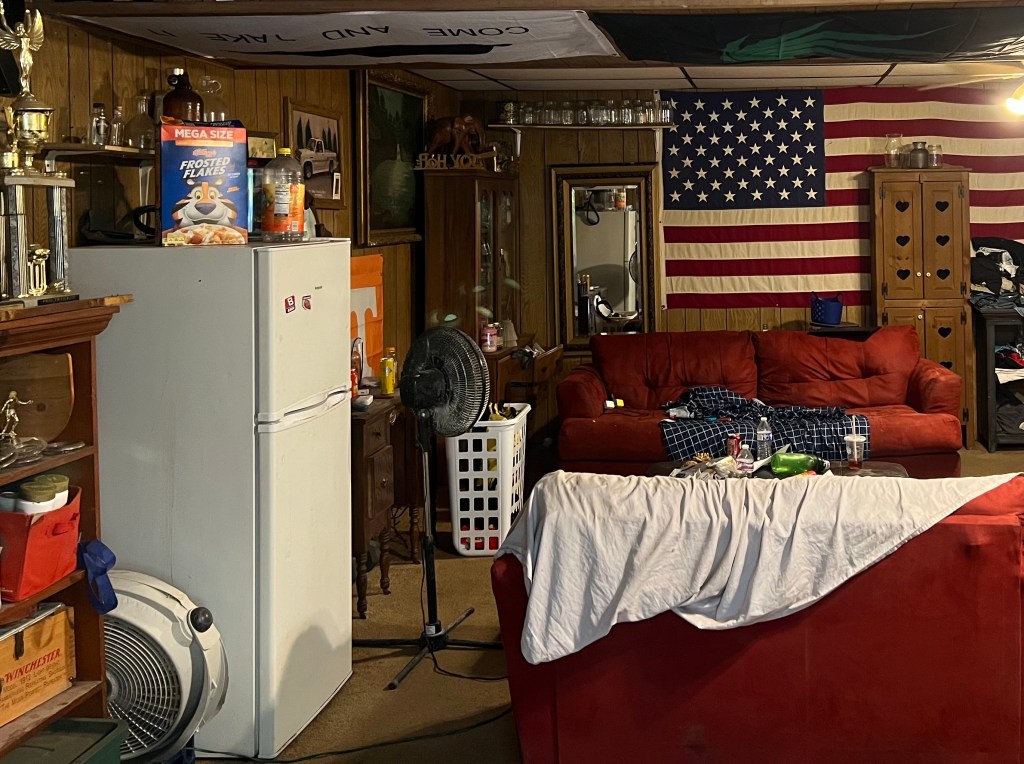
John’s (not his real name) basement apartment for $500 a month.
When I first met John (not his real name) on April 17 of this year, it was at a McDonald’s. The free Wi-Fi and a place to sit for a while provided a port in the storm of his homelessness. John told me he was exhausted from walking day and night, with nowhere to stay and desperately searching for work. Even when someone offered him a tent, he didn’t have a place to safely pitch it. Yesterday, McMinnville Action To Create Housing (MATCH), a nonprofit committed to helping our unhoused neighbors secure permanent supportive housing, assisted John in paying a month’s rent for his new apartment.
ENDED HIS OWN HOMELESSNESS
John is 32 years old. Due to unfortunate circumstances—some of which he acknowledges were of his own making—he bounced in and out of homelessness for the past 11 years. His determination to find work and address back child support payments ultimately motivated him to find both a job and an apartment. All John needed going into September was $500 to cover his first month of rent in a basement apartment.
A few weeks ago, he started working at an industry in McMinnville. Without a place to stay, he slept right outside on the property. Fortunately, he knew someone nearby, within walking distance of his job, who agreed to rent him a basement apartment after he spent two weeks sleeping outside the building.
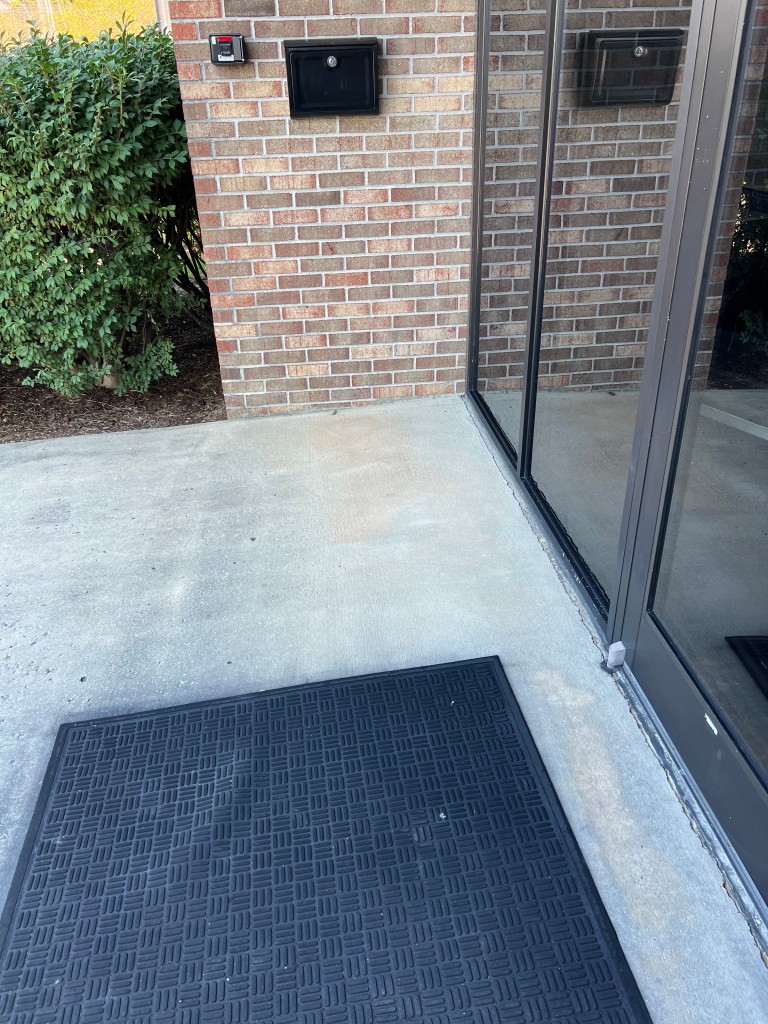
Where John slept overnight before working a full shift — without a sleeping bag or cushion,
HOW MATCH HELPED
MATCH is covering his first month’s rent OF $500, which will enable John to address the child support payments he struggled to make while homeless and looking for work. Moving forward, John will be able to pay his full rent and child support. In September, he has a court date concerning the child support payments, which he has significantly reduced since starting work a few weeks ago. He hopes to catch up on these payments, allowing him to continue working and paying his rent.
UCHRA PROVIDES SUPPORT
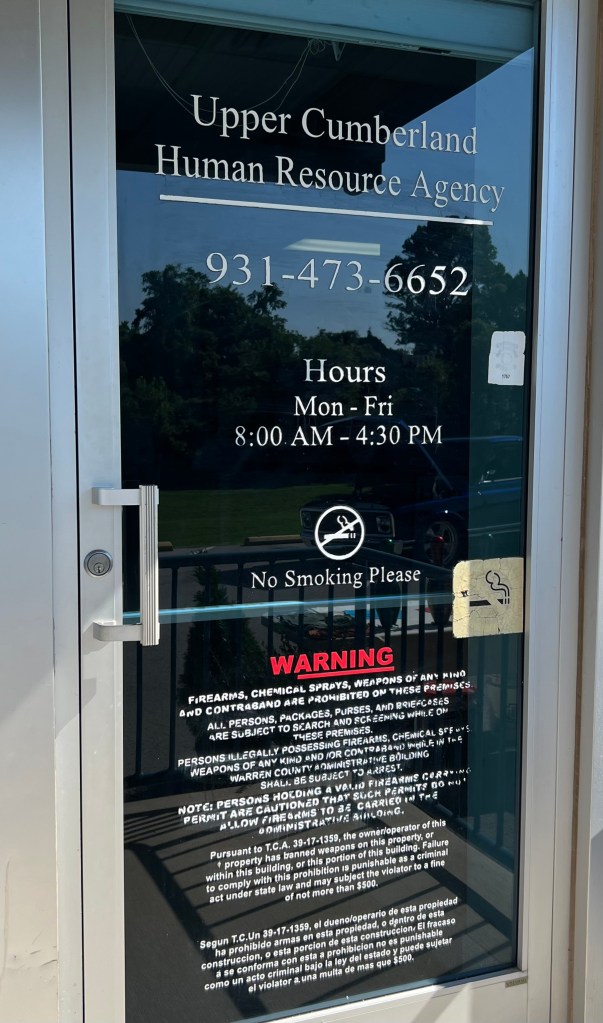
John credits UCHRA with providing support.
John credits a member of the UCHRA staff for providing essential supportive services. He said, “I meet with a lady every Tuesday about child support. She works with UT and UCHRA. When I was homeless and searching for a job, she communicated with the court about my efforts. She is my advocate, a professional who documented my job-search progress. She provided me with gift cards each week for food and gas. She even helped me purchase a new bike for $286! When I had nothing, she helped me get through the week.”
John is the second unhoused neighbor in McMinnville that MATCH has assisted in moving into housing in the past week. This initiative is part of an evidence-based solution to homelessness presented by MATCH in the film BEYOND THE BRIDGE, earlier this year at the Park Theater.

HOMELESS SUMMIT IN OCTOBER
MATCH plans to host a Homeless Summit in October to jumpstart collaboration and fundraising aimed at developing both supportive services and a housing search team, along with private rental subsidies. Everyone in McMinnville will be invited to the Homeless Summit, with the date and location to be announced soon.
-

Second in a Series…

What do you think divides us in McMinnville?
By Brad Durham
Dr. Smoot delivered me at the Clinic in downtown McMinnville in 1956. As a child of the fifties, I remember when Chancery Street was a beautiful tree-lined, two-lane street. I remember people saying they were “yellow-dog” democrats, and they were proud of being that. Today, most of the people in McMinnville are republicans. I was in the fourth grade when schools were racially integrated in McMinnnville. Our community is still trying to resolve divisions over various issues including race, taxes, politics, education and the beautification of the city.
Our former presidents such as George Washington and Andrew Jackson owned slaves. Then as now, America has been divided on political and spiritual issues. For example, Christians were divided over slavery, and both sides used scripture to defend their points of view. Similar to our early history, McMinnville’s citizens in 2023 have different views spiritually, culturally, and politically. Our political landscape is very divided, and both sides often use Christian teaching and scripture as references for their points of view.
As we truly listen to each other, hopefully, we see more commonality than division. McMinnville is stronger when it is united; weaker when it is divided.
The following are comments from the twelve people I interviewed.
I wish people would be respectful of other people and their opinions. I believe that we’re divided by…in this country…unfortunately from 2012 to 2020, we were divided by race — by the United States government within the United States government.
Stacey Harvey
More or less, what I think divides us is our actual government. Actually, having the city government and the county government because most people don’t understand the difference between the city controlling this…(and the county controlling that). The tax thing divides us too.
Terry Bell
I guess different mindsets. Political views especially now.
Judith Gomez
I think there is the same type of dichotomy there is in the country. I think there are democrats and republicans, liberals and conservatives.
And I think the haves and have-nots divides us. We have people here who are struggling financially, and there a lot of people who are doing well. There is probably some trouble there as well.
Tony Lawrence
There are some people who want to hang onto how things were 50 years ago and maybe wish things were the same as they were then. I am sure there is a valuable reason they feel that way. There are other people who would like to see more progress.
Justin Tanner
Politics, right? It’s dividing the whole country, and I think it’s ridiculous that in national politics and the division we see there — we are seeing at the local level. That’s crazy.
Mandy Eller
I think we get caught up in issues like politics and parties that really don’t serve us well. And in our day-to-day lives don’t really matter, but for some reason we get really caught up in it. We get very concerned about who is doing what in Washington, and probably we should be more concerned about what is going on right around us.
Dr. Bryan Chastain
I think the fear of change. I think it has been fueled a bit by the political climate of our country, and I think that politics has instead of uniting people, has divided people. It’s become….if you are for that, then I’m against it. They draw the line and there is nobody willing to meet and compromise in the middle, and that’s what has made democracy so great for so long.
Jimmy Haley
That’s a tough one. When I first came here, I didn’t understand the way this works. We’ve historically been hard-core Bible Belt. We are about as traditional Bible Belt as you can get, and I think that is a divisive issue.
Todd Herzog
Not making sure that the citizenry is properly informed of decisions affecting their community. Not having the opportunity to participate in town hall or meetings or give input on development decisions. We have seen that happen recently on a couple of occasions and it breeds mistrust.
There seems to be a desire at this point, which you could see in the last election, to push party politics into McMinnville that will lead, in my opinion, to divisiveness and impede good debate on key issues. Warren County has been known for its people being independent thinkers and I would hate to see political gridlock become an impediment here.
Mac McWhirter
Politics. If you are a R or a D, it is almost like we do not associate with you. Regarding the restaurant, I have been told that you are a democrat, so I am not eating with you. I am human. I am a person. I am here to take care of you. I don’t care what your politics are, but too many people do. It has gotten worse over the past 6-8 years. It has literally become very divisive for this community.
Lisa Zavogiannis
Politics. Religion. We all have discriminations. When I say that, I mean so and so’s house is better than mine. Their car is better than mine. They have more money than I have. We all discriminate like that. That is all of us.
Wayne Wolford
Apparently, there is vast agreement in McMinnville that politics divides us. Politics may not be the only divisive factor in our midst, but it is probably at the top of the list. As Jimmy Haley indicated, we are not meeting in the middle to compromise as we once did.
It is my hope that we will find more common ground. If we can agree to disagree, we can agree to work on respecting our differences and working together for the greater good of McMinnville. Perhaps there is an “Abraham Lincoln” in our future who can help lead McMinnville to resolve its political divisiveness.
Next week’s article on April 25 will focus on the question, what do you think when you reflect on McMinnville’s future?
For more in-depth look at America’s history during Abraham Lincoln’s life and how he dealt with divisive politics, please read Pulitzer Prize winner Jon Meacham’s book And There was Light Abraham Lincoln and the American Struggle.

Terry Bell 
Dr. Bryan Chastain 
Mandy Eller 
Judith Gomez 
Jimmy Haley 
Stacey Harvey 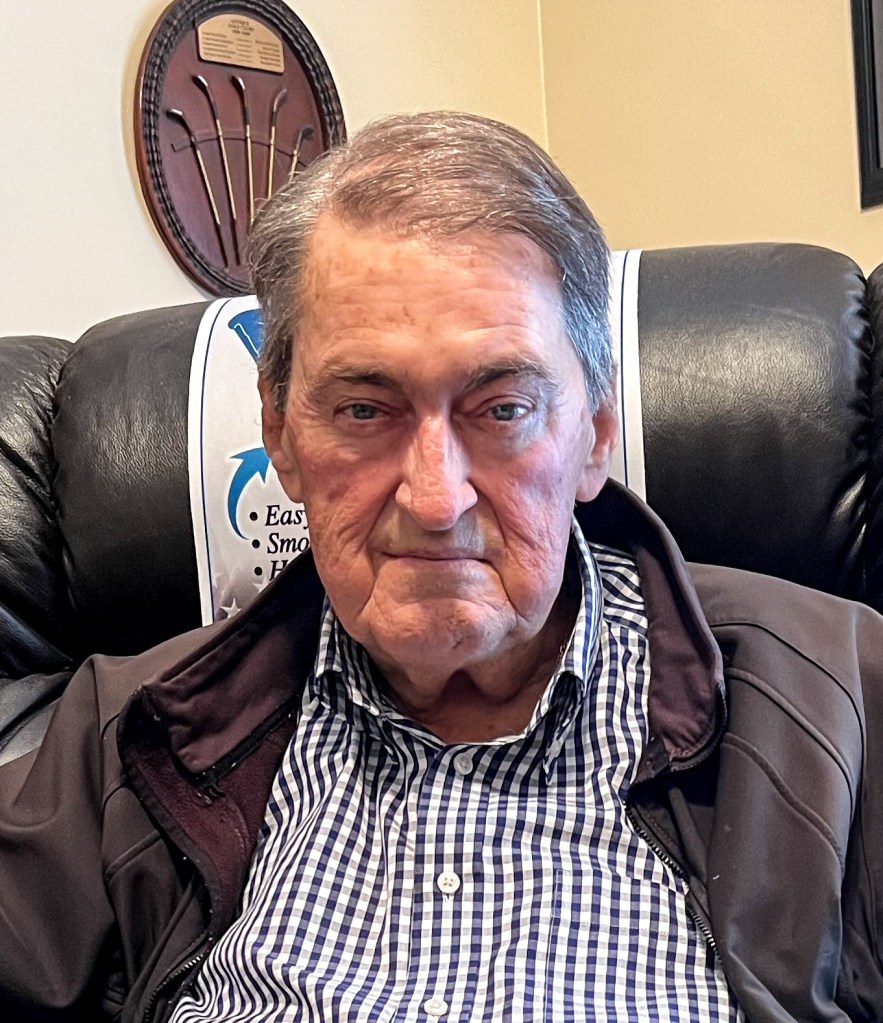
Todd Herzog 
Tony Lawrence 
Justin Tanner 
Mac McWhirter 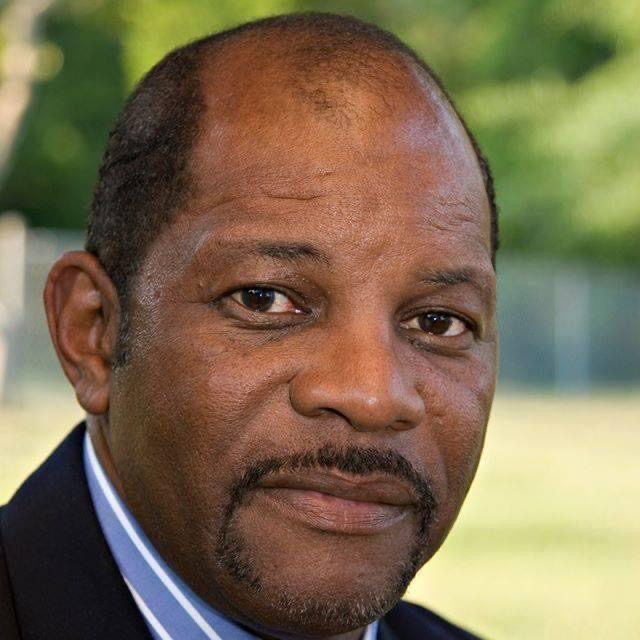
Wayne Wolford 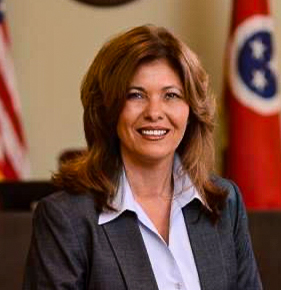
Lisa Zavogiannis -
First in a Series…
The Twelve Interviewees
Terry Bell Dr. Bryan Chastain Mandy Eller 
Judith Gomez Jimmy Haley Stacey Harvey Todd Herzog Tony Lawrence 
Justin Tanner Mac McWhirter Wayne Wolford Lisa Zavogiannis Why Are you in McMinnville?
By Brad Durham
Several months ago, I started interviewing twelve people in McMinnville. My intent was to interview a cross-section of people that would provide different points of view. Not everyone I interviewed is from McMinnville originally, but they all presently consider McMinnville or Warren County their home. Although McMinnville is a small town, many of the national interests and dynamics are represented here. I hope you enjoy learning who the twelve interviewees are and why they are in McMinnville.
The following are their words and stories…
I am a Rock Island man. I’ve lived out there all my life. Came home from the hospital out there in the Midway Community. I served on the County Commission for 16 years. I just want to see Warren County do good. So that’s the reason I ran for this office (County Executive), and I just hope that I can make everyone’s life better.
Terry Bell, County Executive, Farmer.
I’m in McMinnville because of two doctors. Wally Bigbee and Thurman Pedigo took a chance on a young kid 34-35 years ago. They recruited me out of Texas, and I was bound for Arkansas, where I was born and raised. They came to Texas and got me. At first, I said no, I don’t know anything about Tennessee. They said that they would fly my wife and I up there for a weekend, and to just come up and see us. We did, and thank goodness we drove through Woodbury and instead of Mt. Leo. They put us up at the Americana, and we came anyway!
DR. BRYAN CHASTAIN, Doctor in private practice.
Well, I was born and raised in Warren County. You know, I ended up marrying a nurseryman. My dad was a nurseryman and whenever I left home at 18, I said that I am never going to set foot in another nursery. And I ended up marrying a nurseryman. (Laughs.) So, I was around the nursery industry for 37 years anyway. I ended up staying here, you know.
MANDY ELLER, Executive Director of Beersheba Springs Medical Clinic; former Executive Director of the McMinnville Chamber of Commerce.
My parents wanted to live in a place that was more peaceful. My brothers were about to graduate from high school. They did not want my brothers to graduate in California and go down the wrong path.
JUDITH GOMEZ, Forensic Interviewer at Children’s Advocacy Center.
Well, my roots run very deep. My family were founding members of the community 200-plus years ago, so they’ve lived here and flourished here. Some have moved on to other states and places, but I felt that my calling was to remain here in McMinnville and help change lives one day at a time.
JIMMY HALEY, Former County Executive, former City Mayor, retired educator.
I was born here. We moved away when I was in the eighth grade to Kissimmee, Florida and then to Fort Worth, Texas. That’s not where I wanted to raise a family. I was raised out in Faulkner Springs and I always said [that] this is where I wanted to raise my family. So, I struck out on my own with my own business when I moved back here in 1992. I’m still here 30 years later, and I’m not going away.
STACEY HARVEY, President, Warrior Precast LLC, City Alderman.
I have a very simple answer for that: I came here to work at Powermatic. I came here for a job. I was in Buffalo, New York and Powermatic was looking for someone to head up their sales and marketing department and I applied for the job. I came and spent 16 years in that role.
TODD HERZOG, Founder and former president of Accu-Router, Board Member of the Business Roundtable Action Committee.
An opportunity to work with the Church of Christ at Bybee Branch. When I learned of the opening, Glenn Ramsey moved to Cookeville. Glen Ramsey was the minister before me. He and I both were teaching at Tennessee Bible College at that time. He told me about the opportunity here, and I contacted the church here. I came and tried it out, and they decided they wanted me. That was 38 years ago.
TONY LAWRENCE, Minister Church of Christ at Bybee Branch.
I grew up here and went away to college at UT-K. Did not think I would move back here. My wife is from here, and around the time we started a family in Murfreesboro I was looking to change to mortgage lending from real estate because it is a little bit slower paced.
Hey, this is a good place to live, and we moved back. I took a position as a mortgage lender at Security Federal and stayed there for three and a half years.
I have always had pride in being where I was from. My dad was a football coach, and I have always had that Pioneer spirit. It is a great place to live. It is a beautiful place too. We’re surrounded by beauty, and not everybody has that. All those things together made it work for us.
JUSTIN TANNER, Co-owner of Capital Real Estate and Property Management.
Three reasons: the natural beauty and outdoor opportunities, the friendliness of the people, and family history.
Both sides of my family have deep roots here. My ancestors settled here in the Rock Island area in the early 1800s.
We bought a farm in the early 1990’s and built wonderful friendships, learning a lot from folks that a city boy doesn’t usually get exposed to. Retired and moved here in 2013 and haven’t regretted a moment of it.
MAC McWHIRTER, Retired from Rhodes College as Comptroller and Associate Vice President of Administrative Services, former Finance Director for City of Memphis, former Chief Administrative Officer of Shelby County.
My grandparents moved back here. I am the only child. My mother let me come here every other year, and I fell in love with this place. I was born in Illinois; we moved to St. Louis when I was six years old. When I was 10, my grandmother moved here. When I was in St. Louis, I could not get out and do the things that I could do here. I could run in the countryside…had freedom here.
My first three years of high school were in St. Louis, and then I moved here for my fourth year. Graduated from Central High School in 1966. Came here one year after integration.
Moved back here permanently in 1995 when I got out of the military.
WAYNE WOLFORD, Founder, Director, Curator of the Warren County Black History Museum. Retired military.
My husband and I came here 33 years ago and opened up a small restaurant. We were looking for a place to open a restaurant, and we came here. We had a small child who was 18 months old. We didn’t know anybody.
LISA ZAVOGIANNIS, Co-owner of Gondola Restaurant, Assistant District Attorney Bedford County, former District Attorney Warren – Van Buren Counties.
Next week’s article on April 18 will focus on the question, what do you think divides us in McMinnville?
BD Newsletter
-

An Introspection of McMinnville by McMinnvillians
By Brad Durham
If you are reading this, it is almost certain that you are a McMinnville resident. You probably call this place your home. Most likely, you were born here, and your parents were born here. Or, you moved here either recently or a long time ago. We are individuals but similar in many ways. I interviewed twelve people in McMinnville to create an introspection of McMinnville, a deeper understanding of who we are in this small town.
Putting all labels and distinctions aside, my focus was to learn more about what unites and divides us, what people value about education and the things that people would change. There is the obvious existential question of why are you here, and then the questions become more about the quality of life you want for yourself and everyone in McMinnville.
McMinnville is where we are. McMinnville is also part of who we are. Some people say that America is a nation built on a dream, a dream that is still being defined and realized. McMinnville is part of that American dream. Our Declaration of Independence states:
We hold these truths to be self-evident, that all men are created equal, that they are endowed by their Creator with certain unalienable Rights, that among these are Life, Liberty and the pursuit of Happiness.
The interviews are an introspection to determine how McMinnville is doing in the pursuit of these ideals — through the eyes of people in McMinnville. The interviews also offer a sense of discovery. McMinnville can learn more about itself by learning what different people think about McMinnville.
The best place to start is an introduction to the twelve people I interviewed and their explanations of why they are here. In future publications, the interviews will dive more deeply into the quality of life and philosophical questions about what McMinnville is and what people want McMinnville to be.
It is my hope that the publication of these interviews can lead to a town meeting in the near future, which can turn these interviews into an interactive conversation and positive thinking. McMinnville is a place where people can affirm each other and work together to keep McMinnville moving forward in the pursuit of life, liberty and happiness for all of its residents.
###
FIRST IN THE SERIES OF ARTICLES:
Introduction of Interviewees.
The interviewees stating why they are in McMinnville.
-
Catching up with Warren County’s Mr. Football after his outstanding sophomore year on Vanderbilt University’s football team.
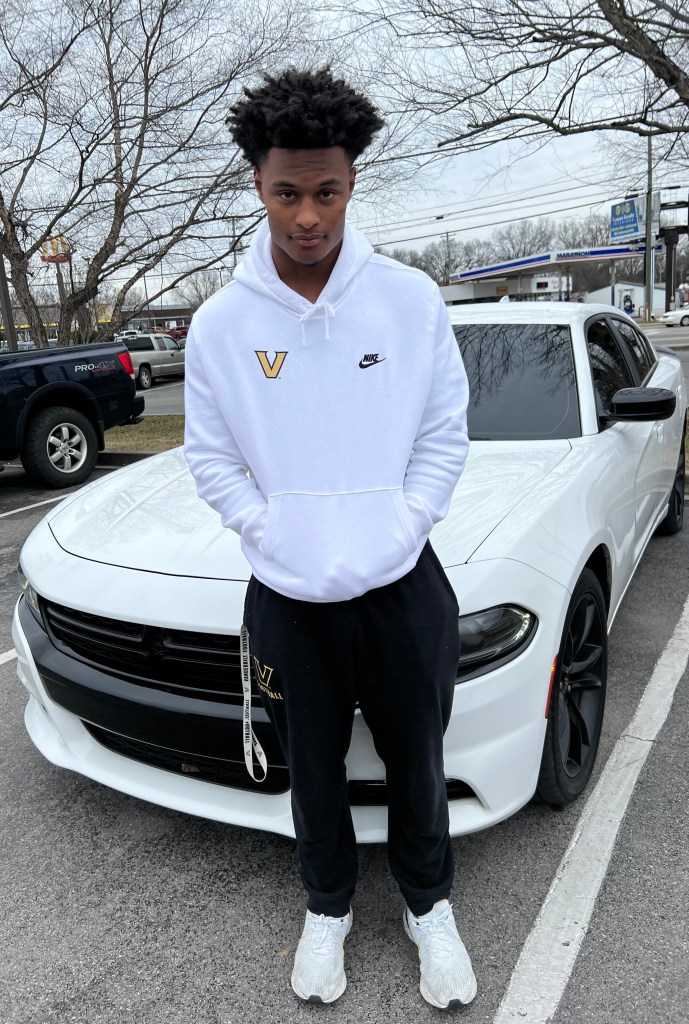
BD NEWSLETTER: What was the major highlight of your sophomore season?
CJ #13: Definitely that Missouri play. I was gifted by God and the people behind me to get to that point in my life to make that play. It was week six, and on Monday we were doing a walk through. My coach came over to me and said, “When we blitz up the middle, the running back is going to come over and try to cut off your legs. You are going to have to get over him.” I said, “Coach, I can’t do that!” He (the running back) got me once in the game, and the second time I jumped over him.
CJ Taylor jumping over the Missouri player and knocking the ball loose from the quarterback. CJ then recovers the fumble and scores a touchdown. BD NEWSLETTER: How did the Anchor Collective at Vanderbilt contact you about the NIL deal, and how much did you have to think about it? Are there only three Vanderbilt football players with the collective deals right now?
CJ #13: I didn’t have to think about anything. It happened after the season. I don’t know how they go about it. To my knowledge, there are only three players.
BD NEWSLETTER: You have been at Vanderbilt University for a year and half. What is the best thing about being there?
CJ #13: I guess living out my childhood dream. I have a picture on my phone screen that I can swipe to. It is a picture of me when I was little and wearing pads with my dad. I look at it every once in a while when I am struggling getting to practice, because it gets hard. When I look at that picture, it helps push me. The biggest thing about being at Vanderbilt is that I get to live out my dream.
BD NEWSLETTER: What is that dream?
CJ #13: To play in the NFL.
BD NEWSLETTER: You got banged up this past season. You had a high ankle sprain against UT and you had surgery to repair an injury on your thumb. When will you be 100% again and ready for conditioning in the offseason?
CJ #13: Hopefully I will be ready by mid-January.
BD NEWSLETTER: What are you looking forward to doing on the Christmas break in your hometown of McMinnville?
CJ #13: I cannot train at the moment. Before the surgery, my plan was to come home for a week and a half, and then go train somewhere. Right now I am just hanging out with my friends, mom and girlfriend. Soaking up all my time here before I get back to business. I go back to Vanderbilt on January 7.
BD Newsletter Final Thoughts: The NIL money is making the opportunity for CJ Taylor to play college football better. He has the opportunity now to go buy a pair of shoes if he needs them. He can make a car payment. Take his mom out to eat. He doesn’t have to worry about asking his mom for money. The NIL money is helping CJ to learn how to handle his money and focus on his education and football.
CJ made one prediction for next season that is worth remembering. He predicts that the Commodores will win at least seven football games next year.
We are thrilled that CJ is having success at Vanderbilt University and we wish him all the best in 2023!
-
A Harvey Family Christmas, December 16, 2022

The sold-out Hark at the Park show at McMinnville’s Park Theater was a sensational event on many levels. The Harvey Family Christmas celebrated its 14th consecutive year with a variety of songs that Ed Sullivan would have envied. The exclamation point of the event’s success was raising over $20,000 for the Hamilton Street Activity Center and The Magness Library.
The event has grown from an intimate show in the upper level of Magness Library in 2009 to a full capacity crowd at the renovated Park Theater in 2022. McMinnville has embraced the show as an authentic Christmas tradition. Former city and county mayor Jimmy Haley expressed a common sentiment about the event, “I think between the Harvey family and the library, it brings joy to people’s hearts. It allows everyone to come together and celebrate everything that is the spirit of Christmas.”
One of the highlights of the night was a tribute to the revered Maxine Weeden, who sadly passed away this past November. Maxine had appeared at the Harvey Christmas show in both venues over the years. An ensemble of singers and musicians paid tribute to Maxine by singing a song that she often performed at the event, “Jesus Oh What a Wonderful Child.”
The music ranged from traditional hymns, jazz, country, hip hop, gospel, and rock and roll. And that list doesn’t cover every genre represented in the evening’s 26 songs. Dr. Wally Bigbee read the Robert Frost poem “Stopping by Woods on a Snowy Evening,” that was well-received by the crowd. The show included four different children’s dance groups from Hamilton Street. Steve Harvey led a traditional sing-a-long of the “Twelve Days of Christmas.” Steve’s nephew and manager of the Park Theater, Joe Harvey closed the show with a crowd-cheering rock and roll version of “Santa Claus is Coming to Town” which included an appearance by Santa and Mrs. Claus.”


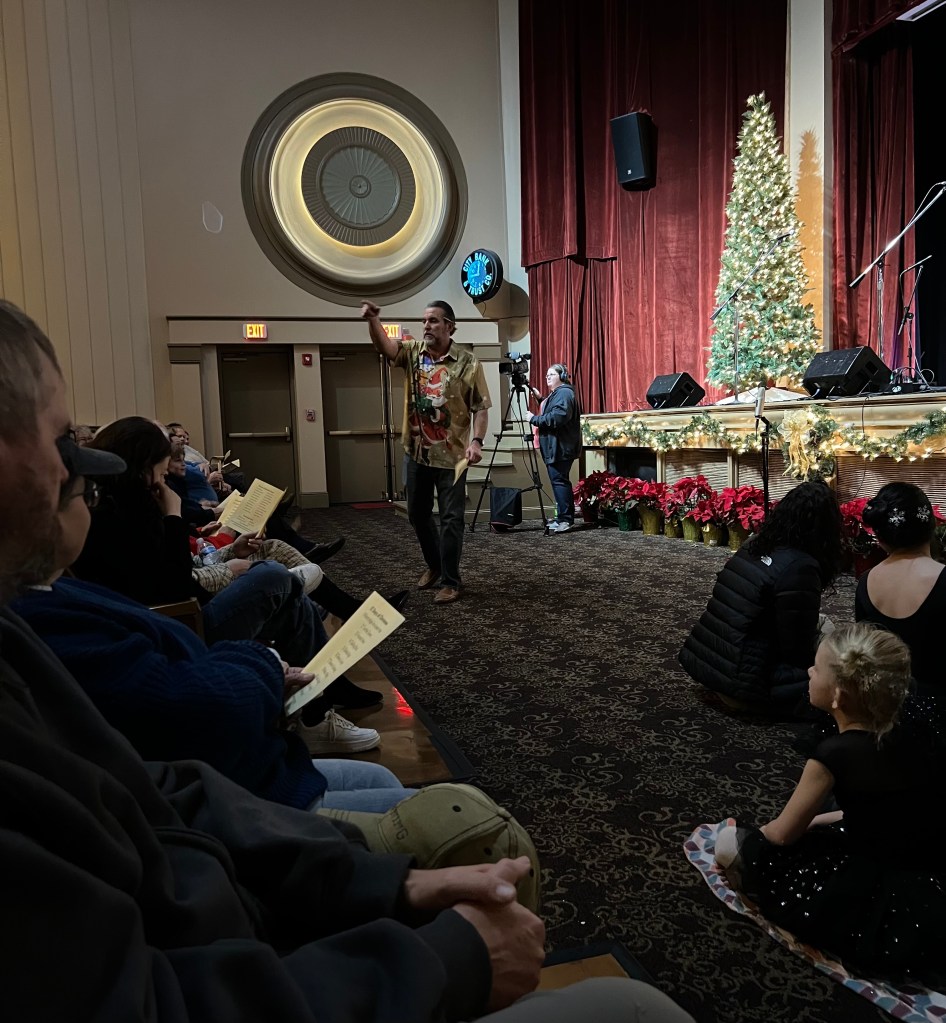
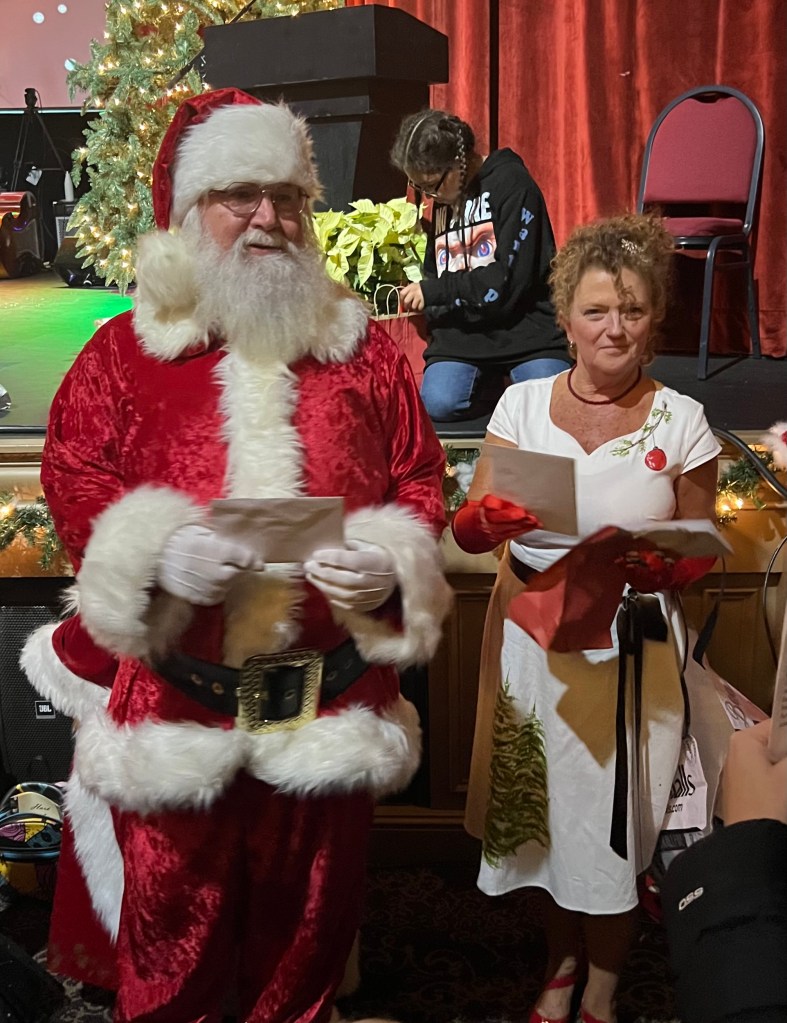
Top left is a dance group from Hamilton Street. Next is Joe Harvey and band closing the show. Steve Harvey is directing the audience in singing “The Twelve Days of Christmas.” The last photo is Santa Claus and “Mrs. Lady,” Lisa Harvey, the director of Hamilton Street. Hark at the Park stands alone as an entertaining show of Christmas music, but it also has an ulterior motive. Steve Harvey created the public event of a Harvey Family Christmas to benefit both The Magness Library and the Hamilton Street Activity Center. The event has exceeded his expectations artistically and financially. The idea for the event was actually born in Alabama at his cousin John’s house. Scott Camp was playing the piano with the family, and Steve thought the music that was being created should be shared with the public in McMinnville. The idea to make it a benefit was a natural step for Steve who has a heart for giving back.
The money raised from Hark at the Park is split evenly between the library and Hamilton Street. Justin Tanner, a member of The Magness Library Board, explained why he became hands-on this year with securing sponsorships. Tanner said, “I have been involved with the library since I moved back to town after college, and this event gets everyone into the Christmas spirit.” Ben Myers the owner of Panther Creek Forestry is a sponsor. Myers said, “I always enjoy the library. Steve (Harvey) has done a great job of engaging people to come out.” Mac McWhirter was chairman of The Magness Library Board for six years, and he and his wife Susan were Silver Bell sponsors this year. McWhirter said, “I love the library and Hamilton Street Activity Center. I love it here and this event.”
After the show, Steve shared why he started the event. He said, “There are a lot of great musicians who were raised in McMinnville and moved away, and people don’t really know that they play anymore. I thought that we needed to get them back and let people hear what they do. That was the start of it. I called it Jazz at the Library. That first show included Mike Chilcutt, Scott Camp, John and Kevin Harvey. They performed jazz music at the first event. After that we started adding singing and new people every year. The variety started at the library. It became difficult for the public to get in at the library, and we moved it over here to the Park Theater. We raised a lot of money this year between ticket sales and sponsors. We will beat $20,000 by a fair amount. I cannot think of two better organizations to donate to than the library and Hamilton Street. They both are important.”
Steve Harvey has created a legacy with the event, and the Park Theater is a perfect home for the Harvey Family Christmas celebration. Steve said that he loosely models the show after the Grand Ole Opry, the Rock and Roll Hall of Fame ceremony and any event that has a variety of acts. McMinnville can consider Steve Harvey to be its own Garrison Keillor and Hark at the Park to be its own Prairie Home Companion show.
A practical way to thank Steve Harvey for creating and hosting Hark at the Park is to keep The Magness Library and the Hamilton Street Activity Center in your thoughts throughout the year. Another way to show gratitude for the event is to thank and support the sponsors of Hark at the Park. Gold and Silver sponsors are listed below. A review of Hark at the Park would not be complete without mentioning the woman the children of the Hamilton Street Activity Center love and respect, “Mrs. Lady,” Lisa Harvey, Steve’s wife. She has done a tremendous job of caring for the children and supplying tutors, meals, and extracurricular programs. There would not be a Hark at the Park without Lisa Harvey.


PERFORMERS: Dr. Wally Bigbee, Joe Harvey, Ashley Fernandez, Lee Carr, Kevin Harvey, Chuck Jones, Michael McGee, Jason McVey, Lacey Tate and Pennye Tate.
MUSICIANS: Sarah McVey, John Harris, John Harvey, Kevin Harvey, Chuck Jones, Jason McVey and Bo Tomberlin.
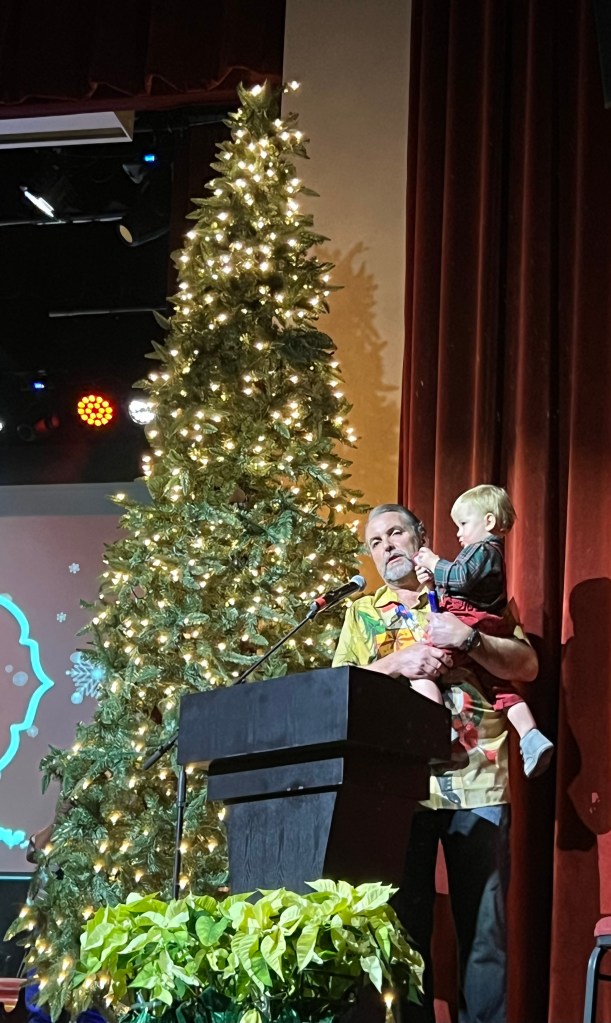
Master of Ceremonies, Steve Harvey and his grandson, Bo Tomberline.
-
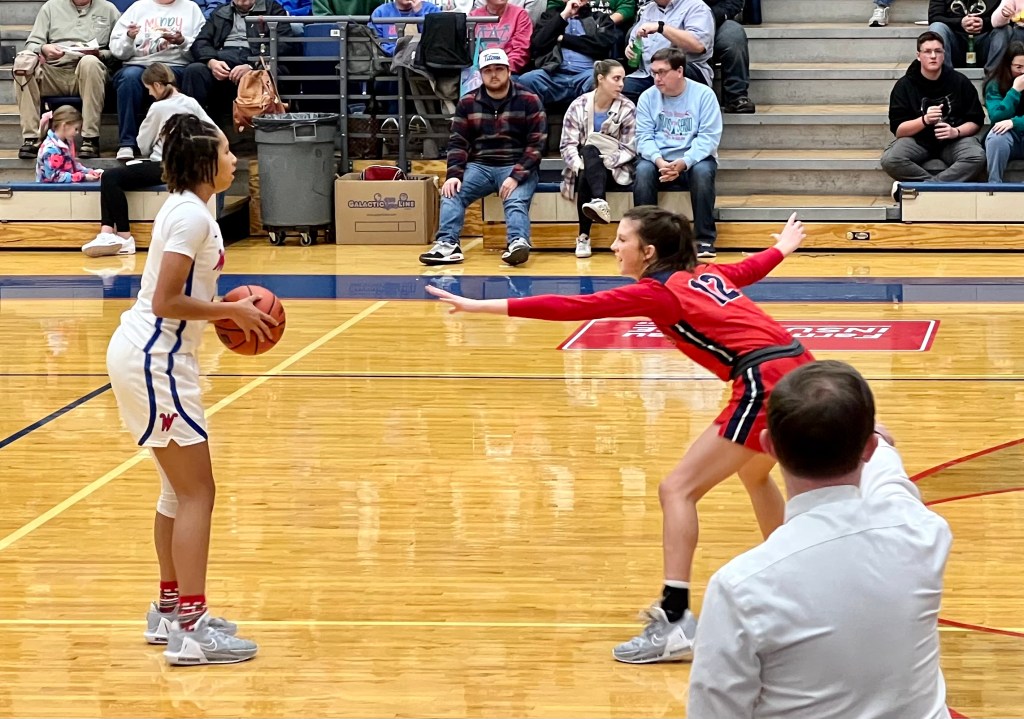
The top scorers for their teams in the game, Kyra Perkins with the ball for Warren County and Jordan Gillies, #12 for Cookeville.
Lady Pioneers Lose 58-52 to Cookeville
The Lady Pioneers faced their former district rival Cookeville at home in a very competitive matchup. There have been too many years in the past when Warren County was not competitive with Cookeville, but that has changed in recent years. Four seniors for the Lady Pioneers have led that turnaround and they had hoped to defeat their old nemesis on the day the Christmas break started. Unfortunately, Warren County could not get a lead and stay ahead of a red-hot shooting Cookeville in the game, losing 58-52.
Warren County started the game with a with small lead in the early stages of the first quarter, but they would not regain the lead until the fourth quarter by squeaking out in front 47-46. Cookeville responded with one of their many 3-point shots of the night to regain the lead 49-47. Warren County tried to stay close, but the sharp shooting Lady Cavaliers keep making baskets to protect their lead.
The player who made a difference down the stretch and during the entire game for Cookeville was Jordan Gillies. She made crucial foul shots that increased Cookeville’s lead in the final moments of the game that sealed the win for the visitors to Warren County High School.
Kyra Perkins was more than just the leading scorer for the Lady Pioneers with 15 points. Perkins made baskets and rebounds when Warren County desperately needed them. Perkins was one of the four seniors starting for Warren County. The other seniors included Mia Hobbs, who played a complete game on both ends of the court, Savannah Winfree who gave the Lady Pioneers a shot of adrenaline with her 3-pointer that cut the Cookeville’s lead to 52-50, and Shelby Smartt who played her usual tough game. Junior point guard Sable Winfree was plagued with foul trouble during the game and Smartt took her place running the offense when Winfree was on the bench.
After the game, Sable Winfree commented, “Well, going into it we all knew that Cookeville was a good team and we had to mentally prepare for them. I think we played well, but there is still some areas we can touch up. The game was determined on who was hitting, and it was them. They were hot the whole game. I just don’t think we ever really found our stride but defensively we played well.”
The star of the game was Cookeville’s Jordan Gillies who had 22 points. Four of her six 3-point shots came in the first quarter. Overall Cookeville made 13 3-pointers which accounted for 67 percent of their total points.
Warren County falls to 7-4 for the season and Cookeville moves to 8-1. The Lady Pioneers play in the White County Sonic Shootout on Monday, and Cookeville is off to a Nike tournament in Phoenix, Arizona. The Lady Pioneers are scheduled to play in a tournament in Washington, D.C. after Christmas.
SCORING
WARREN COUNTY (52): Krya Perkins 15, Mia Hobbs 12, Sable Winfree 8, Savannah Winfree 7, Brienne Kelsey 6, Shelby Smartt 2, Lex Verge 2
COOKEVILLE (58): Jordan Gillies 22, Cassie Gallagher 9, Allie Gillies 6, Charlie Roby 6, Morgan Duffey 5, Isabel Garcia 4, Macy Hudson 4, Emma Horner 2
Pioneers Lose 64-55 to Cookeville
The Pioneers showed signs early in the game of giving Cookeville a battle, but in the second half Cookeville’s dominance took over as the visiting Cavaliers stretched their lead at one point to 20 points. Warren County fought back and continued to cut down the lead, but the outcome was inevitable. On this night, Cookeville was the better team, winning 64-55.
Warren County had difficulty throughout the game getting inside to the basket against a very stingy Cavalier defense. The Pioneers won some one-on-one battles a few times, yet Cookeville had some exceptional individual players who not only blocked shots but could win one-on-one battles on offense.
Alex Van Vuuren had a big night of scoring for the Pioneers with 22 points. Sawyer Seymour made some nifty moves to the the hoop and sank a 3-pointer. Chase Newby showed some exceptional quickness around the basket and made some meaningful shots. Nate Elrod did not get on the scoreboard until the second half, but he was always battling for the ball and pressing on defense. Treyton Terry had some moments of exciting twists and turns on the court, and he was the Pioneers second-leading scorer.
Overall, the intense effort of the Pioneers was not able to overcome the superior athleticism and skills of the Cavaliers. Head coach Josh Heard has two sons on the team and a nephew. Any coach would like to have those three players on their team. Cookeville was able to open up the court and find multiple ways to make baskets. One highlight of the game was Josh Heard dunking the ball on a fast break. All of the Heard clan will return next year, which makes Cookeville a team to watch down the road.
Pioneer senior Braylon Grayson was absent. He was traveling to the high school football Tiki Bowl in Hawaii. The game is Tuesday, December 20.
Warren County is 2-9 for the season. Cookeville’s season record stands at 6-2. Warren County plays again Monday in the White County Sonic Shootout.
SCORING
WARREN COUNTY (55): Alex Van Vuuren 22, Treyton Terry 12, Sawyer Seymour 8, Nathan Elrod 6, Chase Newby 4, Devin Fish 2, Kaden Rutledge 1
COOKEVILLE (64): Josh Heard 21, Jack Oakley 21, Alex Clark 8, Bennett Reeves 6, Dontae Potts-Heard 5, Jalen Heard 3
-
Letter to the Editor:
Jeffery Simmons mischaracterizes the TSSAA in his column, “TSSAA” doesn’t care,” and he uses several inaccuracies to support his false descriptions of the TSSAA. Dr. Grant Swallows, the Director of Schools for Warren County, is on the TSSAA Board of Control, which is one of the governing bodies of the TSSAA. The Legislative Council, which is the other governing body, is responsible for changes to the organization’s Constitution & Bylaws. Both bodies are made up of administrators of member schools who are elected by the schools to represent their respective athletic districts. It is difficult to understand how one is supposed to believe the Director of Warren County schools sits on a board of an association that is corrupted by cash and does not care about Warren County athletics.
In reality, the TSSAA is not corrupted by cash, and neither should Warren County’s citizens believe that the TSSAA does not care about its high school teams. The sad truth is that Warren County High School’s football team has struggled for decades to win more games than it has lost. Anyone who knows Dr. Swallows knows that he has a passion for Warren County athletics and has represented Warren County well during his tenure on the Board of Control.
Below is a definition of the TSSAA from its website:
The Tennessee Secondary School Athletic Association is a voluntary, nonprofit, self-supported organization, conceived by school people (teachers, principals, superintendents) and administered by individuals carefully chosen to lead the program. The Association belongs to the member schools and it serves them well in a very worthy purpose.
The following are a few of the factual inaccuracies in Simmons’ column in bold with my responses in plain text:
“The state obviously doesn’t care about pushing the Pioneers around the state.”
It is not the “state” but an association comprised of people to lead the agency chosen by administrators (including Dr. Swallows). Furthermore, there is no evidence that the TSSAA is moving Warren County to new regions more than the majority of the teams in the TSSAA.
“The squads crossed time zones into Rhea County, headed up to Crossville, battled “Boro schools and duked it out at the Alabama border with Lincoln County.”
Those schools are not all over the state; they are within 60 miles of Warren County – with the exception of Rhea County (76 miles).
Warren County went 10-0 in 1973 playing teams in Lincoln County, Murfreesboro, Crossville, Lebanon, Shelbyville, Tullahoma, etc. These are essentially the same teams Warren County has played against since the beginning of the high school over 40 years ago.
“The football and volleyball teams will get their mileage in going to Murfreesboro, while the basketball, baseball and softball teams will get to make 200 mile round trips to Columbia a couple times a season.”
It is actually a 150-mile roundtrip to Columbia, and it is about 96-mile roundtrip to Rockvale in Rutherford County. (For comparison — Lincoln County travels 116 miles roundtrip to traditional rival Lawrence County for games.)
“Well, the TSSAA would say it is because of our school size, but I say it’s because the state values cash more than competitiveness. It has been proven over and over too.”
Once again, it is not the “state” but an association comprised of leaders chosen by school administrators such as Dr. Swallows.
Every school in Tennessee that is a member of the TSSAA is placed into classifications because of school size and geography. For example, Oakland (1,971 students) and Eagleville (335 students) are not in the same classification and region because of school size, although they are in the same county. Are Eagleville and Oakland being moved around because the TSSAA values cash over competitiveness? Or is it simply common sense for schools to be separated by size, not by location?
Warren County went 8-2 three seasons ago in a region with Rutherford County schools. By any metric that was a competitive season. The subsequent two years the TSSAA placed Warren County football in a region without Rutherford County teams. How did that work out? Is it the TSSAA’s fault Warren County had losing seasons the past two years?
“There’s really no reason for our state to have six classifications in football (nine when adding in private institutions), other than the TSSAA gets to add 32 more playoff teams, get the gate for 31 more games and have an extra championship game to sell to the highest bidder.”
The objective of the classifications is to create as level of a playing field as possible for teams. Historically, the vast majority of coaches and administrators have wanted more classifications so that their teams could make the playoffs. The private school classifications were created to separate private schools who give scholarships (financial aid) to student-athletes.
Because of school size, many small rural public schools were in classifications and regions with private schools, which were often not competitive matchups for multiple reasons. That was one factor that led to increased classifications.
Recently the public-private split became complete, and to make the competition as fair as possible, the TSSAA moved forward with six public classifications and three private classifications.
If schools want to be in districts and regions with more teams and less travel, the compromise is fewer classifications.
Warren County played Cookeville, Shelbyville, Coffee County, and Lebanon in their region this past season and went 0-4. Out of region games included DeKalb County, White County, Mt. Juliet and Siegel…all losses to smaller schools. The only game Warren County won during 2022 was a non-region game at Memphis Ridgeway which was four hours away and 540 miles roundtrip.
The reality is that Warren County High School’s football program has historically lost to schools of any size, regardless of location. The Pioneers lost to Cannon County in 2019 (7-20). In 2011, Warren County lost to DeKalb County (7-26), Moore County (27-31) and Smith County (0-51).
Cannon County has 516 students, Moore County has 289 students, Smith County has 503 students and DeKalb County has 822 students. Warren County has 1,899 students which is 2.3 times the size of DeKalb County’s enrollment.
There is no data that supports playing whomever Warren County wants to play will make the games more competitive. Warren County has been beaten consistently by both non-region and region teams. Significantly smaller schools have beaten the Pioneers an alarming number of times in the history of Warren County High School.
The TSSAA is not the reason Warren County High School’s football team has a problem being competitive. The problem with the Pioneer’s numerous losing seasons and ability to be competitive is inside Warren County, not inside or outside a region.
Brad Durham
McMinnville, Tennessee
November 14, 2022
P.S. Repeatedly stating that the TSSAA is more concerned about cash than the competitive nature of high school athletics is a dangerous accusation that has not been proven over and over. Nor did Jeffrey Simmons provide any evidence of it whatsoever in his column.
-

By Brad Durham
Coaching Career
Carson-Newman University – Student Assistant 1979, Graduate Assistant, 1980
Private Business, 1981-1983
Loudon High School – Assistant, 1983
Samford University – Assistant, 1984-1985
Maryville High School, Assistant, 1986-1988
Maryville High School, Head Coach, 1989-1992
Tullahoma High School, Head Coach 1993-2021
229 Wins as a Head Coach
26 wins at Maryville High School
203 wins at Tullahoma High School
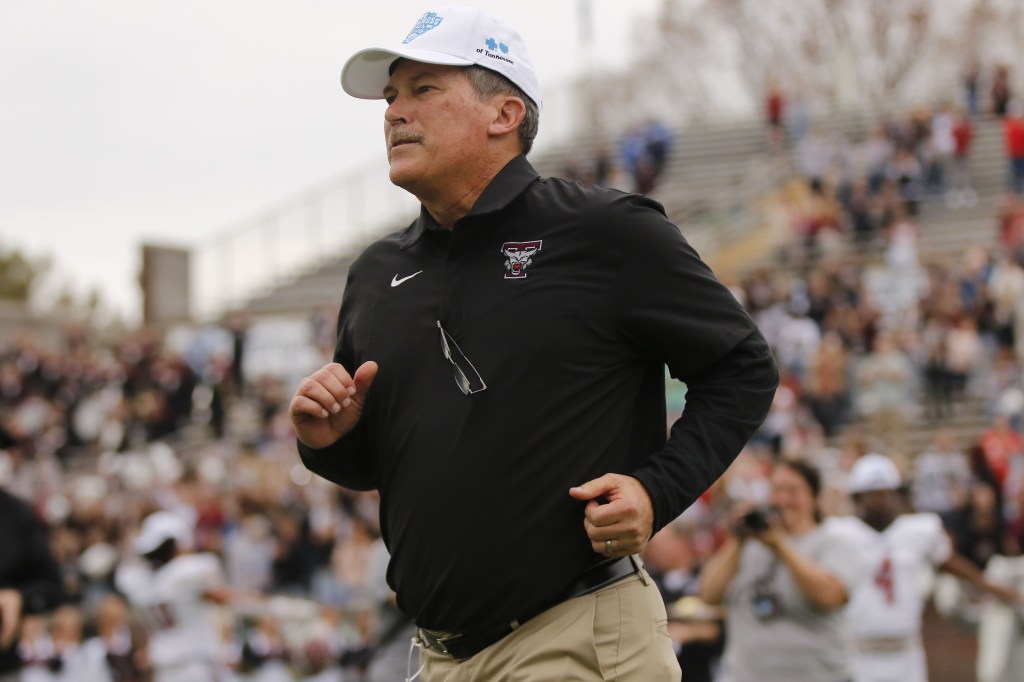
John Olive 2021 State Championship Game Celebration. Photo provided. Introduction
The final year of John Olive’s forty-plus years of coaching ended with his first championship season. Steven Spielberg, Frank Capra or any of the great filmmakers in Hollywood’s colorful history could not have produced a better ending to a brilliant career. Not only did John Olive go out on top, he went out doing what he dreamed of doing as a kid in high school. Football has been his life-long passion.
When he was in high school, John Olive started developing defensive schemes to stop innovative offenses. He wanted to be a coach like Bear Bryant, and his notebooks in high school were full of diagrams demonstrating how to stop the wishbone because Alabama was running it very successfully. Although he admired coach Bryant, his beloved Tennessee Vols could not stop Bryant’s wishbone. When asked why he chose football as his life’s profession, John Olive simply replied, “Why not football!”
One might say that Olive was coached for life in high school by Maryville head coach Ted Wilson and assistant coaches Don Story and Lynn Brown. Football became a passion for John Olive in high school, and his football coaches made a lasting impression. Olive said, “I would not have been coaching in that championship game without the influence of these three men in my life. I was truly blessed to have been coached by them and to know them.”
Two key components of football appeal to Olive more than all the others. He said, “I love the game. It is a mixture of toughness and at the same time you have to be smart because it is a game of schematics as well.” Ask anyone who coached against Olive to describe his Tullahoma teams, and a response would undoubtedly include comments about Tullahoma’s team intelligence.
Olive describes football as a battlefield, a constant conflict of one-on-one battles that transpire on every play. Teams have to collectively win individual battles to win games. He said, “Someone is trying to block you, or you are trying to block him. Someone is trying to tackle you, or you are trying to run the ball. You are carrying out a fake to get rid of that one guy.”
The interdependence on each other is what makes football so special to Olive. He said, “It is a team game. I think it was Joe Paterno who said that all great running backs look the same as other backs when there is no place to go. When I was drawing up defenses in high school to stop the wishbone and triple option, I had not yet figured out it is the Jimmy and Joes, not the Xs and Os that determine whether or not you can stop it,” Olive said.
In 2021, John Olive had the coaching staff, the X’s and O’s, and the Jimmys and Joes to win a championship for the first time in his career. It was also the first state championship for Tullahoma High School football. The championship came during John Olive’s 29th and final season as a head coach at Tullahoma. It was an ending that a young John Olive in high school may have dreamed of happening, but no one was predicting a championship after Olive suffered back-to-back 0-10 seasons in 2015-16.
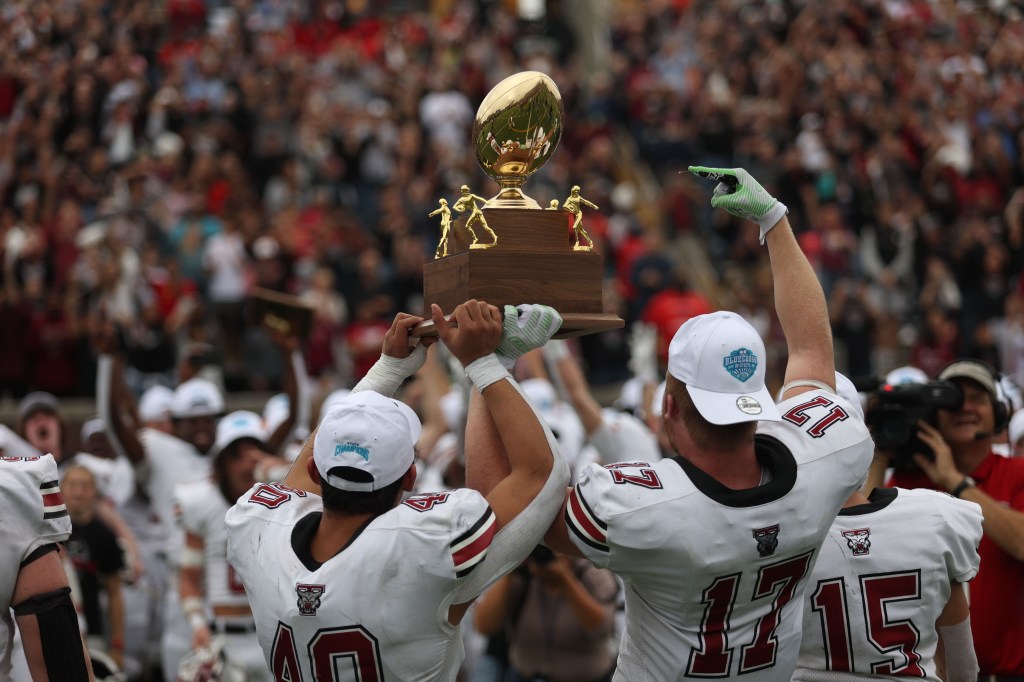
Photo provided. Background to the Championship Season
The general public was unaware of John Olive’s behind the scenes plan to retire in 2021 as head football coach. Olive was both Athletic Director and head football coach from 2017-2021. According to Olive, “I started planning my retirement a year before the championship game. I first notified my principal, Jason Quick in July of 2020 that the next season would be my last as head coach. I reiterated my decision to retire later in December of 2020 to Mr. Quick and for the first time to my superintendent, Dr. Catherine Stephens. Will I come back (someday) as an assistant if one of my sons becomes a head coach – that is a possibility.”

Future coach Jared Olive in 2007. 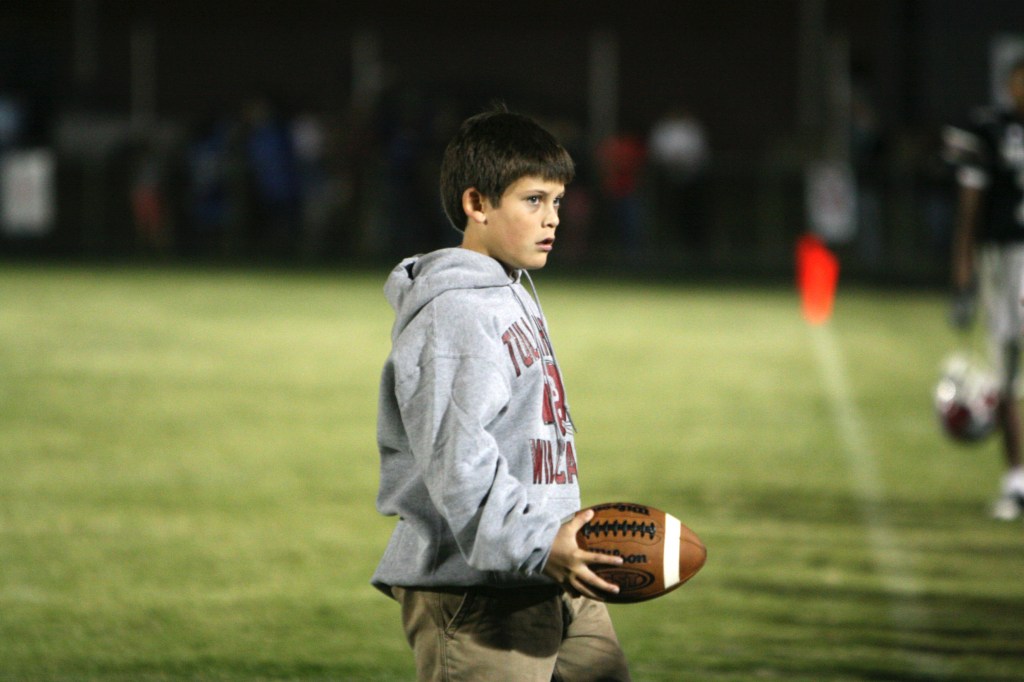
Future coach Caleb Olive in 2007. Olive continued, “If my sons had not been coaching with me, I may have retired in 2018.” That was the year Tullahoma had fully rebounded from the 0-20 years (2015-2016), and the team made it to the state quarterfinals. At this point in 2018, Olive actually felt vindicated after recently going 0-20. Maplewood beat Tullahoma in the 2018 quarterfinals and then got destroyed by Greeneville. Olive reflected on his feelings after the 2018 season, “Reality sets in, and we assumed that we would never have the talent level to win a state championship.”
Turning the Corner in Defeat
The 2016 (0-10) season had a pivotal ending. Olive remembers, “We were not terrible. We still connected with the kids. We asked the team before the last game that season against Giles County if we were going to play to end a second 0-10 season or play to win our first game.”
According to Olive, “Our kids played their hearts out. We still got beat. We had a turnover late in the third quarter, and Giles County goes up by two touchdowns. We cannot close the gap. It had been a game where we tied it up, and they would get ahead. We would tie it up again, and they would get ahead. Yet, I knew then that we had not lost the young men.”
Season Records Improve
Tullahoma football improved after the 2016 season.
2017 – 5-5
2018 – 10-3
2019 – 7-4
2020 – 12-1
2021 – 15-0
Quantity and Quality – Keys to the 2021 Season
Olive explains his championship team’s success in clear terms. He said, “As we got a quantity of quality athletes, because in our sport you need a quantity of good athletes, I knew that we could get back to competing and doing well. You have to have both – quantity and quality. I am not talking about elite. If you only have one or two really good football players, your team won’t look very good. The championship team was a good example. We had a quantity of quality athletes who beat teams who had elite athletes but not the quantity of good football players.”
Moreover, Olive stressed that although his team did not have elite players signing D1 scholarships to play at the next level, he had an abundance of quality players at Tullahoma in 2021. For example, Olive mentioned Will Partin who did not get offers to play football anywhere in college, but made play after play in game after game for Tullahoma in 2021.
Olive stressed that opponents could not take away one player to stop Tullahoma’s offense. He said, “We had depth of quality players at every position. Throughout the playoff run, we had several receivers making big plays. Brody Melton made big plays. Joe Duncan made big plays. Jacob Dixon made big plays. They all made big plays in the playoffs. We had one receiver, Krys Uselton whom we hid on defense during the regular season. He did not start on offense until the playoffs.”
Not only did Tullahoma have four quality receivers, and they also had two hard-nosed running backs, Jaxon Sheffield and KeiShawn Cummings who could catch passes. Olive highlighted that the leader of his offense was quarterback Ryan Scott who was 27-1 as a starter.
The Coaching Years
Carson-Newman University
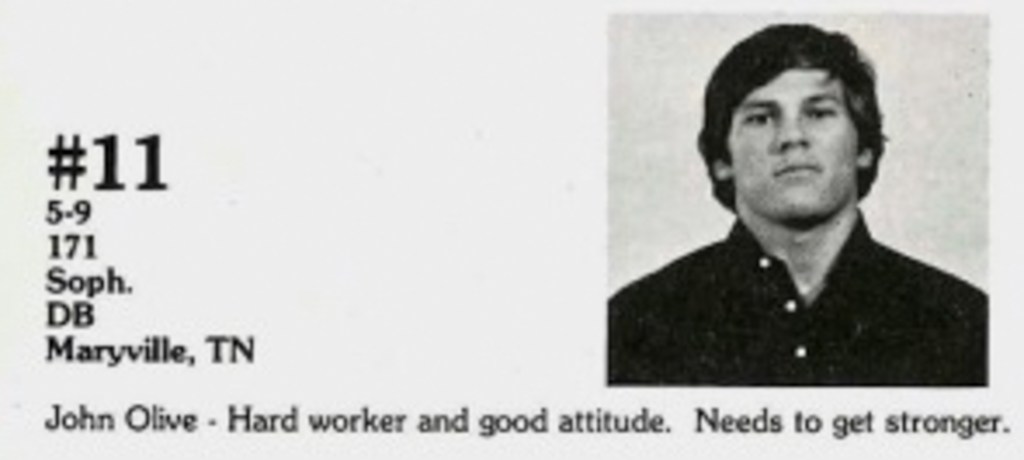
John Olive’s coaching career actually started in college when he became a Student Assistant in 1979 at Carson-Newman University after an injury ended his playing career. The next season he became a Graduate Assistant on Ken Sparks’ first team at Carson-Newman. After the 1980 football season, Olive took a three-year detour from coaching to work in private business for a wealthy Carson-Newman supporter.
As a Graduate Assistant, Olive and another G.A. were able to live in an apartment at a Walking Horse stable owned by the Carson-Newman supporter, Bill Mullins. In exchange for rent, Olive and his colleague fed horses, mowed the lawn around the barn and other chores. Mullins was impressed with young Olive, and he tried to lure Olive to come work for him. The third time Mullins offered Olive a job, Olive accepted.
Loudon High School 1983-1984

Loudon assistant coaches, left to right, John Olive, Larry Bridges and David Clinton. 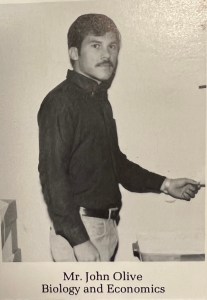
Olive became a closer and was moving up in Mullins lucrative umbrella of businesses. It was a colorful and profitable three years for Olive working in private business out of Knoxville, but he decided to make a change. In 1983, Olive had the opportunity to reenter coaching at Loudon High School as an assistant coach on Henry Blackburn’s staff. The introduction to coaching high school football came with a big surprise – budget cuts.
During his first year at Loudon, Olive started an FCA group at Loudon High School with the girls assistant basketball coach, Randy Davis. Before spring break in 1984, there was a school board meeting, and Davis was to be moved to Lenoir City. Olive went to the school board meeting to speak on his friend Davis’ behalf with the intent at keeping Davis at Loudon High School.
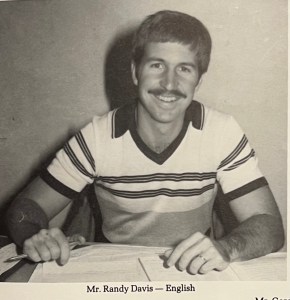
Unknown to Olive, the school system was planning to make personnel cuts. It was a tough economic period for Tennessee government state-wide. The first item on the school board meeting’s agenda was to cut seven personnel positions, and John Olive’s name was one of the seven. Only 10 minutes had passed in the meeting that began at 7:00 p.m. when the board quickly announced that they had to take a break as the small crowd of about 30 people became vocally opposed to the proposed cuts. Within an hour, there were 200 to 300 people trying to get into the meeting, and sheriff deputies were summoned to control the crowd. The meeting did not end until 11:00/11:30.
Of course, there were no cell phones in 1984, but the word quickly spread that John Olive and other teachers were going to lose their positions. The day after the meeting was a Friday, the last day before spring break, and it also happened to be pay day. Checks had to be physically picked up by teachers at the school. Olive asked his head coach Blackburn if he would pick up Olive’s check. Olive was in no mood to attend school the next day, and he would meet the coach on campus to get his check.
There was another surprise the next day for Olive when he dropped by Loudon High School’s campus after lunch to pick up his check. Coach Blackburn and a salesman from the Athletic house greeted Olive with some shocking news. That morning, students refused to go to classes because John Olive was being cut from the school staff. Students congregated in the gym and auditorium, refusing to attend classes. Knoxville television stations had been there to cover the student protest.
The only way students were persuaded to go to classes was a promise from the superintendent to the principal that he would meet with a committee of students to discuss Olive’s future with Loudon High School. Olive finished out the year as a Biology and Economics teacher. His position for the next school year was a casualty of the budget cuts.
The brush with budget cuts and losing his job motivated Olive to apply for coaching positions after spring break. Samford University had decided to reinstate its football program, and Samford appealed to Olive because he had a sister living in Birmingham where the university was located. Something crystalized during that rocky year at Loudon High School for John Olive. He had a major revelation, which he stated, “I knew that I wanted to be developing young people instead of developing pieces of property with older people.” From that point forward, John Olive was a football coach.
Nevertheless, Olive was about to soon learn that coaching at the college level was not any more secure than it was at the high school level. Budget cuts would once again have an impact on Olive’s career at his next coaching stop.
Samford University
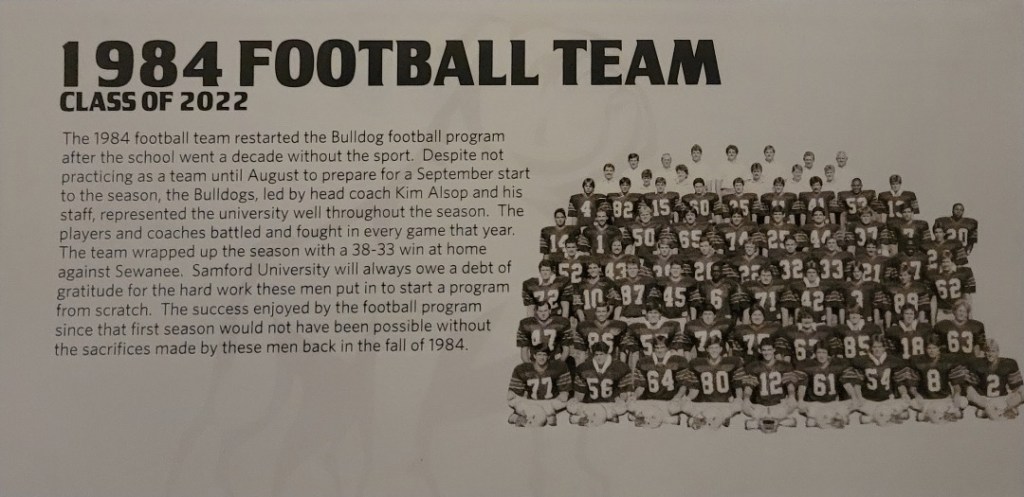
The 1984 Samford University football team was inducted into the Samford Athletics Hall of Fame in 2022 for restarting the football program from scratch with hard work that led to future success in the program. John Olive made one-third the amount of income at Loudon High School that he made in private business working for Bill Mullins, and that didn’t include his business expense account and company car. At Samford University, Olive was earning half of what he was making at Loudon High School. The college job was technically part-time with the possibility that at least two coaches would be elevated to full-time coaches before the next season.
As young John Olive embarked that summer on his commitment to coaching at Samford University, he married his wife, Cherie. Olive’s father was concerned about his son’s income reversals in his new coaching career, and he told Cherie, “If he does anything like this again, we will have him put into a facility.” John Olive believed that his first year at Samford would be part-time, but would become a full-time position in the near future.
Fortunately, Olive’s parents did not have to put him into a facility; however, coaching at Samford was a tough transitional period for John and Cherie. Samford University cut at least $50,000 – $60,000 from the football budget after Olive’s first season. There was no money for full-time positions after the first year. Laverne Farmer, the AD and Business Manager for the university told the coaches about some part-time jobs for the summer after announcing the budget cuts. The prospect of part-time summer jobs to supplement a part-time coach’s income did not sit well with the assistant coaches at Samford.

Samford assistant coaches in 1985, left to right, John Olive, Scott McClahan and Randy Mouser 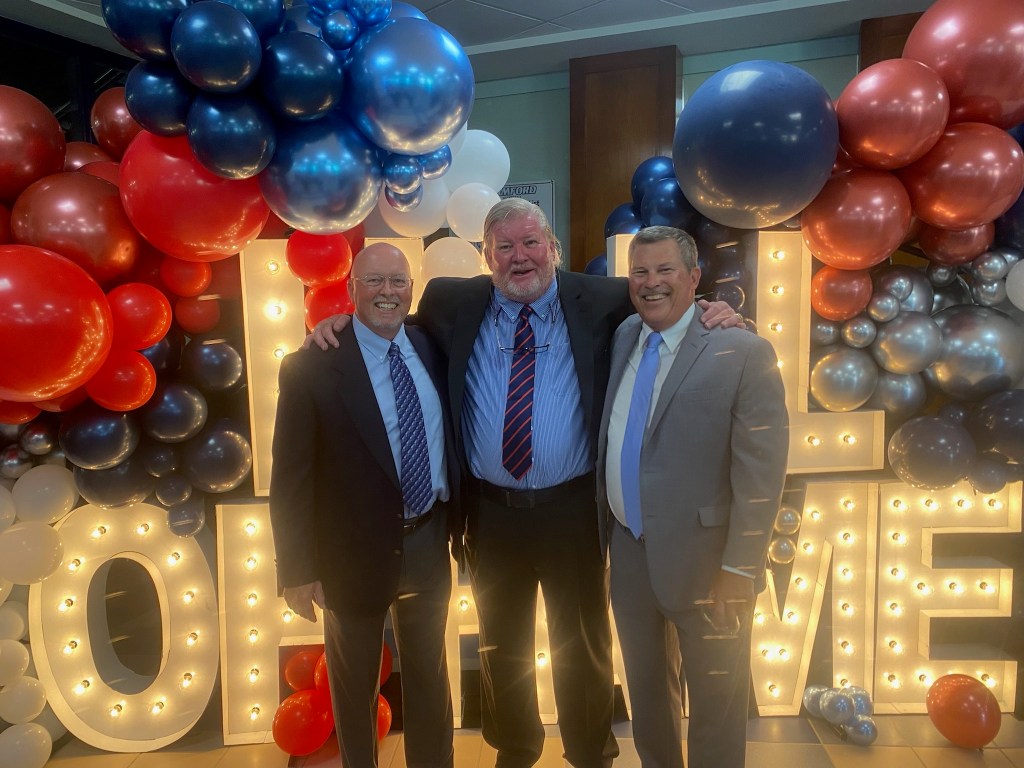
Assistant coaches at Samford University, left to right, Randy Moser, Scott McClahan and John Olive at 2022 Samford University Hall of Fame banquet. Olive, a man of strong faith and Christian convictions, believes that God was taking care of his future as he and his wife struggled financially during the Samford years. Heating their apartment during the first winter was a challenge. They had budgeted only enough money to heat the apartment with a kerosene heater. Temperatures dropped that winter down to zero in Tennessee and single digits in Birmingham. The Olives ran out of their budgeted heating money before the first week of January ended.
They had moved their mattress into the living room with the plan to heat only one room of the cinder block apartment, but the extreme cold weather required more heat than they anticipated. John Olive remembers laying on the mattress in a cold, unheated apartment praying that he would find extra work somehow to to provide extra income to pay for more kerosene. One morning Olive heard water running in the vacant apartment directly below and reported it to Samford’s housing department. The housing department discovered that the water pipes in the vacant apartment below the Olives had frozen and broken during the frigid temperatures.
The university housing department repaired the pipes and turned on the gas heat in the apartment below to ensure that the pipes would not freeze again. The vents for the heat in the downstairs apartment were in the ceiling, and fortunately, the Olive’s apartment had heat coming through their floor. Olive said, “It was another example of how God meets your needs.” The next year Olive was in charge of the married housing apartments for the university and heat was provided in his and Cherie’s apartment as part of the job’s compensation.
Once again, John Olive started updating his resume and looking for a new coaching position. The seeds for his next coaching job were actually planted during the first game of the 1985 season, Olive’s last season with Samford. Samford opened up the season at Sewanee, the University of the South. The Superintendent of Maryville Schools was at that game.
The Maryville Superintendent happened to be a Sewanee alumnus, and he knew that Olive had graduated from Maryville High School. Several months after that game, Olive was putting together his resume in the spring of 1986 at Samford, and out of the blue, the Superintendent contacted him and asked him if he was interested in coming back to Maryville High School. Olive reflects, “It is how God works some things out. I see that in hindsight.”
A couple of interesting anecdotes during Olive’s time at Samford. The first is the fact that the game the Superintendent saw Olive coaching for Samford at Sewanee, Samford lost to the University of the South. That was an especially discouraging loss because the University of the South was the only team Samford University had beaten the previous season.
The other interesting anecdote is that in 1984, Samford played it first game after reviving the football program with only three weeks of practice against Salem College, which is now called Salem University. Samford lost that game 82-9. Olive and the Samford coaching staff believed Salem tried to get to triple digits on the scoreboard at the end of the game, and Samford played prevent defense to the final whistle. The coach of Salem College was a 28-year-old Terry Bowden, the son of Bobby Bowden. Terry Bowden would later go on to coach at Samford and Auburn. The quarterback of that Salem team in 1984 was Jimbo Fisher who is presently the head coach at Texas A&M.
Maryville High School
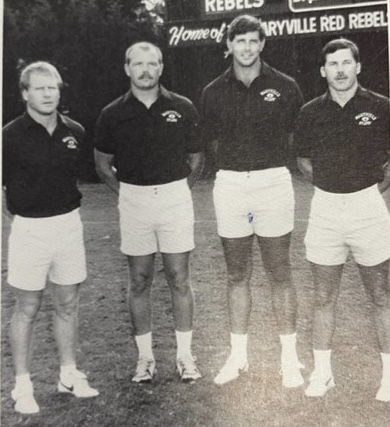
Maryville Coaching Staff 1992, left to right, Ron Summery, Tim Hammontree, Mike Casteel and John Olive. After a two-year stint at Samford University, John Olive returned to his roots at Maryville High School as an assistant to head coach Don Story. Olive said, “Don Story is one of the most intelligent men I have ever met. He spoke three-to-four languages fluently. He was my defensive coordinator when I played at Maryville High School. I would have done anything coach Story asked me to do in high school. If he told me to go out there and do a head-stand, I would have done it believing that it would have helped our team. Coach Story was man who gave generously to both Maryville High School and Maryville College after he made a million dollars in the stock market on a teacher’s salary.”
Story resigned as head coach after the 1987 season, and Emory Hale was named the head coach in 1988. Hale convinced Story to come back as defensive coordinator that year, but Hale resigned after the 1988 season. Olive was promoted to head coach after being an assistant coach for a few years. Olive said, I probably became a head coach before I was ready to become a head coach. We struggled for two years. I told the assistant coaches going into the 1991 season if they would hang with me, I was going to make some changes. The talent pool (at Maryville) was getting better as well. I became a better coach between 1990 and 1991. That was when I probably made my biggest jump as a coach.”
Under Olive’s head coaching, Maryville went 7-3 in 1991, barely missing the playoffs. Only the top two teams in a region went to the playoffs in those days, opposed to the top four who go today. The next year, 1992, Maryville went undefeated until late in the season. The Rebels were undefeated and facing Sevier County in a matchup Olive thought favored the Maryville Rebels.
Looking back, Olive said, “I should have moved the game against Sevier County to the next night because we played in a downpour. They were bigger than us, and our speed was negated.” Sevier County won the game 10-9. Maryville’s placekicker missed his first PAT in three years. Clinton beat Maryville in the first round and lost to Gallatin in the championship game. It was a frustrating ending, but an improvement over the previous 1991 season.
1992 was successful football season for Maryville and head coach, John Olive. However, being a football coach was only part of Olive’s description. Olive was a biology teacher during school hours, and Olive expected to be teaching less biology classes in his fourth year at his alma mater. His teaching schedule was supposed to change from several biology classes to only morning biology classes with P.E. after lunch with a free sixth period. Olive was informed in August of 1992, right before school started, that he would have to teach five biology classes because of the size of the incoming class. Olive didn’t really like having a five-class load in his fourth year as head coach, and that increased class load left a burr under his saddle.
A PREMONITION IN LATE 1991
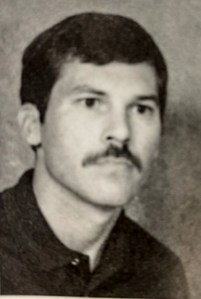
John Olive Maryville Yearbook 1992 Maybe it was a divine premonition, and looking back, Olive said that he sees how God worked things out. The “premonition” may have come when John and Cherie Olive were traveling to Tims Ford Lake over Christmas in 1991. They were spending Christmas at Cherie’s dad’s brother’s new house on the lake. Olive has confirmed the location of the “premonition” by looking at a map. They were traveling on 127 from Tims Ford to Hillsboro on their route back east. Olive said, “We were driving and seeing quail walk across the road in the morning with the sun beaming down on Woods Reservoir. I turned to my wife and said, You know, I could live here. She said, ‘Really?’ I said, Yes, did you see that covey of quail crossing the road? And she said, ‘Yes’.”
John Olive was back at Maryville High School for many months after seeing the quail and beaming sunlight when he learned about teaching five biology classes for the 1992 school year. Olive remembers responding to the news about his class load, “I was huffing a bit and I am in the assistant principal’s office with another coach who was a close friend. I said this class load makes me think of going somewhere else.” The coaching friend said, “Where are you going to go?” Olive replied, “I don’t know, Tullahoma or some place!” Olive said that he had no idea why he mentioned Tullahoma, and he didn’t think any more about it. He taught five biology classes, was coaching football, winning, and having fun. He knew he had more good kids coming up. He said, “The ship is righted (in 1992) and we are moving in the right direction.”
THE CALL
A coach contacted Olive the Tuesday after his Maryville team had lost to Clinton. The coach wanted to know if Olive would be willing to talk to a school in the mid-state. Olive told the coach that he would have to think about it for 24 hours. He was building a new house in Maryville. His first son, Jared was a year-old. It was not an ideal time to move from his hometown and alma mater.
Olive decided to meet the people who had expressed interest in him. In November, he met a Tullahoma businessman, Pat Welsh and Dr. Embry, Tullahoma’s Superintendent of Schools at a hotel in Athens, Tennessee. Olive thought he was going for an interview, which may have been the original plan, but he left that hotel with an offer to be Tullahoma’s next coach.
When Olive won a state championship at Tullahoma in 2022, Ronnie Carter, the TSSAA Executive Director in 1992 called Olive to congratulate him. During that call, Ronnie Carter said, “I guess I will take a little credit for you being at Tullahoma.” Olive said, “How’s that?” Carter replied, “Well, Don Embry called me wanting to know some good coaches around the state (back in 1992), and you are one of the coaches I named.” Olive commented, “This confirms what Dr. Embry had previously told me.”
THE DECISION
Olive is not sure how long the process lasted, but he does remember that it was long enough for Tullahoma to start interviewing other people for the head coaching position. The weekend after the meeting in Athens, John and Cherie stopped in Tullahoma on the way to the football state championships at Vanderbilt University. They met Dr. Covington, who was the principal at Tullahoma High School. The school had asked a realtor to show John and Cherie houses and around the town.
Olive reflects on that time period, saying, “I wonder why I am even talking to anybody. We are building a new house that is supposed to be ready in January. I go, okay God…I can’t figure this out. My prayer is that you speak to me through my wife. I did not tell my wife about that prayer, and I don’t know how many days I prayed that prayer.”
A few weeks later, John Olive sat up in bed around midnight and said, “I don’t know what to do.” Cherie said, “I cannot tell you why I feel this way, but I feel as though it is a door we are supposed to walk through.” Olive turned to his wife and said, “I think you are right.” He picked up the phone and called Dr. Embry, and obviously got him out of bed. Olive said, “If you will still have me as your coach, I will come to Tullahoma.”
Dr. Embry hired John Olive, and soon afterwards, Olive was in Tullahoma. Olive said, “MLK Day in 1993 was my first day here (in Tullahoma), and to my surprise, we are in school. Welcome to middle Tennessee!”
Retirement from Coaching
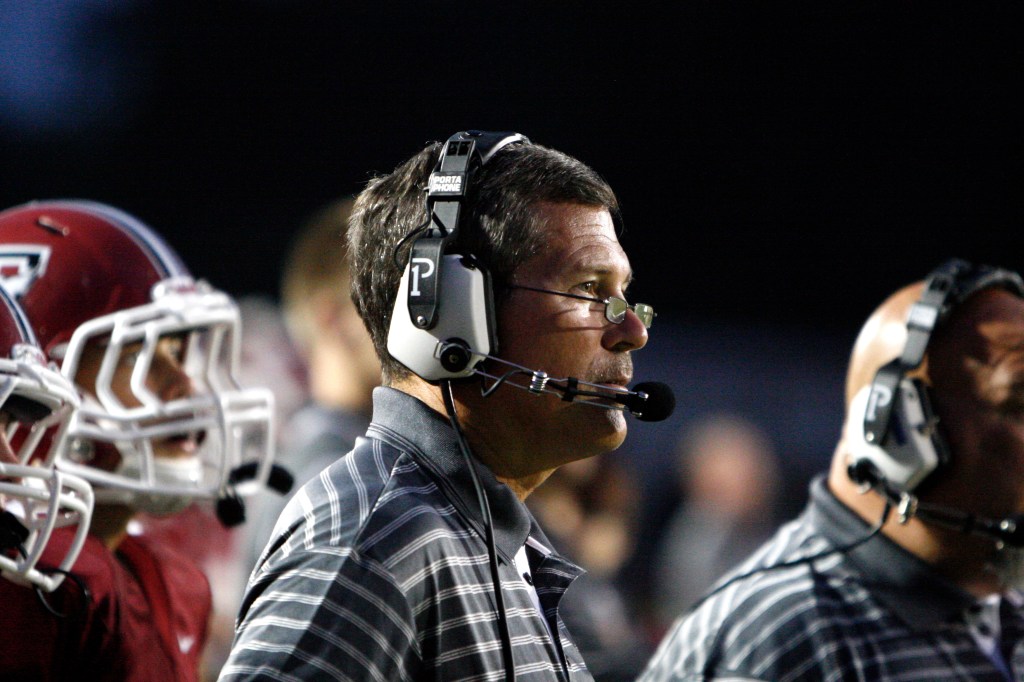
John Olive coaching during a Tullahoma football game. “Old soldiers never die, they just fade away.” – Gen. Douglas MacArthur
John Olive described his decision to retire, “I enjoy the coaching part, but I did not want to become a drag on the program. I did not want to be coaching from a golf cart like I have seen so many older coaches have to do. I am not saying that is wrong; I am simply saying that is not something I wanted to do. Plantar Fasciitis is something I have battled for the past 15 years, but since I have had COVID, I cannot get my foot problems under control.”
His physical challenges were real, and John Olive faced what many athletic men face in their later years…pain. Another example of how severe his physical pain had become in recent years was Olive’s struggle to keep water skiing.
Olive said, “I used to water ski, and I wanted to ski into my sixties. A couple of surgeries made me realize that when I skied my last time at 59, I struggled to get back in the boat, and I couldn’t get completely back in the boat. I flopped over and laid on the back platform for 10 minutes before I could finally crawl into the back seat. I sat there for the rest of the afternoon, and I knew that was it. Too many surgeries had brought my skiing to an end.”
Olive’s childhood hero, Bear Bryant battled illness in his final years of coaching, and Bryant died four weeks after coaching his final game in the 1982 Liberty Bowl, a 21-13 victory over the University of Illinois. Bryant announced his retirement when the regular season ended, having finished in sixth place in the SEC, losing to LSU and Tennessee for the first time since 1970. It was an inglorious ending to a remarkable coaching career for Bear Bryant.
Perhaps the sad ending of Bryant’s career was in the back of Olive’s mind when he told his principal, Jason Quick in 2020 that he was going to retire from coaching after the next season, a year in advance of his public retirement. In December of 2020, Olive reiterated to his principal, Mr. Quick that he would retire after the 2021 season. Olive told superintendent, Dr. Catherine Stephens for the first time in December of 2020 that the next year (2021) was his last as coach.
Olive remembers the physical pain of his final season, “Standing on the field during practice was no fun. A fun football team to be around. A fun football staff to be around. Obviously, we are winning and that makes the environment fun. The pain was confirmation that I had made the right decision, that it was time. I could have hung on for a few more years, but I didn’t want to be a hanging-oner.”
Transition to Life as a Full-Time Athletic Director
John Olive was in his fifth year in dual roles as Athletic Director and head football coach at Tullahoma High School when the football team won the championship. 2022 is Olive’s sixth year as AD and his first as a full-time Athletic Director. He describes the transition, “This is a busy time of the year. There is not a lot of down time. I don’t have the super long (football coaching) days of getting in at 6:00 a.m. and leaving at 9:00 p.m. I have seen more volleyball and soccer games than I have seen in my entire lifetime.”
Olive is the Athletic Director over the entire Tullahoma school system which often requires his presence at athletic events five nights a week. He will often get to work at 7:45 and have a lunch at home in midafternoon, returning to school by 4:00 p.m. Once a month Olive will have an early morning meeting with all the high school head coaches at 6:50 a.m. It is something he eventually wants to start with middle school coaches as well.
Olive revealed his focus as an Athletic Director, “As an AD you are trying to put things into place where all of your coaches are working together as a team. They become family…doesn’t meant that you don’t have problems within your family, but you can talk and work things out. We have started meeting once a month. Next year will probably start that at middle schools as well. You work on some things from a big picture perspective. Help coaches know why they are coaching. Give them support. Work on facilities.”
Olive continued, “I have worked really hard the past five years to improve our facilities, soccer and softball in particular. They are on what we call our east middle school campus athletic facilities. I have hit it at a good time because our school board has built up some reserves, and therefore there was some money we could spend to upgrade our facilities.”
Awards
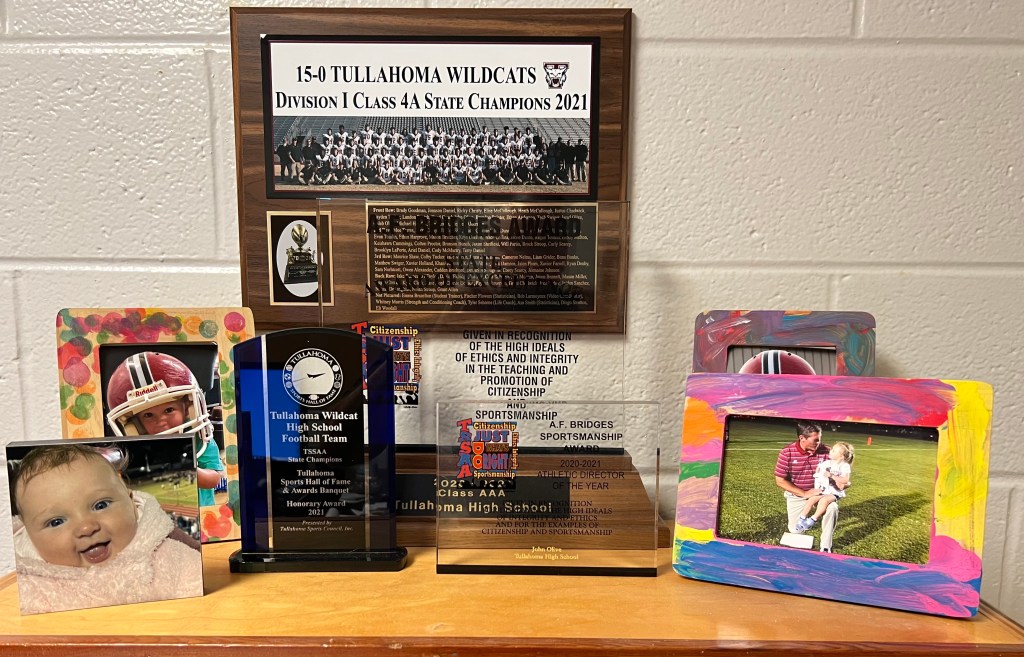
John Olive’s present office. John Olive has won many awards over the years as both a coach and athletic director. He has won the coveted TSSAA A.F. Bridges Award as an athletic director and coach. The award is considered a honor for what is best in high school sports, including sportsmanship and citizenship. He won a MLK, Jr. Award in Tullahoma a few years ago. Last year, Olive won the Tennessee Titans Coach of the Year award.
Olive said, “Most of the awards you get as a football coach are for your staff. The local awards mean something because it means your community appreciates you. The coach awards mean something because of the people you are competing against.”
He continued, “You realize that in the sport of football, it is a group thing. And you learn how fleeting they are. In a year or two, people forget about the awards. The state championship one is real, and it will stay.” Olive also shared a part of his coaching philosophy that he believes led to awards and a championship season. He said, “Do the ordinary things extraordinarily well, and you will do well. I have repeated that often to my team and staff. It is a truth of life, not just a football truth.”
Family Life as a Head Coach
John Olive gives much credit to his wife, Cherie for keeping the home life stable and positive. Olive said, “Cherie has done a great job raising our kids. You live like a divorced person four-to-five months out of the year, and the offseason is not a lot different. I felt like as the head football coach in a small town that it was important for me to be at basketball games and other sports. I went to at least one girls soccer game during our season because I had students in class who were on the team. I have gone to school plays because I had students in my class performing in the plays. I have been to a band concert. I thought it was important as a head football coach in a small town to support kids in other sports and activities.”
Olive continued, “There is a lot of stuff that Cherie did. Instead of leaving kids with Cherie all the time, I carried our kids to games with me, and we sat in the stands as spectators. It was a good opportunity to talk with parents about other things beside football.”
Five Years into the Future
John Olive hopes to be retired in five years. His ambition is to eventually be working with his hands. Olive explained, “I want to be working with Hands and Feet, a ministry in our town that builds wheelchair ramps. That would be a nice way to spend my retirement working on a couple of wheelchair ramps a month, helping people stay in their houses.”
When asked where he will physically be living in five years, Olive stated, “We will be staying in Tullahoma or wherever the grandchildren are – that is what Cherie tells me.”
QUOTES ABOUT JOHN OLIVE FROM FOOTBALL COACHES
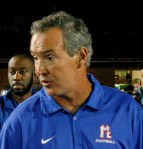
“John Olive is an outstanding football coach, and a better man! Great mentor for all of the young men that have come through that program. I have competed against him when I was at Hillsboro and at McGavock and every time you knew his kids were going to fight for four quarters. To have been at Tullahoma for as long as he has is a testament to his character!”
– Jay Gore, former McGavock head coach and Hillsboro assistant coach, present Goodpasture assistant coach.

“John is the most underrated coach in the state. He was my first encounter to a coach with a staff that knew everything you did and how you did it, and if we weren’t sound and well-coached, we had no chance of winning. Beyond his coaching ability, which is beyond the best in the state, he is one of the best people I know! Of all his accomplishments the one Tullahoma players’ parents should be proud of is that their sons played for a Christian man who really cared about them.”
— Ron Aydelott, former Hillsboro and Riverdale head coach.
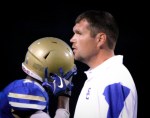
“As a young head coach, I was really impacted by Coach Olive’s influence. He was a class act and one of the most well-respected people in the profession. Throughout my coaching career and now as an administrator, I try to be an ambassador for our youth as he has been during his career. I am thankful our paths crossed as coaches and to still be able to call him a friend.”
— Jason Hardy, former Shelbyville Central head coach and present Jackson County head principal.

“I have known John since 1995. He is an outstanding coach and leader of men. His teams were always prepared. The thing I appreciate the most is that he is a man of integrity.”
– Doug Greene, Coffee County head coach.
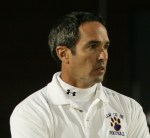
“Always the same guy. I’ve coached against him for 19 years. Have seen them really good, go through a drop in talent and suffer through a couple of 0-10 seasons and then have phenomenal success ending with a State Championship. He has always prepared his teams at a high level and been a class act. I’ll miss coaching against him.”
— David Marston, Lawrence County head coach.

“Coach Olive is one of the really good guys in this business. He did it for the right reasons. He was always supportive of me when I was at Maryville. You would have a hard time finding anyone to say something bad about Coach Olive. It was very fitting that he was able to go out with a state championship. He deserved it.”
– George Quarles, former Maryville High School head coach and present East Tennessee State University head coach.
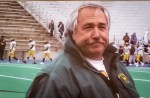
“John deserves the win. A lot of good coaches have come and gone without having the opportunity of playing that one special game. Takes hard work, good surrounding cast of players and coaches and some very good luck.”
– Terry Hemontolor, former Hunters Lane head coach and Hillsboro assistant coach.
-

Harbaugh’s comments are alarming and reassuring at the same time. Harbaugh said what most of us thought about Tua’s re-entry into the game on Sunday. How was Tua Tagovailoa allowed to renter the game on Sunday and allowed to play Thursday night?
The video of a conversation between Peter King and Mike Florio in the story link is very illuminating. The issue of who should ultimately make the decision about a player’s safety regarding concussive issues is at the forefront of the debate. As Peter King states, there is a red badge of courage for players to keep playing and lie about their concussions.
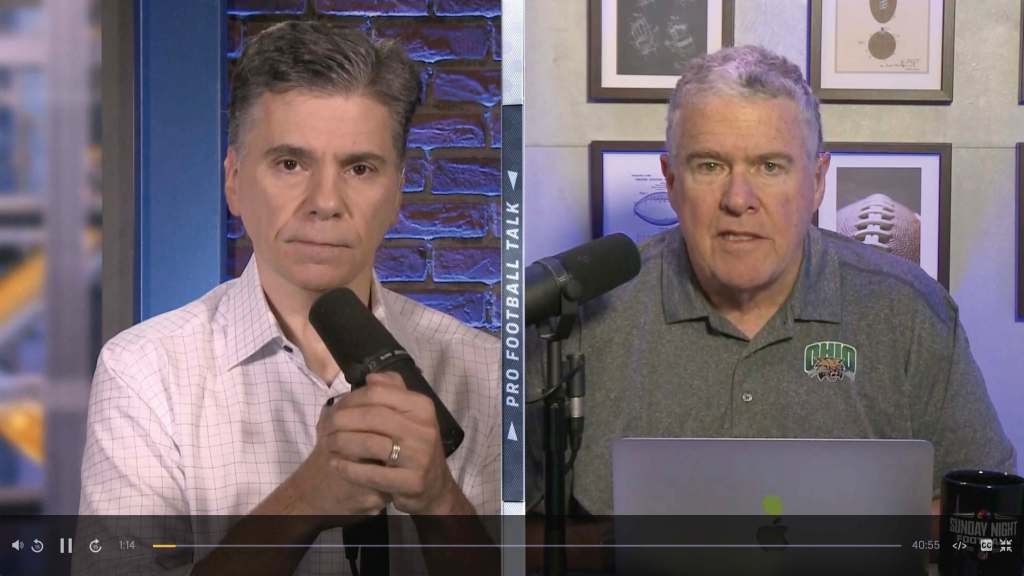
Mike Florio and Peter King discussing Tua Tagovailoa’s head injury. On a high school level, there are protocols in place, but anyone who has attended high school games over the years will attest, there are head injuries in football games. To a fan in the stands, it is very difficult to accurately ascertain what actually happens to a player. Millions saw Tua Tagovailoa suffer some head trauma on Thursday night’s NFL game, yet he was cleared later that night in a Cincinnati hospital and flew back with his team.
Head concussions is a lingering issue that will not go away in football on any level. As reluctant as players, coaches, and fans are to deal with concussions, it is an issue that must be fully evaluated again with standard medical protocols that protects players at every level of competition.
Peter King sounds an alarm by stating that if more guardrails are not in place to protect players at every level, you are going to see colleges and schools starting to drop football. What has happened to Tua Tagovailoa should create more changes in the protocols to protect players from head trauma.
-
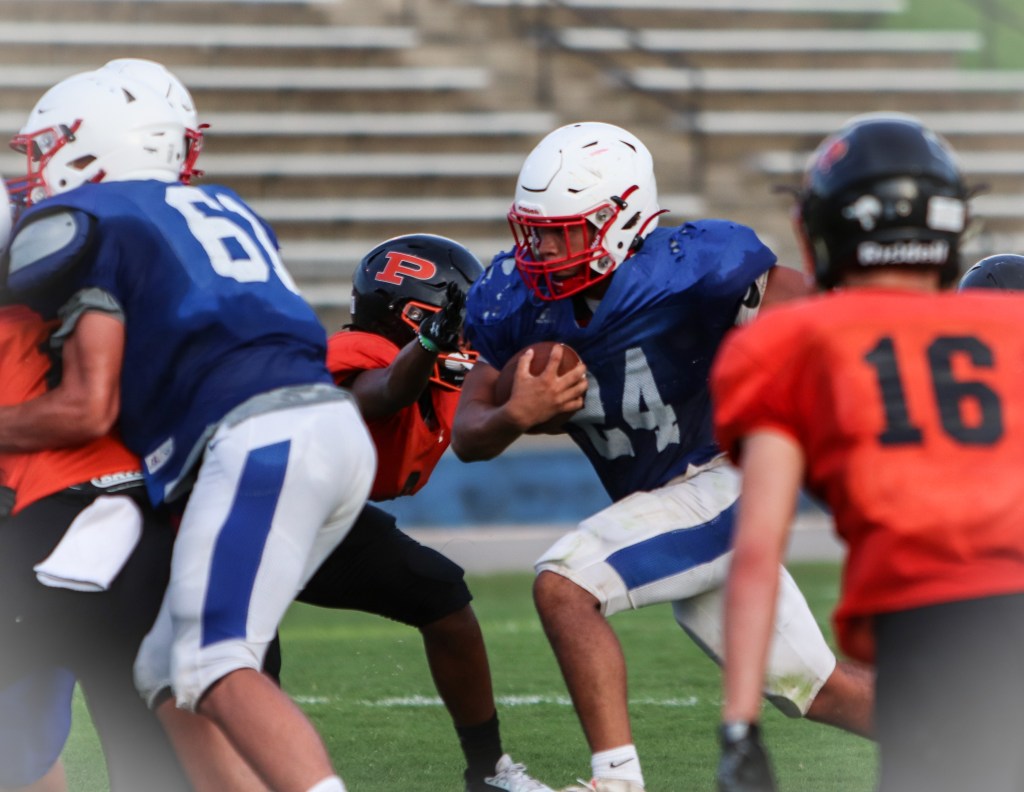
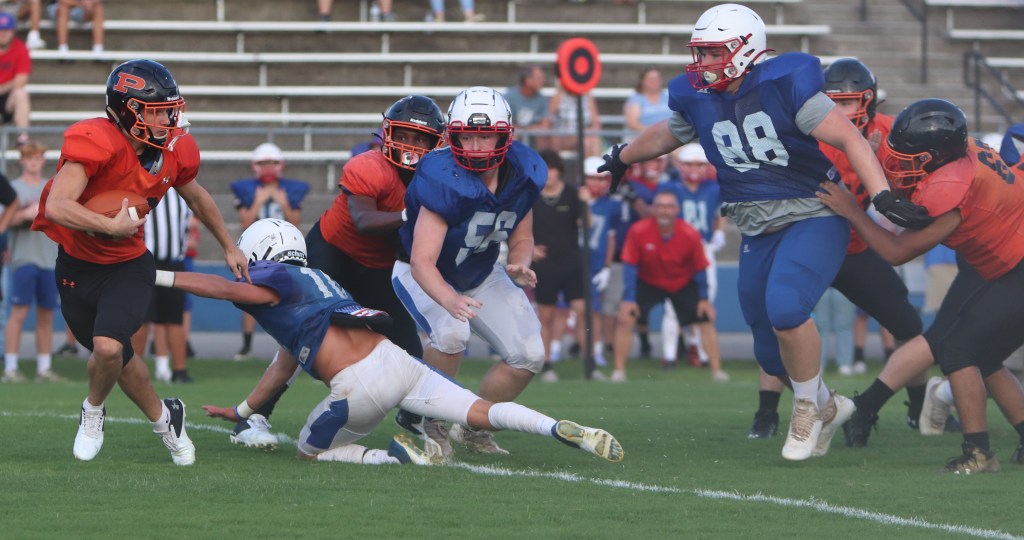
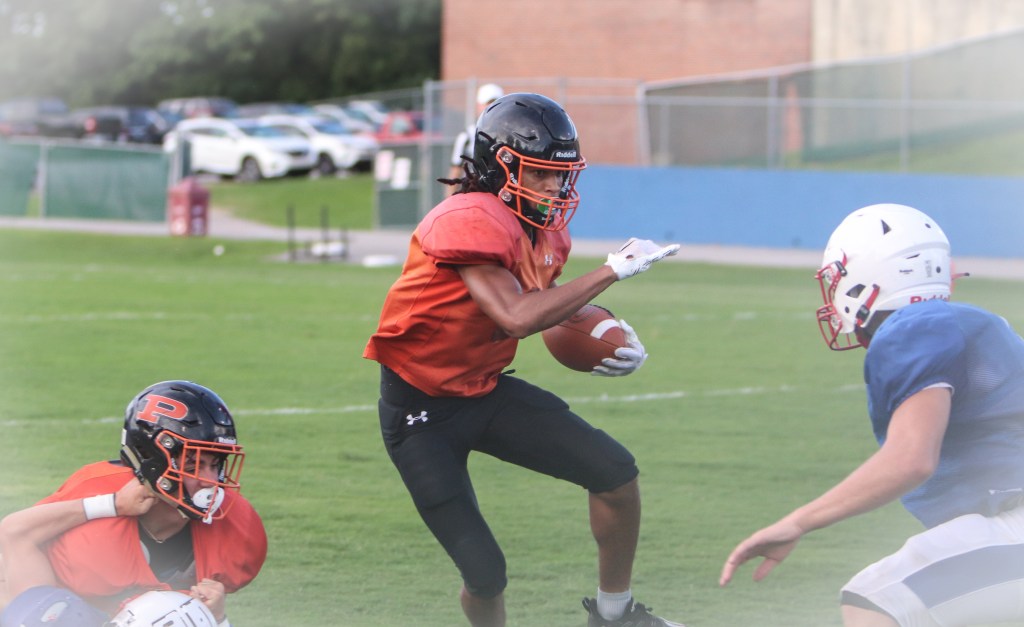
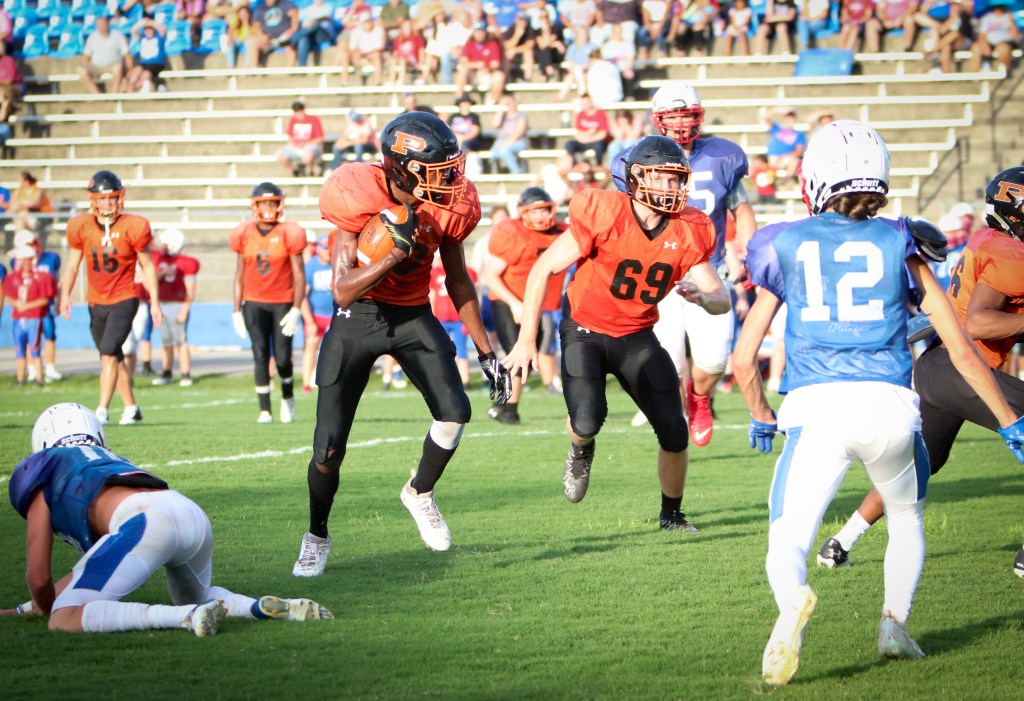
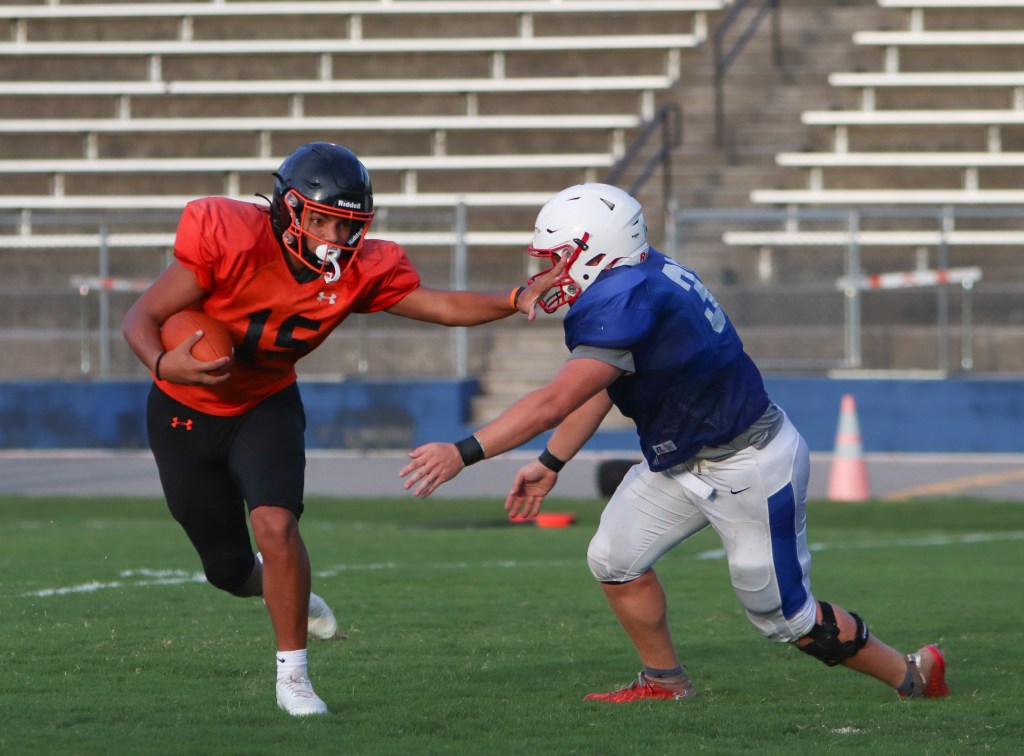
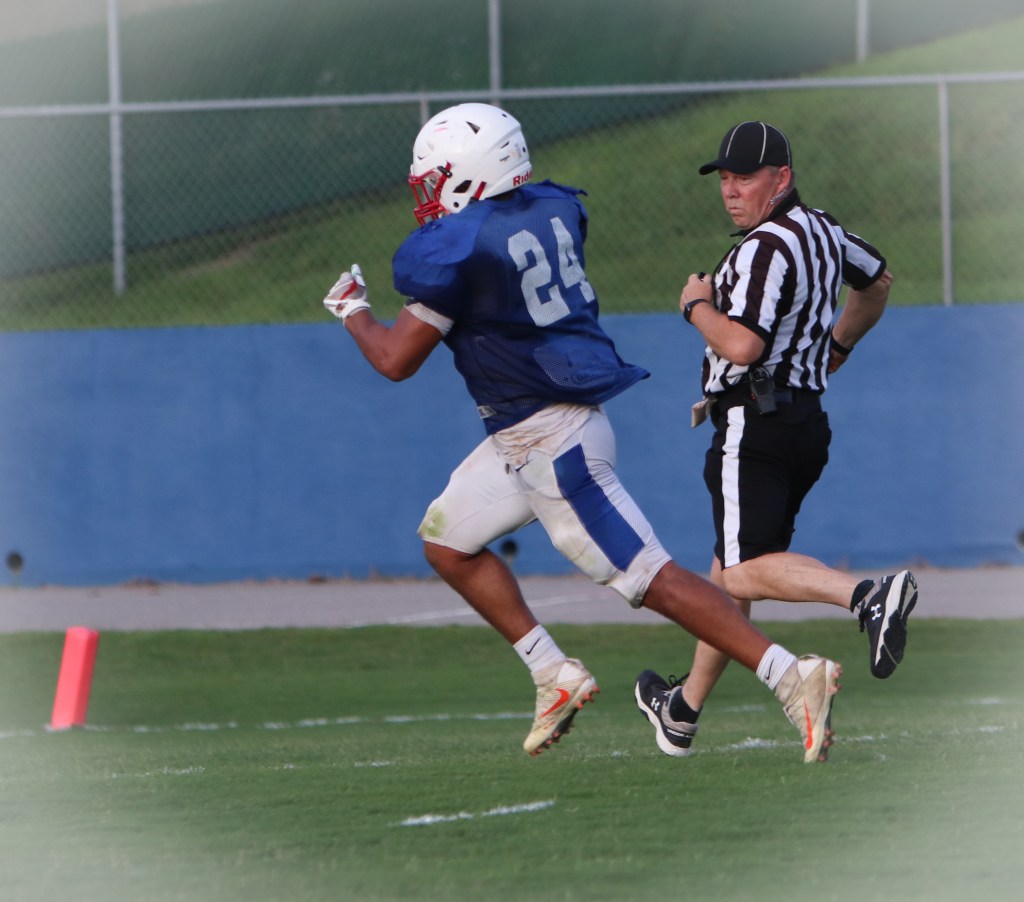
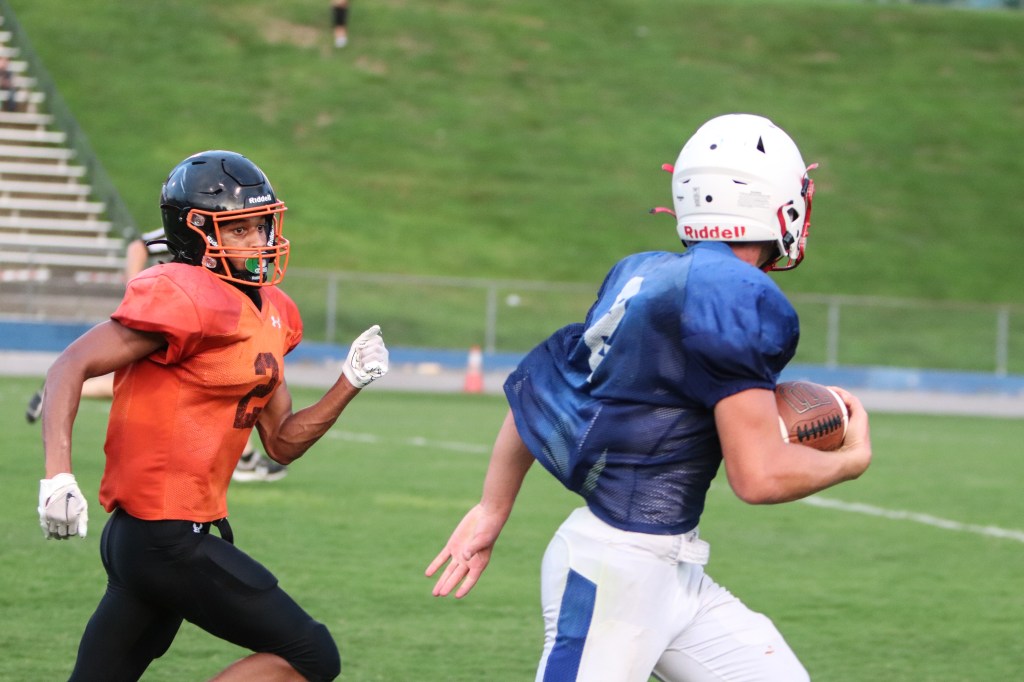
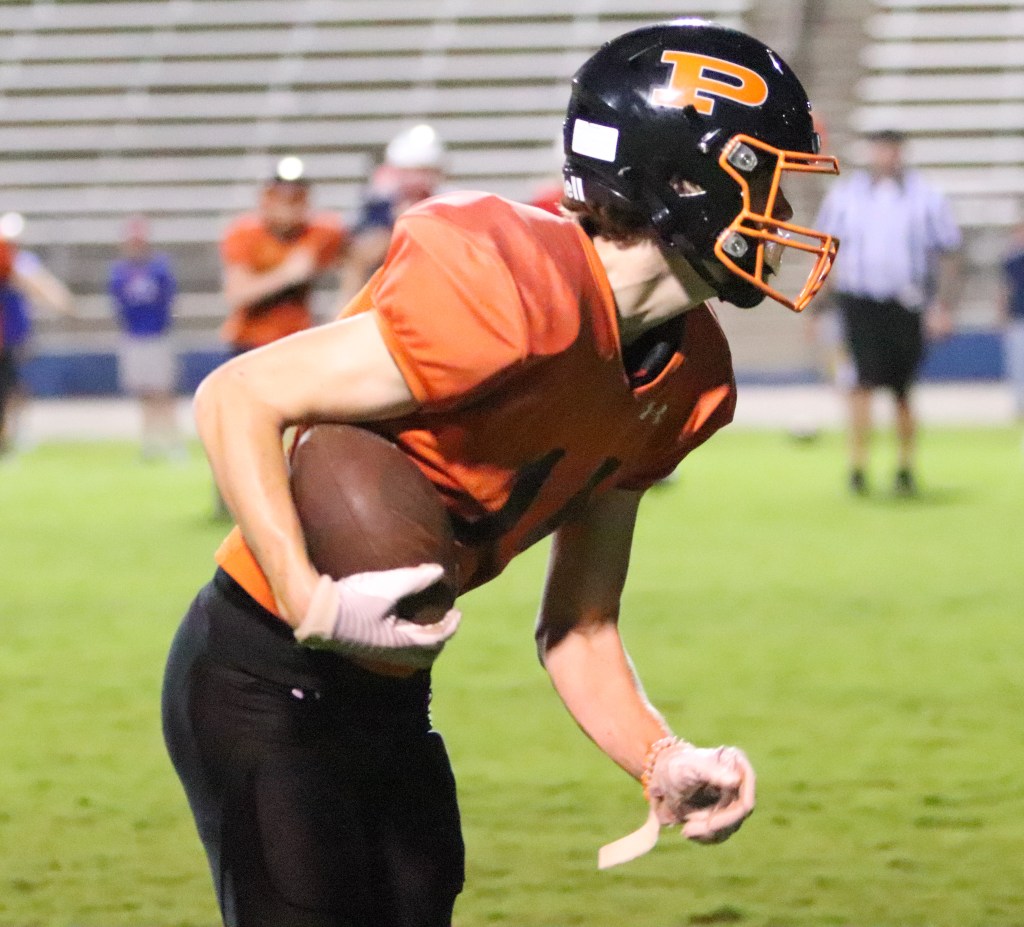
Nunley Stadium August 5-2022
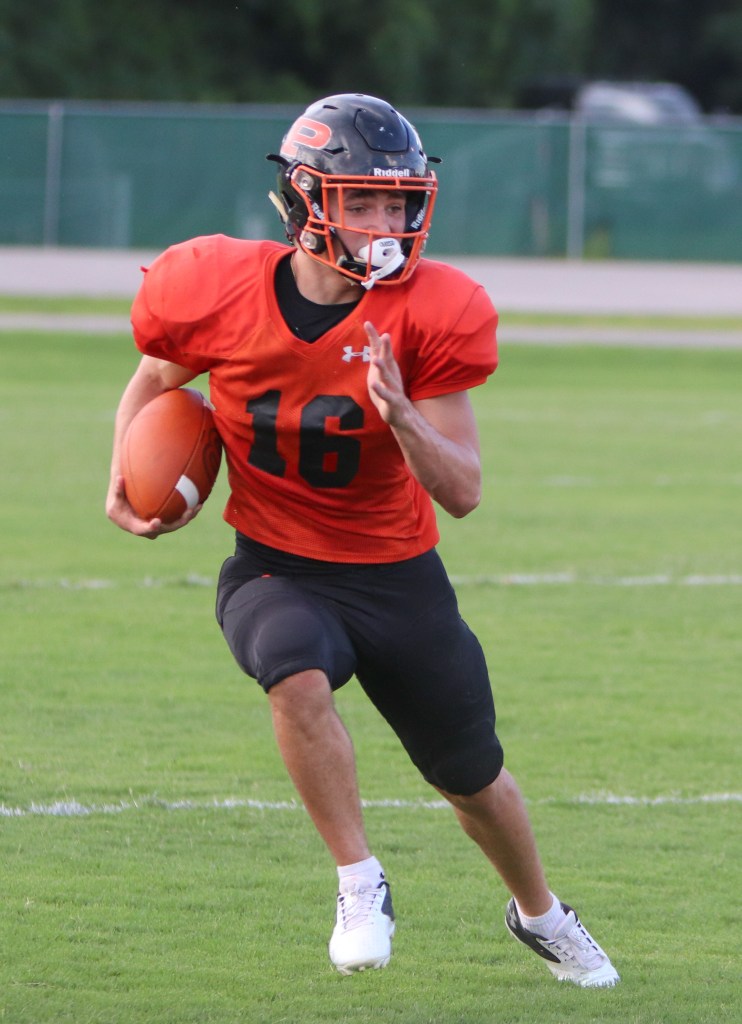
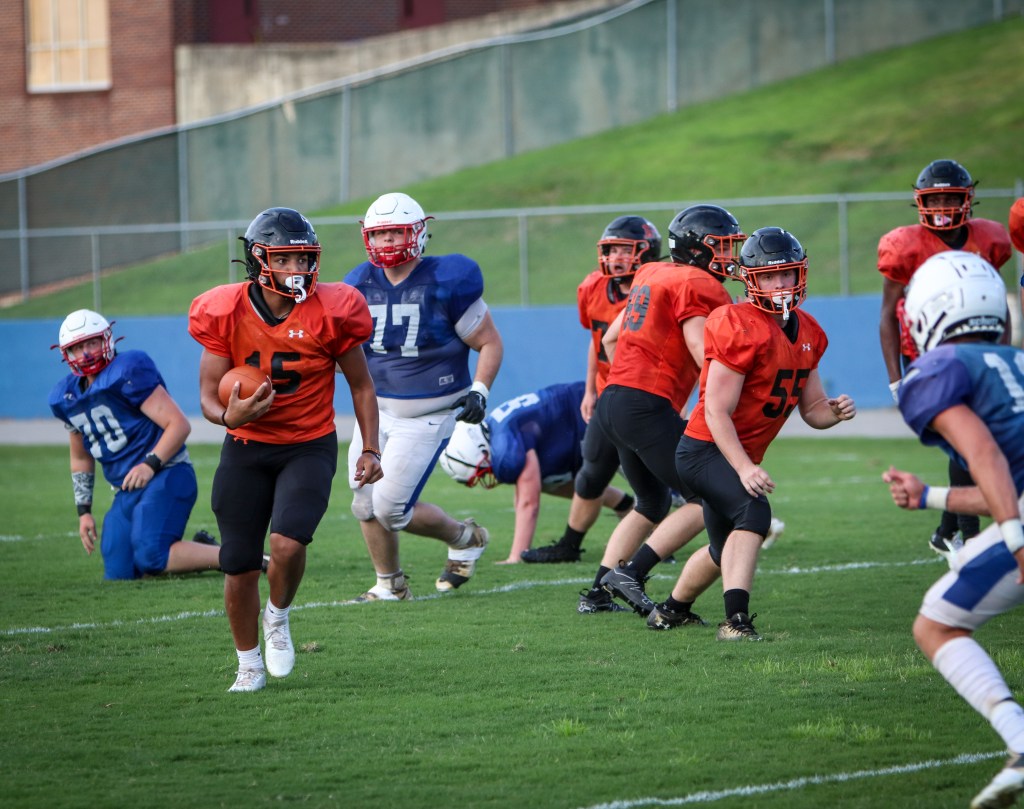
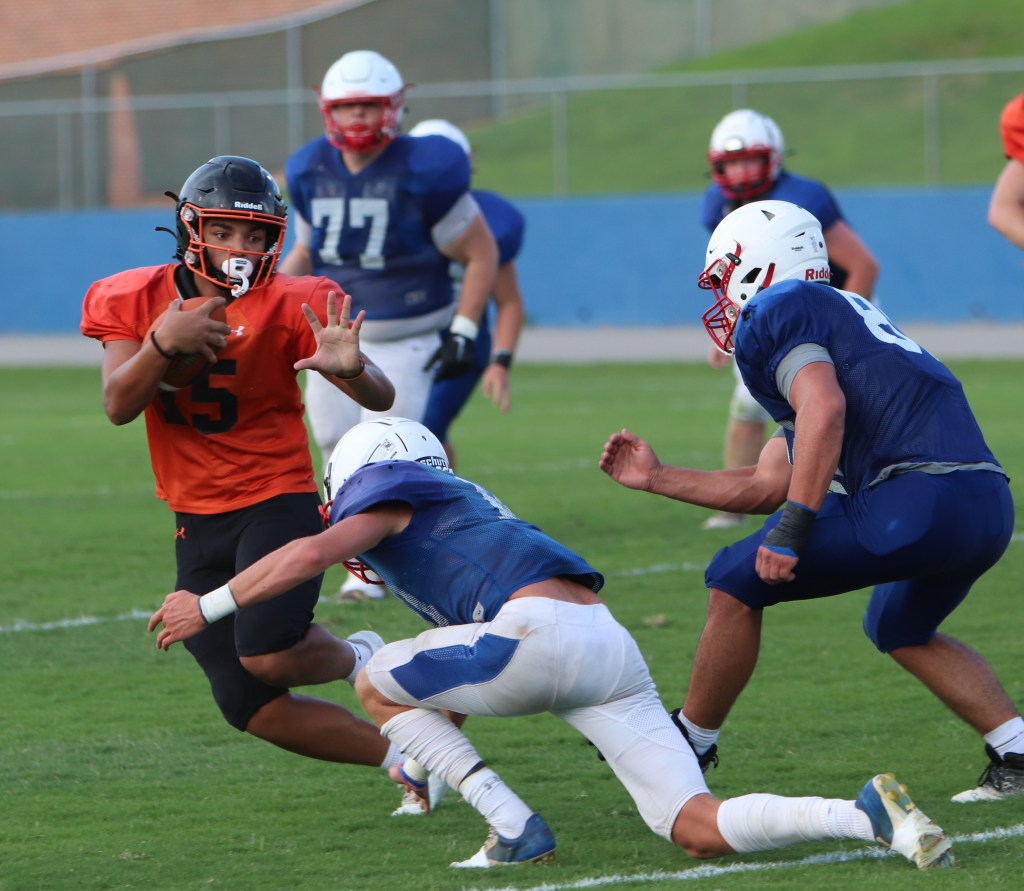
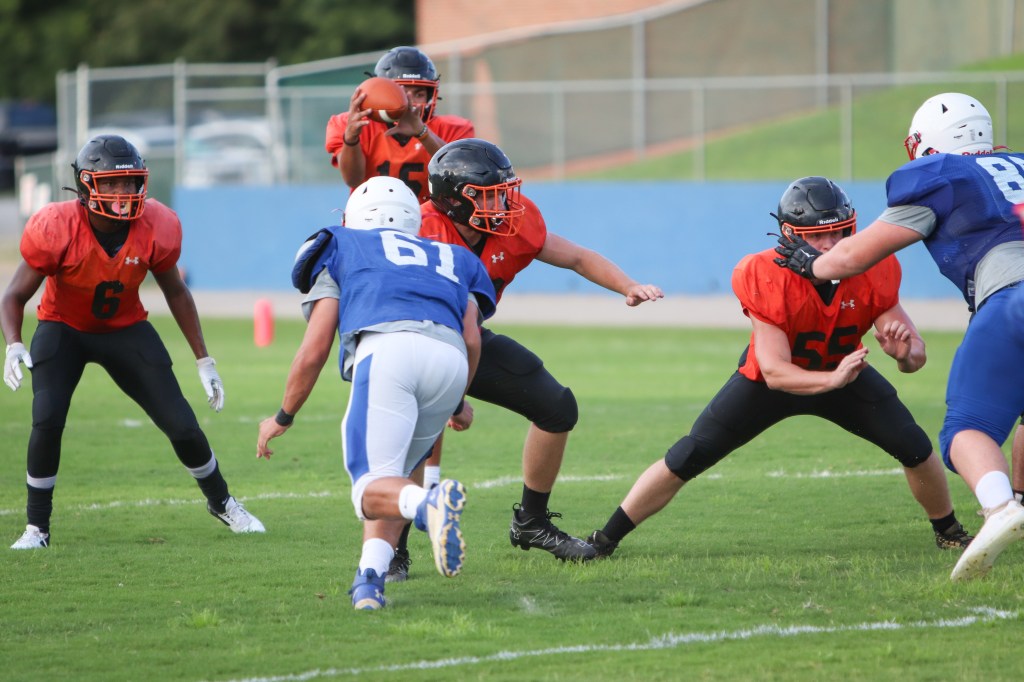



 BD Newsletter
You must be logged in to post a comment.