AUTHOR, STREET CHAPLAIN, ACTIVIST & NONPROFIT LEADER
BY BRAD DURHAM
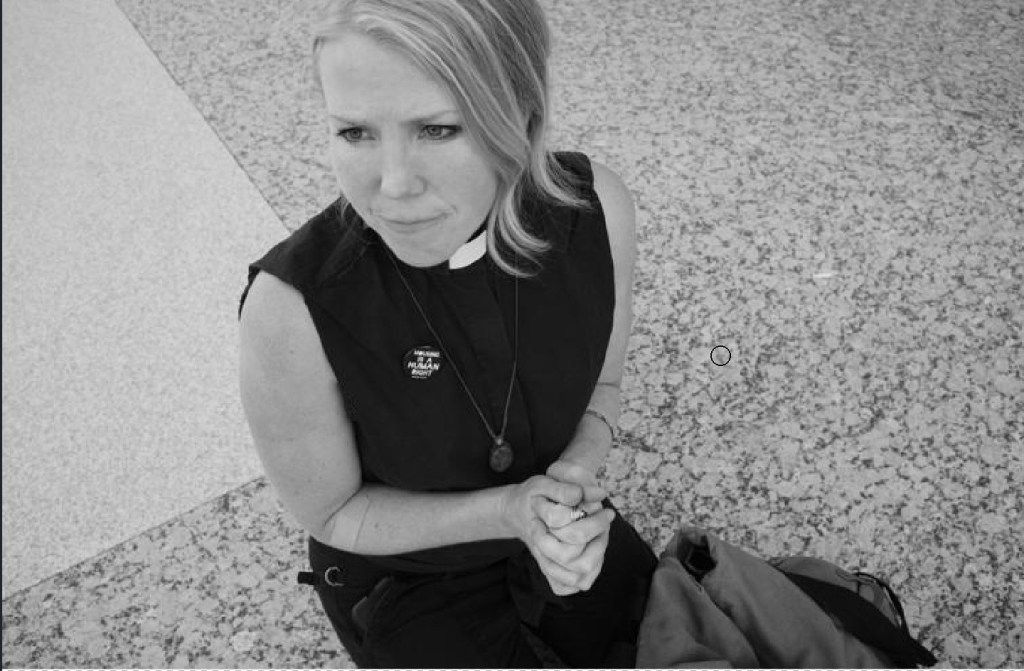
Recently, Lindsey Krinks visited McMinnville and spoke to a group of people working with unhoused individuals in the community. Not only did Krinks travel 70 miles to reach McMinnville, but she has traveled a great distance in her lifetime—going from South Carolina to David Lipscomb University, then to Vanderbilt Divinity School. She has made her way from Tent City to Otter Creek to Legislative Plaza. Throughout her journey, she has undergone transformative experiences rooted in a spiritual quest.
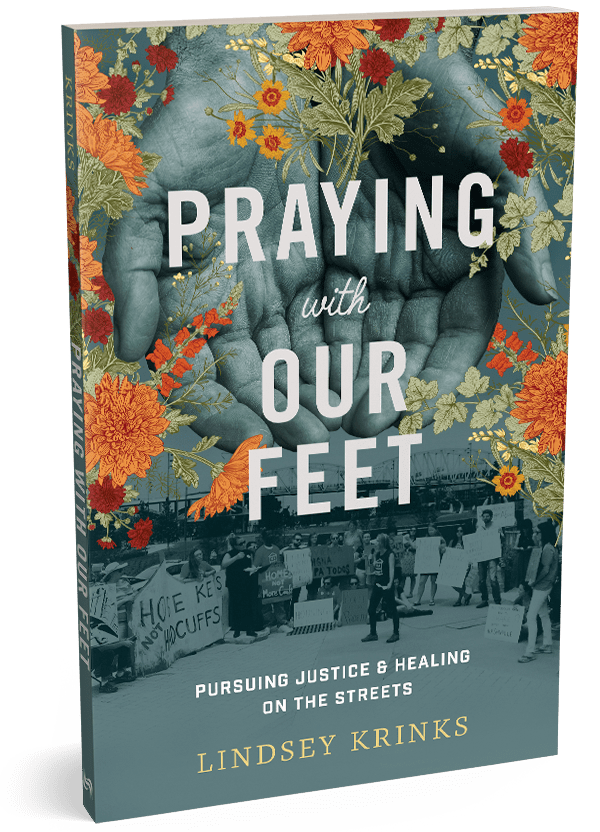
After inviting Lindsey Krinks to meet with us, I read her book, Praying with Our Feet. As I read her autobiography, I couldn’t help but think of Joseph Campbell’s Hero’s Journey. The hero embarks on an adventure beyond the ordinary and returns with a message. Lindsey’s story mirrors this: she has faced moments of almost breaking down physically, mentally, and spiritually—yet she persevered and was transformed. Her drive to serve the poorest of the poor—the homeless—has fueled her journey.
For me, reading Lindsey’s book felt like uncovering stories of saints such as Saint Francis of Assisi and Mother Teresa—people who led lives of profound transformation and became signposts along the journey of imitating Christ.
Lindsey Krinks is the real deal—she is a street chaplain, author, activist, and nonprofit leader. She is the co-founder of Open Table Nashville. I’m grateful she visited us to share her story and an excerpt from her book, Praying with Our Feet.
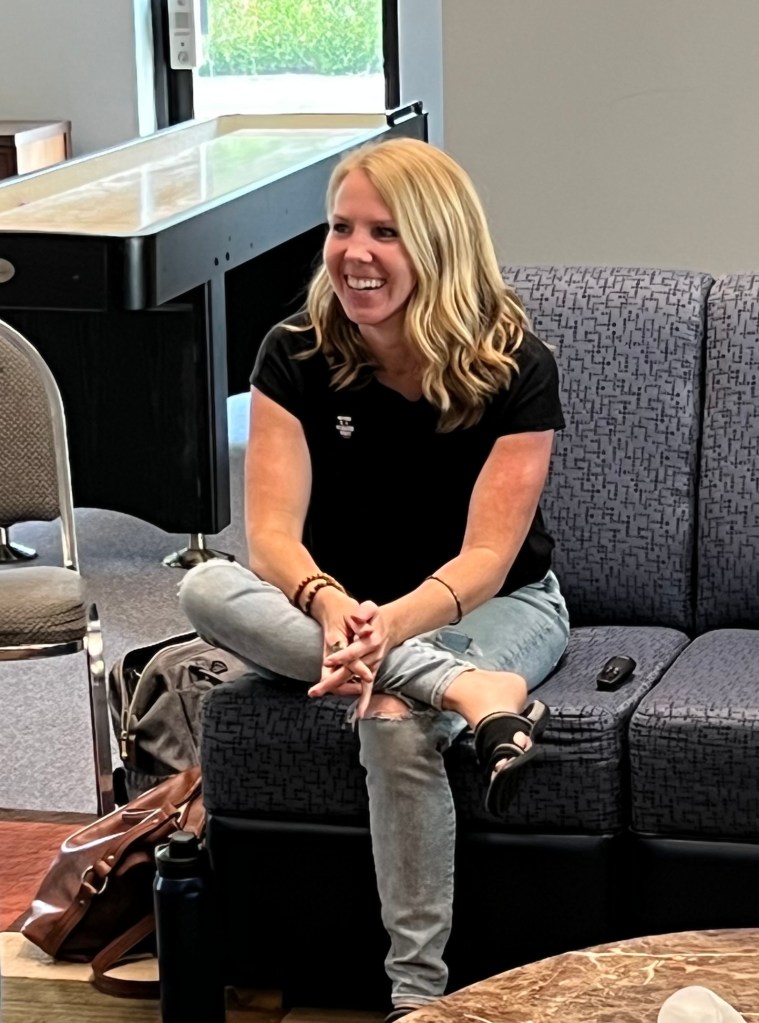
After the meeting, I asked Lindsey a few questions. The following is part of that interview during lunch at The Local in McMinnville.
BD NEWSLETTER: What motivated you to work with the homeless?
LINDSEY KRINKS: Growing up, members of my family—their experiences with homelessness—shaped my perspective. My cousin and uncle experienced homelessness, and I initially thought it was a personal decision on their part. But when I got to college in Nashville, I realized that poverty is much more widespread than individual choices. I started re-reading the Hebrew prophets and the Gospels, and a conviction grew in me: if we are truly followers of Christ, we must go where Jesus went. We are called to the margins—to love, to extend our hand, share food, and provide shelter. And if we take Matthew 25 seriously, we are also called to find Christ there.
Understanding how widespread and systemic the problem is—beyond personal failures—has deepened my call to be the hands and feet of Christ. Compassion at this larger level is justice. That’s a significant part of what pulled me into this work. But once I built relationships with people on the street, I was amazed by who they are and what they had survived. After forming those relationships, there was no way I could go back to anything else. It has been the most raw, real, and transformative experience I’ve ever been part of.
BD NEWSLETTER: What influenced you to attend Vanderbilt Divinity School after graduating from David Lipscomb University?
LINDSEY KRINKS: I started becoming involved with issues of homelessness and affordable housing during my time at Lipscomb. Influences included dedicated teachers, books I was reading, and a service club that truly changed me.
I was introduced to authors like Shane Claiborne (The Irresistible Revolution), Dorothy Day (The Long Loneliness), and saints such as St. Francis and Mother Teresa. Those are the things that started working on me as I graduated from Lipscomb as a young adult and thinking about what I wanted to do in the world.
I met Charlie Strobel, founder of the Room at the Inn and homeless services in Nashville—someone I considered a literal saint living among us.
I took a few years off after college to work on the streets. I spent two years with AmeriCorps in a homeless outreach program within a mental health agency. The questions of faith, suffering, and liberation kept haunting me. I wanted to explore these issues theologically, which led me to Vanderbilt Divinity School. I knew the school had the tools I needed, and I also had gained tools at Lipscomb. Vanderbilt welcomed me warmly. As a young Church of Christ member, I had a phenomenal experience—meeting others wrestling with Scripture, reflecting deeply, and sharpening my faith and commitments.
BD NEWSLETTER: In your book, you mention a Vanderbilt professor who asked what you were running from. Could you describe the context of that question and how you found the answer years later?
LINDSEY KRINKS: During my first or second year at Vanderbilt, I was part of a small group discussing pastoral care. I was exhausted, burning the candle at both ends—working at shelters, trying to help everyone around me. It’s common for “fixers” to go full throttle…but if done excessively, it’s unhealthy.
My professor noticed I was doing good work but not in a sustainable way. After I expressed my exhaustion, she asked, “What are you running from?” I was defensive and replied, “I am not running from anything.”
It took digging into therapy to realize and say, “Oh, I keep falling into this over-functioning fixer role because of the family system dynamic that was ingrained in me. I was also struggling with survivor’s guilt. I work on the margins and was seeing people on the streets dying from preventable causes. Globally, I was seeing poverty on an enormous scale. Looking at my own family system, I’ve lost cousins and uncles—one of my uncles died on the street and another uncle died after getting out of prison. I’ve watched family systems implode. I had been navigating survivor’s guilt. I believed that if I’ve survived these toxic systems, then I had to try to pull everyone out of these systems.
We see this with war veterans and people who survive childhood trauma. Once I got to the root of that and started to name it, I could begin to respond from a place of love rather than guilt. Love is a deeper well—one that says I am committed to working toward a world where everyone is whole and can thrive.
Yes, I was taken aback by that question from the professor. When someone sticks a finger in our wounds, removes the Band-Aid, and says, “It’s here”—ouch! I encourage all of us to do that kind of work.
BD NEWSLETTER: There’s a point in your life that you describe in your book when you decided to dedicate your life to working with the poor. Can you describe how that commitment manifested?
LINDSEY KRINKS: I’ve always been drawn to healing work. My dad was a pediatrician, and healing felt like a natural calling—it was ingrained in me. I initially wanted to pursue physical therapy in undergrad because the medical field made sense to me. I also wanted a comfortable life, and I saw how some family members worried about finances, so I wanted to avoid that stress.
It was through rereading the prophets and the gospels—holding up examples like Dorothy Day, St. Francis, Mother Teresa, Martin Luther King, and others—who leaned into discomfort to become personally transformed and participate in larger societal change through faith. Once I started working on the street, met Charlie Strobel, and connected with friends on the streets through the Nashville Homeless Power Project, everything fell into place.
There’s a quote I encountered in college that resonated deeply: You are not called to be comfortable; you are called to be faithful. That shook me up.
My faith drew me toward the margins. That is where I discovered that God didn’t need to be taken there – God was already present in the tents and alleys, the underpasses and camps. As Jesus says in Matthew 25, you will meet him on the margins: “When I was thirsty, you gave me water. When I was hungry, you gave me food. When I needed clothing, you clothed me…
There are these passages in scriptures. It was absolutely a calling.
You can order Lindsey Krinks’ book, PRAYING WITH OUR FEET here: https://bakerbookhouse.com/products/235899
You can learn more about Lindsey Krinks at her website: https://www.lindseykrinks.com

 BD Newsletter
You must be logged in to post a comment.