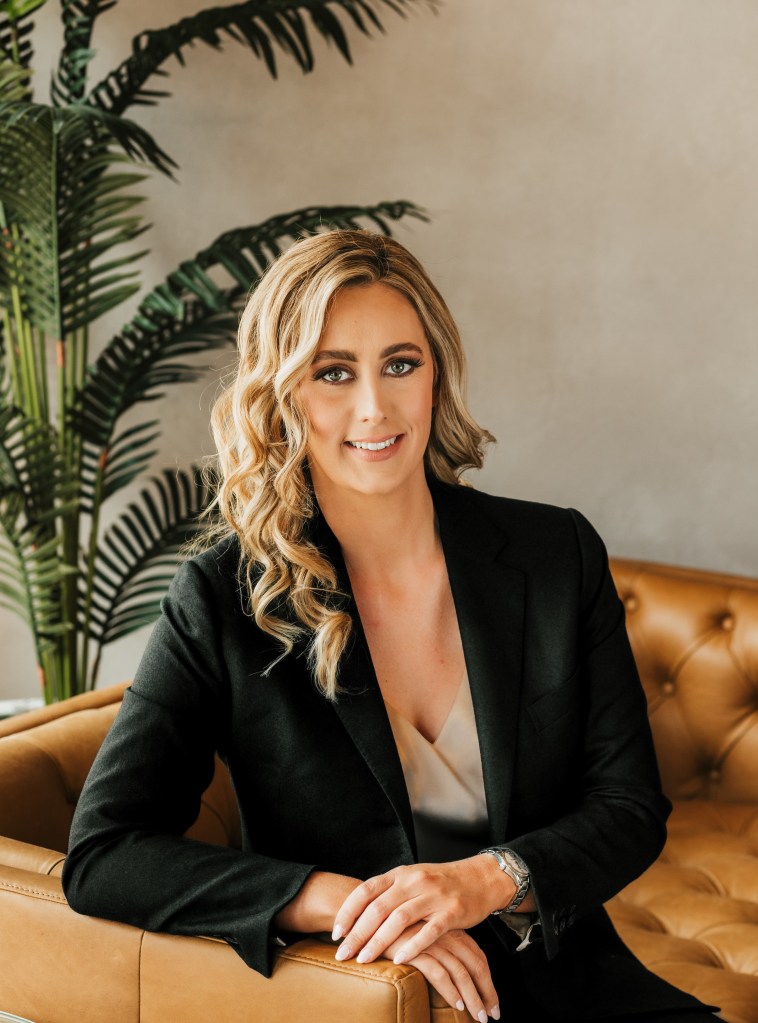
Five Questions for Attorney Kara Youngblood

Attorney Kara Youngblood

By Brad Durham

         When I grew up in McMinnville many decades ago, there were no “immigrants” that I was aware of in my hometown. As I grew older, I eventually came to the conclusion that almost all of us are “immigrants.” It has become a hot topic recently. Some polls had immigration as a top five issue in last year’s 2024 presidential election.

         Personally, I did not become aware of any new immigrants in McMinnville until the 1980s. There were not any Hispanics living in McMinnville that I was aware of when I grew up here. The last US Census states that 10.1% of the Warren County population is Hispanic or Latino. Link:https://www.census.gov/quickfacts/fact/table/warrencountytennessee/PST045224

         The population has changed over the decades, and I believe that that is a good change. I am very grateful for the vibrant and hard-working Hispanic community in McMinnville. There is one family in particular that has enriched my life tremendously with their friendship and fellowship.

         The campaign and recent rhetoric about immigrants and deportation by President Trump concerns me. The executive order which attempts to end automatic citizenship for babies born on American soil actually shocked me.

         That executive order was blocked and reported by the New York Times on Thursday, January 23: In a hearing held three days after Mr. Trump issued his executive order, a Federal District Court judge, John C. Coughenour, sided with Washington, Arizona, Illinois and Oregon, the four states that sued, signing a restraining order that blocks Mr. Trump’s executive order for 14 days, renewable upon expiration. “This is a blatantly unconstitutional order,” he said.

Link to article: https://www.nytimes.com/live/2025/01/23/us/trump-news#judge-blocks-birthright-citizenship

         To better understand these issues, I asked McMinnville’s immigration expert, Attorney Kara Youngblood, five questions via email. The following are those questions and answers.


BD Newsletter: Please share your perspective on what is happening with federal immigration policies, and do you have a prediction on what the outcome will ultimately be regarding the birthright to citizenship issue?

Kara Youngblood: The implementation of the new immigration policies will likely result in extended processing times, heightened scrutiny of immigration applications, increased discretion granted to immigration officers and prosecutors, as well as a backlog of cases within immigration courts. It is particularly noteworthy that a federal judge appointed by President Reagan issued the injunction. Given the recent rulings by the Supreme Court, it is reasonable to anticipate that the executive order will ultimately be invalidated, even by the most conservative of courts. 


BD Newsletter: Do you foresee any differences between the federal policies/laws and state and local policies/laws? In other words, will federal policies override all local and state policies?

Kara Youngblood: With the recent passage of the state bill that felonizes any vote of an elected official against federal immigration policy it seems like federal may win out. However, it should be noted that both the recent executive orders and this aforementioned state bill are likely unconstitutional and will most likely be immediately challenged.

Under federal preemption law, federal law generally takes precedence over state law if they conflict.


BD Newsletter: How active is ICE (U.S. Immigration and Customs Enforcement) in McMinnville and Warren County? Does this federal law enforcement agency have an office here?

Kara Youngblood: At present, ICE does not maintain an office in McMinnville or Warren County; however, it is anticipated that their presence will increase in the near future, particularly in light of Governor Lee’s initiative to establish a Centralized Immigration Enforcement Division (CIEO). Gov. Lee’s agenda also aims to incentivize local governments to collaborate in the enforcement of federal immigration policies and allocate funding to support both federal and state immigration efforts. Additionally, we can expect an expansion of ICE activities, particularly as ‘sensitive’ areas, such as schools and places of worship, are no longer protected under the same restrictions. Since 2011, such locations were considered ‘sensitive’ and were off-limits to ICE raids except under specific, limited circumstances; however, under the previous Trump administration, these areas were no longer classified as ‘sensitive’ and thus are now subject to enforcement actions.


BD Newsletter: What would you advise an immigrant who is not a U.S. citizen and living in McMinnville to do, in addition to contacting your office for legal consultation?

Kara Youngblood: Know your rights and if you are here lawfully, be sure you keep proof of that with you. We have created a “Know Your Rights” campaign on the Youngblood & Associates social media platforms that will be published over the next few weeks. Keep an eye out for those.


BD Newsletter: What percentage of your clients live in McMinnville and Warren County?

Kara Youngblood: I cannot answer this question. I believe Tenn. Sup. Ct. R. 8, RPC 1.6 would apply in this instance which prohibits me from sharing client information individually or collectively without their consent.


Bonus Question: What motivated you to practice immigration law?

Kara Youngblood: My father has owned and operated a nursery in Morrison my whole life. The immigrant population is an integral part of the agricultural industry. I was exposed to the immigration system from a young age, seeing the vast expanse of how immigration shaped the lives of those that worked side by side with my father, and who ultimately became like a part of our family. From the positive impacts of the green card and naturalization processes to negative consequences of immigration detentions and deportations, I was privy to a world that most US citizens never see. I found the complexity of this facet of the law interesting and knew the positive impact I could have for many people if I studied it and offered solutions to the many qualified individuals that simply needed someone on their side to navigate the complex system for them.

I always say that unlike many other types of law, no one loses when I win a case. Most of my clients have already positively integrated into our community, but my services allow them to finally do so out of the shadows and with the peace of mind that every person deserves. 


Attorney Kara Youngblood in her office.

BD Newsletter Footnote: The following is a brief overview of Kara Youngblood’s professional career.

         Kara Youngblood is the founding attorney of Youngblood & Associates, which is dedicated to providing legal immigration services to individuals and families and labor solutions for green industry employers. Website: www.youngbloodassociates.com

         Youngblood is also the owner of The Local on Morford restaurant, which is part of the major renovation projects she has undertaken on Morford Street. Kara Youngblood was elected to office as a City Alderman in 2024 and is chairman of the Building & Grounds committee. She also serves on the Tourism & Marketing, Parks & Recreation, and Water & Wastewater committees.

         Youngblood was Valedictorian of her Warren County High School senior class, Middle Tennessee State University, Bachelor of Science, and The University of Memphis—Cecil C. Humphreys School of Law, Juris Doctor, Law.
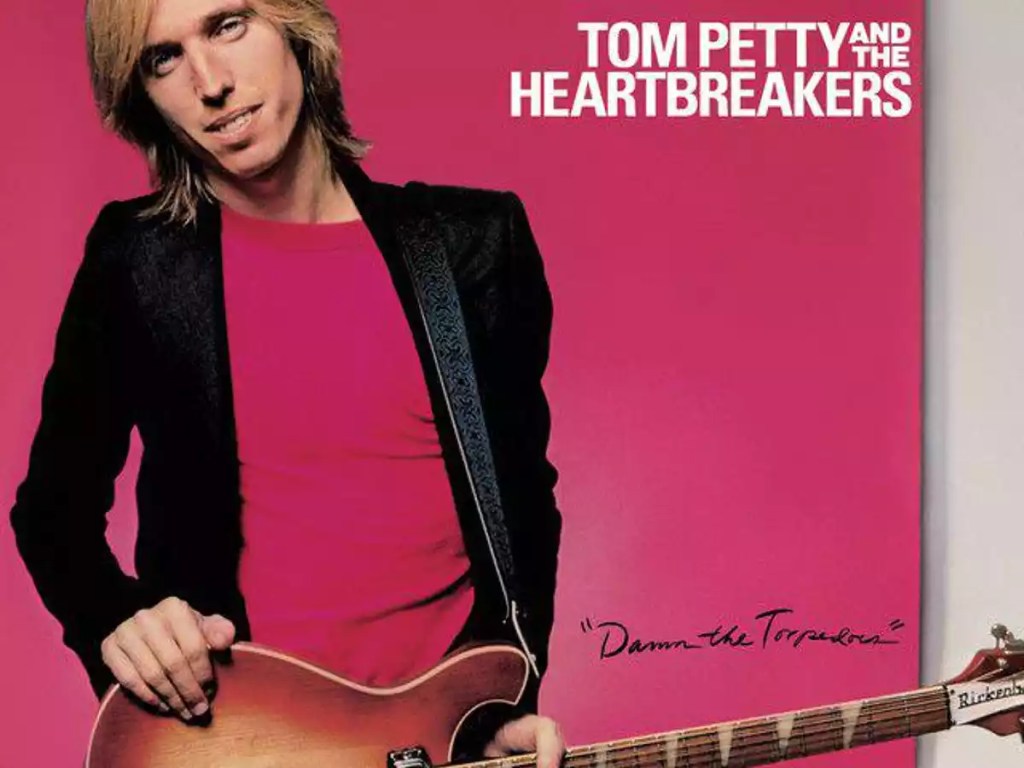

TOM PETTY WAS RIGHT

This morning I was reading a post on Facebook with random facts. One of the facts stated that outdoor cats live for 3 years and indoor cats can live up to 16 years. The next thing I did was google it, and this came up in my search:

         “An indoor cat may live 15-17 years, while the life expectancy for outdoor cats is only 2-5 years, according to researchers at University of California-Davis. Dr. Jeff Levy, DVM, CVA, owner of House Call Vet NYC, also discourages owners from keeping cats outdoors.”

         As I contemplated this, I visualized a cat I often see who lives outside. Then I started thinking about people living on the street and in tents in McMinnville. My mind also drifted to people who live outside in tents in refugee camps. Then Tom Petty’s song, “Refugee” popped into my head.

REFUGEE, BY TOM PETTY

We did somethin’ we both know it
We don’t talk too much about it
Ain’t no real big secret all the same
Somehow we get around it
Listen it don’t really matter to me, baby
You believe what you want to believe
You see, you don’t have to live like a refugee (don’t have to live like a refugee)

Somewhere, somehow, somebody
Must have kicked you around some
Tell me why you want to lay there
Revel in your abandon
Honey, it don’t make no difference to me, baby
Everybody’s had to fight to be free
You see, you don’t have to live like a refugee (don’t have to live like a refugee)
Now baby, you don’t have to live like a refugee (don’t have to live like a refugee) No

Baby we ain’t the first
I’m sure a lot of other lovers been burned
Right now this seems real to you
But it’s one of those things
You gotta feel to be true

Somewhere, somehow, somebody
Must have kicked you around some
Who knows, maybe you were kidnapped
Tied up, taken away and held for ransom, honey
It don’t really matter to me, baby
Everybody’s had to fight to be free
You see, you don’t have to live like a refugee (don’t have to live like a refugee)
No, you don’t have to live like a refugee (don’t have to live like a refugee)
You don’t have to live like a refugee (don’t have to live like a refugee) 
Oh, oh, oh

Songwriters: Michael W Campbell / Thomas Earl Petty

Refugee lyrics © Gone Gator Music, Universal Music Publishing Group, Warner Chappell Music, Inc, Wixen Music Publishing

         Tom Petty may have been singing about lovers, but it fits perfectly as I think about people who are experiencing homelessness. However, there is a catch for me personally. During the past year, I have been volunteering to help a little with people who are homeless. I am watching people leave a building after they can eat and shower to go live outside and sleep outdoors on the actual streets, sidewalks and in tents. I have come to the conclusion that I am enabling or helping them to live there by not doing something to help them live in a home.

         So, I googled “life expectancy of a person living outdoors vs. indoors.” This is what appeared on my computer screen:

         Generally, a person living primarily outdoors would have a significantly lower life expectancy compared to someone living indoors, due to increased exposure to environmental hazards like weather extremes, predators, accidents, and lack of access to basic necessities, making living entirely outdoors is considerably more risky for health and longevity. 

Key points to consider:

  • Environmental dangers:

Exposure to harsh weather conditions, including extreme heat, cold, rain, and storms, can lead to health complications and potential fatalities. 

  • Predators and accidents:

Individuals living outdoors are more vulnerable to attacks from wild animals and potential accidents due to lack of controlled environments. 

  • Access to healthcare:

Limited access to medical care and sanitation facilities when living outdoors can exacerbate health issues.

         I don’t need medical experts to tell me that living outdoors shortens the life expectancy of someone. I have seen what happens with my own eyes. People’s health deteriorates rapidly over a few months of living outdoors or in conditions where the roof leaks and there is no electricity or running water. The hazards of living outdoors, especially when you are disabled are real. Thurman Crisp, a disabled veteran, was living on the streets in McMinnville, and he passed away on December 2, 2024 when he was crossing the street and hit accidentally by a vehicle.

Tom Petty was right, you don’t have to live like a refugee. But until I can help develop and implement a strategic plan to keep men and women from living outside in tents and living in a home, I believe that I am allowing people to live like refugees in McMinnville. And I am embarrassed to keep thinking and saying that there is nothing I can do about it. 

Refugee on Spotify: https://open.spotify.com/track/4mcZYzoGwPRDdhWVlygiHf?si=a132825cb4534c93

Refugee on YouTube: https://youtu.be/fFnOfpIJL0M?si=6MMpcQ9SJ4BdbtYM

A COLUMN BY DAVID BROOKS

Below is a link to the NY TIMES column by David Brooks. It is worth reading, no matter your political affiliation. No matter how you voted, this article provides good insight. If you consider yourself a democrat, you definitely need to read it.

https://www.nytimes.com/2024/11/14/opinion/identity-groups-politics.html?unlocked_article_code=1.aE4.g2mo.DfYY-TNJ5NHc&smid=url-share: A COLUMN BY DAVID BROOKS

DAVID BROOKS

Why We Got It So Wrong

Let me ask you a few questions:

If the Democrats nominated a woman to run for president, would you expect her to do better among female voters than the guy who ran in her place four years before?

If the Democrats nominated a Black woman to run for president, would you expect her to do better among Black voters than the white candidate who ran in her place four years before?

If the Republicans nominated a guy who ran on mass deportation and consistently said horrible things about Latino immigrants, would you expect him to do worse among Latino voters over time?

If the Democrats nominated a vibrant Black woman who was the subject of a million brat memes, would you expect her to do better among young voters than the old white guy who ran before her?

If you said yes to any of these questions, as I would have a month ago, you have some major rethinking to do, because all of these expectations were wrong.

In 2024, Kamala Harris did worse among Black voters than Joe Biden did in 2020. She did worse among female voters. She did much worse among Latino voters. She did much worse among young voters.

She did manage to outperform Biden among two groups: affluent people and white voters, especially white men. If there is one sentence that captures the surprising results of this election, it is this one from the sociologist Musa al-Gharbi: “Democrats lost because everyone except for whites moved in the direction of Donald Trump this cycle.”

Going into this campaign, I did not have that one on my bingo card.

Why were so many of our expectations wrong? Well, we all walk around with mental models of reality in our heads. Our mental models help us make sense of the buzzing, blooming confusion of the world. Our mental models help us anticipate what’s about to happen. Our mental models guide us as we make decisions about how to get the results we want.

Many of us are walking around with broken mental models. Many of us go through life with false assumptions about how the world works.

Where did we get our current models? Well, we get models from our experience, our peers, the educational system, the media and popular culture. Over the past few generations, a certain worldview that emphasizes racial, gender and ethnic identity has been prevalent in the circles where highly educated people congregate. This worldview emerged from the wonderful liberation movements that highlighted American life over the past seven decades: the civil rights movement, the women’s liberation movement, the gay rights movement, the trans rights movement.

The crucial assertion of the identitarian mind-set is that all politics and all history can be seen through the lens of liberation movements. Society is divided between the privileged (straight white males) and the marginalized (pretty much everyone else). History and politics are the struggle between oppressors and oppressed groups.

In this model, people are seen as members of a group before they are seen as individuals. When Biden picked his running mate in 2020 and his Supreme Court nominee in 2022, he told us he was going to pick a Black woman before he decided who it was going to be. In both cases her identity grouping came before her individual qualities.

In this model, society is seen as an agglomeration of different communities. Democrats thus produce separate agendas designed to mobilize Black men, women and so on. The goal of Democratic politics is to link all the oppressed and marginalized groups into one majority coalition.

In this model, individual cognition is de-emphasized while collective consciousness is emphasized. Groups are assumed to be relatively homogeneous. People are seen as representatives of their community. Standpoint epistemology reigns. This is the idea that a person’s ideas are primarily shaped not by individual preferences but by the experience of the group. It makes sense to say, “Speaking as a gay Hispanic man …” because a person’s thoughts are assumed to be dispatches from a communal experience.

This identity politics mind-set is psychologically and morally compelling. In an individualistic age, it gives people a sense of membership in a group. It helps them organize their lives around a noble cause, fighting oppression.

But this mind-set has just crashed against the rocks of reality. This model assumes that people are primarily motivated by identity group solidarity. This model assumes that the struggle against oppressive systems and groups is the central subject of politics. This model has no room for what just happened.

It turns out a lot of people don’t behave like ambassadors from this or that group. They think for themselves in unexpected ways.

It turns out that many people don’t see politics and history through the paradigm of liberation movements. They are concerned with all kinds of issues that don’t fit into the good-versus-evil mind-set of oppressor versus oppressed: How do you fix inflation? How can we bring down crime? What should our policy on Ukraine be?

Plenty of people are exhausted by the crude generalizations that are so common today. For example, analysts talk about gender wars and hypermasculine Trump supporters. But in most elections, as in this one, there’s not a vast difference between how men and women vote. The differences within the male and female populations are greater than the differences between these populations.

A lot of the group categories that identity politics rely on don’t make much sense. For example, the category “Hispanic voter” includes people of Mexican descent whose families have been in Texas for 350 years as well as families from Chile who came to New York a decade ago.

The category “people of color” doesn’t make sense, either, as a way to group individuals as a political force. America has been uniquely wretched to Black Americans, practicing structural racism that shows up today, for example, in the horrendous wealth gap between Black and white people. The diverse communities we call Asian and Hispanic Americans came here largely voluntarily. Many of them have been able to prosper and experience educational and income trajectories that are different from those of a community that has suffered hundreds of years of slavery and discrimination.

Even the most solid identity group categories are fluid. As a recent Pew Research Center study found, among people who married in 2022, 32 percent of Asian Americans married outside their ethnic group, as did 30 percent of Hispanics, 23 percent of Black people and 15 percent of white people. In one Pew survey 58 percent of Hispanics also identified as white.

The identity politics mind-set has made it harder to deal with nuts-and-bolts issues like how to address the homelessness crisis or reduce opioid deaths and how to run an institution in which people treat one another decently. Have you noticed that the places most rife with this mind-set (progressive cities and elite universities) have experienced one leadership failure after another?

This is a time when we all should be updating our mental models and making our view of society more complex. And I’m seeing a lot of that around me as people try to learn from what just happened.

But I’m also seeing many people who are still victims of conceptual blindness. They are so imprisoned by their mental models, they can interpret these results only in identity politics terms: Harris lost because America is racist (even though she did virtually the same as Biden did among white voters). Harris lost because America is sexist (even though she underperformed among women). Some people blamed white women for abandoning their Black sisters, as if lack of gender solidarity were the main thing going on here.

Identitarian takes are strewn across the media. The New Yorker ran an analysis piece headlined “How America Embraced Gender War.” Slate ran a piece called “Men Got Exactly What They Wanted.” The Guardian ran a piece called “Our Mistake Was to Think We Lived in a Better Country Than We Do.” If the election didn’t come out the way we wanted, it must be because of their groups’ bigotry against our groups.

As I try to update my own models, a few stray thoughts enter my mind. First, you don’t reduce racial, ethnic and gender bigotry by raising the salience of these categories and by exaggerating the differences between groups. Second, integration is better than separatism. Diverse societies prosper when people in different categories cooperate in respectful ways on a day-to-day basis, not when we divide people into supposedly homogeneous enclaves. Third, assimilation is not a dirty word, as long as it’s voluntary; it’s not a sin to feel that your love for America transcends your love for your ethnic group, and you don’t really love America if you despise half its people. Fourth, most of the world’s problems are caused by stupidity and human limitation, not because there’s some malevolently brilliant group of oppressors keeping everybody else down.

Fifth, seeing groups in all their complexity requires seeing individuals in all their complexity. To see people well, you have to see what makes them unique. You also have to see which groups they belong to. You also have to see their social location — where they fit in the economic, social and status hierarchies. When you’re able to see people at all three levels of reality, you’re beginning to see them holistically.

Finally, we need a social vision that doesn’t rely on zero-sum us/them thinking. During his first term, Trump unleashed a cultural assault based on his version of identity politics. The left responded by doubling down on its identitarian mind-set. We have to do better this time.

In 1959 the British jurist Patrick Devlin made a point that should haunt us: “Without shared ideas on politics, morals and ethics, no society can exist.” He added, “If men and women try to create a society in which there is no fundamental agreement about good and evil, they will fail; if having based it on common agreement, the agreement goes, the society will disintegrate.”

We need a social vision that is as morally compelling as identity politics but does a better job of describing reality. We need a national narrative that points us to some ideal and gives each of us a noble role in pursuing it. That’s the gigantic cultural task that lies ahead.