By Brad Durham

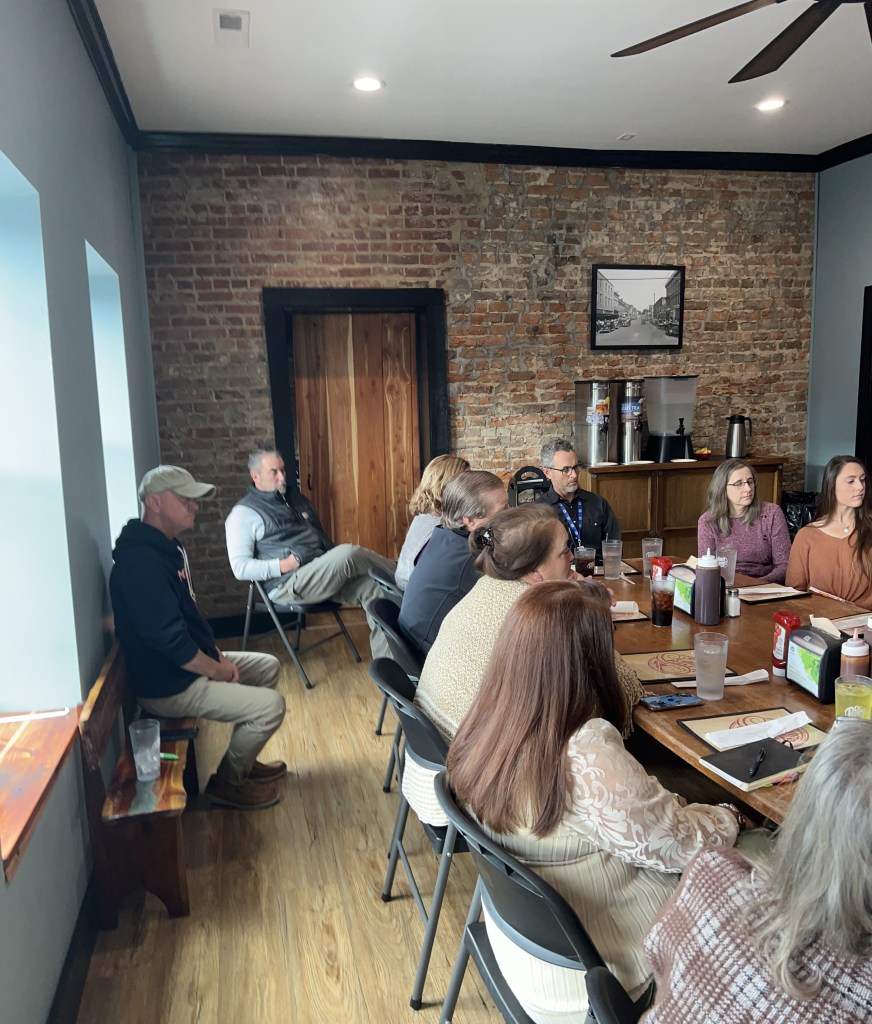
For a list of who attended the meeting, go to the end of this letter.
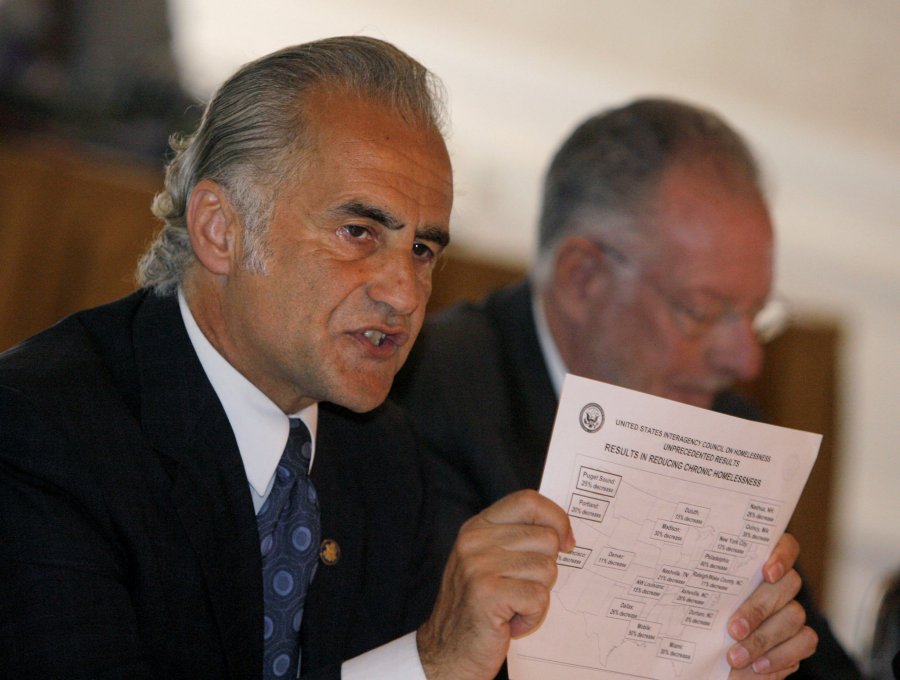
On Friday morning, January 26, a group of 14 McMinnvillians gathered for a presentation by Philip F. Mangano. Mr. Mangano served as President George W. Bush’s Executive Director of the White House’s U.S. Interagency Council on Homelessness. Brad Durham, who worked with Mr. Mangano in Cambridge, Massachusetts placing homeless families into permanent housing, invited Mangano to McMinnville.
HOUSING FIRST SOLUTION
The heart of Mangano’s presentation was housing first, a concept to end homelessness, not to provide endless services. Mangano stressed that data clearly supports the housing first policy.
COST-EFFECTIVE SOLUTION FOR CITIES
It is cost-effective to place a homeless person or family in permanent housing versus a shelter or transitional housing. Mangano said, “Mayors know the cost involved related to caring for a homeless person. A homeless person incurs expenses that a community pays for such as health care, mental health, police, court costs, addiction, etc.” Mangano stated that a city spends between $25,000 to $138,000 a year in services for a homeless person.
STABLIZES A HOMELESS PERSON
A permanent home is the most cost-effective solution to homelessness because it stabilizes the homeless person. When a homeless person is safe and secure in a home, the health care, mental care, and other services are more easily identified and effective. The services follow the homeless person into a home.
WHAT EVERY HOMELESS PERSON WANTS
Mangano emphasized that there is one thing every homeless person says that he or she wants — when asked — is a place to live, a home. Although the housing first solution appears to be self-evident, Mangano stated that homeless advocates often act out of genuine compassion by providing transitional housing and services that create a perpetual cycle of services that sadly do not end homelessness.
Another major desire homeless people ask for is a job. Mangano said, “Homelessness results in an unraveling of social capital – the loss of friends and family.” Clearly, when an individual or family is homeless, that person or family have busted through every possible safety net and hit the street. A homeless person is completely alone…lonely. A homeless person intuitively knows that a job will provide friends — the social capital everyone needs.
Philip Mangano suggested a book by Robert Putnam to better understand how the social fabric has diminished in America’s recent history. That book is Robert Putnam’s BOWLING ALONE: The Collapse and Revival of American Community. The book was developed from Putnam’s essay entitled, “Bowling Alone: America’s Declining Social Capital.”
A COMMON FRUSTRATION AND PERCEPTION
Several members of Friday’s gathering stated that there is no affordable housing in McMinnville. Mangano replied, “Homeless advocates in every city say that. That is a common perception. The response requires innovative thinking and a commitment to housing first principles.”
THREE BOOK RECOMMENDATIONS
Philip Mangano worked with three researchers and authors who have worked with executives in the corporate world to find solutions to business problems. These authors helped research and provide the framework for successful housing first models and policies.
Malcom Gladwell, THE TIPPING POINT
Jim Collins, GOOD TO GREAT
Clayton Christensen, THE INNOVATOR’S DILEMMA
Using Gladwell’s book and homeless research as a resource, Mangano said, “Investing resources into the most challenging and difficult parts of homelessness from an economic perspective leads to a decline in homelessness.” Conversely, providing compassionate emergency services without a housing first policy does not effectively create a decline in homelessness.
Mangano’s alluded to examples of creative solutions involving converting motels into housing that have services onsite. He also mentioned manufactured housing as a cost-effective solution for a homeless person or family.
Clayton Christensen’s book, THE INNOVATORS DILEMMA offered examples of how businesses seeking to move to the next step often failed when using the solutions suggested by the sales force. On the other hand, businesses seeking to move to the next step often succeeded when their researched focused on the consumers and solutions they wanted.
SUMMATION
The general thesis of Mangano’s presentation was that research and data from across the country, in large and small cities, clearly shows that housing first is the best solution to homelessness. Creative innovations to decrease homelessness have often come from unsuspected sources such as private industry and listening to the homeless population. The solution that works best for everyone is housing a homeless person or family — not long-term emergency services that allow the homeless to perpetually experience trauma and instability.
PEOPLE ATTENDING THE MEETING
Carrie Baker, UCHRA Director
Terry Bell, County Executive
Courtney Breedlove, Program Director, Families in Crisis
Brad Durham, Private Citizen
Sheila Fann, Connie Fox, Co-Directors of HOME
Beth Gallagher, Private Citizen
Jimmy Haley, former Mayor and County Executive
Steve Harvey, City Alderman
Ryan Heatherly, Senior Pastor, First United Methodist Church
Rayah Kirby, Realtor
Philip Mangao, President & CEO American Roundtable to Abolish Homelessness
Nolan Ming, McMinnville City Administrator
Rev. Charles McClain, Priest, St. Matthew’s Episcopal Church
Kristy Stubblefield, Executive Director, Families in Crisis
Pam Vaughn, Executive Director, McMinnville Housing Authority
POSTSCRIPT
As the meeting came to close, members expressed the desire to work together and collaborate, to meet again in three weeks. It is hoped that the meeting will lead to some type of homeless alliance in McMinnville.

 BD Newsletter
You must be logged in to post a comment.