LINDSEY KRINKS VISITS MCMINNVILLE

LINDSEY KRINKS

BY BRAD DURHAM

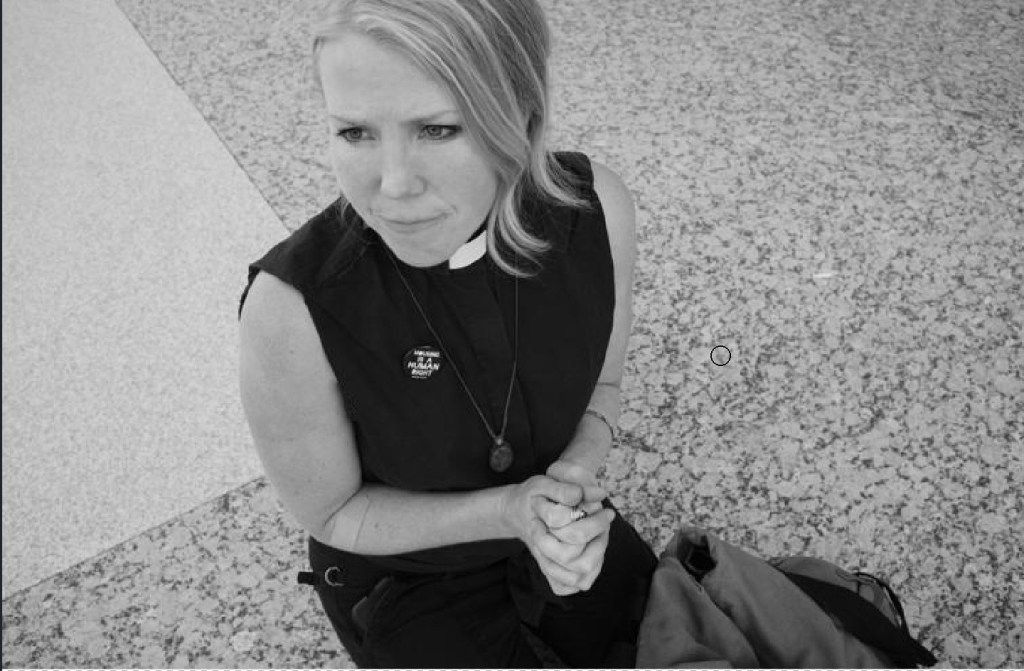
Recently, Lindsey Krinks visited McMinnville and spoke to a group of people working with unhoused individuals in the community. Not only did Krinks travel 70 miles to reach McMinnville, but she has traveled a great distance in her lifetime—going from South Carolina to David Lipscomb University, then to Vanderbilt Divinity School. She has made her way from Tent City to Otter Creek to Legislative Plaza. Throughout her journey, she has undergone transformative experiences rooted in a spiritual quest.

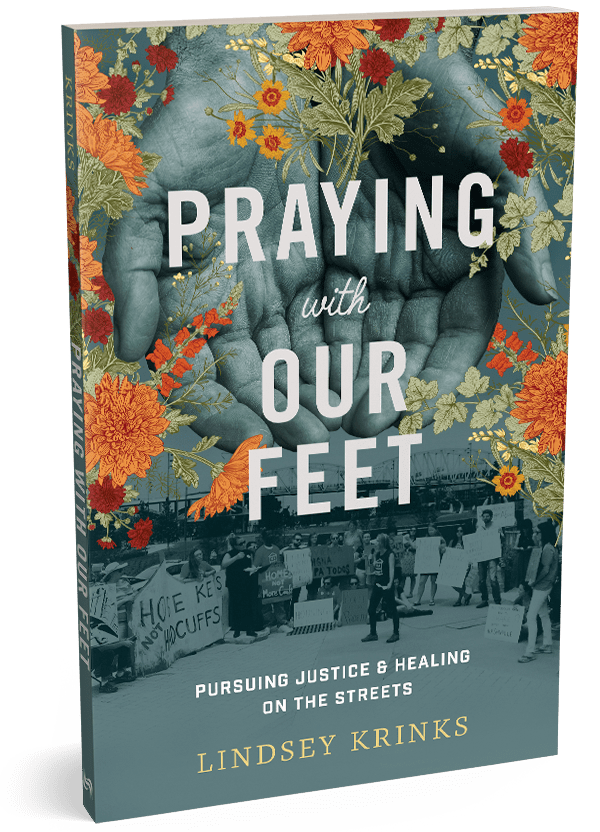
After inviting Lindsey Krinks to meet with us, I read her book, Praying with Our Feet. As I read her autobiography, I couldn’t help but think of Joseph Campbell’s Hero’s Journey. The hero embarks on an adventure beyond the ordinary and returns with a message. Lindsey’s story mirrors this: she has faced moments of almost breaking down physically, mentally, and spiritually—yet she persevered and was transformed. Her drive to serve the poorest of the poor—the homeless—has fueled her journey.

For me, reading Lindsey’s book felt like uncovering stories of saints such as Saint Francis of Assisi and Mother Teresa—people who led lives of profound transformation and became signposts along the journey of imitating Christ.

Lindsey Krinks is the real deal—she is a street chaplain, author, activist, and nonprofit leader. She is the co-founder of Open Table Nashville. I’m grateful she visited us to share her story and an excerpt from her book, Praying with Our Feet.
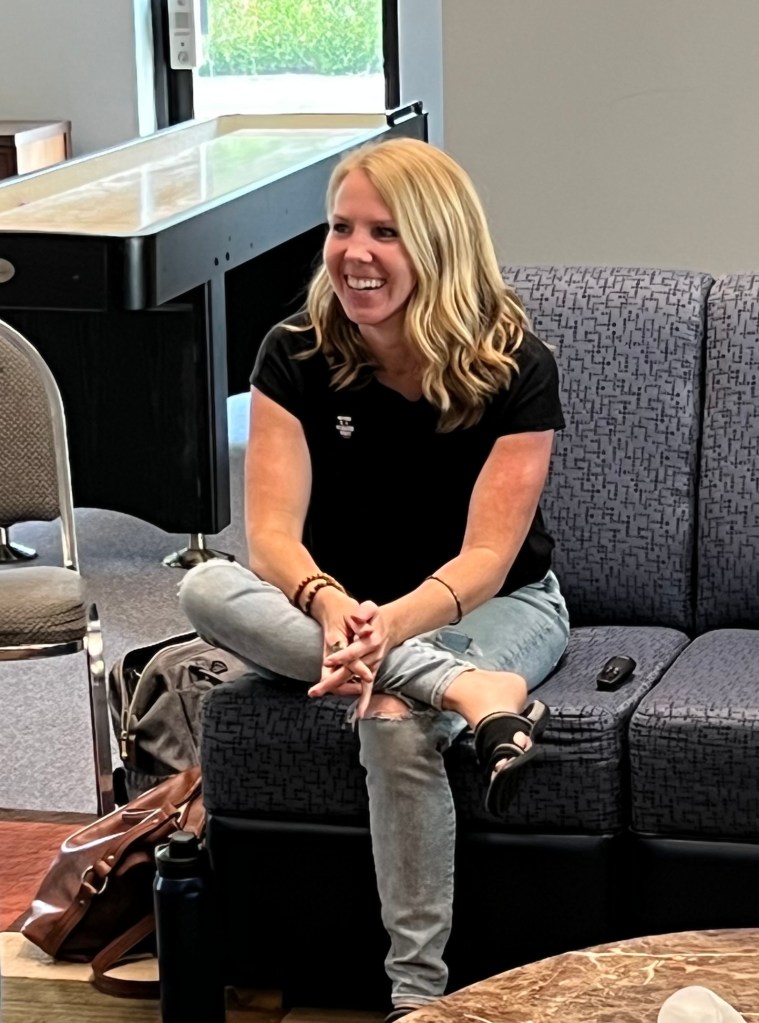
After the meeting, I asked Lindsey a few questions. The following is part of that interview during lunch at The Local in McMinnville.

BD NEWSLETTER: What motivated you to work with the homeless?

LINDSEY KRINKS: Growing up, members of my family—their experiences with homelessness—shaped my perspective. My cousin and uncle experienced homelessness, and I initially thought it was a personal decision on their part. But when I got to college in Nashville, I realized that poverty is much more widespread than individual choices. I started re-reading the Hebrew prophets and the Gospels, and a conviction grew in me: if we are truly followers of Christ, we must go where Jesus went. We are called to the margins—to love, to extend our hand, share food, and provide shelter. And if we take Matthew 25 seriously, we are also called to find Christ there.

Understanding how widespread and systemic the problem is—beyond personal failures—has deepened my call to be the hands and feet of Christ. Compassion at this larger level is justice. That’s a significant part of what pulled me into this work. But once I built relationships with people on the street, I was amazed by who they are and what they had survived. After forming those relationships, there was no way I could go back to anything else. It has been the most raw, real, and transformative experience I’ve ever been part of.
BD NEWSLETTER: What influenced you to attend Vanderbilt Divinity School after graduating from David Lipscomb University?

LINDSEY KRINKS: I started becoming involved with issues of homelessness and affordable housing during my time at Lipscomb. Influences included dedicated teachers, books I was reading, and a service club that truly changed me.

I was introduced to authors like Shane Claiborne (The Irresistible Revolution), Dorothy Day (The Long Loneliness), and saints such as St. Francis and Mother Teresa. Those are the things that started working on me as I graduated from Lipscomb as a young adult and thinking about what I wanted to do in the world.

I met Charlie Strobel, founder of the Room at the Inn and homeless services in Nashville—someone I considered a literal saint living among us.

I took a few years off after college to work on the streets. I spent two years with AmeriCorps in a homeless outreach program within a mental health agency. The questions of faith, suffering, and liberation kept haunting me. I wanted to explore these issues theologically, which led me to Vanderbilt Divinity School. I knew the school had the tools I needed, and I also had gained tools at Lipscomb. Vanderbilt welcomed me warmly. As a young Church of Christ member, I had a phenomenal experience—meeting others wrestling with Scripture, reflecting deeply, and sharpening my faith and commitments.

BD NEWSLETTER: In your book, you mention a Vanderbilt professor who asked what you were running from. Could you describe the context of that question and how you found the answer years later?

LINDSEY KRINKS: During my first or second year at Vanderbilt, I was part of a small group discussing pastoral care. I was exhausted, burning the candle at both ends—working at shelters, trying to help everyone around me. It’s common for “fixers” to go full throttle…but if done excessively, it’s unhealthy.

My professor noticed I was doing good work but not in a sustainable way. After I expressed my exhaustion, she asked, “What are you running from?” I was defensive and replied, “I am not running from anything.”

It took digging into therapy to realize and say, “Oh, I keep falling into this over-functioning fixer role because of the family system dynamic that was ingrained in me. I was also struggling with survivor’s guilt. I work on the margins and was seeing people on the streets dying from preventable causes. Globally, I was seeing poverty on an enormous scale. Looking at my own family system, I’ve lost cousins and uncles—one of my uncles died on the street and another uncle died after getting out of prison. I’ve watched family systems implode. I had been navigating survivor’s guilt. I believed that if I’ve survived these toxic systems, then I had to try to pull everyone out of these systems.

We see this with war veterans and people who survive childhood trauma. Once I got to the root of that and started to name it, I could begin to respond from a place of love rather than guilt. Love is a deeper well—one that says I am committed to working toward a world where everyone is whole and can thrive.

Yes, I was taken aback by that question from the professor. When someone sticks a finger in our wounds, removes the Band-Aid, and says, “It’s here”—ouch! I encourage all of us to do that kind of work.

BD NEWSLETTER: There’s a point in your life that you describe in your book when you decided to dedicate your life to working with the poor. Can you describe how that commitment manifested?

LINDSEY KRINKS: I’ve always been drawn to healing work. My dad was a pediatrician, and healing felt like a natural calling—it was ingrained in me. I initially wanted to pursue physical therapy in undergrad because the medical field made sense to me. I also wanted a comfortable life, and I saw how some family members worried about finances, so I wanted to avoid that stress.

It was through rereading the prophets and the gospels—holding up examples like Dorothy Day, St. Francis, Mother Teresa, Martin Luther King, and others—who leaned into discomfort to become personally transformed and participate in larger societal change through faith. Once I started working on the street, met Charlie Strobel, and connected with friends on the streets through the Nashville Homeless Power Project, everything fell into place.

There’s a quote I encountered in college that resonated deeply: You are not called to be comfortable; you are called to be faithful. That shook me up.

My faith drew me toward the margins. That is where I discovered that God didn’t need to be taken there – God was already present in the tents and alleys, the underpasses and camps. As Jesus says in Matthew 25, you will meet him on the margins: “When I was thirsty, you gave me water. When I was hungry, you gave me food. When I needed clothing, you clothed me…

There are these passages in scriptures. It was absolutely a calling.


You can order Lindsey Krinks’ book, PRAYING WITH OUR FEET here: https://bakerbookhouse.com/products/235899

You can learn more about Lindsey Krinks at her website: https://www.lindseykrinks.com

LINDSEY KRINKS

LOCAL MEDIA: A SMALL TOWN PERSPECTIVE

By Brad Durham

    Recently, there was an article in The New York Times, “The Theory of Media That Explains 15 Years of Politics.” The article explains how the media has changed from a very small number of trusted sources to an abundance of questionable digital sources. Link: https://www.nytimes.com/2025/02/25/opinion/ezra-klein-podcast-martin-gurri.html?unlocked_article_code=1.2k4.ku6r.CXinZpISRmjN&smid=url-share

         The New York Times article is full of insights about the disruptions to the media. It is worth reading, especially if you are interested in how national politics have been shaped by the different forms of media in recent elections. 

         Reading the article made me think about the traditional media sources in McMinnville. There were no digital platforms or internet when I grew up. Baby boomers such as myself experienced the media in our youth much differently than we do in 2025. 

THAT WAS THEN…

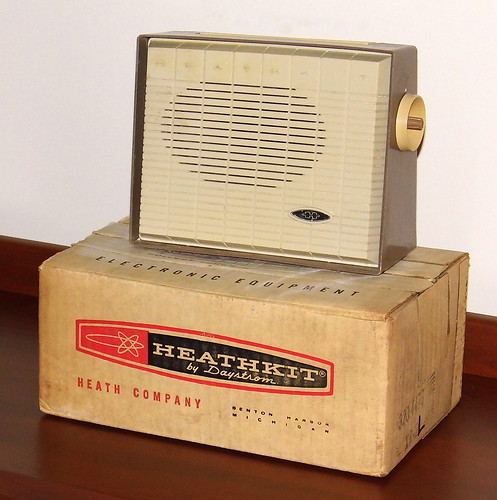
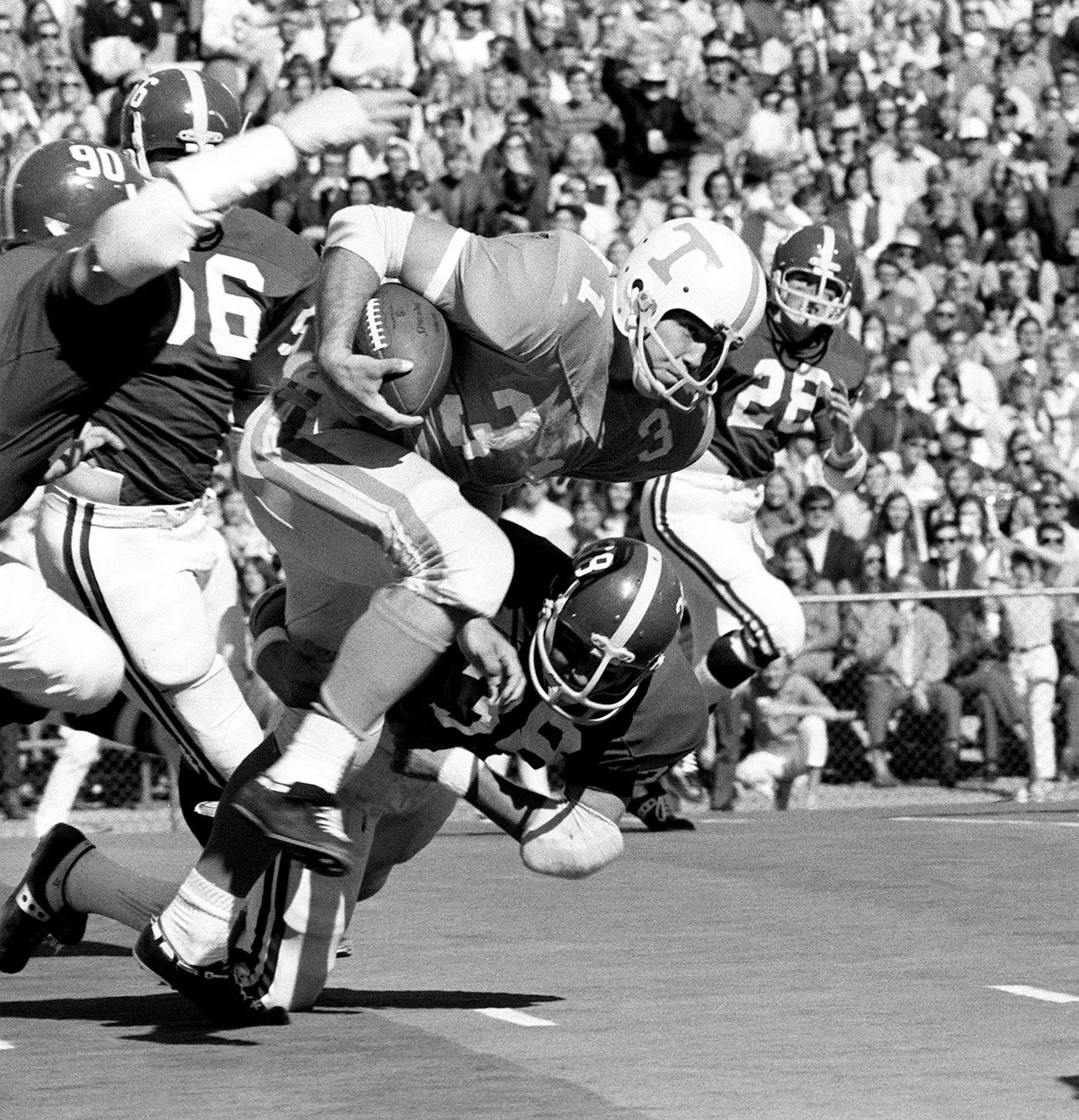
         When I was in the eighth grade during 1970, I would often go to bed listening to WLS-AM out of Chicago playing the Top Forty Hits on the radio. My radio was a Heathkit that I had put together myself. I would go downtown and buy 45 vinyl records of the songs I really liked and wanted to listen to on my turntable/stereo. On Sunday mornings, I would read the newspaper to learn college football scores, stories and pictures from Saturday’s games. Radio and the newspaper were primary sources of music and information.  

         In November of 1963, when I was seven years-old, I vividly remember hearing my father call into my uncle Hal’s radio show in McMinnville on WBMC-AM from Dallas. My dad was reporting that President Kennedy had been shot. My dad’s call had beaten the newswire report to the station, and my uncle recorded the phone call. The radio station replayed the news report from my dad a few times that day – after verifying the story from national sources.

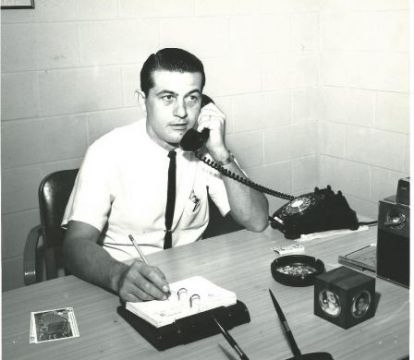
         My father and uncle, Aaron and Hal Durham, worked at WMMT-AM in high school, and then worked their way through college working at radio stations in Knoxville. My father later purchased WAKI-AM (formerly WMMT) in the early 1970s. My uncle Hal became Program Director at WSM and later the General Manager of the Grand Ole Opry.

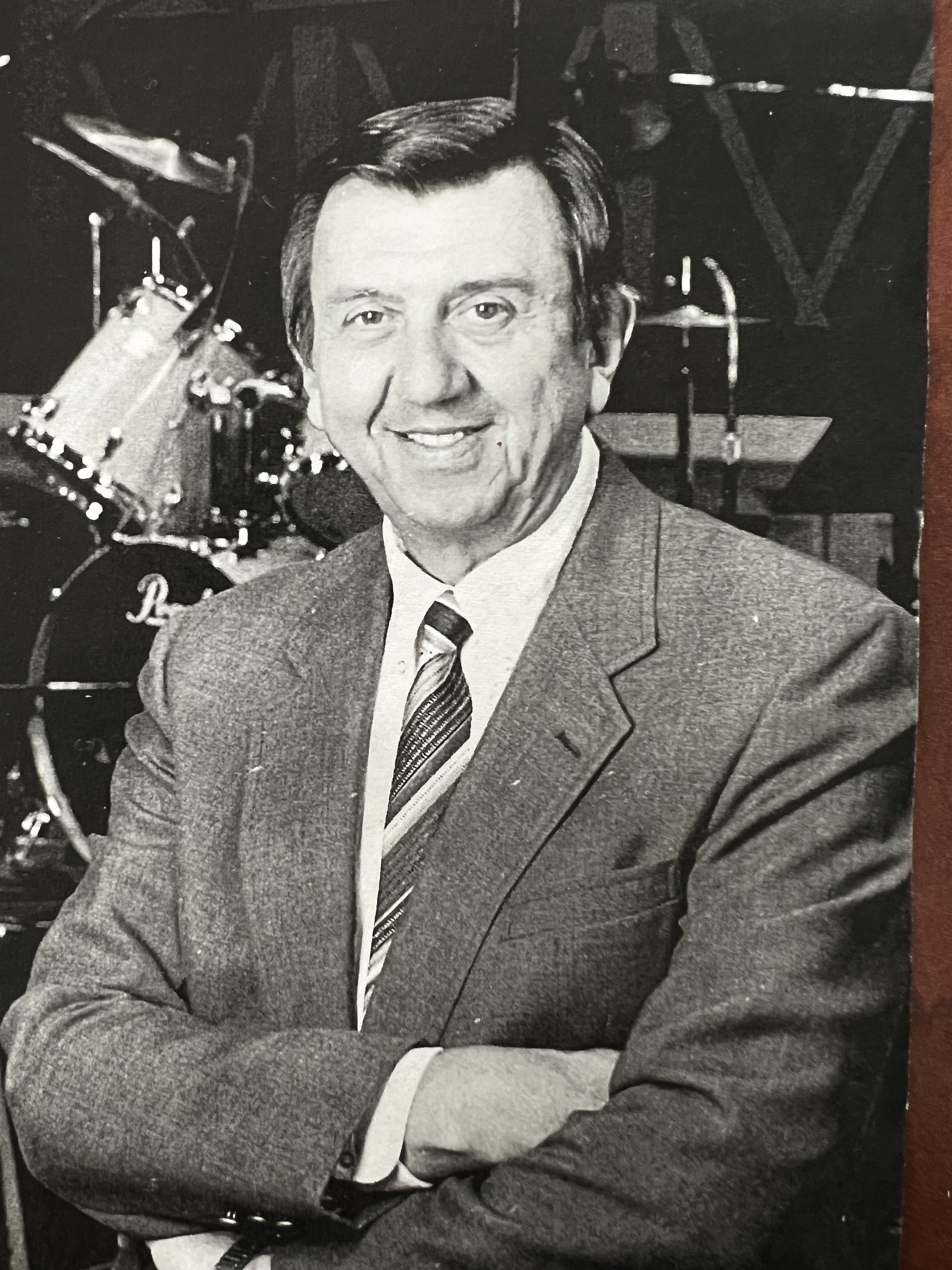
Left to right: Aaron Durham during his days as owner/manager of WJLE-AM; Hal Durham, General Manger at the Grand Ole Opry.

         I would be interested in what my father and uncle would think about the future of the radio stations and newspaper in McMinnville. When they were broadcasters in college, radio was how people normally first learned about a news story. News headlines were at the top of the hour on radio stations. Today, it is extremely rare for radio to be someone’s first source of headline news.  Nobody is waking up on Sunday morning to first learn about college football scores from the day before in a newspaper. 

         If someone is under 30, I might as well be talking about watching the first man to walk on the moon or riding in a horse and buggy. My early media encounters resemble nothing a 30-year-old has experienced. If someone is under 40, he has probably have never listened to a radio in their bedroom or had a newspaper delivered to his home.  

LOCAL NEWSPAPER AND RADIO STATION OWNERS

         The local newspaper is clearly undergoing changes as it announced its publisher is retiring. The Southern Standard is owned by a private company, Morris Multimedia, located in Savannah, Georgia. Link: https://morrismultimedia.com Morris Multimedia owns over 20 newspapers in five states and six television stations in five states.

         The local radio stations are owned by Main Street Media, which has two local owners in a partnership with a third owner who does not live in McMinnville. Main Stree Media also owns radio stations in Sparta and Crossville. Link: https://mainstreetmedia.llc Main Street Media, who owns the radio stations, is not to be confused with Main Street Media of Tennessee, which owns at least 18 newspapers. Link: https://mainstreetmediatn.com It would be confusing if Main Street Media of Tennessee purchased the local newspaper, which is not out of the realm of possibilities. 

IMPROVISE, ADAPT & OVERCOME

         Talk radio helped radio adapt and thrive in a changing world. No individual changed the format as dramatically as Rush Limbaugh. His syndicated radio show transformed the midday slump of radio listeners (and advertisers) into millions of listeners across the country. Limbaugh became not only an influential republican commentator, he also became a best-selling author and direct-to-consumer salesman. 

         At least one of the four local McMinnville radio stations has added video and social media to its local talk shows to increase its audience. Radio has only one revenue source – advertising. Unless the local radio stations can develop some type of subscription base and direct-to-consumer revenue, they must rely exclusively on advertising dollars to exist.

         Newspapers have also experienced disruptions and challenges. Making newspapers available online and through apps with subscriptions have helped newspapers modify its distribution and survive.  The New York Times has had success digitally by expanding into podcasts, audio versions of articles, and adding games to its subscription package.

         The local newspaper does have a digital subscription option and an app. The newspaper also offers some video content, and it also uses social media to market its stories. The local newspaper has not added podcasts, audio versions or games to its content.

THE MAJOR OBSTACLE

         The digital disruptions are formidable, but the major obstacle to the survival of local radio and the newspaper in McMinnville is the economic landscape. The number of large grossing, locally-owned retail businesses has decreased significantly in the past 50 years. The domination of corporately-owned businesses and family-cartels like Walmart have wiped out numerous local businesses. 

        Franchises became more dominant locally, and are often owned by corporations not located in McMinnville. Amazon became a dominant retailer online. Eventually, many of the locally owned clothing, hardware, grocery stores, etc. ceased to exist. The option of shopping out-of-town has always been a factor.

    The economic changes caused the number of ads on the radio and in the newspaper to diminish. As advertising revenues declined, so did the number of staff at the local radio stations and newspaper. The majority of programming on the local radio stations is presently satellite radio that is not locally produced. The newspaper has less original content and less printed pages than it had 30-50 years ago.

MARKET VALUE OF TRADITIONAL LOCAL MEDIA HAS DROPPED

         The four local radio stations sold in the past year for less than half of their selling price in 1999. It is a tough business that keeps decreasing in value. The radio stations presently have its second set of owners since the hometown owners sold the stations to Clear Channel in 1999. The logical assumption is that the market value of the local newspaper has also declined as well during the past 25 years.

         If people fall out of the habit of listening to local radio and purchasing a local newspaper, the odds of bringing those listeners and readers back are not very favorable. Replacing older consumers of local media with a new, younger group of listeners and readers is an extremely challenging task. Today’s youth obtains their entertainment and news on TikTok and Instagram for free, not radio stations and newspapers. Facebook has the most social media traffic, but it skews to an older demographic.

QUESTIONS THE MCMINNVILLE PUBLIC AND BUSINESSES WILL ANSWER

         Will people change their habits and listen to local radio and read the local newspaper in greater numbers in 2025? Will advertising dollars increase for the radio stations and newspaper in McMinnville? Will local radio and newspaper help shape local political campaigns? Can McMinnville stay aware of itself and its history without local radio and a newspaper? Will the local radio stations and newspaper be around in another 25 years? 

         The changes over the next few months will most likely determine what the future holds for the local radio stations and newspaper. For an older person such as myself, I will not be listening to the radio on my nightstand for the top hits, nor will I be scanning a newspaper for sports’ scores. 

         Changing people’s habits is challenging. Unless the local traditional media can successfully change people’s habits of obtaining news, information and entertainment in McMinnville, the local media will continue to decline in terms of influence and relevance. 


FUNDRAISER FOR JAMES ALBERT ENDS TUESDAY, MAY 21ST

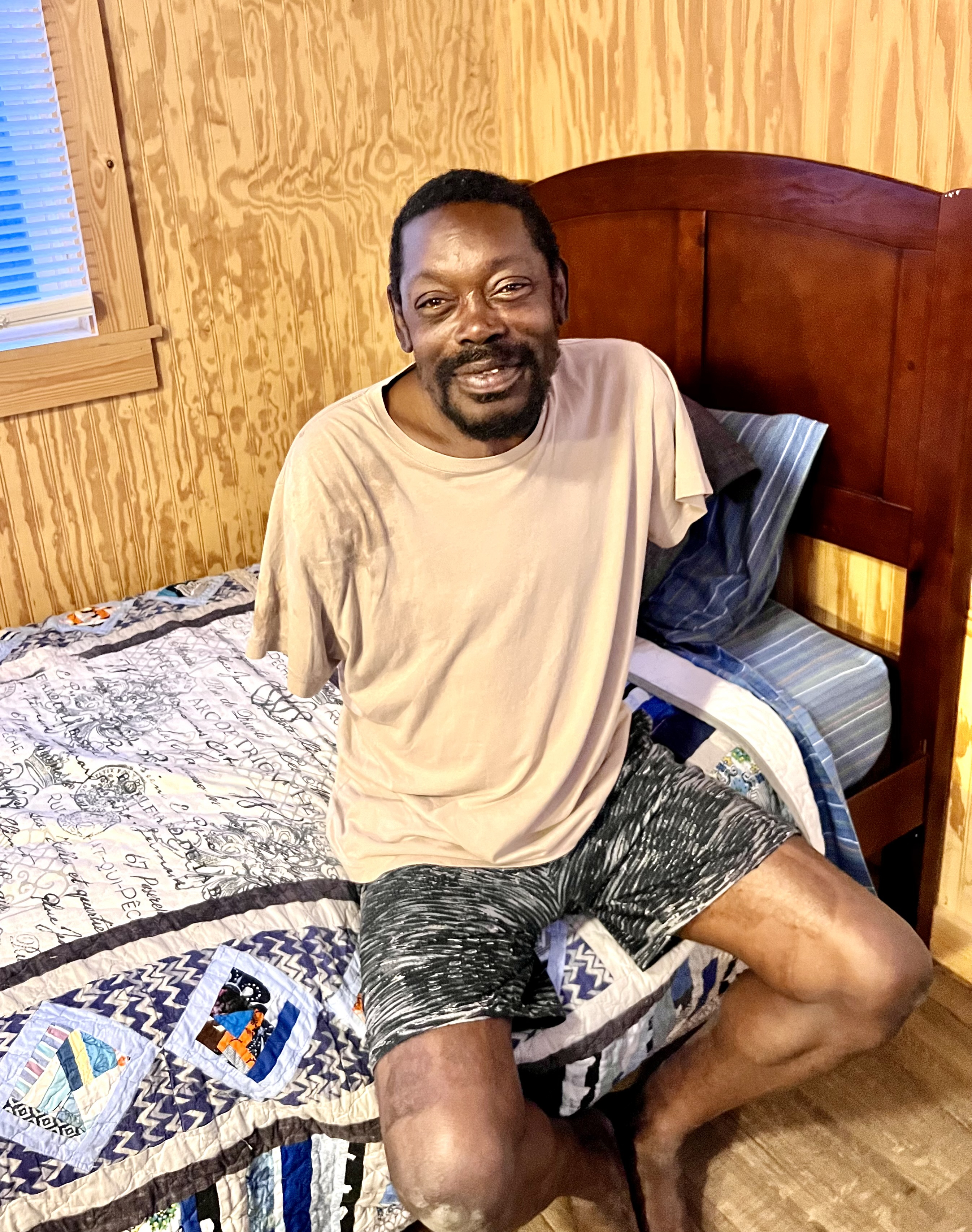
James Albert at HOME’s Prosperity Point, May 15, 2024.

By Brad Durham

The purpose of this fundraiser is to help provide for James V. Albert’s emergency housing, food, and daily needs until he is placed into permanent housing. Any of these funds that have not been used for emergency purposes will be used to help James once he has permanent housing. Tuesday, May 21st is the last day to contribute to this fund on the app (see link below).

HOW THE JAMES V. ALBERT FUND IS ADMINISTERED

First United Methodist Church is receiving all monies for the James V. Albert Fundraiser. The Mission Committee is overseeing the distribution of the funds. 

If you do not wish to donate online, you can mail a check or cash to:

First United Methodist Church
c/o James Albert Fund
200 West Main Street
McMinnville, TN 37110

JAMES ALBERT’S TRAGIC ACCIDENT THAT COST HIM HIS ARMS

10 years ago, James Albert lost both arms at the shoulder in an accident working on electrical lines. The company he worked for will not release any information about the accident without a subpoena from a lawyer. Whatever money was received in a settlement was spent a long time ago. This is something that James and I will look into with a lawyer.

HOME (Homeless of McMinnville Effort)

HOME has generously paid for James Albert’s initial stay at the Scottish Inns, and on Wednesday, May 15, James moved into a tiny house at Prosperity Point. Prosperity Point is owned and operated by HOME. Sheila Fann, HOME Co-Director, told James Albert that he can stay at Prosperity Point until July.

RELEASE OF INFORMATION

James Albert signed a Release of Information form with me for the purpose of helping him secure rental assistance (vouchers -and Section 8) from HUD via the Crossville Housing Authority, in addition to supportive services from various agencies. There are housing vouchers for homeless individuals, and as soon as we have James’ physical social security card, we will submit that application. That should happen very soon.

I am not comfortable releasing or sharing all of James’ personal information publicly, yet I am going to share some so that it is clear what resources are being pursued for him. His personal history can be shared to some degree, but for various reasons, it is not appropriate to share all of his history.

WHY MONEY IS NEEDED FOR JAMES V. ALBERT

When I asked HOME if they could pay for a hotel room for James Albert on Wednesday, May 8, I was told that I would have to be his case manager. I said that I would take care of James, and that my focus was to get him into permanent housing as soon as possible.

The process of securing rental assistance unfortunately can take months to complete. I want to make certain that there is money to provide emergency housing until James is placed into permanent housing. There is no guarantee that James can stay at Prosperity Point until he has a permanent place to live.

James receives a disability check from Social Security and some money for food with his U Card. His insurance is with United Health Care, and it is very helpful. Vanderbilt Hospital is where James receives all of his medical care. Meals on Wheels started providing James with meals last week. James regularly attends a few free meals offered by churches during the week.

Any money that is not used for James’s personal items and emergency needs will be put toward his permanent housing. Presently, there is no guarantee that James will receive rental assistance, and there are long waiting lists for all public assistance housing in McMinnville.

EXISTING SERVICES THAT ARE BEING PURSUED

The Upper Cumberland Development District (UCDD) has referred James Albert to the CHOICES program. Services that may be provided include homemaker aid, personal care, meals, legal aid, etc.

Home health care is something that is also being pursued. James is very good at scheduling his own doctor appointments and transportation to Vanderbilt University Medical Center. James takes meds daily, and he can cook and prepare meals for himself.

HOLES IN THE SAFETY NET FOR HOMELESS PEOPLE IN MCMINNVILLE

One of the reasons I started this fundraiser for James Albert is because there was no place for James to go or stay when he became homeless. James said, “I would have died if I had not gotten into that hotel when I did.” He was homeless for three days.

McMinnville needs full-time staff to help navigate anyone who is homeless to a safe and secure emergency place to live; in addition to directing homeless individuals and families to existing services. The predominant alternative for most individual homeless people is to live on the street, under bridges and in tents – which people are doing right now in McMinnville. Nothing good happens on the street, under bridges and in tents.

MY FOCUS FOR JAMES ALBERT 

I asked James what he wanted, and he said that he wants a permanent place to live. He does not want to live in a group home. I told James that I would do my best to help him get rental assistance and a permanent place to live. 

The solution to being homeless is a home, a permanent home. The stress that James was under in his former living situation led to him becoming homeless. Being on the street for a few days with no arms led to more stress and trauma. It created health concerns and James immediately scheduled his own appointment with a Vanderbilt doctor.

HOUSING FIRST – RAPID REHOUSING

The approach I am taking is an innovation that began decades ago in the work around the country to solve homelessness. The plan is to put homeless people in housing first with supportive services. If someone becomes homeless such as James, that person is rapidly put back into permanent housing.

James Albert became homeless for the first time on May 4th. He has never been arrested. He is fully capable of living independently with supportive services.

Several weeks ago, I began the process of asking Nicole Mosley, City Police Commissioner and Sheriff Jackie Matheny, Jr., if they could provide data on how much money was spent arresting and incarcerating homeless individuals in 2022 and 2023. I also asked Dale Humphrey, CEO of Ascension Saint Thomas River Park, how much money he thought the hospital had spent caring for the homeless population in McMinnville during the past two years.

I believe a business approach to solving homelessness in McMinnville will reveal that putting homeless people into housing first with supportive services will be cost effective. The savings of placing homeless individuals into housing with services versus the cost of arresting, prosecuting, incarcerating, and health care should be significant. A study should also reveal that the same people who become homeless keep recycling through the courts, jail and hospital.

FUNDING FOR HOMELESS PROGRAMS AND AFFORDABLE HOUSING

In late April, I visited with Vivian Walker, Homeless Program Advocate for HART (Homeless Advocacy for Rural Tennessee). The following is from the HART website:

WHO IS THE HOMELESS ADVOCACY FOR RURAL TENNESSEE CONTINUUM OF CARE?
HART is the Upper Cumberland Continuum of Care that covers an 18-county area in Tennessee. We are a collaborative and diverse group of community-based social service providers, county and city officials, private citizens, and faith-based organizations that began meeting in 2001. 

Since 2003 this Continuum has been awarded over $6 million in HUD funding for homeless programs through the McKinney-Vento Homeless Assistance Act. Programs that have been awarded HUD funding include faith-based, private, and government funded organizations.

WHAT IS A CONTINUUM OF CARE?
The Department of Housing and Urban Development (HUD) allocates homeless assistance grants to organizations that participate in local homeless assistance program planning networks. Each of these networks is called a Continuum of Care (CoC).

The CoC awarded $833,377 for the Upper Cumberland in 2023 to assist the homeless16 of the 18 counties in HART did not apply for funding. Not a single nonprofit from Warren County has ever applied for the CoC funding for the homeless.

Another source of funding for the homeless and affordable housing is the THDA (Tennessee Housing Development Agency). The THDA is another routing source of HUD money. This is a partial list of what the THDA provides:

  • Housing Choice Voucher
  • Low Income Energy Assistance Program
  • Low Income Water Assistance Program
  • TNHousingSearch.org
  • Tax Credits
  • Section 8 Projects-Based Assistance 

POSITIVE SOLUTION TO HOMELESSNESS IN MCMINNVILLE

In January, I invited Philip Mangano to speak to people working with the homeless in McMinnville, including County Executive Terry Bell, Mayor Ryle Chastain and City Manager, Nolan Ming. Mr. Mangano served as President George W. Bush’s Executive Director of the White House’s U.S. Interagency Council on Homelessness.

The heart of Mangano’s presentation was housing first, a concept to end homelessness, not to provide endless services. Mangano stressed that data clearly supports the housing first policy. Mangano said, “Mayors know the cost involved related to caring for a homeless person. A homeless person incurs expenses that a community pays for such as health care, mental health, police, court costs, addiction, etc.”  Mangano stated that a city spends between $25,000 to $138,000 a year in services for a homeless person who can ricochet through law enforcement and health care systems in the community..

A permanent home is the most cost-effective solution to homelessness because it stabilizes the homeless person. When a homeless person is safe and secure in a home, the health care, mental health care, and other services are more easily identified and effective. The services follow the homeless person into a home.

It is my hope that a nonprofit in McMinnville can apply for HUD money from the Continuum of Care and THDA. A stronger safety net with full-time staff can be cost-effective in serving the homeless.

One thing every homeless person like James Albert wants is a permanent home. I firmly believe with our community’s support, McMinnville can provide a stronger safety net and more positive solutions to homelessness.