Don’t penalize people for being poor and lacking housing

Introduction by Brad Durham

Approximately 40 years ago, Joyce Tavon was one of my supervisors as I conducted housing searches for the homeless in Boston. Joyce and other friends have recently been helping me understand the best solutions for ending homelessness. Joyce Tavon wrote this article in response to the Supreme Court’s ruling that a community may ban people from sleeping outside. Link: https://www.newschannel5.com/news/nashville-advocate-reacts-to-scotus-ruling-on-sleeping-outside

This guest article was previously published by CommonWealth BEACON on July 3. Link: https://commonwealthbeacon.org/opinion/dont-penalize-people-for-being-poor-and-lacking-housing/

Supreme Court decision addresses a symptom of homelessness but provides no real solution

by JOYCE TAVON 4 days ago

Joyce Tavon is the CEO of the Massachusetts Housing and Shelter Alliance.

How best should a community respond when a person has nowhere to live or even a safe place to sleep at night? Should we give them a ticket for pitching a tent in a local park? Arrest them for sleeping on a bench? Or can we commit to finding actual solutions to address this crisis and strengthen our communities?

At the Massachusetts Housing & Shelter Alliance, we are deeply disturbed by this decision. These prohibitions don’t solve the problem; they just drive people further into a downward spiral. Individuals with nowhere to go will be pushed from place to place as their encampments are cleared. As a result, vital documents will likely be lost, and homelessness and all its subsequent trauma exacerbated. Homeless individuals will be saddled with criminal records that will make it even more difficult for them to secure housing or a job. Instead of solving the problem, this punitive approach will create new obstacles to stability.

At the Massachusetts Housing & Shelter Alliance, however, we are not fighting for the right of someone to sleep on a park bench – we are striving to develop real solutions. We build partnerships with city hall, the police, and service providers that solve homelessness by providing housing, engagement, and support. The alliance has done this before in collaboration with communities from Chelsea to Worcester to Pittsfield. When resources, strategic planning, and political will are brought to bear, we can significantly reduce homelessness.

Understandably, communities don’t want people to camp in their public parks and playgrounds. But banning these acts of desperation won’t resolve the crisis.

We’ve always done better here in Massachusetts. Starting in the 1980s, we provided emergency shelter as a first response. Over the years, we’ve learned that offering housing along with the necessary wraparound services is the most effective response of all. We were early adopters of the Housing First model, moving vulnerable people to affordable housing quickly and, with the stability of a roof over their heads, connecting them with essential services such as health care. 

The data shows this approach works, with more than 80 percent remaining housed for as many as seven years following the initial intervention. In the early 2000s, as we added more housing coupled with the necessary safety net of support, chronic homelessness was dramatically reduced.

Recently, homelessness has been rising in Massachusetts, especially in our smaller Gateway Cities that lack shelter capacity and a robust housing infrastructure. While the media has covered the plight of desperate migrant families coming to our state, a quieter crisis was already brewing here among adults struggling with poverty, often combined with mental illness or addiction and with few options for housing, services, or treatment. 

We also know that homelessness disproportionately impacts people of color. To further complicate an already complex situation, the fastest growing group of newly homeless in the country – and by all indications in Massachusetts as well – are people aged 50 and over. Many have never been homeless before. Losing a job or spouse or receiving a massive rent increase is pushing more and more older adults out of their homes and into their cars or to campsites.

The solution to the homelessness crisis is simple, but it’s not always easy, and moving forward requires political will. We need to redouble efforts to partner with our communities and invest resources in housing with life-changing services. In response to the housing crisis, the governor has called for the creation of 200,000 units by 2030 at all income levels. Based on available data, we are advocating for 10,000 of those units to be supportive housing for our most vulnerable neighbors who are experiencing long-term homelessness.

Our Commonwealth has a long history of innovation and creative problem solving. Let’s apply that can-do approach to this statewide challenge rather than penalizing people for the crime of being poor with nowhere to go.
FUNDRAISER FOR JAMES ALBERT ENDS TUESDAY, MAY 21ST

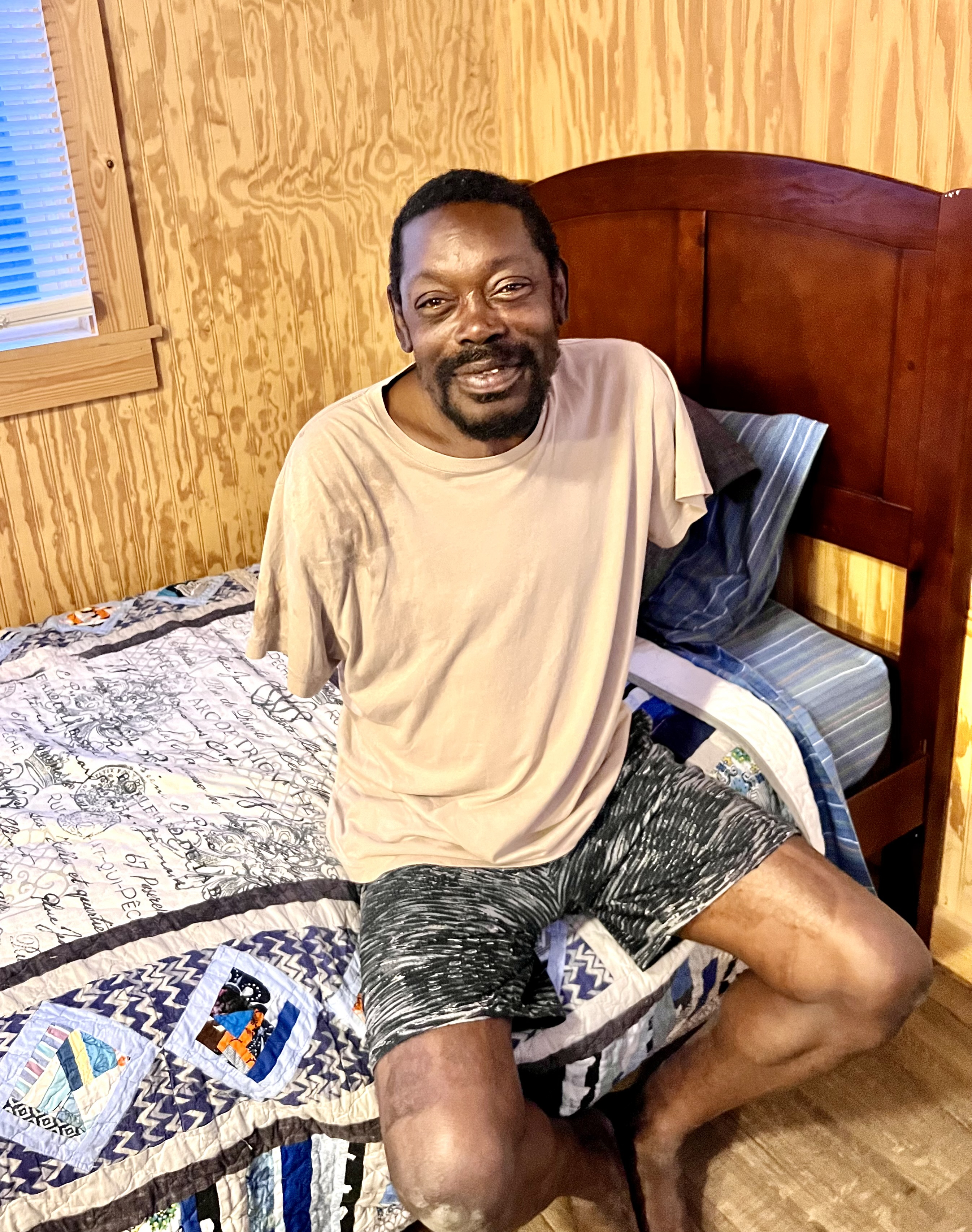
James Albert at HOME’s Prosperity Point, May 15, 2024.

By Brad Durham

The purpose of this fundraiser is to help provide for James V. Albert’s emergency housing, food, and daily needs until he is placed into permanent housing. Any of these funds that have not been used for emergency purposes will be used to help James once he has permanent housing. Tuesday, May 21st is the last day to contribute to this fund on the app (see link below).

HOW THE JAMES V. ALBERT FUND IS ADMINISTERED

First United Methodist Church is receiving all monies for the James V. Albert Fundraiser. The Mission Committee is overseeing the distribution of the funds. 

If you do not wish to donate online, you can mail a check or cash to:

First United Methodist Church
c/o James Albert Fund
200 West Main Street
McMinnville, TN 37110

JAMES ALBERT’S TRAGIC ACCIDENT THAT COST HIM HIS ARMS

10 years ago, James Albert lost both arms at the shoulder in an accident working on electrical lines. The company he worked for will not release any information about the accident without a subpoena from a lawyer. Whatever money was received in a settlement was spent a long time ago. This is something that James and I will look into with a lawyer.

HOME (Homeless of McMinnville Effort)

HOME has generously paid for James Albert’s initial stay at the Scottish Inns, and on Wednesday, May 15, James moved into a tiny house at Prosperity Point. Prosperity Point is owned and operated by HOME. Sheila Fann, HOME Co-Director, told James Albert that he can stay at Prosperity Point until July.

RELEASE OF INFORMATION

James Albert signed a Release of Information form with me for the purpose of helping him secure rental assistance (vouchers -and Section 8) from HUD via the Crossville Housing Authority, in addition to supportive services from various agencies. There are housing vouchers for homeless individuals, and as soon as we have James’ physical social security card, we will submit that application. That should happen very soon.

I am not comfortable releasing or sharing all of James’ personal information publicly, yet I am going to share some so that it is clear what resources are being pursued for him. His personal history can be shared to some degree, but for various reasons, it is not appropriate to share all of his history.

WHY MONEY IS NEEDED FOR JAMES V. ALBERT

When I asked HOME if they could pay for a hotel room for James Albert on Wednesday, May 8, I was told that I would have to be his case manager. I said that I would take care of James, and that my focus was to get him into permanent housing as soon as possible.

The process of securing rental assistance unfortunately can take months to complete. I want to make certain that there is money to provide emergency housing until James is placed into permanent housing. There is no guarantee that James can stay at Prosperity Point until he has a permanent place to live.

James receives a disability check from Social Security and some money for food with his U Card. His insurance is with United Health Care, and it is very helpful. Vanderbilt Hospital is where James receives all of his medical care. Meals on Wheels started providing James with meals last week. James regularly attends a few free meals offered by churches during the week.

Any money that is not used for James’s personal items and emergency needs will be put toward his permanent housing. Presently, there is no guarantee that James will receive rental assistance, and there are long waiting lists for all public assistance housing in McMinnville.

EXISTING SERVICES THAT ARE BEING PURSUED

The Upper Cumberland Development District (UCDD) has referred James Albert to the CHOICES program. Services that may be provided include homemaker aid, personal care, meals, legal aid, etc.

Home health care is something that is also being pursued. James is very good at scheduling his own doctor appointments and transportation to Vanderbilt University Medical Center. James takes meds daily, and he can cook and prepare meals for himself.

HOLES IN THE SAFETY NET FOR HOMELESS PEOPLE IN MCMINNVILLE

One of the reasons I started this fundraiser for James Albert is because there was no place for James to go or stay when he became homeless. James said, “I would have died if I had not gotten into that hotel when I did.” He was homeless for three days.

McMinnville needs full-time staff to help navigate anyone who is homeless to a safe and secure emergency place to live; in addition to directing homeless individuals and families to existing services. The predominant alternative for most individual homeless people is to live on the street, under bridges and in tents – which people are doing right now in McMinnville. Nothing good happens on the street, under bridges and in tents.

MY FOCUS FOR JAMES ALBERT 

I asked James what he wanted, and he said that he wants a permanent place to live. He does not want to live in a group home. I told James that I would do my best to help him get rental assistance and a permanent place to live. 

The solution to being homeless is a home, a permanent home. The stress that James was under in his former living situation led to him becoming homeless. Being on the street for a few days with no arms led to more stress and trauma. It created health concerns and James immediately scheduled his own appointment with a Vanderbilt doctor.

HOUSING FIRST – RAPID REHOUSING

The approach I am taking is an innovation that began decades ago in the work around the country to solve homelessness. The plan is to put homeless people in housing first with supportive services. If someone becomes homeless such as James, that person is rapidly put back into permanent housing.

James Albert became homeless for the first time on May 4th. He has never been arrested. He is fully capable of living independently with supportive services.

Several weeks ago, I began the process of asking Nicole Mosley, City Police Commissioner and Sheriff Jackie Matheny, Jr., if they could provide data on how much money was spent arresting and incarcerating homeless individuals in 2022 and 2023. I also asked Dale Humphrey, CEO of Ascension Saint Thomas River Park, how much money he thought the hospital had spent caring for the homeless population in McMinnville during the past two years.

I believe a business approach to solving homelessness in McMinnville will reveal that putting homeless people into housing first with supportive services will be cost effective. The savings of placing homeless individuals into housing with services versus the cost of arresting, prosecuting, incarcerating, and health care should be significant. A study should also reveal that the same people who become homeless keep recycling through the courts, jail and hospital.

FUNDING FOR HOMELESS PROGRAMS AND AFFORDABLE HOUSING

In late April, I visited with Vivian Walker, Homeless Program Advocate for HART (Homeless Advocacy for Rural Tennessee). The following is from the HART website:

WHO IS THE HOMELESS ADVOCACY FOR RURAL TENNESSEE CONTINUUM OF CARE?
HART is the Upper Cumberland Continuum of Care that covers an 18-county area in Tennessee. We are a collaborative and diverse group of community-based social service providers, county and city officials, private citizens, and faith-based organizations that began meeting in 2001. 

Since 2003 this Continuum has been awarded over $6 million in HUD funding for homeless programs through the McKinney-Vento Homeless Assistance Act. Programs that have been awarded HUD funding include faith-based, private, and government funded organizations.

WHAT IS A CONTINUUM OF CARE?
The Department of Housing and Urban Development (HUD) allocates homeless assistance grants to organizations that participate in local homeless assistance program planning networks. Each of these networks is called a Continuum of Care (CoC).

The CoC awarded $833,377 for the Upper Cumberland in 2023 to assist the homeless16 of the 18 counties in HART did not apply for funding. Not a single nonprofit from Warren County has ever applied for the CoC funding for the homeless.

Another source of funding for the homeless and affordable housing is the THDA (Tennessee Housing Development Agency). The THDA is another routing source of HUD money. This is a partial list of what the THDA provides:

  • Housing Choice Voucher
  • Low Income Energy Assistance Program
  • Low Income Water Assistance Program
  • TNHousingSearch.org
  • Tax Credits
  • Section 8 Projects-Based Assistance 

POSITIVE SOLUTION TO HOMELESSNESS IN MCMINNVILLE

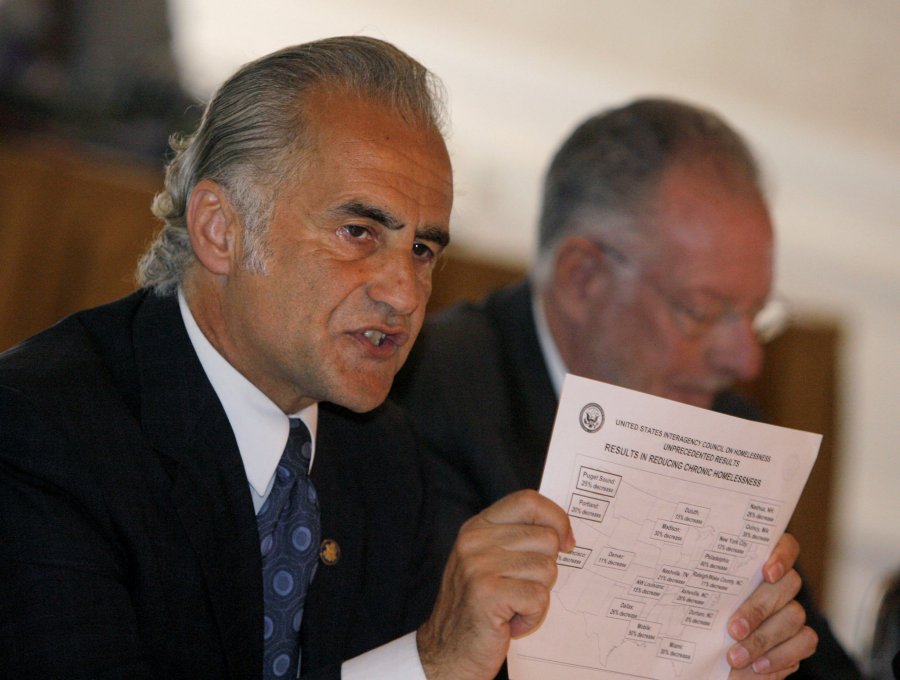
In January, I invited Philip Mangano to speak to people working with the homeless in McMinnville, including County Executive Terry Bell, Mayor Ryle Chastain and City Manager, Nolan Ming. Mr. Mangano served as President George W. Bush’s Executive Director of the White House’s U.S. Interagency Council on Homelessness.

The heart of Mangano’s presentation was housing first, a concept to end homelessness, not to provide endless services. Mangano stressed that data clearly supports the housing first policy. Mangano said, “Mayors know the cost involved related to caring for a homeless person. A homeless person incurs expenses that a community pays for such as health care, mental health, police, court costs, addiction, etc.”  Mangano stated that a city spends between $25,000 to $138,000 a year in services for a homeless person who can ricochet through law enforcement and health care systems in the community..

A permanent home is the most cost-effective solution to homelessness because it stabilizes the homeless person. When a homeless person is safe and secure in a home, the health care, mental health care, and other services are more easily identified and effective. The services follow the homeless person into a home.

It is my hope that a nonprofit in McMinnville can apply for HUD money from the Continuum of Care and THDA. A stronger safety net with full-time staff can be cost-effective in serving the homeless.

One thing every homeless person like James Albert wants is a permanent home. I firmly believe with our community’s support, McMinnville can provide a stronger safety net and more positive solutions to homelessness.

A CONVERSATION WITH PROFESSOR AND AUTHOR, MARYBETH SHINN

Professor and author Marybeth Shinn in her office at Vanderbilt University. Feb. 29, 2024.

By Brad Durham

On Thursday afternoon, February 29, I visited with Beth Shinn in her office at Vanderbilt University. Near the end of our conversation, she said something that stood out, “Homelessness is the worst manifestation of income and racial inequality in our country.” Shinn’s statement clearly illustrates the challenges facing the homeless population.

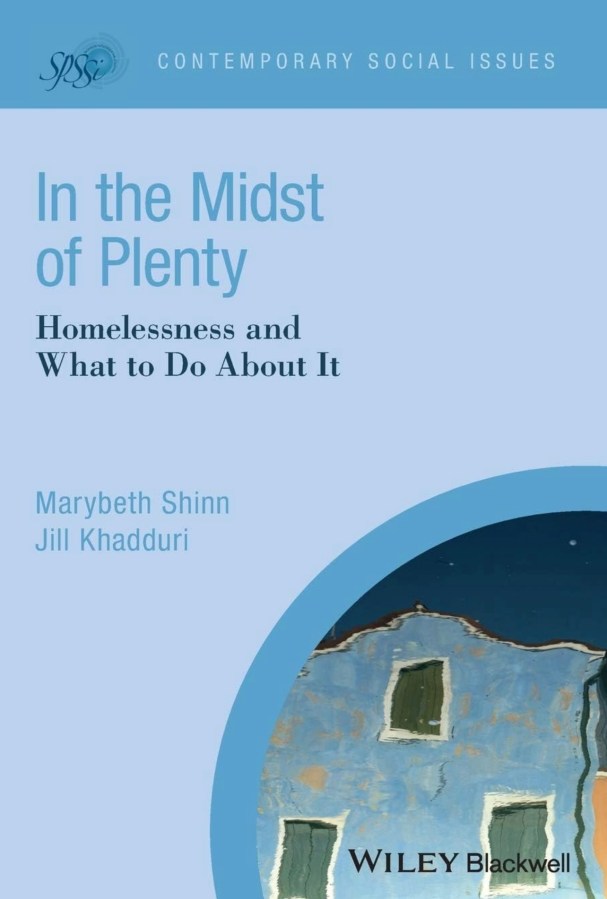
The following are excerpts from my interview with the professor and author of IN THE MIDST OF PLENTY – HOMELESSNESS AND WHAT TO DO ABOUT IT. I highly recommend purchasing the book and reading it. There is a wealth of research and positive solutions for ending homelessness in Shinn’s book.


Brad Durham: Please describe your background and position at Vanderbilt University.

Beth Shinn: I am a professor at Vanderbilt, and I have been studying how to prevent and end homelessness for over 30 years.

Brad Durham: Would you say that you have a passion for researching that and looking at solutions for homelessness?

Beth Shinn: That is my central focus.

Brad Durham: What made homelessness your central focus?

Beth Shinn: When homelessness started going out of skid rows and onto the streets, I was a young mother in New York. My kids would say, “Why is that person living there, why is somebody sleeping there? It is pretty hard these days to recapture the shock that we had at first seeing this in the mid-1980s. 

Brad Durham: When did you start at Vanderbilt?

Beth Shinn: 16 years ago.

Brad Durham: In your 30 years of research, what have you found to be the best approach to solving homelessness?

Beth Shinn: We have a lot of evidence, and it is different for different folks. For families, a large-scale experiment that I was involved with, The Family Option Study, randomized nearly 2,300 families to housing intervention services. What we learned was that giving families access to housing vouchers that held their housing cost to 30% of their income not only ended homelessness, but also has radiating benefits for other aspects of family life. 

Access to the vouchers reduced psychological distress and substance abuse, it reduced domestic violence, food insecurity… Some of the things that can cause homelessness were reduced simply by making housing affordable. Kids school attendance improved; their behaviors improved. We are in the field now with a 13-year follow-up to that study to see how long the affects lasted. How did being a kid in one of those families that had access to housing vouchers change the trajectories into adulthood? In another year or so, we will know the answer to that.

For folks with serious mental illness and substance-abuse problems, the approach that is evidenced-based and seems to work best is the original Housing First approach to supportive housing. People get housing with private landlords directly from the street without any prerequisites, and services under their control. The wraparound services are the ones that the people choose. Wraparound services include mental health services, substance-abuse services, but also vocational services for people who ask for job help, educational services, recreational services to help people build community. That approach has been shown in experimental studies to work much better than approaches that require people to be clean and sober before coming indoors. 

There are some advantages to scattered-site housing with private landlords as opposed to putting people with problems all in the same buildings. Being in the same building is more convenient for the service providers, but not necessarily for the environment that people are trying to manage. 

We also know something about the prevention of homelessness. The biggest issue there is identifying the people who are at-risk. The most common program is eviction-prevention. But most people who are evicted, do not become homeless. 

One study in Chicago looked at people who called up the eviction hotline and qualified for the program. They compared people who called at times when there was money and when there was not money. What they found out was that when people called up when there was  money, about half a percent became homeless in the next six months. When people called up and there was no money available, less than 2% of the people became homeless over the next six months. So the eviction help reduced homelessness, but 98% of the people who called up even when there was no help did not become homeless.

Eviction prevention helps, but that is not where most people who are experiencing homelessness are coming from. People who have a place from which they can be evicted are better off in terms of housing than folks who don’t.

Resources are the problem. We have shown that with resources, we can end homelessness. The country has cut homelessness for military veterans in half since 2010. That happened because we put in the resources. There was supportive housing for veteran families and other programs. There was preventive screening for veterans who came into veteran health services. They were asked questions about current homelessness, worries about insecurities about the future… 

I don’t believe anyone should be homeless. We can fix it if we wanted to, but fixing it involves both getting people who are currently homeless out of that state and stopping generating more. At this point we are pitching people into homelessness faster than we are getting them out. Homelessness is rising.

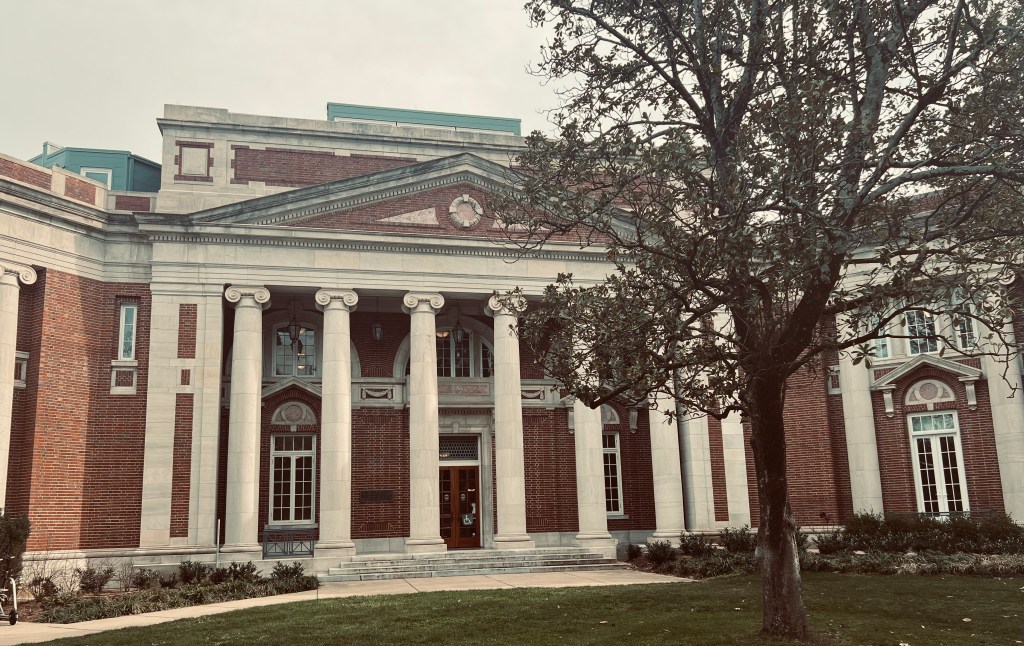
Mayborn Building, Vanderbilt University…location of Professor Shinn’s office.

Brad Durham: How do you change the public will so that the public cannot stomach having homeless individuals living on the street and in tents? There is a tent city area right outside downtown Nashville, not too far from us right now.

Beth Shinn: That is a good question. In this part of the country, one could appeal to moral values and religious tenets, “love thy neighbor.” If I could answer your question, I would be shouting it from the rooftops.

There is a lack of affordable housing. Nationwide, we have the highest level of “worst case of housing needs” since we started tracking these things. Worst case housing needs are people who are below 50% of the median income and are paying more than 50% of their income toward housing or living in seriously deficient housing. At this point nationally, we have 8.5 million renters who fall into that category as of 2021, which is the most recent report. That is the highest number we have ever had.

Those are people who are really strapped…people who are living below 50% of area median income and are paying more than 50% of their income for rent, which does not leave much room for paying anything else. 

Brad Durham: How would you define homelessness? 

Beth Shinn: There are two basic definitions of homelessness. There is what the Housing and Urban Development (HUD) uses, which sometimes is called literal homelessness. Someone who is sleeping outdoors or a place where people are not intended to sleep such as a bus station or in a shelter or other homeless serving programs. 

There is a broader definition that the Department of Education uses that includes additional folks: the largest group is people who are doubled up in other households because they cannot afford a place of their own. There are some additional groups such as folks staying temporarily in hotels. 

Those are the two big definitions. We try to count the people who are homeless according to the HUD definition in January. That number is going up. We try to count the number of people in schools who fit the Department of Education definition. That doesn’t count anyone who is below school age. In Nashville, that number is looking worse as well.

About a third of the people who experience homelessness are a part of families. The age that you are most likely to be in a homeless shelter in the United States is infancy. 

Brad Durham: The Finnish model in your book is encouraging and inspiring. They eliminated homelessness. 

Beth Shinn: We are wealthier than Finland. We could choose to do it. It’s a choice.

Brad Durham: Do we have the federal and state money to do it in Tennessee?

Beth Shinn: There is money through HUD, and the housing choice voucher program is something that needs to be expanded. The other thing the Feds do is the Low Income Housing Tax Credit, and that helps developers create more affordable housing. Even with that tax credit, developers cannot develop and maintain housing that poor people can afford. LIHTC helps developers provide housing to people who are at about 80% of median income. Getting that down to 30% of area median income is really tough, and that is where the need is. 

If you look at the people who are experiencing homelessness, they are around 15% of area median income. Disability benefits are too low to afford a studio apartment anywhere. 

State and local funds can help, but regulations are part of what is causing homelessness. In Nashville, we have down-zoned the number of units that are permitted. In 1950, you could have built a duplex or triplex in a place where now only single-family homes are permitted. We need to allow for greater density. We need housing on transportation corridors. Some people like to say that it is the housing and transportation cost that we should be looking at together. It doesn’t really help if you can get housing way out (from work) because it increases the transportation cost of commuting to work.

Zoning requirements for parking are another thing that makes housing more expensive to build. Nashville is removing zoning requirements for parking downtown. There is a tradeoff between having more parking spaces or more housing units. 

The Tennessee state legislature has tied our hands to incentivize developers to build affordable housing. You can’t say in Tennessee that we will give you a zoning variance to build more units if 10% of them are more affordable. The legislature has nixed that from happening.

State and local funding can help, but state and local regulations hurts. We need changes to state and local regulations to make it more possible to build affordable housing. 

Brad Durham: Are you optimistic in what you are seeing in your research, or are you pessimistic about the numbers you are seeing in respect to solving homelessness?

Beth Shinn: What leaves me optimistic is that we generally know what to do. It is really at this point a question of resources. We have shown that we know how to end homelessness with families. We have shown how to end homelessness for people with serious mental illness and substance abuse disorders. We have shown how to end homelessness for veterans. It is matter of resources and political will. 

It is not a matter of the poor are always going to be with us and we don’t know what to do, so we should just bury our heads in the sand. We have a lot of knowledge. We know something about prevention. We could know more there. We know something about what is generating homelessness. There is a GAO report that indicates that for every $100 increase in rent in a city (technically a continuum of care) there is a 9% increase in homelessness. 

We need to build things that are not all mansions. We need to build smaller homes, what used to be called starter homes. Not everyone needs three bedrooms and 2.5 bathrooms and a white picket fence. We need to offer more kinds of housing to people. 

FORMER PRESIDENT BUSH’S HOMELESS CZAR VISITS MCMINNVILLE

By Brad Durham

For a list of who attended the meeting, go to the end of this letter.

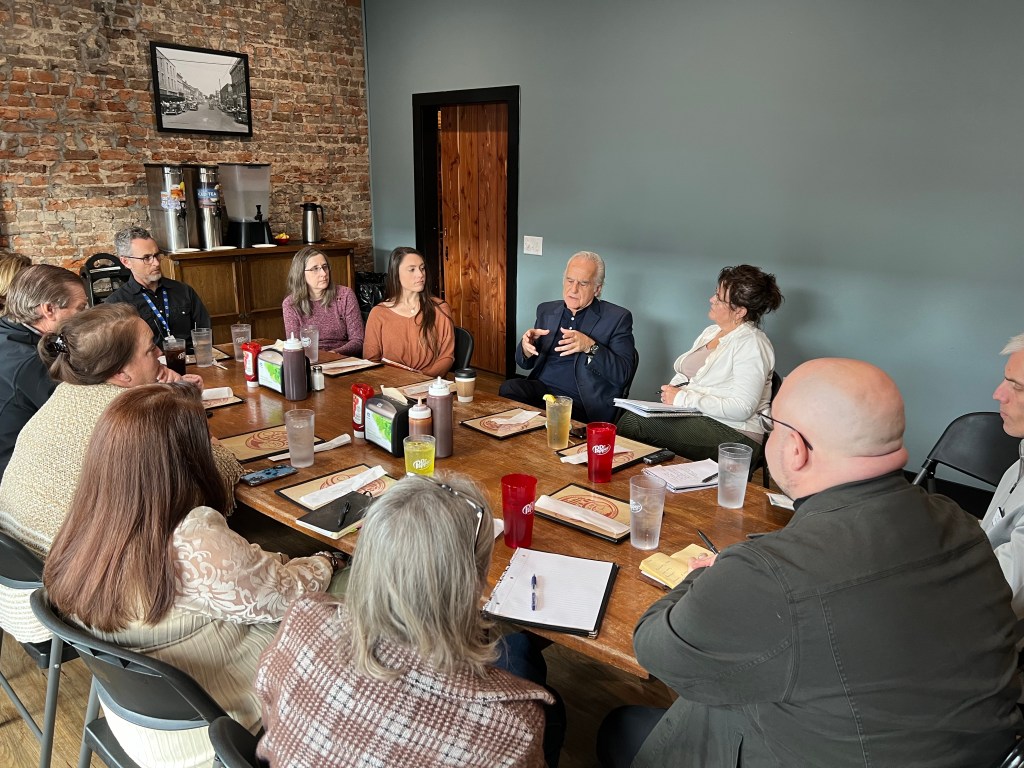
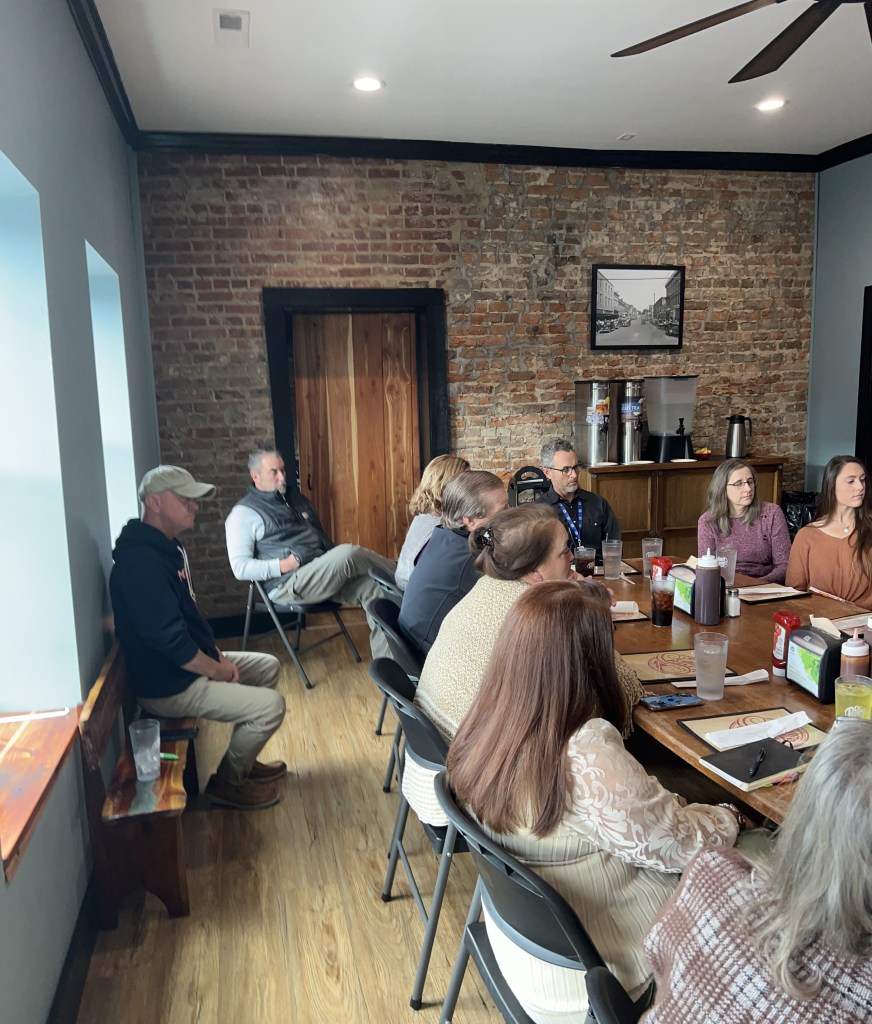
         On Friday morning, January 26, a group of 14 McMinnvillians gathered for a presentation by Philip F. Mangano.  Mr. Mangano served as President George W. Bush’s Executive Director of the White House’s U.S. Interagency Council on Homelessness. Brad Durham, who worked with Mr. Mangano in Cambridge, Massachusetts placing homeless families into permanent housing, invited Mangano to McMinnville.

HOUSING FIRST SOLUTION

         The heart of Mangano’s presentation was housing first, a concept to end homelessness, not to provide endless services. Mangano stressed that data clearly supports the housing first policy. 

COST-EFFECTIVE SOLUTION FOR CITIES

         It is cost-effective to place a homeless person or family in permanent housing versus a shelter or transitional housing. Mangano said, “Mayors know the cost involved related to caring for a homeless person. A homeless person incurs expenses that a community pays for such as health care, mental health, police, court costs, addiction, etc.”  Mangano stated that a city spends between $25,000 to $138,000 a year in services for a homeless person.

STABLIZES A HOMELESS PERSON

         A permanent home is the most cost-effective solution to homelessness because it stabilizes the homeless person. When a homeless person is safe and secure in a home, the health care, mental care, and other services are more easily identified and effective. The services follow the homeless person into a home.

WHAT EVERY HOMELESS PERSON WANTS

         Mangano emphasized that there is one thing every homeless person says that he or she wants — when asked — is a place to live, a home. Although the housing first solution appears to be self-evident, Mangano stated that homeless advocates often act out of genuine compassion by providing transitional housing and services that create a perpetual cycle of services that sadly do not end homelessness.

         Another major desire homeless people ask for is a job. Mangano said, “Homelessness results in an unraveling of social capital – the loss of friends and family.” Clearly, when an individual or family is homeless, that person or family have busted through every possible safety net and hit the street. A homeless person is completely alone…lonely. A homeless person intuitively knows that a job will provide friends — the social capital everyone needs. 

         Philip Mangano suggested a book by Robert Putnam to better understand how the social fabric has diminished in America’s recent history. That book is Robert Putnam’s BOWLING ALONE: The Collapse and Revival of American Community. The book was developed from Putnam’s essay entitled, “Bowling Alone: America’s Declining Social Capital.”

A COMMON FRUSTRATION AND PERCEPTION

         Several members of Friday’s gathering stated that there is no affordable housing in McMinnville. Mangano replied, “Homeless advocates in every city say that. That is a common perception. The response requires innovative thinking and a commitment to housing first principles.”

THREE BOOK RECOMMENDATIONS 

         Philip Mangano worked with three researchers and authors who have worked with executives in the corporate world to find solutions to business problems. These authors helped research and provide the framework for successful housing first models and policies.

         Malcom Gladwell, THE TIPPING POINT

         Jim Collins, GOOD TO GREAT

         Clayton Christensen, THE INNOVATOR’S DILEMMA

         Using Gladwell’s book and homeless research as a resource, Mangano said, “Investing resources into the most challenging and difficult parts of homelessness from an economic perspective leads to a decline in homelessness.” Conversely, providing compassionate emergency services without a housing first policy does not effectively create a decline in homelessness. 

         Mangano’s alluded to examples of creative solutions involving converting motels into housing that have services onsite. He also mentioned manufactured housing as a cost-effective solution for a homeless person or family.

         Clayton Christensen’s book, THE INNOVATORS DILEMMA offered examples of how businesses seeking to move to the next step often failed when using the solutions suggested by the sales force. On the other hand, businesses seeking to move to the next step often succeeded when their researched focused on the consumers and solutions they wanted. 

SUMMATION

         The general thesis of Mangano’s presentation was that research and data from across the country, in large and small cities, clearly shows that housing first is the best solution to homelessness. Creative innovations to decrease homelessness have often come from unsuspected sources such as private industry and listening to the homeless population. The solution that works best for everyone is housing a homeless person or family — not long-term emergency services that allow the homeless to perpetually experience trauma and instability.

PEOPLE ATTENDING THE MEETING

Carrie Baker, UCHRA Director

Terry Bell, County Executive

Courtney Breedlove, Program Director, Families in Crisis

Brad Durham, Private Citizen

Sheila Fann, Connie Fox, Co-Directors of HOME

Beth Gallagher, Private Citizen

Jimmy Haley, former Mayor and County Executive

Steve Harvey, City Alderman

Ryan Heatherly, Senior Pastor, First United Methodist Church

Rayah Kirby, Realtor

Philip Mangao, President & CEO American Roundtable to Abolish Homelessness

Nolan Ming, McMinnville City Administrator

Rev. Charles McClain, Priest, St. Matthew’s Episcopal Church

Kristy Stubblefield, Executive Director, Families in Crisis

Pam Vaughn, Executive Director, McMinnville Housing Authority

POSTSCRIPT

         As the meeting came to close, members expressed the desire to work together and collaborate, to meet again in three weeks. It is hoped that the meeting will lead to some type of homeless alliance in McMinnville.