Got nothing against the big town
Man, I’m still hayseed enough to say, “Look who’s in the big town”
But my bed is in a small town
Oh, and that’s good enough for me.
I was born in a small town
And I can breathe in a small town
Probably die in a small town
Oh, and that’s probably where they’ll bury me



SLIDE SHOW OF THREE IMAGES FROM THE TOP OF THE BLUE BUILDING – APRIL 2023
By Brad Durham
Interviewing twelve people about McMinnville has reminded me of how research is vital to knowing the facts. Being neutral on an issue or topic until you have fact-based evidence can be challenging. I tried to create a blank page in my mind before I conducted the interviews. Political division and caring for each other were the two dominant themes imprinted on my mind after conducting and posting the interviews.
TWO DOMINANT THEMES – POLITICAL DIVISION & CARING FOR EACH OTHER
These two themes may appear to be diametrically opposed to each other. Are we more inclined to care less about someone if they are in a different political party? Let’s hope not! Mac McWhirter stated, “There is a wealth of people in Warren County reaching down and giving a hand up to help people here.”
Although I believe both themes can be true — we are divided politically and people care about each other, I also believe the political division has the potential to decrease good will and harmony. We are seeing how national politics are becoming more adversarial in D.C., and we recently saw how politics can create division in the state legislature with the Tennessee Three.
STACEY HARVEY QUOTE ABOUT BEING A PUBLIC SERVANT
Last fall, Stacey Harvey told me in an interview what he has experienced being in politics as an Alderman in McMinnville:
You’re supposed to be a public servant. There’s a lot of stuff going on right now and I’m a lightning rod. I don’t set out to be. I don’t set out to issue criticism. I don’t set out to be a flamethrower. What I do set out for is I want people to tell the truth. I want people to own their actions. Their great deeds and their mistakes. Because everybody is human. But there are some people around here who will admit to no wrongdoing whatsoever. They just won’t. They just won’t. Somebody points out somebody telling a lie, you know, then they attack the person pointing out the lie. They don’t address the lie — even when it’s in print.
I honestly believe, and you can print this if you want, that the local political class here counts on people not remembering what was said. I believe that they think everybody has a short attention span. I believe that folks are smarter than that.
I agree with Stacey Harvey — he is a lightning rod. I am not saying that I agree with everything he says. Who agrees with another person 100% of the time? My interview with Mr. Harvey encouraged me to ask myself questions. How do we think and speak to our elected officials, and to each other? How do we know if what the other person is saying is accurate, fact-based?
SEEKING UNDERSTANDING AND COOPERATION — POSITIVE FACT-BASED SOLUTIONS
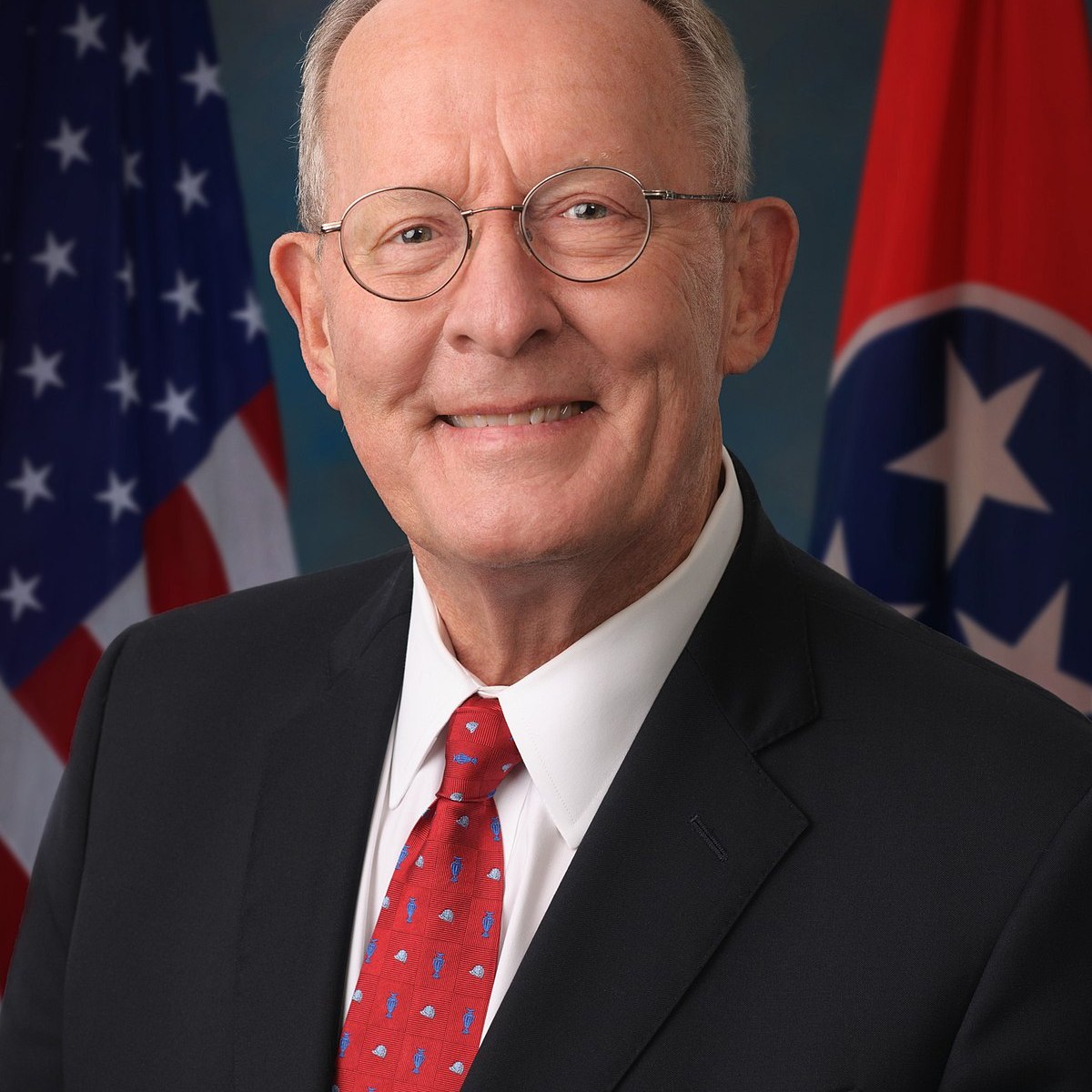

Lamar Alexander (left) and the late Chancellor Alexander Heard (right)
Lamar Alexander, former Governor (1979-1987), U.S. Senator (2003 – 20021), U.S. Education Secretary (1991-1993) and President of the University of Tennessee (1988-1991), recently wrote an article on how to deal with controversial issues in the WALL STREET JOURNAL. He centered the article on Vanderbilt University’s new chancellor, Daniel Diermeier’s recommitment to “principled neutrality.” Principled neutrality is the practice of the university refraining from taking positions on controversial issues that don’t directly relate to the function of the university.
Lamar Alexander quotes Chancellor Alexander Heard, who was chancellor when Lamar Alexander was a student at Vanderbilt, to document the history of Vanderbilt’s position on principled neutrality. Heard said, “A university’s obligation is not to protect students from ideas, but rather expose them to ideas, to help make them capable of handling and, hopefully, having ideas.” Chancellor Heard’s statement was a response to reactions on the left and right to having speakers on campus such as Allen Ginsberg, Stokely Carmichael and Strom Thurmond.
Vanderbilt has implemented a program to continue its legacy of principled-neutrality — the Vanderbilt Project on Unity and Democracy. Former Republican Governor Bill Haslam and historian Jon Meacham help lead the project with faculty member Samar Ali. The project promotes research and discussion on evidence-based solutions to mediate differences. You can read Lamar Alexander’s article by clicking here: WSJ article.
The twelve people I interviewed about McMinnville had facts that were often coupled with personal experience. Their answers to questions were informed by more than just their opinions. How do we find agreement and solutions when our experiences and facts are different?
If we can talk and discuss the facts, and not shout at an individual for having a different point of view, we have a chance to create a solution. If we don’t communicate with each other, we are left with different points of views which will potentially divide us.
HAVING DIFFERENT POINTS OF VIEWS AND COOPERATING
There is a commonly told story about a car accident that illustrates how we can legitimately have different points of view about the same issue. What facts will four people share when they are standing on four different corners of an intersection when a car accident occurs?
Each witness will explain what he/she saw. Inevitably, each person’s description of the accident will vary because each person saw the accident from a different point of view. Hopefully, as each person tells his/her version of the accident, everyone’s individual fact-based evidence (testimony) will help tell the collective story. One person’s version of events does not necessarily eliminate another person’s facts.
INVESTING IN EACH OTHER CAN ELIMINATE DIVISION
It is my hope that political division is not a dominant theme in our future. I want everyone to have the freedom to be who they want to be in McMinnville. After completing this series of interviews, I am motivated to be more invested in caring about people in our small town, and doing more research before forming an opinion.
In the near future, I will post the complete interviews.


 BD Newsletter
Thanks for sharing this Brad. I’m surprised to hear Mr Harvey speak of truth when he himself is so unwilling to listen to the truth about some situations.
Certainly there are plenty of people who express uninformed opinions, but to staunchly stand by those opinions when they are demonstrably untrue is not healthy.
I had hoped to hear more insights into past and future civic issues, but otherwise you did a nice job of highlighting our community.
Thanks.
LikeLike
I enjoyed your article!
LikeLiked by 1 person